
Pork and Mushroom Soup with Mustard Greens
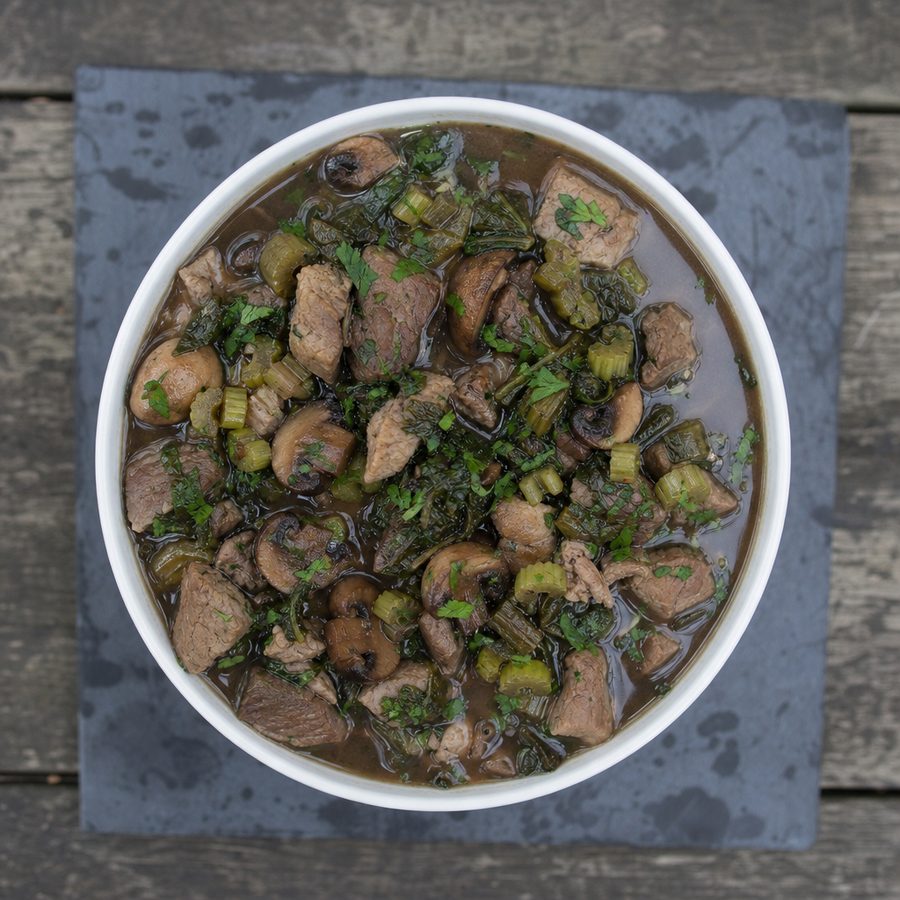
Cubes of pork shoulder simmered until tender in a dark mushroom broth with celery and thyme, finished with torn mustard greens and a spoonful of cider vinegar.
Why You'll Love This Recipe
This is the soup I make when the week ahead looks long and I want something in the refrigerator that is genuinely a meal rather than a snack. It takes about an hour and a half, almost all of it unattended, and it makes four big bowls that carry to work in a jar. Broth lunches have a reputation for leaving you hungry by two in the afternoon, and that is entirely a function of what is floating in them. There is a pound and a half of pork shoulder and a full pound of mushrooms in this pot, so it eats like dinner. I start making it in October and more or less keep going until spring.
The mushrooms are the step people rush. They go into a dry hot pan first, in a single layer, and they will squeak and give up their water before anything good happens. Wait through that. Once the water has gone the pan goes quiet, the cut faces turn deep brown, and what you get tastes nothing like a mushroom simmered straight into broth. The pork gets the same treatment in the same pot, a hard sear on two sides, and the browned bits left on the bottom are exactly what the broth is there to lift. That fond, the mushrooms, and the bone broth are the three savory layers doing all the work in a pot with no spice blend in it.
Pork shoulder wants time and low heat, so keep the pot at a bare simmer with the lid ajar for about an hour, until a cube gives under the side of a spoon. Then the mustard greens, torn straight in, where four minutes in hot broth turns their raw bite into something gently peppery. The cider vinegar goes in off the heat and it is not optional. Pork fat and mushroom broth together are deeply savory and slightly flat on their own, and two teaspoons of acid is what pulls the whole bowl into focus. Reheated the next day, when the pork has gone softer still, it is better than it was the first time.
Ingredients
- 1 1/2 lb boneless pork shoulder, trimmed and cut into 3/4-inch cubes
- 1 lb cremini mushrooms, halved, or quartered if large
- 1 large yellow onion, diced (about 1 cup)
- 3 celery stalks, sliced 1/4 inch thick
- 4 cloves garlic, minced
- 1 bunch mustard greens (about 7 oz), woody stem ends discarded and leaves torn
- 6 cups beef bone broth
- 2 tbsp olive oil, divided
- 1 tbsp fresh thyme leaves, or 1 tsp dried
- 2 bay leaves
- 2 tsp apple cider vinegar
- 3 tbsp chopped fresh parsley
- 1 1/4 tsp fine sea salt, divided
Instructions
- Brown the mushrooms: Heat a heavy pot over medium-high with no oil in it, since mushrooms give up a great deal of water and oil added now would only float on top of it. Add the mushrooms cut side down in a single layer and leave them alone for 4 minutes. They will squeak, release water, and then go quiet as the water cooks off. Add 1 tablespoon of the olive oil, toss, and cook 4 minutes more until the edges are deep brown. Move them to a bowl.
- Sear the pork: Pat the pork cubes dry and season them with 1/2 teaspoon of the salt. Add the remaining tablespoon of oil to the pot and sear the pork in two batches over medium-high, about 3 minutes a side, until two faces of each cube are browned. It does not need to cook through here, because an hour in the broth is still ahead of it and the sear is only for the browned layer it leaves on the bottom of the pot. Move each batch to the bowl with the mushrooms.
- Soften the onion and celery: Lower the heat to medium and add the onion and the celery. Cook for 6 minutes, scraping the bottom of the pot as the vegetables release their moisture, since that water is the only thing that will lift the browned bits and they are where the soup gets its depth. Add the garlic and thyme and cook 45 seconds more.
- Deglaze and simmer: Pour in the bone broth and scrape the last of the fond off the bottom. Return the pork with any juices, add the bay leaves and 1/2 teaspoon of the salt, and bring it to a bare simmer. Cook with the lid ajar for 55 to 65 minutes, until the pork gives easily under a spoon, because shoulder needs that long at a low bubble to turn its connective tissue soft rather than tough.
- Add the mushrooms and greens: Stir the browned mushrooms back in along with the torn mustard greens and simmer for 4 minutes, until the leaves have collapsed and turned dark and their raw pepperiness has softened. Fish out the bay leaves.
- Finish: Take the pot off the heat, stir in the cider vinegar and the remaining salt, and scatter the parsley over the top, since an hour of simmering flattens everything and the vinegar at the end is what brings the pot back. Taste it and add a little more vinegar if the broth reads flat rather than bright.
Variations
- Rutabaga in the pot: Add two cups of diced rutabaga or turnip with the broth for a heartier soup that eats closer to a stew.
- Lamb version: Swap the pork for cubed lamb shoulder and the thyme for rosemary, and give it another 15 minutes of simmering.
- Ginger and scallion: Add a tablespoon of grated ginger with the garlic and finish with sliced scallions for a sharper, cleaner-tasting broth.
- Milder greens: Kale, Swiss chard, or collards all stand in, though collards want 10 minutes rather than 4.
- Deeper mushroom flavor: Use half cremini and half shiitake, stems removed, for a broth with more of a woodsy edge to it.
Storage & Leftovers
The soup keeps in a sealed container in the refrigerator for up to 4 days and the pork keeps softening while it sits. Cool it uncovered for 20 minutes before the lid goes on so the greens at the top of the container do not steam themselves to threads. The broth may set lightly from the gelatin in the bone broth, which is a good sign.
Reheat on the stove over medium-low for 6 to 8 minutes, stirring once or twice, and add a splash of water if it has thickened past what you want. A microwave handles a single bowl in about 2 minutes at half power. Either way, brighten it with a few drops of vinegar or lemon after heating, since acid fades in the refrigerator.
It freezes for up to 3 months in flat bags, though the greens come back softer than they went in. If you know a batch is headed for the freezer, leave them out and tear fresh leaves into the thawed soup while it reheats. Thaw overnight in the refrigerator for the best texture.
Notes & Tips
- Give the mushrooms one layer: Stacked mushrooms steam in their own water and stay pale and rubbery. Brown them in two batches if your pot is not wide.
- Cut the pork evenly: Three-quarter-inch cubes all finish together. A mix of sizes gives you some pieces falling apart while others are still firm.
- Keep the lid ajar: A fully covered pot traps the steam and dilutes the broth. Leaving a gap lets it concentrate while the pork cooks.
- Wash the greens twice: Mustard greens grow low and hold grit in their crinkles. Two changes of cold water, lifting the leaves out rather than pouring them out, is the only way.
- Taste before you salt: Bone broths vary enormously in saltiness. Wait until the simmer is done and the liquid has reduced before you decide about the last half teaspoon.
- Save the fat: If a layer of pork fat sets on top in the refrigerator, lift it off and keep it. It is the best thing you own for browning vegetables.
Nutrition & Mindful Eating
- Pork, mushrooms, and bone broth build the whole flavor of this soup between them. The meat gives it substance, the browned mushrooms give it the dark savory backbone, and the greens torn in at the end mean every spoonful has something fresh in it.
- Pork shoulder is marbled enough to stay tender through a long simmer rather than going stringy, and it is one of the best food sources of thiamin, the B vitamin your body uses to turn what you eat into usable energy.
- Mushrooms browned in a dry pan lose their water and concentrate into something meaty and almost sweet. They carry selenium and a run of B vitamins, and they are one of the few vegetables that reads as savory rather than fresh.
- Mustard greens go in for the last four minutes only, long enough to collapse and lose their raw bite while keeping a gentle pepperiness. They are a strong source of vitamin K and vitamin A, and cooking them right in the broth means whatever leaches out of the leaves stays in the bowl.
- Thyme, bay, and two teaspoons of cider vinegar are the whole seasoning apart from salt. The vinegar goes in off the heat, where it stays sharp, and it is what makes a rich pork broth taste bright at the edges.
- As you eat, take the first few spoonfuls slowly enough to taste the difference between the browned mushroom and the soft pork, and let the warmth of the bowl settle you before you decide how much of it you want.
Frequently Asked Questions
Can I use a different cut of pork?
Pork shoulder is the right cut because the fat and connective tissue in it survive an hour of simmering. Country-style ribs work the same way. Tenderloin and chops do not, since they tighten and go dry in about 15 minutes, so if that is what you have, poach the slices in the finished broth for 4 minutes at the end.
Why brown the mushrooms in a dry pan?
Mushrooms are mostly water, and oil added at the start gets absorbed and then blocks the browning while that water cooks off. A dry pan drives the moisture out first, and the oil goes in afterward when there is a hot surface to brown against. It takes about 8 minutes and it is most of the flavor.
Are mustard greens too sharp for a soup?
Raw they are aggressive, and that is the point. Four minutes in hot pork broth takes the edge off and leaves a gentle pepperiness that keeps a rich bowl from going one-note. If you want them milder still, tear them smaller and stir them in with the heat already off.
Does this fit an AIP elimination phase?
It does. There are no grains, legumes, dairy, eggs, nuts, seeds, or nightshades in it, and the seasoning is onion, garlic, thyme, bay, and cider vinegar. Read the bone broth label, since many boxed broths carry black pepper or paprika, and either make your own or pick one whose ingredient list you can read in full.