
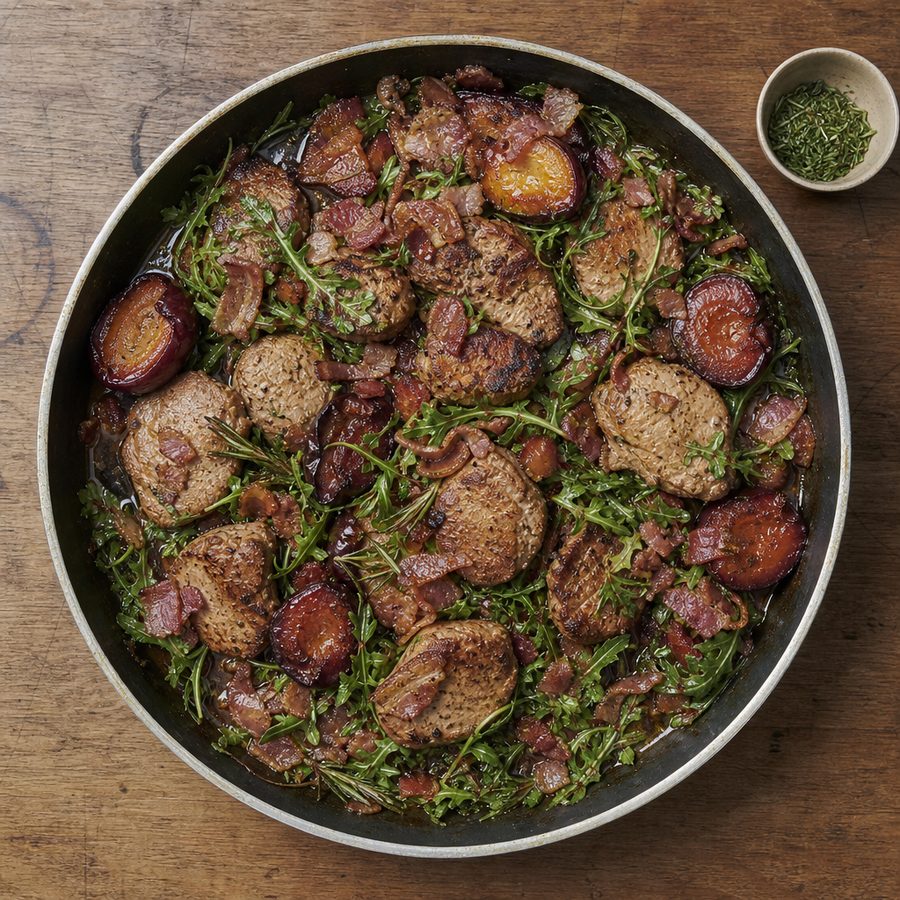
Pork Tenderloin with Skillet Plums and Bacon
Pork tenderloin medallions seared in bacon fat with halved plums, finished with rosemary and balsamic, and served over arugula for a savory-sweet breakfast plate.
Why You'll Love This Recipe
This is the plate I make on a Saturday when there are good plums on the counter and nobody in the house wants another skillet of meat and sweet potato. It is sweet and savory at the same time, which is the thing most people miss once they start an elimination phase, and it gets there on fruit and bacon fat rather than syrup. Start to finish it takes about thirty five minutes, and a fair share of that is the pork sitting still and resting. I have also made it at seven on a weekday morning, because a tenderloin cut into medallions cooks faster than almost anything else at the meat counter.
The bacon is in here for its fat more than for itself. Render it slowly in a cold pan so it gives up everything it has, lift the pieces out to drain, and cook the pork and the fruit in what is left behind. Plums go in cut side down and stay put for three full minutes, which is long enough for the sugar at the cut face to caramelize into something close to jam while the fruit behind it holds its shape. The step people rush is the pork. Give the medallions a dry surface, a properly hot pan, and room between them, and you get a brown crust rather than gray edges.
A whole tenderloin across four plates is a serious amount of protein, and it is the reason this eats like a meal rather than like a fruit course. The balsamic goes in at the very end with a splash of broth and pulls the bacon fat, the plum juice, and the browned bits into a sauce thin enough to spoon over everything. Arugula does the last job, because something raw and peppery under warm fruit and pork fat is what keeps the plate lively down to the final bite. Leftovers are good cold, sliced thin over more arugula, which is how I usually eat them the next morning.
Ingredients
- 1 lb pork tenderloin, trimmed and cut into 1-inch medallions
- 4 slices bacon (about 4 oz), chopped
- 6 firm ripe plums (about 14 oz), halved and pitted
- 2 shallots, thinly sliced
- 2 tsp chopped fresh rosemary
- 2 tbsp balsamic vinegar
- 1/4 cup chicken broth
- 4 packed cups arugula (about 3 oz)
- 1 tbsp olive oil
- 3/4 tsp fine sea salt, divided
Instructions
- Prep the pork and the plums: Pull the silverskin off the tenderloin with a thin knife and cut the meat into 1-inch medallions. Pat them very dry and season with half a teaspoon of the salt, since a wet cut face spends its first minute in the pan boiling instead of browning. Halve the plums and pull out the pits, and slice the shallots.
- Render the bacon: Put the chopped bacon into a cold, wide skillet and set it over medium heat, because fat renders out slowly from a cold start and the pieces crisp evenly instead of seizing. Cook for 7 to 9 minutes, stirring now and then, until the pieces are crisp and there is a shallow layer of fat in the pan. Lift the bacon out onto a plate and leave the fat behind, since everything that follows cooks in it and the bacon itself would go soft sitting in the pan.
- Sear the pork: Raise the heat to medium-high. Add the medallions with space between them and sear for 3 minutes without moving them, then turn and cook 3 minutes more, until the thickest one reads 145°F (63°C). Move them to a plate and cover loosely rather than tightly, so that they rest without steaming the crust back off.
- Sear the plums: Add the olive oil if the pan looks dry, then lay the plum halves cut side down and leave them alone for 3 minutes, until the cut faces are dark and syrupy. Scatter in the shallots and rosemary and cook 2 minutes more, until the shallots soften.
- Make the pan sauce: Pour in the broth and the balsamic vinegar and scrape the bottom of the pan with a wooden spoon. Simmer for 1 to 2 minutes, until the liquid is glossy and just coats a spoon. Return the pork and any juices on the plate, add the remaining salt, and turn everything once.
- Serve: Divide the arugula among four plates. Spoon the pork and plums over the leaves so that the warm sauce wilts them slightly, which is the only dressing the arugula gets, then scatter the crisp bacon over the top and serve right away.
Variations
- Apricot and thyme: Use halved apricots and swap the rosemary for thyme when you want the pan lighter and more floral.
- Chicken thighs: Boneless thighs work in place of the pork, seared skin side down first and given about 12 minutes total.
- Watercress base: Swap the arugula for watercress or baby mustard greens for a sharper, more peppery bed under the fruit.
- On the grill: Grill the medallions and the plum halves over high heat for 3 minutes a side and build the sauce in a small pan on the side burner.
- Cold lunch plate: Chill everything, slice the pork thin, and pack it with the plums and dressed arugula for a container that travels well.
Storage & Leftovers
Keep the pork and the plums in separate containers in the refrigerator for up to 3 days. Sliced pork sitting in plum juice turns soft by the second morning, and the plum halves hold their shape better stored whole. Put the bacon in a small jar of its own so it stays crisp.
Reheat the pork in a covered skillet over low heat with a spoonful of broth, about 3 minutes, and stop while it is only just warm. Pork tenderloin is done at 145°F (63°C) and gentle reheating pushes it past that quickly, which is what turns a juicy medallion dry and chalky.
Most mornings I skip reheating altogether. Cold pork sliced thin over fresh arugula with the plums and a spoonful of the pan sauce takes two minutes and eats beautifully. Freezing is not worth doing here, since thawed plums slump into water and the sauce breaks when it comes back.
Notes & Tips
- Take the silverskin off: That silver band does not soften with cooking and it curls the medallion as it tightens. Slide a thin knife under one end and pull it away in a strip.
- Start the bacon cold: A cold pan lets the fat render out slowly before the meat browns, which gives you more fat to cook in and crisper pieces at the end.
- Buy plums that give slightly: A plum that dents under your thumb will fall apart in the pan. You want fruit that yields only a little, with tight skin and no soft spots.
- Leave the fruit alone: Three undisturbed minutes cut side down is where the caramelization happens. Moving the halves around gives you warm fruit and no color.
- Do not boil the balsamic hard: Balsamic turns bitter and sticky if it reduces at a hard boil. A gentle simmer for a minute or two gets it glossy and keeps it sweet.
- Rest the pork before it goes back in: Five minutes under a loose cover lets the juices settle. Cut it straight off the heat and most of them end up on the board.
Nutrition & Mindful Eating
- Pork, plums, and arugula each do a different job on this plate. The meat gives it substance, the fruit gives it sweetness and a little fiber, and the raw peppery leaves underneath keep a pan built on bacon fat from sitting heavy first thing in the morning.
- Pork tenderloin is close-grained and quick-cooking, and it carries thiamine along with a good amount of protein, one of the B vitamins the body uses to turn what you eat into usable energy. It is the part of the plate that holds you through a long morning.
- Plums seared cut side down turn softer and sweeter than they are raw, and the dark skins carry the anthocyanins that give them their color. Most of the fiber sits in those skins too, which is a good reason to leave them on.
- Arugula is peppery and slightly bitter, which is exactly what warm fruit and pork fat want against them, and the leaves bring vitamin K and folate to a plate that is otherwise built on meat and fruit.
- Rosemary, balsamic vinegar, and the rendered bacon fat are the whole seasoning here. The vinegar reduces into the pan juices until it is glossy and faintly sweet, and that touch of acid is what makes the pork taste clearly of itself.
- As you eat, notice how the seared face of a plum tastes nothing like the cool raw side of it, and let that contrast slow you down enough to finish the plate sitting rather than standing at the counter.
Frequently Asked Questions
Can I use a different stone fruit?
Yes. Apricots, pluots, and firm nectarines all sear the same way at the same weight, and peaches work if you buy them firm. What matters is that the fruit is ripe enough to be sweet and firm enough to hold a cut face, since soft fruit collapses into liquid in a hot pan.
My pork came out dry. What went wrong?
It went past 145°F (63°C), usually because the medallions were cut thin or the pan was crowded and they sat in it too long. Cut them a full inch thick, sear them in one uncrowded layer, and pull them off the heat while a thermometer still reads 145°F (63°C). They carry over a few degrees while they rest.
Can I get any of it done the night before?
Render the bacon and slice the shallots the evening before and keep the fat in the pan in the refrigerator. In the morning you are melting fat, searing pork, and searing fruit, which is about twelve minutes. Cut the plums fresh, since they brown and weep once they sit.
Does this fit an AIP elimination phase?
It does, with one thing to check. There are no grains, legumes, dairy, eggs, nuts, seeds, or nightshades in the recipe, and the seasoning is rosemary, shallot, vinegar, and salt. Read the bacon label, though, since many cures carry paprika or other spices that are not part of an elimination phase.