
Pork and Turnip Breakfast Hash with Sage
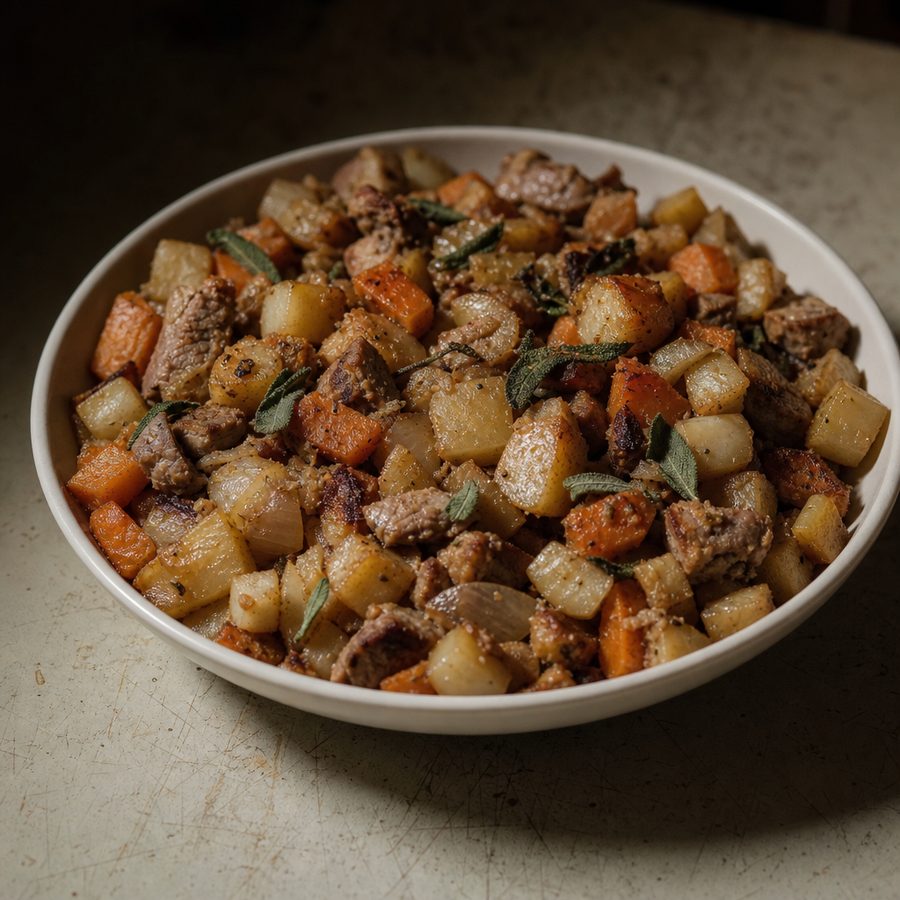
Cubes of pork tenderloin browned with turnip, carrot, and onion, seasoned with fresh sage and a splash of cider vinegar for a savory morning hash.
Why You'll Love This Recipe
Anyone who grew up on sausage and hash browns misses the shape of that plate. Everything about it is familiar, right down to the sage, and none of it comes from a package. I make it on a slow Sunday when there is time to let the turnips sit still in the pan and get properly dark, and I make it in a double batch because it is one of the few savory breakfasts that genuinely improves on day two. Half an hour of mostly unattended cooking gets you a skillet that four people can eat from.
Turnip is the vegetable doing the heavy lifting and it deserves a word. Raw it is sharp and radish-like, but cut into half-inch cubes and left alone in hot fat it turns sweet and mellow with a deeply browned face on each side, which is exactly the texture a hash wants. The pork gets seared first, in two batches so the pan stays hot, and then comes out while the vegetables cook in the fat and the browned bits it left behind. Onion goes in late so it softens rather than burns, and the sage hits the hot pan right at the end so its oils bloom instead of turning dusty.
Pork tenderloin is the cut I reach for here because it stays tender in small cubes and cooks in minutes rather than hours. Pull it at 145°F (63°C) and let it rest while the vegetables finish, and it stays juicy in a way that ground pork never quite does. The cider vinegar goes in off the heat, and it is the piece people leave out and then wonder why the pan tastes heavy. A tablespoon of acid over browned meat and sweet root vegetables sharpens all of it, and it is the reason this eats like breakfast rather than like a plate of leftovers.
Ingredients
- 1 3/4 lb pork tenderloin, trimmed and cut into 3/4-inch cubes
- 4 medium turnips (about 1 lb), peeled and cut into 1/2-inch cubes
- 2 medium carrots, cut into 1/2-inch dice
- 1 medium onion, diced
- 2 1/2 tbsp coconut oil, divided
- 1 1/2 tbsp chopped fresh sage leaves
- 1 tbsp apple cider vinegar
- 1 tsp fine sea salt, divided
Instructions
- Prep everything first: Peel the turnips and cut them into half-inch cubes, dice the carrots to the same size, and dice the onion. Trim the silverskin off the pork tenderloin and cut it into three-quarter-inch cubes, then pat the cubes dry with a paper towel, since a wet surface steams and there is no getting a crust back once the moment has passed.
- Sear the pork in two batches: Heat 1 tablespoon of the coconut oil in a large skillet over medium-high until it shimmers. Add half the pork in a single layer, because the whole lot at once drops the pan temperature and the cubes stew rather than sear, with a pinch of the salt, and leave it undisturbed for 2 minutes, until the underside is deep brown. Turn and cook 2 minutes more, to 145°F (63°C), then move it to a plate and repeat with the second batch.
- Brown the turnip and carrot: Add the remaining oil to the same pan, then the turnip and carrot with half the remaining salt. Spread them into one layer and leave them for 5 minutes, until the undersides are dark gold, since turnip only browns where it is touching hot metal and stirring keeps interrupting that. Toss and repeat until the cubes are browned all over and tender at the center, 15 to 18 minutes total.
- Soften the onion and bloom the sage: Stir in the onion and cook 4 minutes, until it turns translucent and picks up color from the bottom of the pan. Add the sage and cook 30 seconds more, just until it smells warm and slightly peppery, because dried sage stirred in at the end tastes dusty where sage bloomed in fat tastes like breakfast.
- Bring it together: Return the pork and any juices from the plate to the skillet and toss for 1 minute to warm through. Take the pan off the heat before the vinegar goes in, since it goes flat over a live burner and it is the only sharp thing on the plate, then add it with the last of the salt, scrape up anything stuck to the bottom, and serve straight from the skillet.
Variations
- Apple and sage: Add a diced tart apple with the onion for a sweeter pan that plays to the classic pairing with pork.
- Rutabaga swap: Use rutabaga instead of turnip for a sweeter, denser hash, and give it five extra minutes in the pan.
- Greens on top: Wilt a few big handfuls of kale or Swiss chard into the skillet at the end for color and a little bitterness.
- Rosemary and lemon: Trade the sage for chopped rosemary and finish with lemon juice rather than cider vinegar for a brighter, more Mediterranean plate.
- Bigger batch: Double the vegetables and roast them at 425°F (220°C) on a sheet pan while you sear the pork, which frees up the skillet and feeds a crowd.
Storage & Leftovers
Leftovers keep in a sealed container in the fridge for up to four days, and this is one of the few hashes I like better on the second morning. The turnip firms up as it chills and browns again readily, and the sage settles into the pork overnight.
Reheat in a dry skillet over medium-high for four or five minutes, spreading the hash out and leaving it alone so the cut faces catch again. The microwave steams the turnip soft and turns the pork rubbery in under a minute, so it is worth washing the pan.
This freezes reasonably well for up to two months. Cool it fully, freeze in flat portions, and thaw overnight in the fridge before reheating in a pan. Turnip comes back softer than it went in, so add a fresh splash of cider vinegar to bring it back to life.
Notes & Tips
- Cut everything the same size: Half-inch cubes across the board means the turnip and carrot finish together. Mixed sizes give you burnt corners next to raw centers.
- Two batches for the pork: Crowding the pan drops the temperature and the cubes steam gray instead of searing. Two batches costs four minutes and gives you the browning the whole dish rests on.
- Dry the pork cubes: Moisture on the surface has to boil away before browning starts. A paper towel over the cut cubes takes ten seconds and saves you two minutes of waiting.
- Leave the turnips alone: Browning happens where the vegetable touches metal. Five undisturbed minutes per side beats fifteen minutes of stirring every time.
- Sage at the end: Fresh sage burns and goes bitter over long heat. Thirty seconds in hot fat releases its oils and keeps the flavor round.
- Vinegar off the heat: Acid boiled in a hot pan goes flat and slightly harsh. Added after the burner is off it stays bright and lifts the whole skillet.
Nutrition & Mindful Eating
- Pork, turnip, and carrot make a plate that eats like a full meal. The meat carries the protein, the root vegetables give it bulk and fiber, and the browning on both is where most of the flavor comes from rather than from anything poured over the top.
- Pork tenderloin is fine-textured and quick-cooking, and it is one of the richest everyday sources of thiamin, the B vitamin your body uses to turn what you eat into usable energy.
- Turnips sit in the same family as cabbage and mustard greens, which is where their faint pepperiness comes from, and they bring vitamin C along with the fiber that makes this hash sit steadily.
- Carrots go sweet and slightly candied at the browned faces, and the beta-carotene that gives them their color is better absorbed when it is cooked in fat the way it is here.
- Fresh sage is what makes this taste like a breakfast, warm and slightly peppery against the pork, and it carries aromatic compounds that have been studied for their antioxidant activity.
- As you eat, look for the difference between the dark caramelized faces of the turnip and the soft centers inside them, and check in halfway through the bowl about how full you already are.
Frequently Asked Questions
Can I use a different cut of pork?
Yes. Pork shoulder cut into cubes is richer and more forgiving, though it wants a longer, slower cook to become tender. Ground pork works if you want a faster pan and turns this into something closer to sausage hash. Chicken thigh also slots in at the same weight.
What can I use instead of turnip?
Rutabaga is the closest match and browns beautifully, though it is sweeter and takes a few minutes longer. Celeriac and parsnip both work well too. White potato is the obvious answer everywhere else, but it is a nightshade and does not belong in this pan.
Can I prep it the night before?
Cut all the vegetables and the pork the night before and keep them in separate covered containers. The turnip will discolor slightly at the edges, which cooks away the moment it browns. That leaves you about twenty minutes of cooking in the morning.
Is this all right during an AIP elimination phase?
It is. There are no nightshades, grains, dairy, eggs, nuts, or seeds in it, and the seasoning is sage, onion, cider vinegar, and salt. If you are still testing your tolerance for alliums, halve the onion and lead with a little more sage.