
Portuguese Cod and Chickpeas with Greens, Egg, and Olive Oil
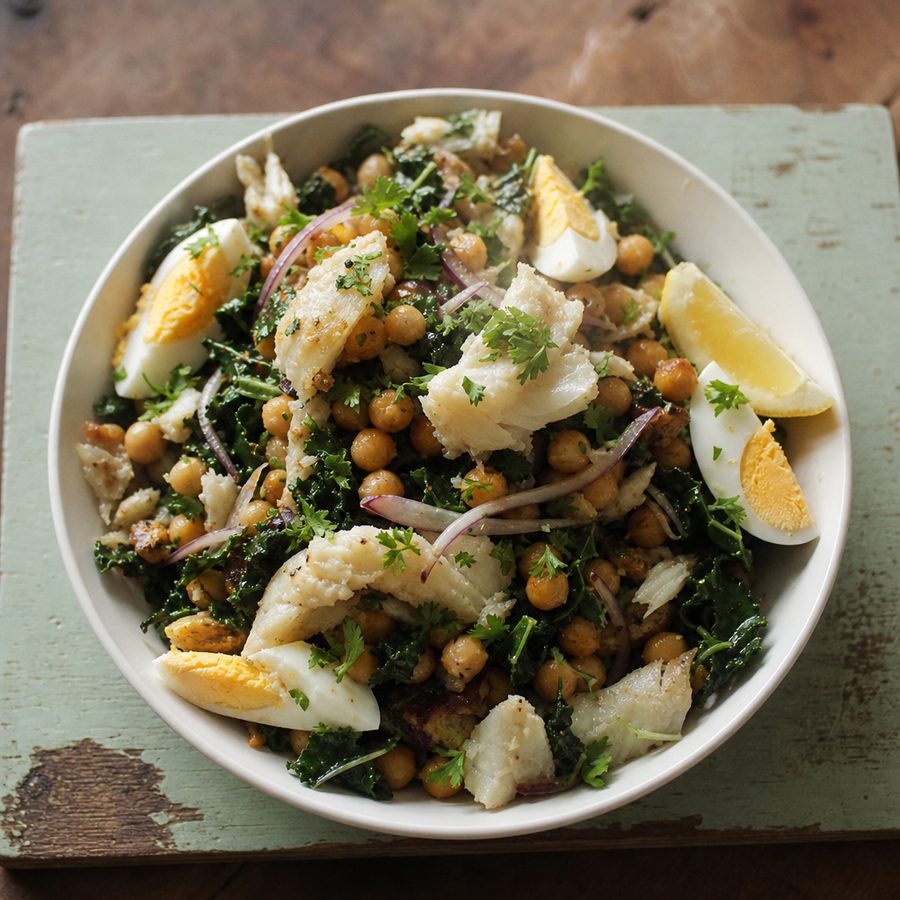
Gently poached cod broken into big flakes over warm chickpeas dressed with olive oil, garlic, and vinegar, with wilted greens folded through and quartered eggs and parsley over the top.
Why You'll Love This Recipe
Every Portuguese cook I have ever met has a version of cod with chickpeas, and almost all of them are variations on the same three moves: warm the beans in good olive oil, cook the fish carefully, and put a lot of parsley and onion over the top. It is a dish about proportion more than technique. There is no sauce to speak of, nothing is browned, and what you taste is the olive oil, the sweetness of the chickpeas, and the fish itself. That is exactly why it is worth cooking on a night when the ingredients are decent.
The fish is the only part that asks for attention. Cod goes from perfect to chalky in about ninety seconds, so the water should never actually boil, just shiver with a few bubbles rising at the edge of the pan. When it is right the flakes separate under gentle pressure and stay translucent in the very center, and they will carry on cooking for a minute after they come out. The chickpeas, meanwhile, are impossible to ruin, and the kale goes in for barely a minute so it keeps its color and a little chew.
This is a good dinner for a warm evening, since it is served warm rather than hot and it is just as good at room temperature twenty minutes later. I like it on a wide platter in the middle of the table so people can take what they want, with lemon wedges and the vinegar bottle nearby. It also travels well to a lunch the next day, which is not something you can say about most fish dinners, because the chickpeas keep everything moist.
Ingredients
- 1 1/4 lb skinless cod loin, cut into 4 pieces
- Two 15 oz cans chickpeas, drained and rinsed well (about 2 cups)
- 1 bunch kale or turnip greens (about 8 oz), stems stripped out and leaves cut into wide ribbons
- 1 small red onion, halved and sliced paper thin
- 2 large eggs, hard-cooked, peeled, and quartered
- 2 tbsp extra virgin olive oil, the best you have
- 4 garlic cloves, sliced thin
- A generous 1/3 cup chopped fresh flat-leaf parsley
- 1 tbsp white wine vinegar or cider vinegar
- 2 dried bay leaves
- 1 tsp coarsely ground black pepper
- 1/4 tsp fine sea salt
Instructions
- Get the eggs and the poaching water going: Lower the eggs into a small pan of gently boiling water and cook them for nine minutes, then move them straight into cold water. Meanwhile fill a wide sauté pan with about two inches of water, add one bay leaf and a pinch of the salt, and bring it to a bare simmer while you deal with everything else.
- Warm the chickpeas in the oil: In a second wide skillet, warm the olive oil over medium-low heat with the sliced garlic and the remaining bay leaf. Cook for two to three minutes, just until the garlic turns pale gold and smells sweet, then add the chickpeas, the black pepper, and the rest of the salt. Stir to coat and let them warm through for five minutes, pressing a few against the side of the pan so they thicken the oil.
- Poach the cod: Slide the cod pieces into the barely simmering water and turn the heat down so the surface only shivers. Cook for seven to nine minutes depending on thickness. The fish is done when the flakes just separate when you press with the back of a spoon and the center has lost its glassy look. Lift the pieces out with a slotted spatula and set them on a plate.
- Wilt the greens: Add the kale to the chickpea pan with two tablespoons of the poaching water. Turn the heat up to medium, cover, and cook for sixty to ninety seconds, until the leaves have collapsed and turned deep green but still have body. Stir them through the chickpeas.
- Build the platter: Spoon the chickpeas and greens onto a wide platter and break the cod over the top into large flakes, keeping the pieces as big as you can. Scatter the sliced onion, the parsley, and the quartered eggs over everything, then spoon the vinegar across the plate and grind over more pepper. Let it sit for two or three minutes before serving so the onion softens slightly in the oil.
Variations
- With roasted peppers: Lay strips of jarred or freshly charred red pepper over the top, which is common in the Algarve and adds sweetness against the vinegar.
- Smoked paprika oil: Stir half a teaspoon of smoked paprika into the warm olive oil with the garlic for a redder, deeper version of the dressing.
- Potato instead of chickpeas: Use a pound of small waxy potatoes, boiled and halved, dressed the same way, for the version served most often at the coast.
- Add olives: A handful of chopped black olives scattered over at the end brings salt and a little bitterness that the eggs take well.
Storage & Leftovers
This keeps three days in a sealed container in the refrigerator and is genuinely good cold, which is how it often turns up at Portuguese lunch tables. Keep the eggs separate if you can, since the whites weep a little overnight and the yolks are better crumbled over fresh.
To serve it warm again, spread it in a skillet with a splash of water, cover, and set it over low heat for four or five minutes. Do not stir much or the fish breaks down into shreds. What you want is to warm the chickpeas underneath and let the steam do the rest.
I would not freeze this one. Cod turns cottony and the chickpeas go mealy after a thaw. If you want to get ahead, cook the chickpeas in oil and the greens up to two days early, refrigerate them, and poach the fish the evening you eat.
Notes & Tips
- Rinse the chickpeas properly: A full thirty seconds under running water washes off the canning liquid that makes beans taste tinny. Shake them dry so they do not spit in the oil.
- Keep the poaching water shivering: A rolling boil batters cod apart and squeezes the moisture out of it. If you see more than a few lazy bubbles, pull the pan half off the burner.
- Slice the onion as thin as you can: Thick slices stay harsh and crunchy on the plate. Paper-thin slices soften in the warm oil within a couple of minutes and turn sweet.
- Use your best olive oil here: There is nowhere for it to hide. This is the dish where a peppery, grassy oil earns what you paid for it, and a dull one shows immediately.
- Let it sit before serving: Two or three minutes on the platter lets the vinegar and oil find their way down through the chickpeas. Served the second it is assembled, it tastes like separate parts.
Nutrition & Mindful Eating
- Cod, chickpeas, eggs, and greens make this a complete plate without a sauce to hold them together. The fish brings the protein, the chickpeas carry the fiber and the slow carbohydrate, the eggs add a little more protein and all their fat-soluble vitamins, and the olive oil is what ties the four of them into one dish.
- Cod is a mild, close-flaking fish with a great deal of protein and very little fat of its own, which is why it takes so well to being dressed in olive oil at the table. It brings iodine and selenium along with it.
- Chickpeas warmed in oil until a few of them crush are the backbone here. Their fiber is the soluble kind that gives the plate its staying power, and they carry folate and a useful amount of iron, which the parsley and lemon alongside help the body take up.
- Kale wilted for barely a minute keeps its color and its bite, and the shorter it spends in the pan the more of its vitamin C stays put. It also brings calcium, which is unusual in a leafy green this dark.
- Sliced onion, chopped parsley, and a spoonful of vinegar go on cold at the very end, and that sharp, grassy top layer is what keeps a plate this oily tasting fresh rather than heavy.
- As you eat, notice how differently the soft chickpeas, the flaking fish, and the crisp slivers of onion land in the same mouthful, and let a plate that is meant to be eaten warm rather than hot set the pace for you.
Frequently Asked Questions
Do I need salt cod for this to be authentic?
The traditional dish uses salt cod soaked for a day or two with several changes of water, and if you have it and the time, use it. Fresh cod poached gently gives you the same big flakes and the same sweetness on a weeknight, which is how most of us cook it at home now.
Which greens are right?
Turnip greens are what a Portuguese cook would reach for, and kale is the easiest stand-in. Collards work if you slice them very thin and give them three minutes rather than one. Spinach is fine too, though it collapses to almost nothing, so use twice as much.
Can I use another fish?
Haddock, pollock, or hake all poach the same way and flake just as generously. Halibut is excellent but firmer, so give it an extra minute. Avoid anything oily like salmon or mackerel, which fights the olive oil rather than sitting inside it.
How do I keep the fish in big pieces?
Poach it in one piece per person rather than in chunks, lift it with a wide slotted spatula rather than tongs, and break it over the platter with your fingers at the very last moment. Every time you move it, it loses a little structure.