
Portuguese Piri-Piri Chicken with Stewed Peas and Potatoes
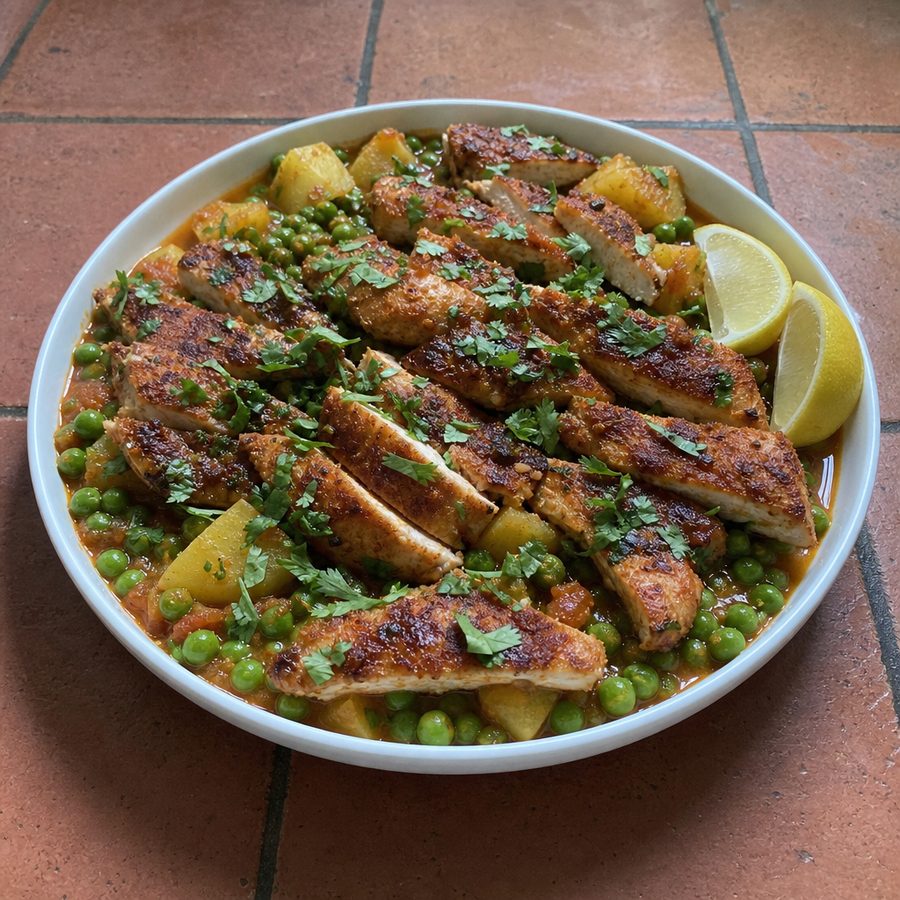
Chicken cutlets rubbed with a chile, garlic, and lemon paste and seared hard, served over peas and gold potatoes stewed in tomato and olive oil with cilantro.
Why You'll Love This Recipe
Piri-piri is the sauce that follows small red chiles from Africa to Portugal and back again, and every family in the Algarve makes it slightly differently. Mine is chile, crushed garlic, paprika, lemon, and vinegar loosened with olive oil, and it does two jobs at once: it seasons the chicken all the way through while it sits, and the acid in it keeps the outside of a thin cutlet from tightening into rubber in a hot pan. Give it an hour if you have one. Twenty minutes still gets you most of the way there, and the paste keeps for a week in a jar.
The peas underneath are ervilhas guisadas, the everyday Portuguese pot of peas stewed with onion, tomato, and enough olive oil that people who grew up elsewhere are usually startled by it. They are not a side salad. They cook long enough to go soft and a little sweet, the potatoes break at their corners and thicken the broth around them, and the cilantro goes in by the handful at the end rather than as a garnish. Cilantro is the herb of southern Portugal in the way parsley is the herb of Italy, and it belongs here in quantity.
It is a Tuesday dinner that eats like a weekend one. The chicken takes eight minutes in the pan, the peas can sit covered on the back of the stove for as long as you need them to, and everything comes together in one shallow bowl with the cutlet sliced across the top. There is real heat in it, the kind that arrives late and stays a while, and the lemon squeezed over at the table is what keeps the plate from going heavy. If you are cooking for people who are cautious about chile, put half the paste on the chicken and pass the rest in a small bowl, which is closer to how it gets served at home anyway.
Ingredients
- 1 1/4 lb boneless, skinless chicken breasts, butterflied and opened into 4 thin cutlets
- 1 tsp cayenne, or 3 fresh bird's eye chiles, stemmed and finely minced
- 2 tsp sweet paprika
- 8 garlic cloves, 4 crushed to a paste and 4 thinly sliced
- 3 tbsp lemon juice, from 1 large lemon, plus wedges for the table
- 1 tbsp cider vinegar
- 3 tbsp extra-virgin olive oil, divided
- 1/4 tsp fine sea salt, divided
- 1 medium yellow onion, cut into small dice
- 2 dried bay leaves
- 3/4 cup crushed tomatoes
- 3 medium gold potatoes (about 14 oz), cut into 3/4-inch cubes
- 1 1/4 cups chicken broth
- 4 cups frozen green peas, thawed
- 3/4 cup chopped cilantro, leaves and thin stems
- 3/4 tsp coarsely ground black pepper
Instructions
- Make the piri-piri paste: Crush the 4 garlic cloves to a paste with the flat of a knife, then stir them together with the cayenne, paprika, 2 tbsp of the lemon juice, the cider vinegar, 2 tbsp of the olive oil, and half the salt. It should look like loose rust-colored mud. Rub it over both sides of the chicken cutlets, cover, and leave them at room temperature for 20 minutes or in the refrigerator for up to 4 hours.
- Start the peas: Warm the remaining tablespoon of olive oil in a wide skillet or shallow pot over medium heat. Add the onion, the sliced garlic, the bay leaves, and the rest of the salt, and cook for 7 to 8 minutes, stirring, until the onion is translucent and just starting to color at the edges. The garlic should be pale gold, not brown.
- Cook the tomato down: Add the crushed tomatoes and cook for 3 to 4 minutes, stirring, until the mixture darkens and the oil separates and pools at the edges of the pan. That split is the signal that the tomato has cooked rather than merely warmed, and it is where the depth in the broth comes from.
- Add potatoes, then peas: Stir in the potato cubes and the broth, bring it to a simmer, cover, and cook for 12 to 15 minutes, until a knife tip slides into a potato with no resistance. Add the peas, stir once, and simmer uncovered for 6 to 8 minutes more, until they are soft all the way through and the broth has reduced to something that pools rather than runs.
- Sear the chicken: Heat a dry heavy skillet over medium-high until a drop of water skitters. Lay the cutlets in without crowding them and cook for 3 to 4 minutes without moving them, until the paste has set into a dark rust crust, then turn and cook 3 minutes more, to 165°F at the thickest point. Move them to a board and let them rest for 5 minutes.
- Bring it together: Stir the cilantro and the black pepper into the peas and fish out the bay leaves. Slice the rested cutlets on a sharp diagonal and lay them over the peas in shallow bowls, pouring any juice from the board back over the top. Finish with the last tablespoon of lemon juice and put the wedges on the table.
Variations
- Cilantro and lemon sauce: Blend a handful of the cilantro with the lemon juice and an extra tablespoon of olive oil into a loose green sauce to spoon over the sliced chicken.
- Collard greens folded in: Stir two big handfuls of finely shredded collard greens into the pot with the peas, which is how a Portuguese cook stretches the same pan further.
- Shrimp instead of chicken: Toss a pound of peeled shrimp in the paste and sear them 90 seconds a side, laying them over the peas at the last moment.
- Smoked paprika: Swap the sweet paprika for smoked, which pushes the plate toward the grilled-over-coals version of this dish.
- A softer heat: Replace the cayenne with a tablespoon of tomato paste and half a teaspoon of chipotle powder for warmth and smoke with far less bite.
Storage & Leftovers
The peas and potatoes keep four days in a sealed container and are genuinely good cold, straight from the refrigerator with a squeeze of lemon. The potatoes keep softening and the broth keeps thickening, so by day three the pot is closer to a thick stew than a soupy one.
Store the chicken separately from the peas if you can. Sliced chicken sitting in warm broth keeps cooking and goes dry, whereas a whole rested cutlet in its own container stays juicy and can be sliced when you want it. Reheat it gently, covered, in a low oven or a skillet with a splash of broth.
The peas freeze for three months, though they lose some of their color and come back a duller green. The chicken freezes better, wrapped tightly for up to two months. Thaw both overnight in the refrigerator, and make a fresh spoonful of the paste to brush over the chicken as it reheats, which brings the heat back.
Notes & Tips
- Butterfly the breasts: A thick breast dries out on the outside before the middle is done. Opened into a thin cutlet it cooks in seven minutes and stays juicy.
- Let the paste sit on the meat: Twenty minutes is the minimum and an hour is better. The acid works its way in and the chicken tastes seasoned through rather than only on the surface.
- Wait for the tomato to split: When the oil pools at the edge of the pan, the tomato has cooked. Adding liquid before that leaves a thin, sharp-tasting broth.
- Do not move the cutlets: The rust crust forms in the first three minutes and only if the meat sits still. Poking at it tears the paste off into the pan.
- Rest the chicken five minutes: Slicing straight off the heat pushes the juice onto the board. Five minutes on a warm plate keeps it in the meat.
- Squeeze the lemon at the table: Lemon added in the pan cooks flat within a minute. Over the finished bowl it stays sharp and lifts the chile.
Nutrition & Mindful Eating
- The chicken, the peas, and the potatoes make a full plate between them. The cutlet carries the protein, the peas bring both fiber and a surprising amount of plant protein of their own, and the potatoes soak up the tomato broth and turn the pot into something you can eat with a spoon.
- Green peas are starchy and sweet in a way that most green vegetables are not, which is why they hold up to a long stew rather than collapsing into it. They carry fiber, vitamin K, and thiamin, and cooking them soft in olive oil is the Portuguese way with them.
- Chicken breast is close-grained and quick-cooking, which is why a butterflied cutlet is done in seven minutes and why the paste needs its hour on the meat beforehand. It gives this plate most of its protein along with the B6 and selenium that poultry carries.
- Chile, crushed garlic, lemon, and vinegar do all the seasoning here, and they are what makes a plate this simple taste layered. Garlic softens as it sits in the acid, and the heat of the cayenne arrives a beat after everything else so the first thing you taste is still the tomato and the olive oil.
- Gold potatoes cooked in broth and then partly broken against the pan give the pot its body, and they bring potassium along with that starch. A bowl of this holds you well into the evening, and the peas and potatoes together are doing as much of that work as the chicken.
- As you eat, notice the way the heat from the chile builds slowly while the peas stay sweet underneath it, and pause between bites long enough to squeeze more lemon and decide whether you actually want the rest.
Frequently Asked Questions
How hot is this, really?
A teaspoon of cayenne across four servings gives a heat that arrives a second after you swallow and sits at the back of your throat. It is noticeable but not punishing. Cut it to half a teaspoon if you are cooking for people who flinch, or use two teaspoons and fresh chiles if you want the version they serve in the Algarve.
Can I use chicken thighs?
Yes, and boneless thighs are the more traditional cut for piri-piri. They need 5 to 6 minutes a side and want to reach 175°F, since thigh meat is better a little past done. The paste behaves the same way on them and the crust comes out even darker because thigh meat carries more fat to the pan.
My peas came out gray and mushy. What happened?
Almost certainly too long over too high a heat, or peas added at the same time as the potatoes. They only need the last six to eight minutes. Portuguese stewed peas are meant to be soft rather than snappy, but they should still be green, so add them once the potatoes already give to a knife.
Can I grill the chicken instead?
That is how it is usually done. Get the grill hot, oil the grates well, and cook the cutlets 3 minutes a side over direct heat. The paste has sugar in it from the tomato and lemon and will catch quickly, so keep a cooler zone open to move them to if the crust darkens before the middle is done.