
Portuguese Sardines with Blistered Peppers and Chickpeas
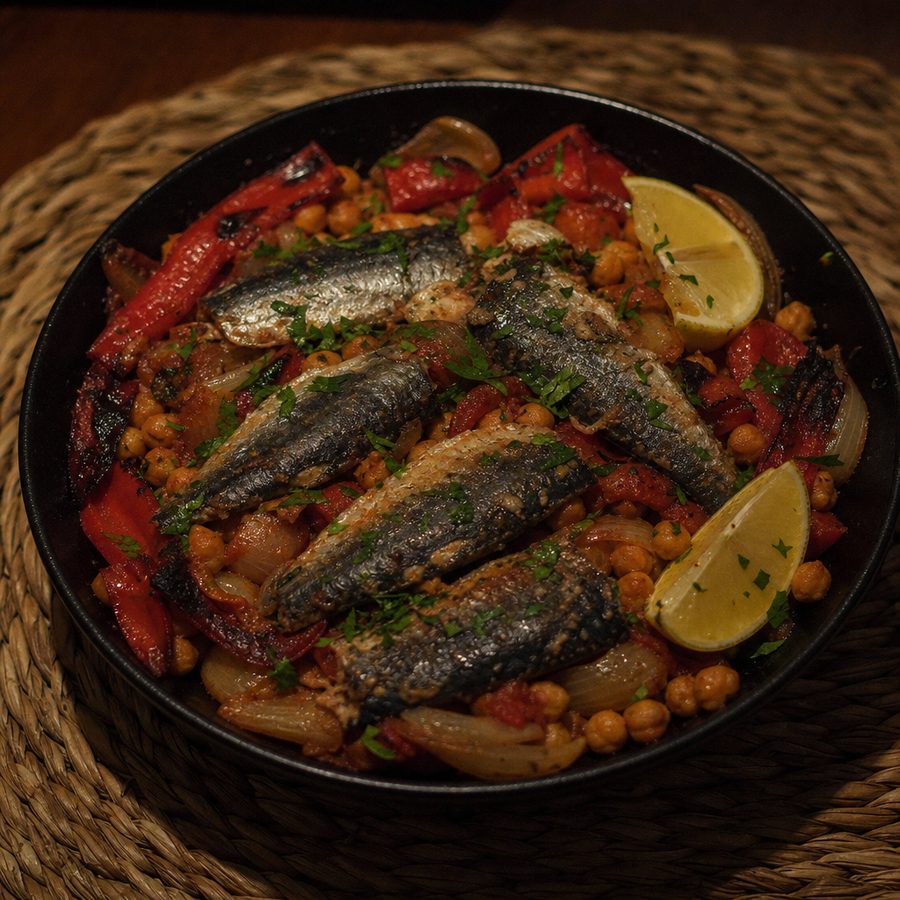
Red peppers blistered dark in olive oil with onion and smoked paprika, tumbled with chickpeas and a splash of vinegar, sardines warmed on top and finished with oregano, lemon, and parsley.
Why You'll Love This Recipe
Grilled sardines with peppers is what you eat outdoors in Portugal in June, standing near the smoke with bread in your other hand. This is that plate translated to a skillet on a Wednesday. The peppers do the work: cut wide, left alone in hot oil, they blister black in places and turn sweet and floppy, and smoked paprika stirred in at the end carries the memory of the coals. Chickpeas go in for substance, the vinegar goes in for the sharpness that grilled food usually gets from a squeeze of lemon at the table, and the fish is warmed rather than cooked.
It tastes smoky, sweet, and sour all at once, and it is one of the few quick dinners I make where the vegetable is not a side. The pepper strips are the body of the dish. Sardines are strong and salty and they need something sweet under them, which is why peppers and onions work better here than a green vegetable would. Eat it with a fork and a spoon, breaking each fillet into the peppers as you go so every mouthful has a little of the fish rather than all of it at once.
I make this at the end of summer when peppers are cheap and I have three cans of sardines in the cupboard that I keep meaning to use. It reheats beautifully, it travels to work without complaint, and it is one of the better cold lunches I know. If you are cooking for someone unconvinced by sardines, this is the recipe I would start them on, because the smoke and the sweetness meet the fish halfway.
Ingredients
- 2 tbsp extra-virgin olive oil
- 2 large red bell peppers, seeded and cut into wide strips
- 1 small yellow onion, cut root to tip into thick slices
- 4 garlic cloves, thinly sliced
- 1 1/2 tsp sweet smoked paprika
- 1/3 tsp crushed red chile flakes
- 1 tsp dried oregano
- 2 cups chickpeas (one 15-oz can), drained and rinsed
- 1 tbsp cider vinegar
- 4 cans (about 3.75 oz each) sardines, drained, soft bones left in
- 1 1/2 tbsp lemon juice, plus wedges for the table
- 1/2 cup chopped flat-leaf parsley
- 1/2 tsp coarsely ground black pepper
Instructions
- Blister the peppers: Heat the olive oil in a 12-inch skillet over medium-high until it shimmers. Add the pepper strips in as close to a single layer as you can and leave them alone for three minutes, until the undersides have blackened in patches. Toss once and give them another two minutes. You are looking for real color, not an even tan.
- Add the onion: Drop the heat to medium, add the onion slices, and cook for five to six minutes, stirring every minute or so, until the onion is translucent and starting to fall apart and the peppers have gone soft enough to bend without snapping. The pan will smell sweet at this point rather than sharp.
- Garlic, paprika, and oregano: Clear a space in the middle, add the sliced garlic, and let it sizzle for thirty seconds. Take the pan off the heat, then stir in the smoked paprika, the chile flakes, the oregano, and the black pepper. Paprika scorches and turns bitter in seconds over a live burner, so the pan comes off first, every time.
- Chickpeas and vinegar: Return the pan to medium heat, add the chickpeas, and fold them through the peppers for two minutes until they are hot and coated orange. Pour the vinegar down the side of the pan, where it will hiss, and stir it in, scraping up anything stuck to the bottom. Add a splash of water if it looks dry.
- Warm the sardines and finish: Lay the drained sardines on top in one layer, cover the pan, and let them warm for two minutes, until the skins turn glossy and the fillets are hot through. Take the pan off the burner, add the lemon juice, scatter the parsley over the top, and bring it to the table with lemon wedges.
Variations
- With potatoes: Fold in a cup of diced cooked gold potatoes with the chickpeas and press them into the oil so the cut sides crisp.
- Greener: Wilt a few handfuls of chopped collard greens into the pan before the chickpeas, with a lid and a splash of water for four minutes.
- Olives and capers: Add a small handful of chopped kalamata olives with the chickpeas for a saltier, more briny pan.
- Egg on top: Crack two eggs into wells in the peppers before the fish goes on and cover until the whites are fully set and firm.
Storage & Leftovers
This keeps four days sealed in the refrigerator and is one of the few fish dishes I look forward to on day two. The peppers give up more of their sweetness into the chickpeas overnight and the smoked paprika settles into everything. Add fresh parsley when you serve it again, since the first batch goes dull.
Reheat covered in a skillet over medium-low with a spoonful of water for four or five minutes. It is just as good straight from the container at room temperature, dressed with a little more lemon, which is how it usually gets eaten in my house at lunchtime.
The pepper and chickpea base freezes for up to three months without the fish in it. Cool it fully, freeze flat in a sealed bag, and thaw overnight in the refrigerator. Bring it back in a hot pan so the peppers firm up again, then add sardines, lemon, and parsley.
Notes & Tips
- Do not crowd the peppers: Strips piled on top of one another steam instead of blistering. Use the widest pan you own, or blister them in two batches.
- Paprika off the heat: This is the one step people skip and regret. Thirty seconds too long over a burner and the whole pan tastes scorched.
- Cut the onion root to tip: Slices cut with the grain hold their shape through the whole cook, so you get soft ribbons rather than mush.
- Vinegar down the hot side: Poured against the pan wall it hisses and reduces on contact, losing its harshness and leaving the sweetness behind.
- Two minutes under a lid: That is all the fish needs. Longer and the fillets break apart and the skins stick to the chickpeas.
- Taste before adding any salt: Between the fish and the chickpeas there is already a good deal in the pan, so check at the end and adjust from there.
Nutrition & Mindful Eating
- Peppers, chickpeas, and sardines split the work three ways here. The peppers bring the sweetness and the vitamin C, the chickpeas bring fiber and enough substance to make it a meal, and the fish brings the protein and the salt that ties it together.
- Sardines are eaten whole with their soft bones, which is where their calcium is held, and the same oily flesh is one of the better sources of omega-3 fats you can keep in a cupboard.
- Chickpeas hold their shape in a hot pan and soak up the paprika oil around them, carrying iron and a good amount of fiber into the bowl while they do it.
- Red peppers blistered dark taste sweeter than they do soft, and the color that survives that heat is beta-carotene, which the olive oil in the pan helps you absorb.
- Smoked paprika, oregano, and chile do the work that a charcoal grill would do outdoors, and the vinegar and lemon at the end keep a smoky, oily pan from ever tasting flat.
- As you eat, find the blackened edges of the peppers and notice how the smoke and the vinegar keep changing places, and eat slowly enough to catch the point where you are comfortably full.
Frequently Asked Questions
Can I use jarred piquillo or roasted peppers?
Yes, and it makes this a fifteen-minute dinner. Drain them well, tear them into strips, and add them with the onion rather than at the start, since they are already soft and only need warming through in the oil.
Are the bones really edible?
They are, and they are the point. Canning softens the spine until it crushes to nothing between your fingers, and that soft bone is where most of the calcium in a sardine sits. Once the fish is warm on the peppers you will not detect them at all.
My paprika tasted bitter. What went wrong?
It touched a hot pan for too long. Ground paprika burns quickly and turns acrid, which is why the skillet comes off the heat before the spice goes in. Off the burner, the residual warmth is plenty to bloom it.
Can I make it with tuna?
You can. Drain it well, break it into large flakes, and stir it through at the very end so it stays in pieces. The dish will be milder, so add a little more vinegar and chile to make up the difference.