
Pot Likker Soup with Tempeh, Collards, and Navy Beans
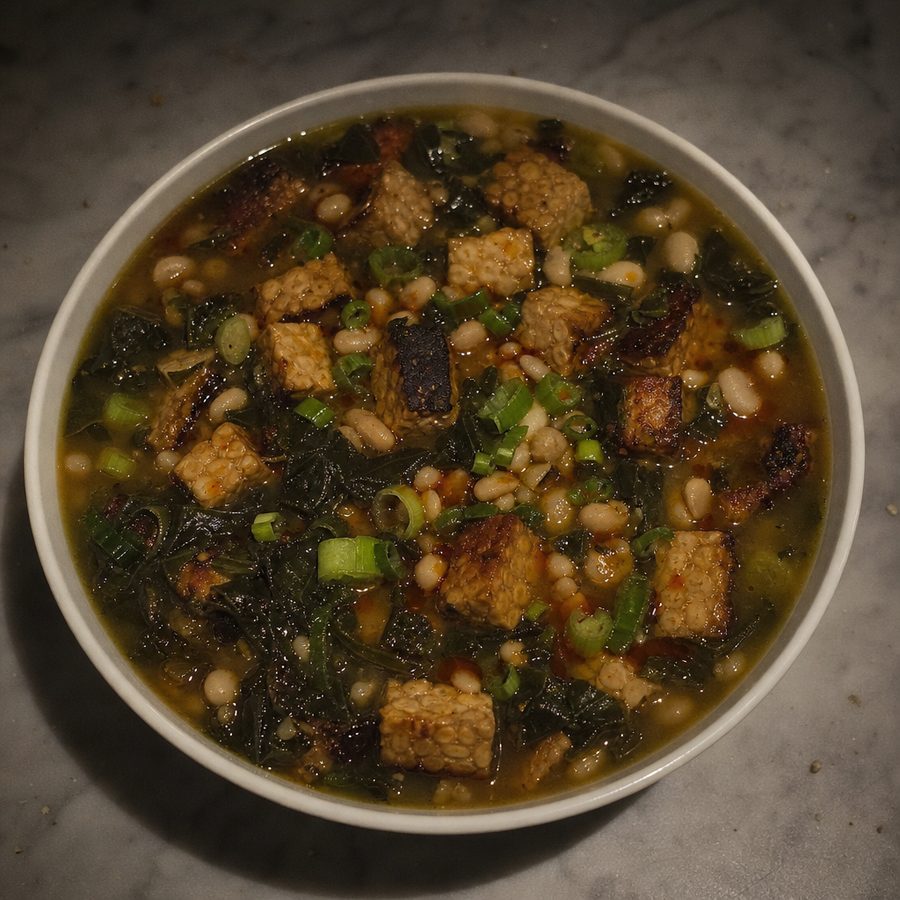
A brothy pot of collard ribbons and navy beans simmered with onion, celery, bay, and thyme, with cubes of smoked paprika tempeh browned separately and dropped in at the end, finished with cider vinegar.
Why You'll Love This Recipe
Pot likker is the liquid left in the pot after a long day of greens, and around here it is prized more than the greens themselves. This is a fast version of that idea, built so the broth tastes like it has been sitting on the back of the stove since morning. Thin ribbons and a hard simmer get you most of the way in fifteen minutes, and the navy beans do the rest, breaking down slightly and giving the liquid a soft body. The tempeh browns in a separate pan while that happens, so it never gets a chance to go soggy.
It eats like a soup you want a spoon and a deep bowl for. The broth is peppery from the greens and the black pepper, smoky from the paprika, and sharp at the finish where the cider vinegar goes in. Beans come apart on the tongue, collards keep enough chew to feel like a vegetable rather than a puree, and the tempeh cubes hold their crust for the first few minutes in the bowl and then start drinking up the broth, which is its own pleasure. Celery leaves, if your bunch has them, taste greener than the stalks and are worth throwing in.
I make this the week after a heavy holiday, or any night the house is cold and nobody wants to chew much. It reheats better than any other soup I keep, and it stretches: another cup of broth and a second can of beans takes it from four bowls to six without anything else changing. Set the vinegar bottle on the table and let people sharpen their own, which is what everybody in my family does anyway, some of them to a degree I find alarming. A deep bowl of it eats like a full dinner, which is more than most soups I make can claim, and that is mostly the beans and the tempeh talking.
Ingredients
- 12 oz tempeh, cut into 1/2-inch cubes
- 2 bunches collard greens (about 1 lb of leaves), stems stripped and leaves sliced into thin ribbons
- 1 can (15 oz) navy beans, drained and rinsed well
- 3 cups vegetable broth
- 1 medium yellow onion, diced
- 2 celery stalks, diced, plus any tender leaves
- 5 garlic cloves, thinly sliced
- 2 tsp smoked paprika
- 1/2 tsp cayenne
- 2 tsp fresh thyme leaves, from about 6 sprigs
- 2 dried bay leaves
- 1 tsp coarsely ground black pepper
- 2 tbsp olive oil
- 5 tsp apple cider vinegar, plus the bottle at the table
- 4 scallions, thinly sliced
- 1/4 tsp fine sea salt
Instructions
- Cut the greens and the tempeh: Strip the collard leaves from their stems, stack, roll, and slice them into thin ribbons. Cut the tempeh into half-inch cubes and toss them in a bowl with the smoked paprika, cayenne, and black pepper until every side is dusted, since tempeh on its own tastes of very little and the spice has to go on before it browns.
- Brown the tempeh and set it aside: Heat 1 tbsp of the olive oil in a large skillet over medium-high and add the tempeh in one layer. Cook six to eight minutes total, turning every couple of minutes, until at least three sides of most cubes are dark and crisp. Tip them onto a plate and leave them there until serving, because anything crisp dropped into a pot of broth is soft within a minute.
- Start the pot: In a large pot or Dutch oven, warm the remaining 1 tbsp oil over medium. Add the onion, celery, and salt and cook four minutes until soft and translucent, then add the garlic, thyme, and bay leaves and stir for another thirty seconds until the garlic smells sweet.
- Simmer the greens and beans: Pour in the broth and bring it to a boil, then add the collard ribbons a handful at a time, pressing them under the liquid as they wilt. Add the navy beans, lower to a steady simmer, and cook ten to twelve minutes, since the beans break down slightly over that time and it is their starch that gives the broth its body, until the greens are tender and the broth has turned pale green and tastes of them.
- Finish and serve: Fish out the bay leaves and stir in the cider vinegar off the heat, because a long-simmered pot of greens goes flat and the vinegar at the end is what brings it back. Taste the broth and adjust with another splash if it needs waking up. Ladle into deep bowls, spoon the browned tempeh over each one so the cubes sit on top, and finish with the scallions.
Variations
- Black-eyed peas: Swap the navy beans for black-eyed peas, which hold their shape more and give the broth an earthier flavor.
- Tomato in the pot: Stir half a cup of crushed tomatoes in with the broth for a redder, rounder soup that leans closer to a gumbo.
- Potato and thyme: Add a diced gold potato with the broth for a heavier bowl, and let it simmer an extra five minutes until it is fork tender.
- Hot pepper vinegar: Steep a few sliced jalapenos in cider vinegar for a day and use that at the finish, which is the condiment most greens on a Southern table are waiting for.
- Sesame finish: Scatter toasted sesame seeds over the bowls with the scallions for a nutty crunch against the soft beans.
Storage & Leftovers
This keeps five days in the refrigerator, longer than most soups I make, and the broth deepens every day. Store the tempeh separately if you can, since cubes left in the liquid overnight go soft all the way through, which some people prefer and I do not.
Reheat the soup in a saucepan over medium until it steams, about six minutes, and crisp the tempeh again in a dry skillet for two minutes while you wait. A fresh spoonful of vinegar after reheating is the single thing that makes day-three soup taste like day-one soup.
It freezes for up to three months. Freeze the soup and the tempeh in separate containers, thaw overnight in the refrigerator, and reheat gently. The collards hold their texture through a freeze better than almost any other green, which is part of why I keep this in rotation.
Notes & Tips
- Give the tempeh three sides: Cubes brown one face at a time and a quick stir every couple of minutes gets you three good ones. Chasing all six is not worth the time and the crust you have is plenty.
- Press the greens under: A pile of ribbons floats and steams unevenly. Push each handful below the surface with a spoon and add the next only when the first has collapsed.
- Rinse the beans properly: A minute under running water takes away the thick liquid from the can, which would cloud the broth and dull the flavor of the greens.
- Taste the broth, not the greens: The broth tells you when it is done. When it tastes green and faintly peppery on its own, the leaves have given what they have and the pot is ready.
- Vinegar last, always: Added at the start it simmers away and the pot tastes flat. Off the heat at the end it stays sharp and lifts the whole bowl.
- Ladle the tempeh on top: Spooning the cubes over each bowl rather than stirring them through keeps them crisp for the first few bites, which is the best part.
Nutrition & Mindful Eating
- The greens, the beans, and the tempeh build this bowl in three layers. The collards flavor and color the broth, the navy beans break down enough to give it body and bring fiber with them, and the tempeh sits on top carrying most of the protein.
- Collard greens give up a great deal to the pot, and drinking the broth rather than pouring it off is the whole point of cooking them this way. The leaves are one of the stronger plant sources of calcium, and the potassium and folate that come out of them end up in the liquid.
- Navy beans are small, mild, and thin-skinned, which is why a few of them collapse into the broth and thicken it while the rest stay whole. That soft starch is soluble fiber, and it is what gives a brothy soup like this any weight at all.
- Tempeh browned in a dry-ish pan with smoked paprika keeps a crust for the first few bites in the bowl, and each cube carries protein and iron. The acid from the cider vinegar in the broth is a useful partner to the iron in it, as well as being the right thing for the greens.
- Bay, thyme, black pepper, and smoked paprika are what make fifteen minutes of simmering taste like an afternoon of it. Bay works quietly, giving the broth a faint tea-like background you notice most if you leave it out.
- As you eat, take a spoonful of the broth on its own before you touch anything else, notice how much the greens gave it, and let a bowl this warm set the pace for the rest of the evening.
Frequently Asked Questions
What is pot likker, exactly?
It is the broth left behind when greens cook, colored and flavored by everything that came out of the leaves. Traditionally it was saved and sopped up with cornbread rather than poured away. This recipe treats it as the main event rather than a byproduct, which is why there is more liquid here than in a braise.
Can I use dried beans?
You can, but cook them fully ahead of time and add them at the same point as the canned ones. Beans that go into the pot uncooked will not soften in twelve minutes, and the acid from the vinegar at the end makes stubborn beans stay stubborn. About a cup and a half of cooked beans replaces the can.
Why brown the tempeh separately?
Because a crust cannot form in liquid. Browning it in its own pan gives you crisp, spiced cubes that sit on top of the bowl and keep their texture for the first several bites. Dropped into the pot at the start, tempeh turns spongy and takes on the broth instead of adding to it.
Can I use mustard or turnip greens?
Both work, and both are more peppery than collards, which makes a sharper broth. They also cook faster, so start tasting at six minutes rather than ten. A mix of whatever greens are good at the market is closer to how this actually gets cooked in most kitchens.