
Potato, Pea, and Kale Coconut Curry with Toasted Coriander
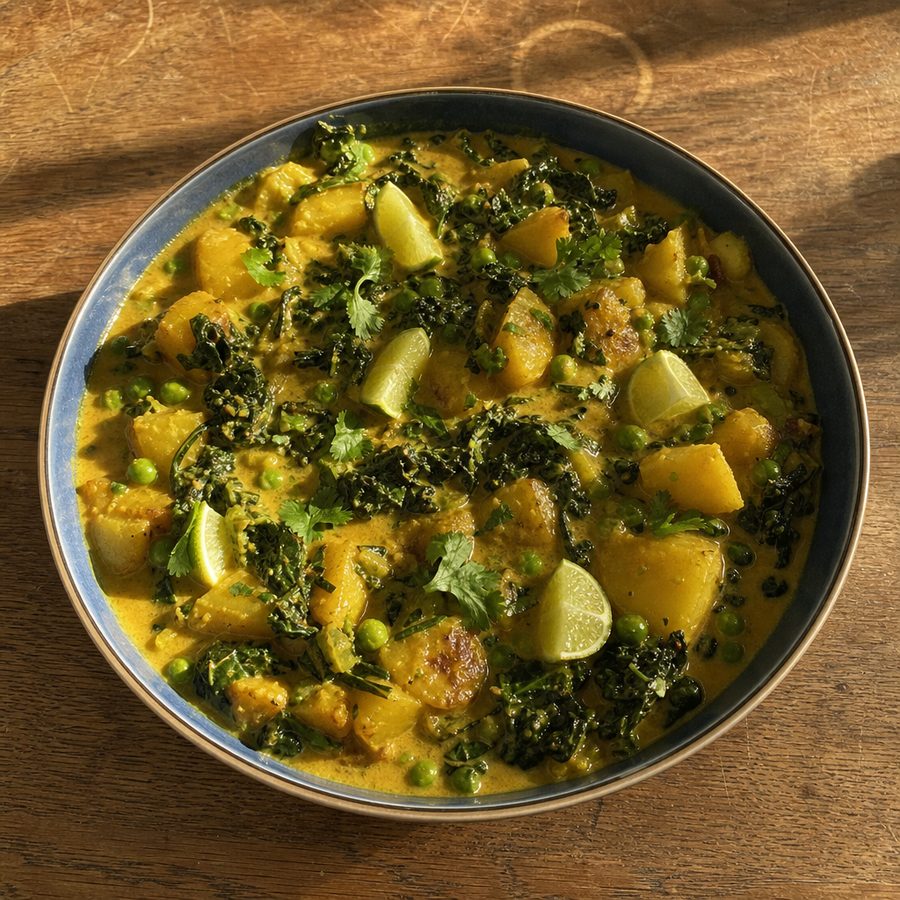
Whole coriander and cumin toasted and ground fresh, then simmered with potatoes in coconut and ginger until the sauce thickens, with green peas and kale folded in at the end and lime over the top.
Why You'll Love This Recipe
Toasting whole seeds and grinding them yourself is the one step in this recipe I will argue about. It takes two minutes with a dry pan and a mortar or a coffee grinder kept for spices, and the difference between that and the jar of pre-ground coriander in the back of your cupboard is enormous. The oils come out with the heat, the smell fills the room, and the finished curry tastes rounder and warmer for it. If you do nothing else here differently from your usual weeknight cooking, do that.
The potatoes are what give this body. They simmer in the coconut and broth until a few of them start to fall apart at the edges, and that loose starch is what thickens the sauce so it clings rather than pooling. I crush two or three against the side of the pot on purpose. Kale goes in with about five minutes left, torn rather than chopped so you get big soft pieces, and the peas go in last of all from frozen, which keeps them sweet and bright green rather than gray and mealy.
This is a weeknight pot for me, thirty minutes on the stove and one pan to wash, and it is better on the second day than the first. Serve it in bowls with lime wedges, and be generous with the lime, because the sauce is rich and it needs that sharpness to keep it moving. It is filling enough to be the whole dinner, though rice or flatbread alongside is never a bad idea if you have hungry people at the table.
Ingredients
- 1 1/4 lb Yukon Gold potatoes, cut into 1-inch chunks
- 1 large bunch curly kale (about 10 oz), stems stripped and leaves torn into large pieces
- 2 cups frozen green peas, straight from the freezer
- 3/4 cup full-fat canned coconut milk, the thick part and the thin part stirred together
- 1 1/4 cups vegetable broth
- 1 large yellow onion, diced fine
- 2 tbsp fresh ginger, peeled and grated
- 6 cloves garlic, minced
- 1 tbsp avocado oil
- 2 tsp whole coriander seed
- 2 tsp whole cumin seed
- 1 1/2 tsp ground turmeric
- 1/4 tsp cayenne, or more to taste
- 2 tbsp lime juice, from about 1 lime, plus wedges to serve
- 1/2 cup cilantro, leaves and thin stems, chopped
- 1/2 tsp fine sea salt
Instructions
- Toast and grind the spices: Put the coriander and cumin seeds in a dry pan over medium heat and shake them constantly for 60 to 90 seconds. They will darken by a shade, a few will jump, and the smell will turn nutty and warm. Tip them onto a plate immediately so they stop cooking, then grind them to a coarse powder.
- Build the base: Warm the avocado oil in a wide heavy pot over medium heat and cook the onion for 7 to 8 minutes, until soft and starting to go golden at the edges. Add the ginger and garlic and cook 90 seconds, stirring, until the raw smell is gone.
- Bloom the spices: Add the ground coriander and cumin along with the turmeric and cayenne and stir for 45 seconds, until the oil turns deep yellow and the spices smell toasted rather than dusty. If the pan looks dry, add a spoonful of the broth so nothing scorches.
- Simmer the potatoes: Add the potato chunks, the salt, the coconut milk, and the broth. Bring it to a simmer, cover partly, and cook 15 to 18 minutes, stirring once or twice, until a knife goes into a potato with no resistance. Crush two or three chunks against the side of the pot and stir, which is what thickens the sauce.
- Add the greens and peas: Fold in the torn kale a handful at a time and simmer uncovered for 4 minutes, until it has gone glossy and dark. Add the frozen peas and cook just 2 minutes more, until they are heated through and still bright. Any longer and they lose both their color and their sweetness.
- Finish with lime: Take the pot off the heat and stir in the lime juice. Taste and adjust the cayenne. Scatter the cilantro over the top and serve in bowls with lime wedges on the side.
Variations
- Chickpea and tomato: Add a drained, rinsed can of chickpeas and a cup of crushed tomatoes with the potatoes for a heavier, more stew-like pot.
- Cauliflower and squash: Trade half the potato for cauliflower florets and cubed butternut, added at the same time, for a sweeter curry with more texture.
- Mustard greens: Use mustard greens in place of the kale for a peppery, sharper finish, added in the last three minutes since they wilt faster.
- Toasted sesame finish: Scatter a tablespoon of toasted sesame seeds over each bowl along with the cilantro for a nutty crunch against the soft potatoes.
Storage & Leftovers
This keeps four days in a sealed container in the refrigerator and improves overnight, since the spices settle into the coconut and the whole pot tastes rounder on day two. The potatoes continue to soften and thicken the sauce, so expect it to be stiffer and darker yellow when you take the lid off.
Reheat gently in a pan over medium-low with a splash of water to loosen it, stirring until it steams, about 5 minutes. Add a fresh squeeze of lime at the end, because the acid is the first thing to fade in the refrigerator and it is what makes the dish taste alive.
It freezes for up to three months, though the potatoes come back slightly grainy from the cold, which most people do not mind in a sauce this thick. Thaw overnight in the refrigerator and reheat slowly, stirring often, since coconut milk can look separated straight from frozen and comes together again with heat and stirring.
Notes & Tips
- Toast the seeds in a dry pan: No oil, constant motion, and your nose as the timer. Pull them the moment they smell nutty, because coriander goes from fragrant to acrid in about fifteen seconds.
- Cut the potatoes evenly: One-inch chunks all around means they finish together. A mix of sizes gives you some that fall apart completely while others are still raw in the middle.
- Peas go in last: Two minutes is all they need. Peas added early turn olive green and mealy, and it is the easiest way to make a bright pot look tired.
- Stir the coconut milk in the can: The thick cream separates to the top and the watery part sits underneath. Stir the can well before measuring so your sauce is consistent every time.
Nutrition & Mindful Eating
- The potatoes, the coconut, and the greens each hold up a corner of this pot. The potatoes give it body and thicken the sauce as they break down, the coconut milk carries the fat that makes the spices bloom and taste of something, and the kale and peas bring the color and most of the fiber.
- Kale torn into big pieces and folded in at the end keeps its dark green color, and with it the vitamin K and the calcium that a sturdy leaf like this carries. Cooking it briefly in a fatty sauce also helps the carotenoids come along with it.
- Green peas are one of the few vegetables with real protein behind them, and they bring sweetness that plays directly against the ginger and the cayenne. Going in from frozen at the last minute is what keeps them tasting like early summer.
- Coriander and cumin toasted whole and ground fresh are the backbone of the whole dish. Heat pulls the aromatic oils out of the seeds, which is why two minutes with a dry pan changes the finished curry more than any other step.
- Turmeric gives the sauce its color and carries curcumin, which has been studied for its effect on inflammation, and it is absorbed better in the company of fat and black pepper, both of which happen to be right here in the pot.
- As you eat, breathe in the toasted coriander before the first spoonful and notice how the lime changes everything that follows it, and let the bowl warm your hands for a moment before you start.
Frequently Asked Questions
Can I use ground spices rather than whole seeds?
Yes, and the dish still works. Use half the volume, since pre-ground spice is denser in the spoon, and add it to the pan with the turmeric so it toasts in the oil for a few seconds. What you lose is the depth that toasting whole seeds gives, which is the main reason I wrote it this way.
Why frozen peas rather than fresh?
Frozen peas are picked and frozen within hours, so they are reliably sweet in a way fresh peas out of season are not. They also go in straight from the freezer at the last minute and cook in two minutes flat. If you have fresh peas in early summer, use them and give them three minutes.
My sauce is thin. How do I thicken it?
Take the lid off entirely and let it bubble for five more minutes, crushing a few more potato chunks against the side of the pot as it goes. Potato starch is the thickener here, so more crushed potato and more evaporation is all it takes.
How hot is this?
A quarter teaspoon of cayenne gives warmth in the back of the throat rather than real heat. Double it if you want the curry to bite, or leave it out entirely and let the ginger and black pepper carry the warmth. Taste at the end, when the coconut has softened everything, rather than at the start.