
Puglian Chickpeas with Endive and Rosemary
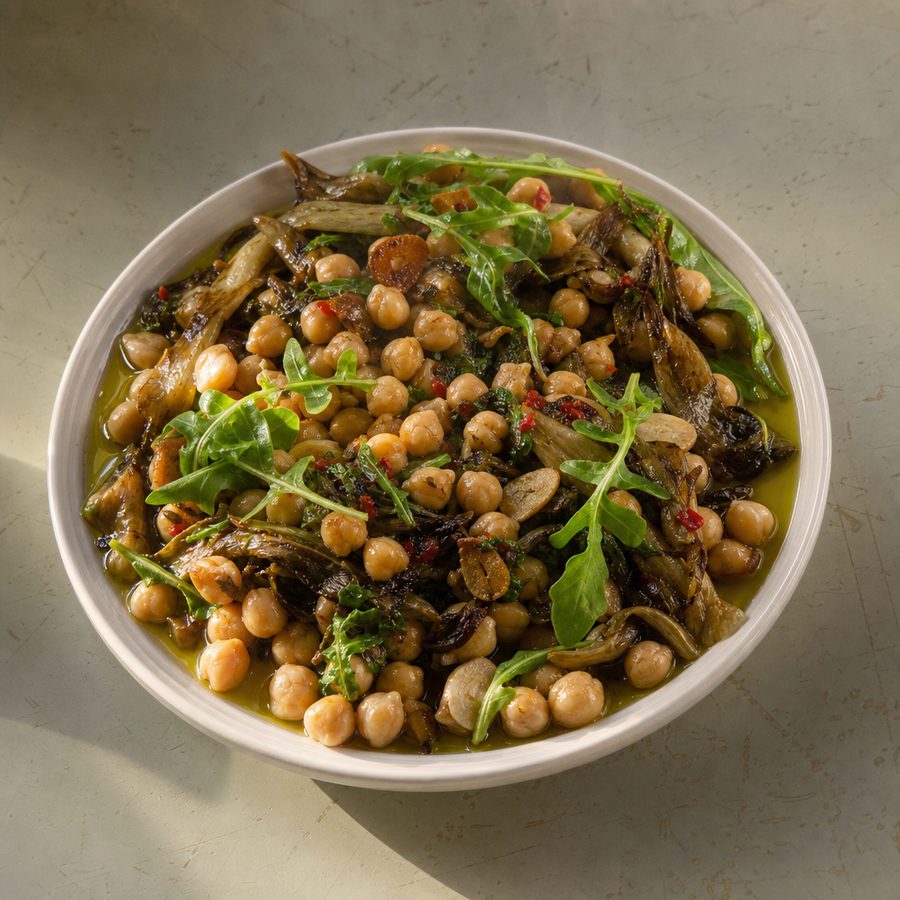
Chickpeas warmed through a pan of garlicky olive oil with wilted curly endive, rosemary, and chili, finished with lemon and a handful of arugula stirred in off the heat.
Why You'll Love This Recipe
Beans and bitter greens is the oldest lunch in southern Italy and one of the few things I make almost weekly without getting tired of it. In Puglia it is dried chickpeas and wild chicory and a great deal of very good olive oil, and it has fed people there for a long time on almost nothing. I make it with canned chickpeas on a Tuesday because I want to eat it on a Tuesday, and the dish survives that shortcut better than most. What it will not survive is timid olive oil, so use the bottle you like the taste of and pour more than feels reasonable.
The pleasure of it is textural as much as anything. Endive wilts fast and unevenly, so you get soft dark ribbons and stems that stay just crunchy enough to notice. Some of the chickpeas stay whole and some break down against the pan and thicken the oil into something almost saucy, which is why I press a few of them deliberately with the back of the spoon. The rosemary and the chili sit underneath it all, and then the arugula and lemon land on top cold and sharp and pull the whole thing upward.
This is a lunch that holds up on a desk, in a lunchbox, or at seven in the evening when you have decided you are not really cooking dinner. It is good warm, fine at room temperature, and it takes a fried egg or a piece of grilled fish on top without complaint if you want to make more of it. What I like most is that it is thirty five minutes from an empty counter to a bowl, and it does not taste like a dish anybody hurried.
Ingredients
- 4 tbsp extra virgin olive oil, divided
- 1 small yellow onion, finely chopped
- 4 garlic cloves, thinly sliced
- 1 tbsp chopped fresh rosemary leaves
- 1/4 tsp crushed red chili flakes, or more to taste
- 2 heads curly endive or escarole (about 1 lb), leaves separated and torn
- Two 15-oz cans chickpeas, drained and rinsed well (about 3 cups)
- 2 packed cups arugula
- 1 1/2 tbsp lemon juice
- 1/8 tsp fine sea salt
Instructions
- Wash and tear the endive: Separate the endive leaves and wash them in a sink of cold water, lifting them out and leaving the grit behind. Curly endive holds sand at the base of the leaves, so give it two changes of water. Tear the leaves into rough pieces about the size of your palm and leave them a little wet, since that water helps them wilt.
- Build the garlic oil: Warm 3 tbsp of the olive oil in a large deep skillet over medium heat. Add the chopped onion and cook for four minutes until it goes translucent, then add the garlic slices, the rosemary, and the chili flakes. Cook for ninety seconds more, stirring constantly, until the garlic turns the color of straw. Do not let it go brown or the whole pan takes on a bitter edge.
- Wilt the greens: Add the endive to the pan in two or three handfuls, turning each one through the oil before adding the next. It looks like far too much and reduces to about a third of its volume within two minutes. Add the salt, cover the pan, and let it steam for three minutes until the stems are tender and the leaves are dark.
- Warm the chickpeas and crush a few: Stir in the drained chickpeas and 1/3 cup of water. Simmer uncovered for six to eight minutes, until the chickpeas are heated all the way through and the liquid has reduced to a loose glaze. Press about a quarter of the chickpeas against the side of the pan with the back of a wooden spoon. They will thicken what is left of the liquid into something that clings.
- Finish off the heat: Take the pan off the burner. Stir in the lemon juice and the remaining tablespoon of olive oil, then fold in the arugula so it half wilts against the hot chickpeas and half stays fresh. Taste and add more chili or lemon. Serve in shallow bowls with the oil spooned over.
Variations
- Tomato in the pan: Add a cup of halved cherry tomatoes with the chickpeas and let them collapse for the last five minutes, which turns the whole thing rounder and sweeter.
- White beans: Cannellini beans in place of the chickpeas give you a creamier, softer bowl that crushes into the oil more readily.
- With a fried egg: Fry an egg in olive oil until the white is crisp at the edges and the yolk is still loose, and set one on each bowl to break through the chickpeas.
- Fennel seed and orange: Add a teaspoon of cracked fennel seed with the garlic and finish with orange zest along with the lemon for a Sicilian turn.
- Over grains: Spoon it over farro or barley to turn a lunch into a fuller dinner plate, and add an extra splash of water so there is enough liquid to soak in.
Storage & Leftovers
Sealed in the refrigerator this keeps four days, and it settles nicely after a night. The chickpeas take on the rosemary and garlic, and the endive softens a little further. The arugula loses its lift by day two, so if you know you are making this for the week, hold half the arugula back and add it fresh to each bowl.
Reheat it in a skillet over medium-low with a splash of water, three or four minutes, stirring once or twice. Microwaving works and takes about ninety seconds, though the chickpeas can go slightly mealy at full power, so use half power if you have it. Either way, a fresh squeeze of lemon on the way to the table is worth the ten seconds.
It is not a dish I would freeze. Chickpeas come out of the freezer with a grainy, split texture, and cooked endive turns to threads. If you want a head start, cook the garlic oil base and refrigerate it separately for up to three days, then the finished dish is about ten minutes of work.
Notes & Tips
- Rinse the chickpeas properly: Drain them, then run cold water over them in a sieve until it stops foaming, about twenty seconds. It rinses off the starchy canning liquid that otherwise makes the pan taste dull and tinny.
- Leave the greens wet: The water clinging to washed endive is what steams the stems tender. Spinning it bone dry means you have to add liquid back, and the leaves scorch before they wilt.
- Straw-colored garlic, not brown: Sliced garlic goes from sweet to acrid in about fifteen seconds. Pull the pan off the heat the moment it takes on color and let the residual heat finish it.
- Crush a quarter of the beans: This is what makes the difference between chickpeas sitting in oil and chickpeas in a sauce. Press them against the pan wall with a wooden spoon and stir the starch through.
- Save a tablespoon of oil for the end: Olive oil that never met the heat tastes green and peppery in a way cooked oil does not. Stirring the last spoonful in off the burner is the whole point of using a bottle you like.
- Add the arugula at the table if you are meal prepping: It wilts to nothing overnight. Keep it in a separate bag and drop a handful into each bowl as you reheat.
Nutrition & Mindful Eating
- Chickpeas, bitter greens, and olive oil are the whole architecture of this bowl. The chickpeas give it body and staying power, the endive gives it the bitterness that keeps it interesting, and the oil binds the two into something that eats like a proper meal rather than a side dish.
- Chickpeas are a legume that behaves like a grain on the plate, firm and starchy and filling, and their protein and soluble fiber together are what make a bowl this size hold you through an afternoon.
- Curly endive is a chicory, and that faint bitterness is the flavor doing the work of a whole seasoning. It wilts into a small dark tangle that carries folate and vitamin K along with it.
- Arugula goes in last and stays peppery, which is the point, and the leafy greens in this family are quietly good sources of calcium, more so than their delicate look suggests.
- Rosemary, sliced garlic, and chili are what turn a pan of beans into a dish worth making again. Cook the garlic just to straw color and it stays sweet, and the whole bowl smells like the inside of an Italian pantry.
- As you eat, pay attention to the bitterness of the greens against the sweetness of the beans, and notice how a bowl this plain keeps giving you reasons to take another bite slowly.
Frequently Asked Questions
What if I cannot find curly endive?
Escarole is the closest thing and behaves identically. Dandelion greens, broccoli rabe, or the darker outer leaves of a head of romaine all work, though each is a little different: dandelion is sharper, broccoli rabe needs an extra two minutes, and romaine is much milder and wilts almost instantly.
Can I use dried chickpeas?
You can, and in Puglia that is what happens. Soak 1 1/2 cups overnight, simmer them gently with a bay leaf until they are creamy rather than merely tender, which is usually an hour and a half, and use a cup of the cooking liquid in place of the water in step four. It is a different, deeper dish and it takes an afternoon.
Mine came out dry. What went wrong?
Almost always the chickpea liquid reduced too far. It should look loose and glossy when you take the pan off the heat, because it tightens as it cools and sits. Add water a tablespoon at a time until it moves again, and remember that the last tablespoon of olive oil stirred in off the heat is part of the sauce, not a garnish.
How spicy is this meant to be?
Warm rather than hot. A quarter teaspoon of chili flakes across four servings gives you a low hum behind the rosemary. Puglian cooks are considerably less restrained, so if you like heat, double it and add half of it at the end so you keep the sharpness.