
Puglian Orecchiette with Broccoli, White Beans, and Ricotta
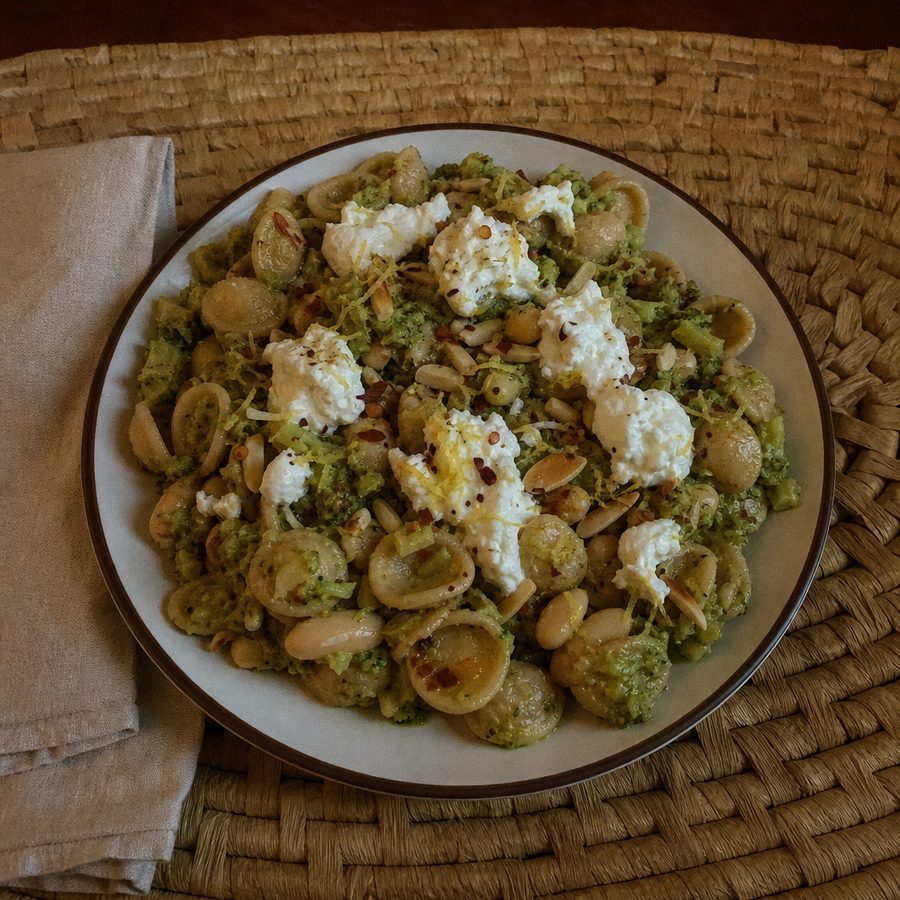
Whole wheat orecchiette cooked in the same pot as the broccoli until the florets fall apart, tossed with garlic and chile oil, crushed cannellini beans, toasted almonds, and spoonfuls of lemon ricotta.
Why You'll Love This Recipe
In Puglia this is made with cime di rapa and the greens are cooked in the pasta water until they surrender completely. Broccoli treated the same way does something similar and is easier to find, so long as you resist the urge to pull it out while it still looks bright. It should be army green and falling apart. That is not overcooked broccoli, it is the sauce. The florets break into small pieces that catch inside the orecchiette, the stems stay in coins with a little bite, and the whole pot smells like garlic and chile by the time it comes together.
There are two temperatures in this bowl and that is what makes it worth doing. Everything in the pan is hot, slick with oil, and savory. The ricotta is cold, whipped with lemon zest and juice, and dropped in spoonfuls at the very end so it stays in soft pockets rather than dissolving into a cream sauce. You get a forkful of garlicky pasta, then a forkful with ricotta in it, and they taste like two different dishes. The almonds go on last for a little crunch against all that softness.
I make it on the weeknights when I want something that eats like real cooking and takes one pot plus a skillet. The broccoli and the pasta share the water, so the timing is dictated by the pasta box and nothing else. It is also the dish I make when there are people with different appetites at the table, because it stretches: a bigger spoon of beans here, more chile there. Leftovers are good the next day at room temperature with an extra squeeze of lemon, which is how I usually eat them, standing up, straight from the container.
Ingredients
- 10 oz whole wheat orecchiette, or another short shape with a hollow
- 1 lb broccoli (about 1 large head), florets broken small and stems peeled and sliced into coins
- 1 (15-oz) can cannellini beans, drained and rinsed
- 1 cup ricotta
- 1/3 cup sliced almonds
- 1 1/2 tbsp extra-virgin olive oil, plus a little for the bowls
- 5 garlic cloves, thinly sliced
- 1 1/2 tbsp fresh lemon juice, plus the zest of the lemon
- 1/3 cup torn fresh basil leaves
- 1/2 tsp crushed red chile flakes, or more to taste
- 1/3 tsp fine sea salt, plus more for the pasta water
- 1/2 tsp coarsely ground black pepper
Instructions
- Whip the ricotta: Stir the ricotta with the lemon zest, the lemon juice, and a pinch of the salt until it loosens and turns glossy, about thirty seconds of vigorous mixing with a fork. Taste it. It should be noticeably lemony and lightly seasoned. Set it aside on the counter so it is not refrigerator cold when it goes into the bowls.
- Toast the almonds: Put the sliced almonds in a dry skillet over medium heat and toast for three to four minutes, shaking the pan often, until they smell nutty and are patched with gold. Tip them onto a plate straight away, since they keep browning in a hot pan and go bitter quickly.
- Boil the pasta and broccoli together: Bring a large pot of well-salted water to a rolling boil. Add the broccoli stems and cook two minutes, then add the florets and the pasta together. Cook for the time on the box, usually nine to eleven minutes for whole wheat, until the pasta is tender and the florets have started to fall apart. Before draining, scoop out 1 1/2 cups of the cooking water.
- Make the garlic chile oil: While the pasta cooks, warm the olive oil in a wide skillet over medium-low heat, add the sliced garlic and the chile flakes, and cook gently for three to four minutes. The garlic should turn pale gold and no darker. If it takes on color faster than that, lift the pan off the burner for a moment, because burnt garlic will run through the whole dish.
- Bring it together: Add the beans and the remaining salt and pepper to the skillet and warm them for two minutes, pressing about a third of them against the pan with the back of a spoon. Drain the pasta and broccoli and add them to the skillet with 3/4 cup of the reserved water. Toss hard over medium heat for a minute or two, until the broccoli breaks down further and the liquid turns into a loose sauce that clings. Add more water a splash at a time if it looks dry.
- Finish in the bowls: Take the pan off the heat and fold in the basil. Divide among four warm bowls, drop spoonfuls of the lemon ricotta over each one, and scatter the toasted almonds and a little more chile over the top. Finish each bowl with a thread of olive oil and eat it while the ricotta is still holding its shape.
Variations
- With sardines: Flake a tin of sardines into the skillet with the beans for a saltier, more coastal version of the same bowl.
- Anchovy garlic oil: Melt two anchovy fillets into the oil with the garlic, which disappears completely and leaves a deep savory background.
- Lemon and mint: Swap the basil for torn mint and add a little more lemon zest for a fresher, sharper finish.
- Toasted breadcrumbs: Scatter coarse breadcrumbs fried in olive oil over the top in place of the almonds, which is how many Puglian kitchens finish a pasta.
- Chickpeas: Use chickpeas rather than cannellini for a firmer, nuttier bite that stays whole through the tossing.
Storage & Leftovers
Leftovers keep three days in a sealed container in the refrigerator. The pasta absorbs the last of the sauce overnight and the ricotta melts into everything, so what you have on day two is a different and softer dish. Store any ricotta you did not use separately and add it fresh.
I eat this cold or at room temperature more often than I reheat it, with an extra squeeze of lemon and a little olive oil to wake it up. If you would rather have it hot, warm it in a skillet over medium with a few tablespoons of water, tossing until the sauce loosens again, about four minutes.
It does not freeze well. Cooked pasta turns soft and grainy on thawing and ricotta separates. If you want to work ahead, cut the broccoli and whip the ricotta up to two days early and keep both covered in the refrigerator, which leaves fifteen minutes of work at dinnertime.
Notes & Tips
- Salt the pasta water properly: The broccoli cooks in it too, and this is the only chance either of them gets to be seasoned from the inside. It should taste like a well-seasoned soup.
- Save more water than you think you need: Whole wheat pasta drinks up sauce as it sits. A cup and a half reserved means you can loosen the bowl twice, once in the pan and once at the table.
- Cook the garlic gently: Pale gold is the target and it happens over medium-low heat in about four minutes. Garlic taken any further turns bitter, and in a dish with this few ingredients there is nowhere for that to hide.
- Crush some of the beans: A third of them pressed against the pan releases enough starch to thicken the sauce. The rest stay whole so you still get soft beans in the bowl.
- Peel the broccoli stems: The outer layer is fibrous and never softens. Underneath it, the stem is the sweetest part of the vegetable, and sliced into coins it holds a little bite against the collapsed florets.
- Warm the bowls: A minute of hot tap water in each bowl, poured out and dried, keeps the pasta hot long enough for the ricotta to soften rather than seize.
Nutrition & Mindful Eating
- Broccoli, white beans, and ricotta are what turn a bowl of pasta into a whole dinner. The vegetable becomes the sauce, the beans bring soft body and plant protein, and the ricotta adds richness and a cool tang that the hot pan cannot give you.
- ricotta is a fresh cheese with a mild, milky sweetness, and it carries calcium and protein in a form that stays soft rather than stringy. Whipping it with lemon is what makes a cup of it spread across four bowls.
- Cannellini beans have thin skins and a texture that turns creamy the moment they are pressed, which is why crushing a few thickens the sauce. They bring fiber and iron, and the lemon in the bowl helps your body take that iron up.
- Broccoli holds its vitamin C better when it goes into already boiling water, and the stems are worth peeling and using, since they carry as much of the vegetable's fiber as the florets do and taste sweeter.
- Garlic sizzled slowly in olive oil, crushed chile, torn basil, and toasted almonds are what carry the flavor of a dish with so few parts. The almonds also add crunch, and toasting them is what brings their oils to the surface.
- As you eat, look for the forkfuls that come up with ricotta still holding its shape against the hot pasta, and let the difference between the two slow you down enough to notice when you have had enough.
Frequently Asked Questions
My broccoli fell apart. Is that a mistake?
No, that is the dish. Puglian pasta with greens is built on vegetables cooked until they give up their shape and turn into the sauce. If you want more texture, hold back a cup of the florets and add them to the boiling water in the last three minutes only.
Can I use broccoli rabe or another green?
Yes, and rabe is the traditional choice if you can find it. Cook it in the pasta water the same way and expect a stronger, more bitter dish. Kale, chopped small, works too, and needs about six minutes in the water before the pasta goes in.
Does the shape of the pasta matter?
More than usual here. Orecchiette are little cups and they trap the broccoli and the oil inside them. If you cannot find them, use shells, cavatelli, or another short shape with a hollow. A long noodle leaves the sauce sitting at the bottom of the bowl.
How do I keep the ricotta from turning into cream sauce?
Let it sit out of the refrigerator while you cook so it is not stiff, and put it into the bowls rather than into the pan. Anything stirred into a hot skillet will melt out. Dropped on top in spoonfuls, it stays in soft white pockets through the whole bowl.