
Puglian Tuna with Crushed Fava Beans and Dandelion Greens
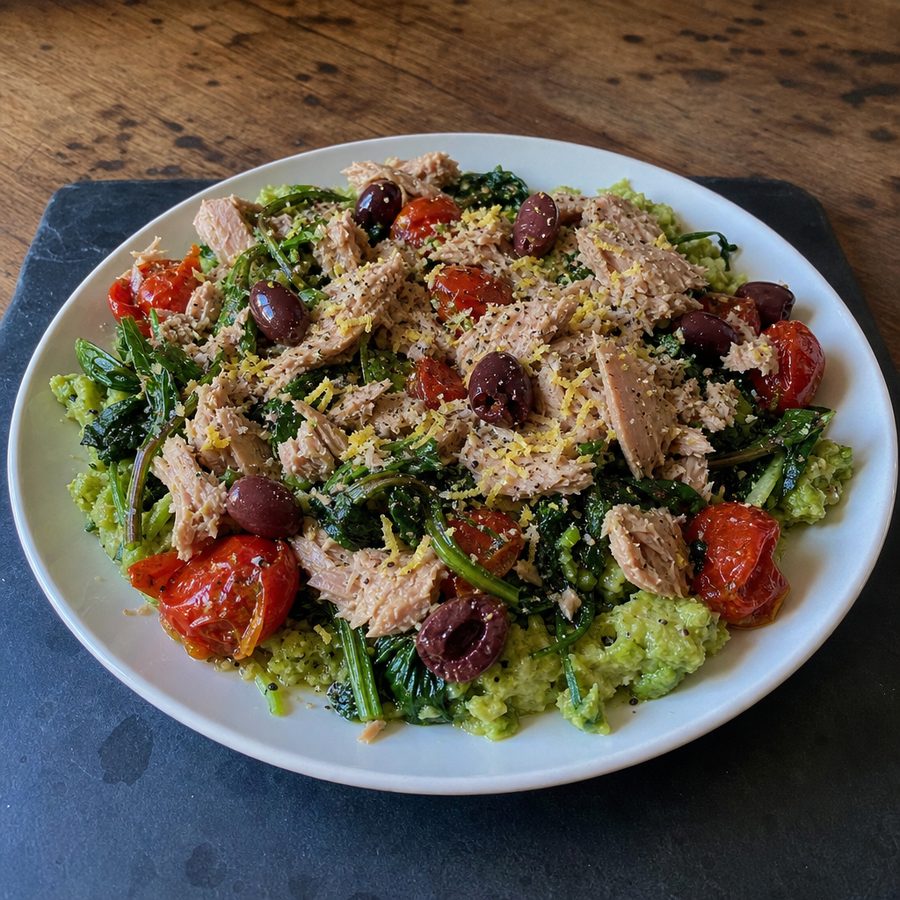
Fava beans crushed rough with olive oil and lemon, dandelion greens wilted in garlic and chile, and canned tuna flaked over the top with olives and blistered cherry tomatoes.
Why You'll Love This Recipe
Fave e cicoria is a Puglian dish so old it predates most of what we think of as Italian food: a purée of dried favas on one side of the plate, bitter chicory boiled and dressed on the other, olive oil poured over both. It is a farmer's lunch, and it is very good, and it has never had quite enough substance to carry me through an afternoon. So I add tuna, which is what half the coast of southern Italy reaches for anyway, and I crush the favas rather than puréeing them so there is still something to chew. Twenty minutes of chopping, fifteen at the stove, and it feeds four properly.
The two halves want opposite treatments. The favas get crushed warm with olive oil, lemon, and a little of their own liquid, only until they break down into something rough and spoonable rather than smooth, because a fully smooth purée turns pasty. The greens want the opposite of gentleness: a wide pan, hot oil, sliced garlic taken to pale gold, and the dandelion added wet from washing so it steams and wilts in about four minutes. Bitterness is the point of them, so I do not blanch it away. The lemon and the vinegar at the end are what make that bitterness read as pleasure rather than a problem.
Assembled, it eats like three or four different things at once, which is why I keep coming back to it. There is the soft mild bean base, the dark chewy greens, the salt of the olives, the sweetness of tomatoes that have split in the pan, and the tuna sitting on top in flakes big enough to get a whole one on your fork. It is a plate I make when the refrigerator is nearly empty, because nearly all of it comes out of cans and jars, and it never once feels like a fallback.
Ingredients
- 3 tbsp extra-virgin olive oil, plus more for the plates
- 1 1/2 cups cooked fava beans, from a can or jar, drained and rinsed well
- 1 large bunch dandelion greens (about 10 oz), tough stem ends trimmed, cut into 3-inch lengths
- 4 garlic cloves, thinly sliced
- 1/2 small red onion, sliced as thin as you can manage
- 1/4 tsp cayenne, or a crumbled dried red chile
- 1 heaping cup cherry tomatoes (about 6 oz), halved
- 3 cans (5 oz each) light tuna in olive oil, drained and broken into large flakes
- 12 kalamata olives, pitted and torn in half
- 3 tbsp lemon juice, from 1 1/2 lemons, plus the zest of one
- 2 tsp cider vinegar
- 1 cup chopped flat-leaf parsley leaves and thin stems
- 1 tsp dried oregano, crumbled between your palms
- 3/4 tsp coarsely ground black pepper
Instructions
- Warm and crush the favas: Put the drained favas in a small saucepan with a tablespoon of the olive oil and two tablespoons of water and warm them over low heat for four or five minutes, until steaming. Crush them with a fork or the back of a wooden spoon until roughly half of them have broken down and the rest are still whole. Stir in a tablespoon of the lemon juice and a good grind of pepper.
- Blister the tomatoes: Set a large skillet over medium-high heat with a tablespoon of the oil. Add the cherry tomatoes cut side down and leave them undisturbed for two to three minutes, until the cut faces are browned and the skins have started to loosen. Tip them onto a plate and keep the pan.
- Gild the garlic: Lower the heat to medium, add the remaining oil, the sliced garlic, and the cayenne, and cook for sixty to ninety seconds. You are looking for the garlic to turn the color of straw and smell sweet rather than sharp. Garlic that has gone brown will make the whole pan bitter in the wrong way, so watch it closely.
- Wilt the dandelion greens: Add the dandelion greens to the pan while they are still damp from washing, in two batches if they will not all fit, and toss them through the garlic oil with tongs. Cover and cook for three to four minutes, then uncover and cook a minute more, until the leaves are dark and silky and the thicker stems bend without snapping. Stir in the cider vinegar and the oregano off the heat.
- Dress the onion and tuna: While the greens cook, toss the sliced red onion with the remaining lemon juice and a pinch of salt in a small bowl and leave it to soften and go pink, about five minutes. Break the drained tuna into large flakes with your fingers rather than a fork, so the pieces stay big enough to see.
- Build the plates: Spread a quarter of the crushed favas across the base of each shallow bowl, pile the warm greens beside rather than over them, and lay the tuna across the middle. Scatter the blistered tomatoes, the olives, the pickled onion, the parsley, and the lemon zest over the top, then finish with black pepper and a last thread of olive oil.
Variations
- Sardines in place of tuna: Lay whole canned sardines over the greens rather than flaked tuna for a stronger, oilier plate.
- White beans: Cannellini beans crushed the same way give a milder, creamier base if favas are hard to find where you shop.
- Roasted peppers: Add strips of jarred roasted red pepper with the tomatoes for a sweeter, softer plate.
- Fennel and orange: Shave a small fennel bulb over the top and swap half the lemon juice for orange, which suits the bitterness of the greens.
- Warm through: Fold the tuna into the greens in the pan for the last thirty seconds so the whole plate arrives hot.
Storage & Leftovers
The parts keep better than the assembled plate, so if you are making this ahead, store the crushed favas, the wilted greens, and the tuna in three separate containers for up to four days. Ten seconds of assembly at lunchtime gives you something that tastes made rather than reheated, and the greens in particular stay far better on their own.
The favas firm up considerably in the refrigerator and want loosening before you eat them again. Warm them in a pan with a splash of water and a little olive oil, stirring until they are spoonable, and taste for lemon, which fades overnight. The greens are good cold and need no reheating at all.
Assembled leftovers will keep two days and eat well cold from the container, though the tomatoes weep into the beans and the plate loses its separate parts. Freezing does not suit any of it: favas turn grainy, greens turn to string, and tuna goes dry and fibrous once it has been frozen and thawed.
Notes & Tips
- Crush, do not purée: A food processor turns favas into wallpaper paste in about four seconds. A fork and thirty seconds of pressure leave you with texture, which is the whole difference.
- Wash the greens and leave them wet: The water clinging to the leaves is what steams them in the covered pan. Spun bone dry, they scorch before they wilt.
- Flake the tuna with your fingers: A fork shreds it into fibers. Fingers give you the big meaty flakes that make this look like a plate somebody built rather than a mixture.
- Give the onion five minutes in lemon: Sliced thin and left in acid, it loses its sharp bite and goes bright pink, which is worth doing at the very start so it is ready when you assemble.
- Taste the greens before the plate goes together: Bitterness varies enormously between bunches. A very sharp one wants more olive oil and a second squeeze of lemon, and it is much easier to fix in the pan.
- Keep the components apart until serving: Piled beside each other rather than stirred together, each thing still tastes of itself. Mixed in a bowl, this becomes one flavor, and a duller one.
Nutrition & Mindful Eating
- The favas, the greens, and the tuna each carry a different part of this plate. The beans give it body and most of its fiber, the dandelion greens give it volume and bitterness, and the tuna sits on top as the protein that turns a side dish into lunch.
- Canned tuna is one of the most useful things in a cupboard, firm and savory and ready in the time it takes to open it, and a few flakes bring a serious amount of protein along with the omega-3 fats that oily fish are known for.
- Fava beans are large, mild, and faintly grassy, and they crush into a base that is soft and starchy at once. They carry folate in real quantity, along with the kind of fiber that makes a spoonful of them sit heavier than its size suggests.
- Dandelion greens are properly bitter, which is exactly what they are for here, and that bitterness comes packaged with vitamin A, vitamin K, and calcium. Wilted in hot garlic oil they turn dark and silky and lose their coarseness while keeping their character.
- Olives, lemon zest, and cider vinegar are doing the work you taste last. The olives bring salt in concentrated bursts, the vinegar goes in off the heat so it stays sharp, and the zest carries the citrus oils that make the whole plate smell like it does.
- As you eat, notice how differently each corner of the plate tastes and how the bitterness of the greens changes the beans that follow, and give yourself long enough between bites to tell when you are comfortably full.
Frequently Asked Questions
What can I use if I cannot find dandelion greens?
Escarole is the closest thing and needs the same four minutes. Mustard greens are sharper and hotter but work beautifully, and kale will do if you give it six or seven minutes with the lid on. Whatever you use, keep some bitterness in the dish, since that is what the sweet favas are leaning against.
Should the tuna be packed in oil or in water?
Oil, if you have the choice. It stays in bigger flakes, tastes rounder, and does not go stringy the way water-packed tuna sometimes does once it is drained. Light tuna, meaning skipjack, is what I buy for this. If you only have water-packed, add an extra spoonful of olive oil to the plate.
Can I use dried favas rather than canned?
You can, and in Puglia they always do. Soak a cup of dried, peeled fava beans overnight and simmer them for about an hour with a bay leaf until they collapse. It is a different weekend project and the results are better, but the canned ones are what keep this to a little over half an hour, which is the point of the version I wrote here.
How do I keep the greens from tasting harsh?
Three things do most of the work: enough olive oil, garlic cooked to gold rather than brown, and acid at the end. The vinegar goes in off the heat so it stays bright, and the lemon on the plate finishes the job. If your bunch is unusually mature and tough, a sixty second dunk in boiling water before it hits the pan takes the edge off.