
Roasted Cabbage Wedge Traybake with Dill Tahini and Sesame
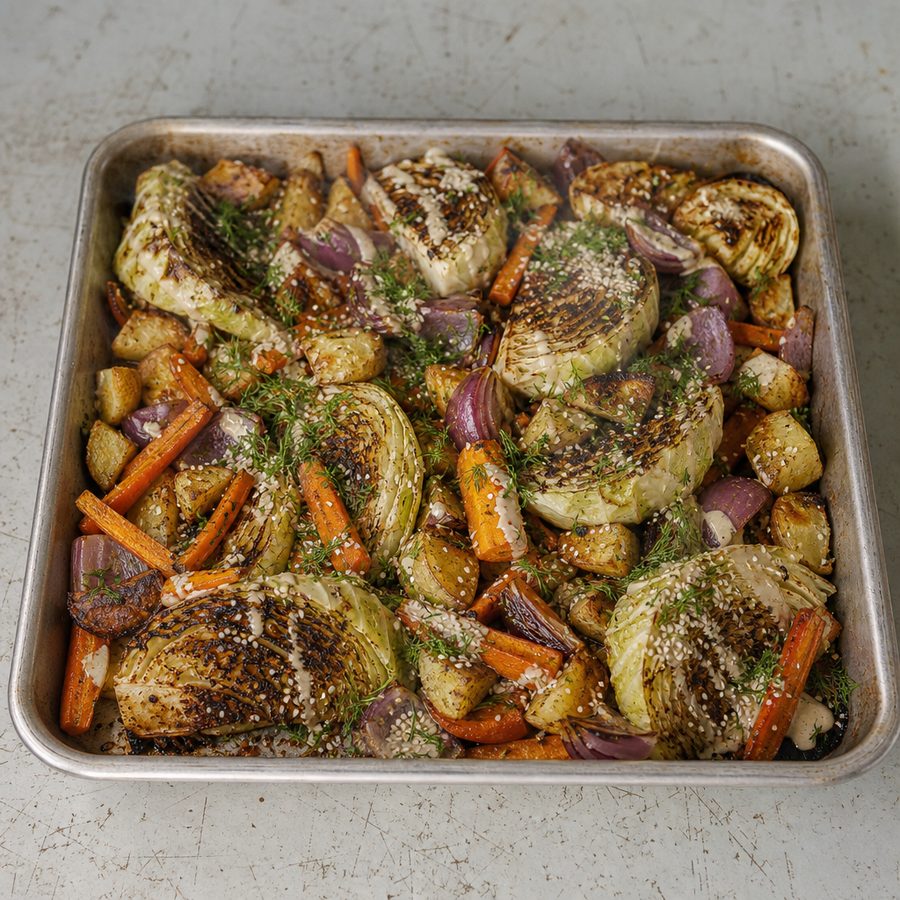
Thick wedges of green cabbage roasted hard alongside carrots, potatoes, and red onion, then dressed while hot with lemony tahini, toasted sesame seeds, and a lot of fresh dill.
Why You'll Love This Recipe
Ten minutes of chopping at the counter, and then the oven does the rest while I leave it alone. A head of cabbage is one of the cheapest things in the store and one of the most transformed by dry heat. Cut into thick wedges through the core so the leaves stay attached, laid flat on a hot tray, it goes from squeaky and watery to sweet, tender, and toasted in about forty five minutes. The carrots and potatoes are there so it eats like a dinner and not like a side dish that got ambitious.
The dressing is what makes people go back for more. Tahini, lemon juice, grated garlic, and enough cold water to loosen it into something pourable, whisked in the bottom of a bowl while the tray is in the oven. It goes on hot vegetables on purpose, because heat thins it further and it runs down into the layers of the cabbage wedges rather than sitting on top like a sauce. The dill goes on last and off the heat, so it stays green and grassy against all that browned sweetness. Sesame seeds toasted in a dry pan give the whole plate a little crunch.
After something rich, a plate that tastes bright and roasted at the same time is welcome. It takes about an hour start to finish, most of it hands off, and it feeds four people generously with almost nothing left to wash except the tray. It is also the recipe I hand to people who tell me they do not like cabbage, because whatever they are remembering was almost certainly boiled, and this is the opposite of that.
Ingredients
- 1 large head green cabbage (about 2 lb), cut through the core into 8 thick wedges
- 4 large carrots (about 14 oz), halved lengthwise and cut into 3-inch lengths
- 1 lb Yukon Gold potatoes, scrubbed and cut into 1-inch chunks
- 1 large red onion, peeled and cut through the root into 8 wedges
- 2 tbsp olive oil
- 1/4 cup tahini, well stirred
- 3 tbsp lemon juice, from about 1 1/2 lemons
- 3 tbsp sesame seeds
- 1/2 cup fresh dill, roughly chopped, fronds and thin stems
- 5 cloves garlic, 3 left whole in their skins and 2 grated fine
- 1 1/2 tsp coriander seed, cracked under a pan
- 1 tsp coarsely ground black pepper
- 1/2 tsp fine sea salt
Instructions
- Heat the oven and the tray: Set the oven to 425°F (220°C) with a large rimmed sheet pan on the middle rack while it comes up. A tray that is already hot when the vegetables hit it starts the browning immediately, which is most of the difference between roasted cabbage and steamed cabbage.
- Cut the cabbage into wedges: Halve the cabbage through the stem, then cut each half into four wedges, always cutting through the core. The core is what holds the leaves together, so do not trim it out. Cut the carrots into 3-inch lengths, halved lengthwise if they are thick, the potatoes into 1-inch chunks, and the onion through the root into eight wedges.
- Oil, season, and load the hot tray: Toss the carrots, potatoes, onion, and the whole garlic cloves with half the olive oil, the cracked coriander, the black pepper, and the salt. Brush the cut faces of the cabbage with the rest of the oil. Pull out the hot tray, lay the cabbage wedges cut side down with the root vegetables around them, and listen for the hiss.
- Roast without moving anything: Roast 25 minutes untouched, until the underside of each cabbage wedge is deep brown and the potatoes have taken color. Turn the wedges onto their second cut face, stir the root vegetables, and roast another 15 to 20 minutes, until a knife slides through the cabbage core with no resistance and the outer leaves are frizzled dark.
- Make the dressing and toast the seeds: While the tray roasts, whisk the tahini with the lemon juice and the grated garlic. It will seize into a stiff paste, which is expected. Add cold water a tablespoon at a time, whisking, until it pours in a thick ribbon, about 4 to 5 tablespoons in total. Toast the sesame seeds in a dry skillet over medium heat for 3 minutes, shaking often, until they smell nutty and a few of them pop.
- Dress it hot: Squeeze the roasted garlic cloves out of their skins and mash them into the dressing. Spoon the dressing over the vegetables straight on the tray while everything is steaming, so it runs down between the cabbage leaves. Scatter the sesame seeds and the dill over the top and bring the tray to the table.
Variations
- Coriander and cumin: Add a teaspoon of ground cumin to the root vegetables along with the cracked coriander for a warmer, smokier tray.
- Mint and lemon zest: Swap half the dill for torn mint and add the zest of the lemon you juiced, which pushes the whole thing greener and sharper.
- Chickpea crunch: Scatter a drained, rinsed can of chickpeas over the tray for the last 20 minutes so they blister and split against the cabbage.
- Green tahini: Blend the dressing with a large handful of parsley and the dill together, which turns it bright green and grassy and coats the wedges more evenly.
Storage & Leftovers
Leftovers keep four days in a sealed container in the refrigerator, and they are good cold straight from it. The cabbage softens further overnight and takes on more of the dressing, so the second day tastes rounder and more garlicky than the first. Store the dill separately if you have any left over and add it fresh each time, since it goes limp and dull after a night in the dressing.
To reheat, spread the vegetables on a tray in a 400°F (200°C) oven for 8 to 10 minutes rather than covering them. Uncovered heat drives off the moisture the cabbage released overnight and brings the browned edges back. The dressing may look broken and grainy when it is cold, and it comes back together as soon as it warms.
This does not freeze well. Cabbage and potato both go watery and grainy after thawing, and the tahini separates. If you want to get ahead, roast the vegetables up to a day early and hold the dressing, the sesame, and the dill until you reheat and serve.
Notes & Tips
- Preheat the pan, not just the oven: Cabbage holds a lot of water and a cold tray lets it steam in its own moisture. Ten minutes of the tray sitting empty in a hot oven is the whole difference.
- Do not crowd the wedges: Each wedge needs a flat face in contact with the metal. If your pan cannot hold all eight with room around them, use two pans on two racks and swap them halfway.
- Toast the sesame seeds separately: Seeds thrown onto the tray burn long before the cabbage is done. Three minutes in a dry skillet, shaken constantly, gets them evenly nutty.
- Dress it on the tray: Moving roasted cabbage to a platter first breaks the wedges and leaves the browned juices behind. Pour the dressing right onto the hot pan and serve from it.
Nutrition & Mindful Eating
- Cabbage, root vegetables, and sesame are doing three different jobs here. The cabbage brings the bulk and the fiber, the carrots and potatoes give the tray its sweetness and its heft, and the tahini and sesame seeds carry the fat that makes the whole plate satisfying to eat.
- Sesame is the quiet reason this dish is worth making. Whole toasted seeds and the tahini they are ground into both bring a great deal of calcium, along with the faintly bitter, nutty flavor that keeps a sweet roasted tray from tasting like dessert.
- Cabbage belongs to the same family as broccoli and mustard, which is where its faint sulfur bite comes from, and roasting turns that bite into something sweet and toasted. Its fiber is the sturdy kind that holds its shape through a long cook.
- Carrots go jammy and dark at the tips in a hot oven, concentrating their sugar as the water cooks off, and the deep orange is beta-carotene that your body converts to vitamin A.
- Dill and lemon go on at the very end and off the heat for a reason. Acid and fresh herbs cut straight through roasted sweetness, and it is why the last bite of this tray tastes as alive as the first.
- As you eat, notice how different the crackling outer leaves are from the soft sweet layers near the core, and let a plate this simple be worth sitting down for rather than something you eat standing over the tray.
Frequently Asked Questions
My cabbage wedges fell apart on the tray. What went wrong?
The core got trimmed. It looks tough and unwanted, and it is the only thing holding a wedge together through roasting. Cut through the stem end every time, leave a triangle of core in each wedge, and lift the wedges with a wide spatula rather than tongs.
Can I use red cabbage?
You can, and it roasts just as well, though it takes a few extra minutes and stains the tahini pink. Savoy is the other good option, with its crinkled leaves catching more of the dressing. Napa cabbage is too tender for this treatment and collapses before it browns.
The tahini turned into cement when I added the lemon. Did I ruin it?
No, that is what tahini does, and it is the sign you are on the right track. Sesame paste seizes when acid hits it and then loosens again with water. Keep whisking and adding water a tablespoon at a time and it will turn pale, smooth, and pourable within a minute.
Can I make this in an air fryer?
Half a batch fits, and it works well at 400°F (200°C) for about 20 minutes with a turn halfway. You will lose the pool of browned juices that collects on a sheet pan, so be a little more generous with the dressing at the end.