
Roasted Chicken Thighs with Blistered Grapes, Sage, and Walnuts
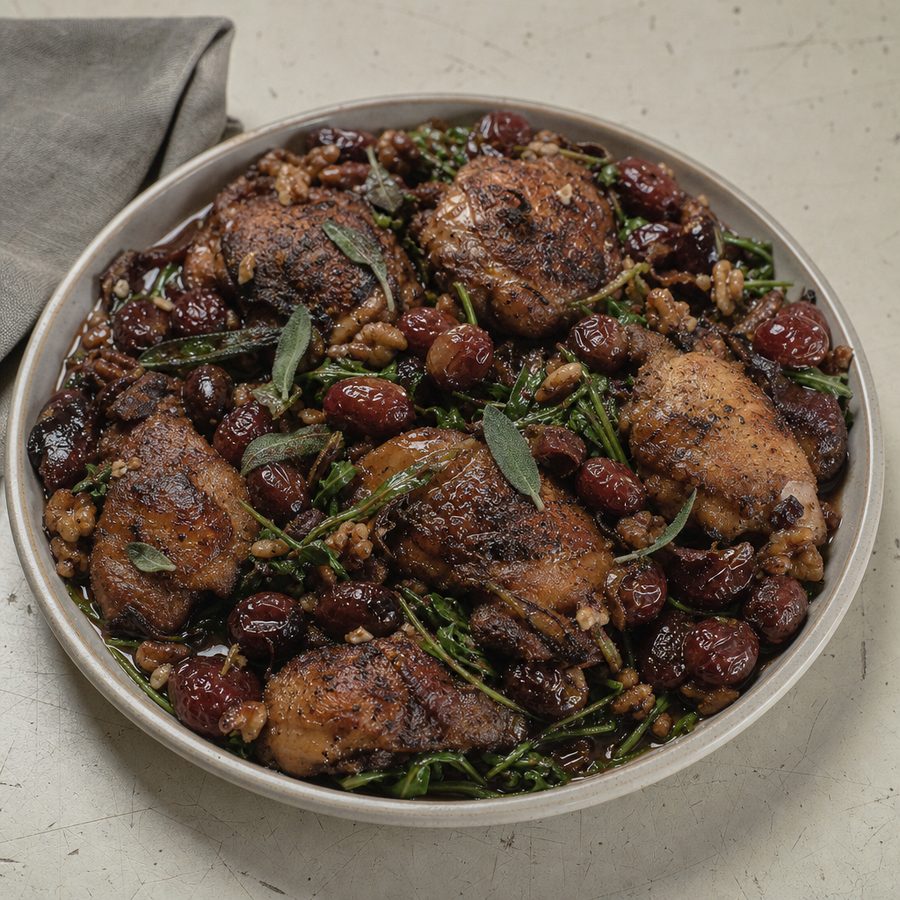
Chicken thighs seared hard and finished in the oven with whole grapes that burst into the pan, dressed with a balsamic sauce and served over wilting arugula.
Why You'll Love This Recipe
Roasting grapes is one of those things I wish someone had told me about years earlier. Whole, in a hot skillet next to chicken, they wrinkle and split and go jammy in about fifteen minutes, and what leaks out of them turns the pan juices sweet and slightly winey. This is the lunch I make when I have people over on a Saturday and want one pan on the table, and it is just as good cold from a container on Tuesday. It takes half an hour, most of it in the oven, and it looks like considerably more effort than it actually is.
The searing is where the savory depth comes from, so give it the time. The thighs go into a properly hot skillet, smooth side down, and they stay there without being moved for six or seven minutes, until the underside is deep brown and releases on its own. That crust and the browned bits left on the pan are what the sauce is built from later. Sage goes in at that point rather than at the start, because sage in a hot dry pan turns bitter fast, and one tablespoon of it against chicken and sweet fruit is the whole seasoning apart from salt and a lot of black pepper.
Balsamic, mustard, and a splash of broth go into the empty pan at the end, and they lift everything stuck to the bottom into a dark glossy sauce in about two minutes. Pour that over a platter of arugula and it wilts in patches rather than all at once, which is exactly what you want. The walnuts go on last so they stay crisp. If you are packing this for lunch, keep the arugula in a separate bag and add it when you eat, because peppery leaves that have sat overnight in a sweet sauce are not worth carrying to work.
Ingredients
- 1 1/2 lb boneless, skinless chicken thighs
- 2 cups red seedless grapes (about 10 oz), left whole
- 5 oz baby arugula (about 8 cups, loosely packed)
- 1/2 cup walnut halves, roughly chopped
- 3 tbsp olive oil, divided
- 2 tbsp balsamic vinegar
- 1/2 cup chicken broth
- 1 1/2 tsp dijon mustard
- 1 tbsp chopped fresh sage, or 1 tsp dried
- 1 tsp coarsely ground black pepper
- 1 1/4 tsp fine sea salt, divided
Instructions
- Heat the oven and dry the chicken: Heat the oven to 425°F (220°C). Pat the chicken thighs completely dry and season them all over with 3/4 teaspoon of the salt and the black pepper. Let them sit on the counter while the oven comes up, since cold meat straight from the refrigerator browns unevenly.
- Sear the thighs: Heat 2 tablespoons of the olive oil in a large ovenproof skillet over medium-high until it shimmers. Lay the thighs in smooth side down and leave them completely alone for 6 to 7 minutes, until the undersides are deep brown and lift away from the pan without sticking. Turn them once.
- Add the grapes and roast: Scatter the whole grapes and the sage around the chicken, drizzle the last tablespoon of oil over the fruit, and slide the skillet into the oven. Roast 12 to 15 minutes, until the grapes are wrinkled and beginning to split and the thickest part of the chicken reads 175°F (80°C).
- Toast the walnuts: While the skillet is in the oven, toast the chopped walnuts in a dry pan over medium heat for 4 to 5 minutes, shaking often, until they smell warm and faintly buttery. Tip them onto a plate straight away so they stop cooking.
- Build the pan sauce: Move the chicken and grapes to a plate. Set the skillet over medium heat, add the balsamic vinegar, broth, and dijon mustard, and scrape the browned bits off the bottom with a wooden spoon. Simmer 2 to 3 minutes, until it thickens enough to coat the spoon, then stir in the last 1/2 teaspoon of salt.
- Serve over arugula: Spread the arugula over a wide platter. Slice the thighs thickly, lay them over the leaves with the grapes, and spoon the hot sauce over everything so the arugula wilts in patches. Scatter the walnuts over the top and serve right away.
Variations
- Rosemary and orange: Use rosemary in place of the sage and add the zest of an orange to the pan sauce.
- Pecans and maple: Swap the walnuts for pecans and stir a teaspoon of maple syrup into the sauce for a rounder, sweeter pan.
- Goat cheese: Crumble a little goat cheese over the hot platter so it softens into the sauce.
- Radicchio: Use torn radicchio in place of the arugula when you want bitterness against the sweet grapes.
- Pork version: Cook pork tenderloin medallions the same way, searing them hard and roasting 10 minutes to 145°F (63°C).
Storage & Leftovers
The chicken, grapes, and sauce keep in a sealed container in the refrigerator for up to 4 days. Store them together so the meat sits in the sauce, which is what keeps sliced thigh from drying at the cut faces, and keep the arugula and walnuts in separate bags.
Reheat in a covered skillet over medium-low for about 5 minutes, or in a 300°F (150°C) oven for 10. The grapes collapse further each time they are warmed, so by the second day they are closer to a sauce than to fruit, which is not a problem, just something to expect.
This is genuinely good cold, sliced thin over fresh leaves with the sauce spooned over as a dressing. Freezing is not worth it. Roasted grapes turn to skins and water on thawing, and the sauce splits into something thin and sour that no amount of reducing brings back.
Notes & Tips
- Dry the chicken: Wet skin will not brown, it steams. Paper towels and a minute on the counter buy you the crust the sauce is built from.
- Leave the thighs alone: Chicken releases from a hot pan when it is ready. If it sticks when you try to turn it, give it another minute rather than forcing it.
- Keep the grapes whole: Halved grapes give up their juice too early and go to mush. Whole ones hold their shape until they burst on their own.
- Add the sage with the grapes: Fresh sage dropped into a dry hot pan at the start scorches and turns bitter. It wants fat and fruit around it.
- Toast the walnuts separately: Nuts roasted in the skillet with the grapes go soggy in the juices. Four minutes in a dry pan keeps them crisp for days.
- Dress the greens at the table: Arugula wilted in advance goes olive-colored and limp. The hot sauce should hit the leaves at the last moment.
Nutrition & Mindful Eating
- Chicken, roasted fruit, and peppery leaves make this plate work. The meat gives it substance, the grapes burst into something sweet and jammy in the pan, and the arugula underneath goes half wilted and half crisp so every forkful has both.
- Chicken thigh stays tender through a hard sear and a hot oven because of the fat marbled through it, and protein this dense is most of the reason a plate of it holds you well past the middle of the afternoon.
- Grapes roasted whole wrinkle and split, and what comes out of them is sweet, faintly winey, and slightly savory. The dark skins are where their polyphenols sit, which is a good argument for red grapes rather than green.
- Arugula is peppery and a little bitter, and it holds folate and vitamin K in leaves small enough to eat raw by the handful. Wilting it in hot pan sauce rather than cooking it in a pot keeps that bite intact.
- Walnuts toasted in a dry pan turn sweeter and smell faintly of butter, and they are one of the few nuts carrying the plant form of omega-3 fats. Scattered on at the very end, they are the only crunch on the plate.
- As you eat, look for the moment a hot grape gives way against the peppery arugula, and let the sweetness of the pan sauce be a reason to eat this sitting down rather than over the sink.
Frequently Asked Questions
Can I use chicken breast?
Yes, at the same weight. Sear it the same way and pull it from the oven at 165°F (74°C), which will be about 5 minutes earlier. Breast meat dries faster, so let it rest in the pan sauce for a few minutes before you slice it.
Do the grapes really work here?
They do, and roasting is the reason. Whole grapes in a hot oven lose water, concentrate, and go jammy and slightly savory, so they read as part of the sauce rather than as fruit on a dinner plate. Use red seedless and leave them whole, since halved grapes collapse into mush.
Can I make this ahead for lunches?
Yes. Cook the whole skillet, then portion the sliced chicken, grapes, and sauce into four containers and keep the arugula and walnuts separate. Add the leaves cold at the table or let a warm portion wilt them when you tip it over the top.
Does this fit a low-FODMAP lunch plan?
It does. The flavor is built on a hard sear, roasted fruit, sage, mustard, and balsamic, so nothing in it depends on onion or garlic. Grapes and walnuts are both comfortable at these portions, and searing in garlic-infused olive oil adds that note back if you want it.