
Roasted Eggplant and Seared Tofu with Tahini and Cumin
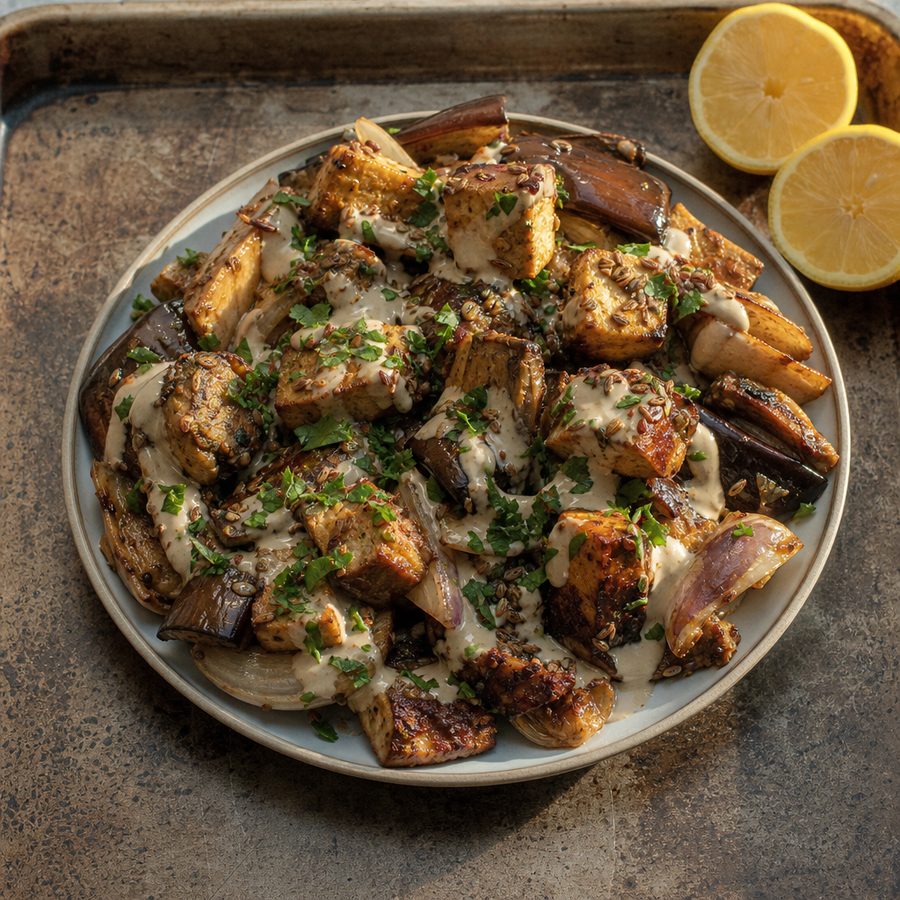
Eggplant roasted until it collapses, tossed with hard-seared tofu, toasted cumin, and crushed coriander, then covered in a loose lemon tahini sauce and a great deal of parsley.
Why You'll Love This Recipe
Eggplant and tahini belong together, and the reason is texture as much as flavor. Roasted properly, eggplant turns silky to the point of collapse, and a sauce built on sesame gives it something with body to push against. I roast the cubes at a high heat on a sheet pan rather than frying them, because eggplant will drink as much oil as you offer it and then turn heavy. High heat and a little patience get you the same bronzed, creamy result with a tablespoon of oil, and the flavor comes out sweeter and more concentrated than the fried version ever does.
The tofu is there to make this lunch rather than a side dish, and it needs to be treated separately. Pressed for fifteen minutes and seared in a hot skillet until at least two faces are golden, the cubes hold their shape and their edges stay firm even under the sauce. If you tossed them onto the sheet pan with the eggplant, they would steam in the moisture the eggplant gives off and come out pale and soft. Two pans, ten extra minutes, and you get two distinct textures on the plate instead of one uniform one.
The sauce is where the whole thing comes together, and it is worth knowing that tahini seizes before it loosens. Whisk lemon juice and grated garlic into it and the mixture will go thick and grainy and look ruined. Add cold water a spoonful at a time and it turns pale, glossy, and pourable. That moment surprises people the first time. Spoon it over everything while the eggplant is still warm so it sinks in, and keep the parsley generous, since a half cup of it is what stops a plate this rich from feeling one-note.
Ingredients
- 25 oz extra-firm tofu, drained, pressed 15 minutes, and cut into 1-inch cubes
- 1 large eggplant (about 1 lb 2 oz), cut into 1-inch cubes
- 1 small red onion, cut into 8 wedges through the root
- 1/4 cup tahini, well stirred
- 2 tbsp lemon juice
- 4 garlic cloves, 2 sliced and 2 grated to a paste
- 1 1/2 tsp cumin seeds
- 1 tsp coriander seeds, crushed under a pan
- 1 1/2 tbsp olive oil, divided
- 1/2 cup chopped flat-leaf parsley
- 1/2 tsp coarsely ground black pepper
- 1/4 tsp fine sea salt
Instructions
- Press and cube the tofu: Drain the tofu, wrap the block in a clean towel, and set a heavy pan on top for 15 minutes while the oven heats. Cut it into 1-inch cubes and pat the faces dry. Water left on the surface is the reason tofu sticks and refuses to brown, so this is not a step to rush past.
- Roast the eggplant: Heat the oven to 425°F. Toss the eggplant cubes and onion wedges with 1 tbsp of the olive oil, the sliced garlic, and half the salt, and spread them on a sheet pan with room between the pieces, since eggplant crowded on a tray steams into something gray and wet rather than bronzing. Roast for 22 to 25 minutes, turning once at the halfway point, until the eggplant is deep bronze, wrinkled, and completely soft when pressed with a spoon.
- Sear the tofu: While the eggplant roasts, heat the remaining 1/2 tbsp oil in a 12-inch skillet over medium-high. Add the tofu in a single layer with the rest of the salt and leave it undisturbed for 4 minutes, until the underside is golden and releases on its own, because tofu lets go of the pan by itself once a crust has formed and tears if you move it early. Turn the cubes and give them 3 to 4 minutes more so a second face colors, then slide the pan off the heat.
- Toast the spices: Push the tofu to one side and add the cumin seeds and crushed coriander to the bare part of the pan. Toast them for about 45 seconds over medium heat, shaking the pan, until they darken a shade and smell warm and nutty, since whole seeds give up almost nothing until heat has cracked their oils open. Toss them through the tofu with the black pepper.
- Make the sauce and build the platter: Whisk the tahini, lemon juice, and grated garlic in a small bowl. It will seize into a thick paste. Add cold water one tablespoon at a time, whisking after each, until it flows off the whisk in a ribbon, which usually takes 3 to 4 tablespoons. Spread the warm eggplant and onion on a platter, scatter the tofu over, and pour the sauce across the top rather than tossing everything together, so that the tofu keeps the crust it just spent eight minutes earning, and finish with all of the parsley.
Variations
- Pomegranate and mint: Scatter pomegranate seeds and torn mint over the finished platter for a sweet-tart contrast against the smoky eggplant.
- Harissa heat: Whisk a teaspoon of harissa into the tahini sauce for a version with real warmth behind it.
- With chickpeas: Add half a cup of drained chickpeas to the sheet pan for the last ten minutes so they blister and split at the edges.
- Charred and smoky: Run the sheet pan under the broiler for the final two minutes so the eggplant edges blacken and pick up a grilled flavor.
- Herb-heavy: Use a mix of parsley, cilantro, and dill in place of parsley alone for a greener, more aromatic finish.
Storage & Leftovers
This keeps three days in the refrigerator, and I store the sauce separately when I can, since tahini thickens as it chills and goes claggy over cold eggplant. In a sealed container the eggplant and tofu hold their character well, and the cumin gets stronger overnight in a way I like.
Reheat the eggplant and tofu in a 375°F oven for 8 minutes, or in a dry skillet over medium heat, which brings a little crispness back to the tofu. Then whisk a splash of water into the cold sauce to loosen it and spoon it over. The microwave works but leaves everything uniformly soft.
It is not a candidate for the freezer. Eggplant that has been frozen and thawed goes watery and loses the silkiness that is the entire point of roasting it. If you want to get ahead, roast the eggplant and press the tofu a day early and keep them covered in the refrigerator, then sear and assemble in about fifteen minutes.
Notes & Tips
- Cut the eggplant big: One-inch cubes survive twenty five minutes of high heat and come out creamy inside. Small pieces dry into chewy little knots before the insides ever go soft.
- Give the sheet pan room: Crowded eggplant steams and stays pale and spongy. Use the largest pan you own, or two, and leave visible space between the cubes.
- Press the tofu, then dry it: Fifteen minutes under a heavy pan pulls out the water inside, and a quick pat with a towel takes what is left on the surface. Both matter, and skipping either one gives you cubes that stick and tear.
- Toast the seeds whole: Cumin and coriander bought ground have already lost most of their oils. Whole seeds toasted for forty five seconds in the pan smell completely different, and it is the loudest flavor on the plate.
- Add water to the tahini slowly: A spoonful at a time, whisking between each. Pour it all in at once and the sauce goes thin and stays slightly grainy rather than turning glossy.
- Sauce it while it is warm: Warm eggplant absorbs the tahini instead of wearing it. Assemble the platter as soon as the pan comes out of the oven and the sauce sinks into every crease.
Nutrition & Mindful Eating
- Eggplant, tofu, and tahini each bring something the others cannot. The eggplant gives volume, fiber, and that silky roasted texture, the tofu carries nearly all of the protein, and the sesame in the tahini adds the fat and the richness that make a vegetable platter eat like a full lunch.
- Tofu pressed and seared holds its shape because most of the water is gone, and what is left is concentrated protein along with the calcium from the salts used to set the curd, which is why a plate built on it holds you for the afternoon.
- Eggplant is mostly water and soft fiber, which is why it collapses so completely in a hot oven, and the deep purple skin carries anthocyanins, the same pigments found in berries. Roasting rather than frying is what keeps the flavor sweet and concentrated.
- Tahini is nothing but ground sesame seeds, and sesame is one of the better plant sources of calcium there is, along with copper and the kind of unsaturated fat that makes a sauce feel rich without any dairy in it.
- Cumin, coriander, garlic, and a heavy hand with parsley are what you taste first and last. The toasted seeds crackle between your teeth, the garlic in the sauce stays sharp because it never sees heat, and the parsley cuts through the richness with something green and clean.
- As you eat, notice how completely the eggplant has given way against the firmer bite of the tofu, and let the cumin and the garlic register fully before the next forkful rather than eating this one standing at the counter.
Frequently Asked Questions
Should I salt the eggplant first?
You do not need to with the eggplant sold in most stores today, which is bred to be far less bitter than it once was. Salting draws out water and can help a very large, seedy specimen brown better, so if yours is enormous and pale, sprinkle the cubes with salt, leave them 20 minutes, and pat them dry.
My tahini sauce turned into a thick paste. Did I break it?
No, and this happens to everybody. Tahini seizes the moment acid hits it and then loosens with water, so keep whisking and keep adding water a spoonful at a time. It will suddenly turn pale, smooth, and pourable, usually right after the point where you are convinced it will not.
Can I do this on one sheet pan?
You can, but the tofu will not brown. Eggplant releases a lot of steam as it roasts, and anything sharing the pan sits in it. If you want to use only the oven, roast the tofu on its own pan on the upper rack for 25 minutes, turning once, which gets you firm, chewy edges rather than a seared crust.
What can I use in place of tahini?
Almond butter thinned the same way is the closest match and gives a slightly sweeter sauce. Sunflower seed butter also works and is a good option in a household avoiding sesame. In either case add a little extra lemon, since neither carries the faint bitterness that makes tahini so good against eggplant.