
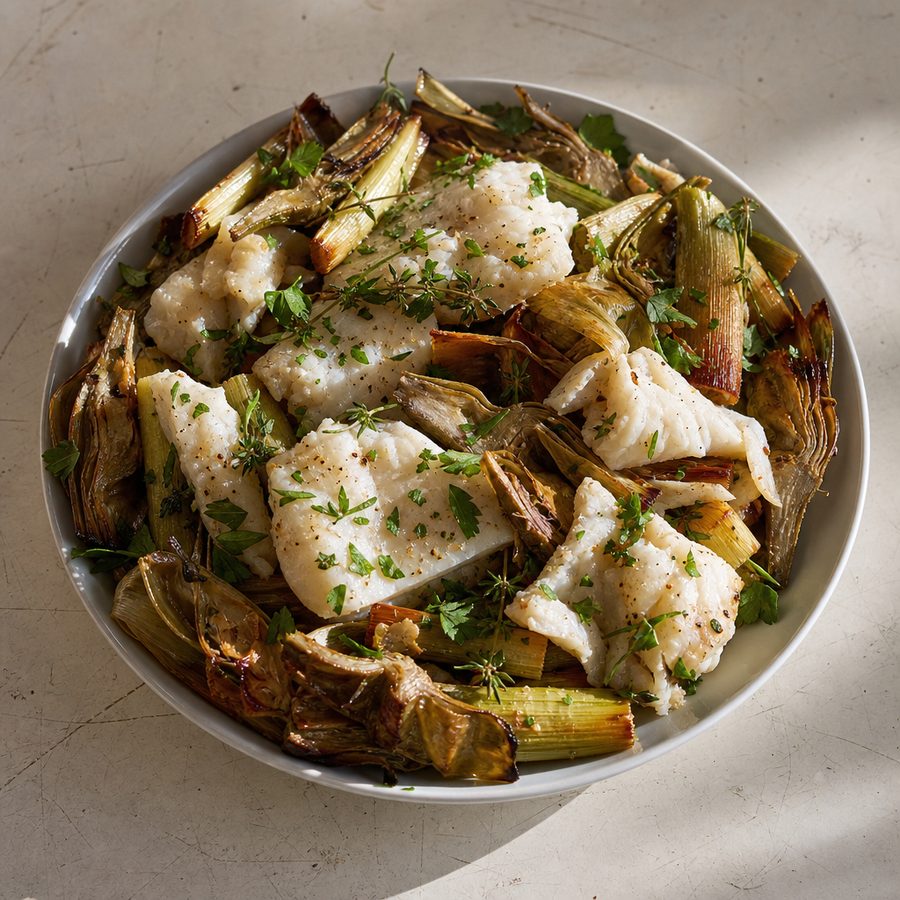
Roasted Halibut with Leeks, Artichokes, and Thyme
Halibut fillets roasted hard on a tray over leeks and artichoke hearts that have already gone golden in olive oil, finished with lemon, thyme, and parsley.
Why You'll Love This Recipe
One tray, two stages, and half an hour is the whole shape of this dinner. The vegetables go in alone first, because leeks and artichokes need real heat and real time to stop tasting like themselves and start tasting sweet and browned. The fish only wants ten minutes, so it goes on top of them partway through and finishes in the steam and oil coming up off the tray. I like this arrangement because there is no pan to watch and no moment where two things need attention at once. You set a timer, chop parsley, and open the oven twice.
Halibut is the fish I choose when I want the eating to feel substantial. It is thick and firm with big sheets of flake, sweeter than most white fish, and it stays in one piece when you lift it off the tray, which cod does not always manage. Underneath, the leeks have gone to velvet and the artichoke hearts have gone two ways at once, tender in the middle and crisp and brown at the leaf tips. Lemon and parsley go over the whole tray at the end and cut a line through the olive oil that has collected in the corners.
This is a good dinner for a night when you want something quiet and slightly elegant without making an occasion of it. It is also the easiest of these dishes to hold, since the vegetables improve while they sit and the fish will wait ten minutes under foil. I make it in early spring when leeks are still cheap and the artichokes in the freezer case are as good as anything fresh, and I serve it straight from the pan with the lemon wedges in a bowl on the table.
Ingredients
- 4 skinless halibut fillets (about 6 oz each), patted dry
- 3 large leeks, white and pale green parts only, halved lengthwise and cut into 1-inch lengths
- 12 oz frozen artichoke hearts, thawed and halved, or jarred hearts drained and quartered
- 3 tbsp extra virgin olive oil, divided
- 5 cloves garlic, smashed and left whole
- 1/3 cup chicken bone broth
- 2 tbsp lemon juice, plus wedges for the table
- 2 tsp fresh thyme leaves, plus a few sprigs for the tray
- 1/3 cup chopped flat-leaf parsley
- 1/3 tsp fine sea salt, divided
Instructions
- Heat the oven hard: Put a rimmed sheet pan in the oven and heat it to 450°F. A tray that is already hot when the vegetables land on it starts the browning immediately and saves you several minutes at the other end.
- Roast the leeks and artichokes: Toss the leeks, artichoke hearts, and smashed garlic with two tablespoons of the olive oil and half the salt. Spread them on the hot tray in one layer, tuck in the thyme sprigs, and roast for ten minutes, until the leek edges are browned and the artichoke leaves have curled and crisped.
- Season the fish: While the tray is in the oven, pat the halibut dry, rub it with the last tablespoon of olive oil, and season it with the rest of the salt and the thyme leaves. Halibut is thick, so make sure the seasoning goes onto the sides as well as the top.
- Roast the halibut on top: Pull the tray out, pour the bone broth around the edges so it hisses and lifts the browned bits, and clear four spaces in the vegetables. Set a fillet in each space and return the tray to the oven for eight to ten minutes. The fish is done when it is opaque through and the flakes separate under gentle pressure at the thickest point, around 130°F (54°C) on an instant-read thermometer, which is medium-rare. The FDA figure for seafood is 145°F (63°C), and halibut carried there loses the large flakes this dish is built around.
- Finish and serve: Squeeze the lemon juice over the whole tray, scatter the parsley, and let it stand for two minutes so the juices settle. Lift each fillet with a wide spatula, spoon the leeks, artichokes, and pan juices around it, and serve with lemon wedges.
Variations
- Olives on the tray: Scatter a handful of pitted kalamata olives over the vegetables for the last ten minutes so they warm and wrinkle in the oil.
- Fennel in place of leek: Two fennel bulbs cut into wedges roast in the same time and give the tray an anise sweetness that suits halibut particularly well.
- Orange rather than lemon: Finish with orange juice and a little grated zest for a rounder, sweeter tray, which is good with the artichokes.
- Add greens: Throw two big handfuls of torn swiss chard or spinach onto the hot tray when the fish comes out and toss until they wilt in the pan juices.
- Rosemary: Trade the thyme for a chopped teaspoon of rosemary, which stands up better if you are using a stronger fish like salmon or mackerel.
Storage & Leftovers
Keep leftovers in a sealed container in the refrigerator for up to three days, fish and vegetables together, with the pan juices poured over the top. Those juices keep the halibut from drying as it sits, which is the main thing that goes wrong with cooked white fish in the cold.
Reheat it covered in a 300°F oven for eight to ten minutes rather than in the microwave, which drives the moisture out of the fish and turns the flakes chalky. A splash of broth or water in the dish before it goes in makes a real difference. Flaked cold halibut over salad greens with the leeks and a squeeze of lemon is the other way I use it.
The roasted leeks and artichokes freeze well on their own for up to three months and come back as a side or as the base for another tray of fish. Cooked halibut does not freeze happily, so I would eat the fish within the three days and freeze only what is underneath it.
Notes & Tips
- Preheat the tray: Vegetables landing on hot metal begin browning at once. On a cold tray they release water first and you spend the first five minutes steaming them.
- Wash the leeks after cutting: Grit hides between the layers and only comes out once the pieces are separated. Swish them in a bowl of cold water and lift them out with your hands so the sand stays at the bottom.
- Dry the artichokes: Whether they came from the freezer or a jar, they carry water that will stop them crisping. A minute with a towel buys you brown, curled leaf tips.
- Give the fish its own space: Push the vegetables aside so each fillet sits on the metal. Halibut set on top of a pile of leeks steams rather than roasts and never firms up properly.
- Pull the fish early: It keeps cooking on the tray for a couple of minutes after it comes out. Taking it at 130°F and letting it rest is what keeps the flakes wet.
- Do not skip the resting minutes: Two minutes lets the juices and the lemon settle into the vegetables. Serve it straight out of the oven and most of that liquid runs off the plate.
Nutrition & Mindful Eating
- Halibut, leeks, and artichokes divide the tray between them. The fish carries the protein and the firm, meaty texture, the leeks melt into sweetness underneath, and the artichokes bring the bite and the browned edges that keep the plate interesting.
- Halibut is a thick, firm white fish with wide flakes, and it delivers a substantial amount of protein along with selenium, magnesium, and a good deal of potassium in a fillet that roasts in ten minutes.
- Leeks roasted at high heat lose their sharpness entirely and turn silky and sweet. They bring fiber of the kind that feeds the bacteria in your gut, and along with the garlic beside them they are the reason the pan juices taste as deep as they do.
- Artichoke hearts are one of the higher-fiber vegetables in the produce aisle, and roasting them dry gives you tender centers and crisp leaf tips at the same time, which is a texture nothing else on this tray provides.
- Thyme, parsley, and lemon are the finish, and they do more than decorate. The herbs are resinous and green against the sweetness of the leeks, and the acid squeezed over at the end cuts the olive oil and makes the fish taste more like itself.
- As you eat, pay attention to how the halibut comes apart in sheets rather than crumbs, and let the two minutes of resting be your cue to sit down properly rather than eating over the pan.
Frequently Asked Questions
How do I know when halibut is done?
Look for opacity and check the thickest part. Slide a paring knife in and twist gently, and the flakes should separate cleanly while still looking wet. On a thermometer, pull it between 130 and 135°F. Halibut is a firm fish that goes dry faster than most, and two extra minutes in the oven is all it takes.
Can I use jarred artichoke hearts?
Yes, and it is worth reading the label. Plenty of jarred hearts are marinated with peppers, chile flakes, or spice blends, so look for ones packed simply in water, oil, salt, and citric acid. Drain them thoroughly and pat them dry, since wet artichokes will steam on the tray rather than crisping.
What other fish works here?
Cod, haddock, and thick sea bass fillets all roast well on this tray. Cod is softer and wants a wide spatula to lift it, and thinner fillets need seven or eight minutes rather than ten. Salmon works too and gives you a richer plate against the sweetness of the leeks.
Why only the white and pale green part of the leek?
The dark green tops are tough and fibrous and stay that way at this temperature. Save them in the freezer for stock, where a long simmer gets everything useful out of them. Leeks also hold grit between their layers, so rinse the cut pieces in a bowl of water and lift them out rather than pouring them into a colander.