
Roasted Radish Halves with Dill
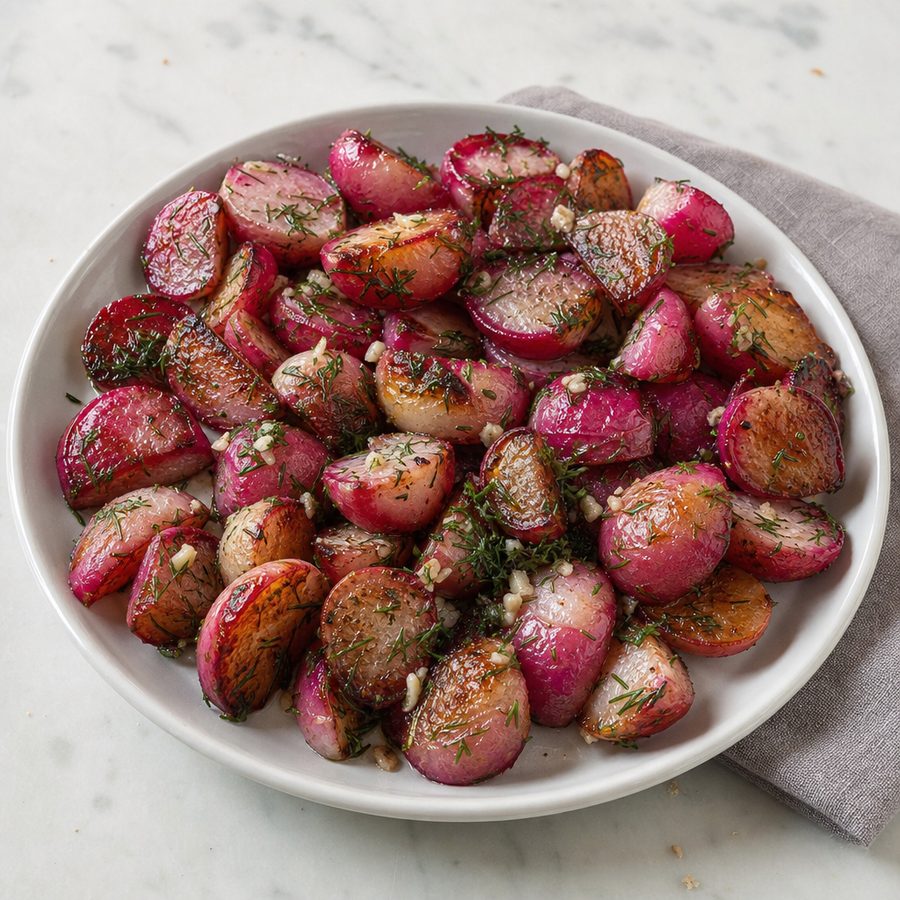
Radishes halved and roasted hot until the sharpness cooks out and the cut faces turn gold, then tossed off the heat with dill, lemon and pan warmed garlic.
Why You'll Love This Recipe
Almost nobody roasts a radish, and almost everybody is surprised the first time. Heat does something quietly remarkable to them. The raw pepperiness cooks away, the flesh goes from crisp white to soft and translucent, and what is left is mild, faintly sweet and a little earthy. I make a tray whenever radishes look good and I have grown tired of eating them cold, usually as a side that goes into the oven while whatever else is on the menu rests before dinner.
The oven has to be genuinely hot and the cut faces have to meet the pan. At four hundred and twenty five degrees the flat sides caramelize to a deep gold while the domed backs stay pale and tender, which gives you two textures inside one bite. Roasting them in halves rather than whole keeps the timing short enough that they soften without collapsing. Give the pan the full ten minutes to heat before anything goes on it, since a radish that lands on cold metal starts by steaming and never quite recovers.
The dill goes on after the pan comes out, never before, along with lemon juice and garlic warmed in the leftover oil. Fresh dill in a hot oven turns to gray dust and loses everything worth having. Off the heat it stays feathery and grassy, and together with the lemon it cuts straight through the sweetness the roots have picked up. Buy the bunch with the radishes still attached to their greens if you have the choice, since firm greens are the clearest sign the roots underneath were pulled recently.
Ingredients
- 1 3/4 lb radishes, trimmed and halved
- 3 tbsp olive oil, divided
- 1/4 cup chopped fresh dill
- 1 tbsp lemon juice
- 3 cloves garlic, minced
- 1/4 tsp salt
- 1/2 tsp black pepper
Instructions
- Heat the oven high: Heat the oven to 425°F (220°C) with a rack in the upper third. That position sits closer to the top element and gives the cut faces more direct heat, which is where the browning you are after actually comes from.
- Trim, halve and dry: Trim the root tails and leafy tops from the radishes, scrub them and dry them thoroughly. Halve each one through the stem end so you have a flat cut face. If some are much larger than the rest, quarter those so everything finishes at the same moment.
- Oil and season: Toss the halves in a bowl with two tablespoons of the olive oil, the salt and the black pepper until they glisten. Hold back the last tablespoon of oil and all of the garlic, both of which would burn at this temperature.
- Roast cut side down: Arrange every half cut side down on a rimmed sheet pan with a little space between them, and roast 20 to 25 minutes without stirring. Leaving them alone is what builds the golden crust, and every pass of the spatula interrupts it.
- Bloom the garlic in the pan: They are ready when the cut faces are deep gold and a paring knife slides into the thickest one with no resistance. Slide the pan out, add the remaining oil and the minced garlic straight onto the hot metal, and toss for thirty seconds so the garlic cooks in the residual heat rather than browning.
- Dress off the heat: Scrape everything into a serving bowl, add the lemon juice and the chopped dill, and toss. Taste, and add a little more lemon if the radishes came out sweeter than you expected, which happens with big spring bunches.
Variations
- Roast the tops too: Wilt the washed radish greens into the hot pan at the end. They taste like a peppery, more delicate mustard green.
- Balsamic glaze: A spoonful of balsamic vinegar over the hot pan reduces to a sticky glaze on the cut faces.
- Thyme and shallot: Roast sliced shallot alongside and use fresh thyme where the dill goes for a rounder, more savory tray.
- Mustard dressing: Whisk a teaspoon of dijon into the lemon and oil before tossing for a sharper, creamier coating.
- Broiler finish: Two minutes under the broiler at the end blisters the cut faces and deepens the color considerably.
Storage & Leftovers
Roasted radishes keep three days in a sealed container in the refrigerator. They soften further as they sit and the dill loses its fluff, so I add half the dill at the table and keep the rest wrapped in a damp paper towel for reheating later in the week.
Reheat them in a hot skillet rather than a microwave. Three or four minutes over medium high heat in a dry pan brings back some of the browning on the cut faces, where a microwave simply makes them wet and floppy. Add the lemon after reheating, never before.
Raw radishes hold about a week if you pull the greens off first, since the leaves keep drawing water out of the roots and leave them hollow and spongy. Store the roots in a bag with a damp towel and they stay firm and snappy.
Notes & Tips
- Halve through the stem: It gives you the widest flat face, and the flat face is where all of the browning happens.
- Dry them properly: Wet radishes steam before they brown, and a steamed radish tastes like not very much.
- Cut side down and leave it: Twenty uninterrupted minutes of contact does more than any amount of stirring.
- Hold the garlic back: Garlic burns long before radishes soften, so it goes onto the hot pan after the oven rather than before.
- Dill after the oven: Roasted dill turns to gray dust; added off the heat it stays feathery and grassy.
- Size them evenly: Quarter the giants so the whole tray arrives at the same doneness together.
Nutrition & Mindful Eating
- The radishes, the olive oil and the dill are the whole tray. Roasting turns the roots sweet and tender, the oil does the browning and carries the garlic, and the dill and lemon arrive at the end to keep something this soft from tasting heavy.
- Radishes are mostly water, which is exactly why they roast so well. The water leaves, the sugars concentrate, and the peppery compounds that make them sharp when raw mellow into something round and gentle in the mouth.
- Dill added after the pan leaves the oven stays feathery and grassy, and that cool anise note is what makes people ask what is on these. It is a herb that gives everything when it is fresh and very little once it has been cooked.
- Olive oil pooled on the cut faces is doing the browning, and it carries its own monounsaturated fat and polyphenols into the dish along with the flavor. It is also what lets the garlic bloom in the residual heat of the pan.
- Each half comes out two ways at once, deep gold and slightly chewy where it met the metal, soft and translucent across the domed side. Lemon squeezed over the hot pan is the last thing in and the first thing you taste.
- As you eat, notice how sweet and gentle the roasting has made these and the way the dill lands right at the end of each mouthful, and give the bowl a few minutes of your attention rather than eating it standing at the stove.
Frequently Asked Questions
Can I roast other roots the same way?
Turnips and kohlrabi behave almost identically, both turning sweet and tender at this temperature. Cut them to the size of a halved radish so the timing holds. Beets need considerably longer and will stain everything else in the bowl pink.
Mine came out watery rather than browned.
The pan was crowded, or the radishes went in still wet from washing. Radishes hold a lot of water and release it as steam, which needs somewhere to go. Dry them well and give each half its own patch of pan.
Can I roast them earlier in the day?
Yes. Roast and cool them, hold at room temperature for a few hours, then give them five minutes back in a hot skillet before serving. Add the lemon, garlic and dill only at the last minute, since acid and fresh herbs both fade with sitting.
Is there any animal product on this pan?
None. It is radishes, olive oil, garlic, lemon, dill, salt, and pepper. It is a good tray to carry to a table where everyone eats differently, since there is nothing anyone has to pick around.