
Salt-Roasted Baby Back Ribs
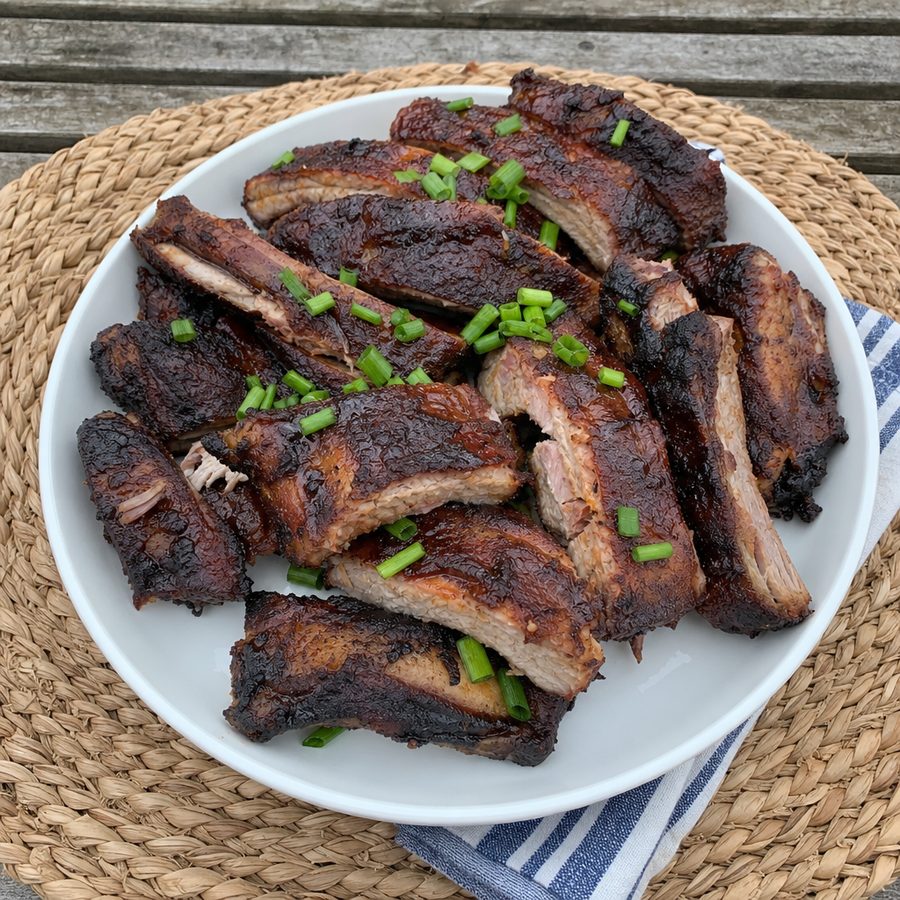
Racks of baby back ribs rubbed with coarse salt and slow-roasted low and slow until the meat pulls cleanly from the bone.
Why You'll Love This Recipe
Two racks, a spoonful of coarse salt, and an oven that does the rest. This is the ribs recipe for a weekend when you want something that feels like an occasion but asks almost nothing of you up front. Ten minutes of prep, then three hours in which the oven is the only one working. Because salt is the only seasoning, it also suits anyone eating carnivore or steering clear of sugar, sauces, and long spice lists.
Low and slow is doing real work here. At 275°F (135°C) the connective tissue that makes raw ribs tough slowly melts into gelatin, which is what gives cooked ribs their silky texture instead of a dry chew. The foil traps steam so the meat never dries out while that happens. Then you open the foil for the last half hour, let the surface dry and brown, and you get crust without losing what the wrap protected. Pulling the membrane off the back matters too, because it never softens and it blocks salt from reaching the meat.
They are rich, and the seasoning stays restrained. Pork ribs carry their own fat, and three hours of gentle heat renders enough of it that the meat tastes seasoned all the way through from salt alone. A couple of ribs with a pile of something green is a full plate. The protein and fat together are slow to leave your stomach, which is why a modest portion holds you for hours instead of leaving you back in the kitchen at nine.
Ingredients
- 2 racks baby back pork ribs (about 4 lb)
- 1 1/4 tsp coarse salt
Instructions
- Take the membrane off the back of each rack: Heat the oven to 275°F (135°C). Pat the racks dry, then slide a butter knife under the thin membrane on the bone side at one end and lift it until you can get a finger under it. Grip it with a paper towel, which is the only way to hold something that slippery, and peel it off in one sheet. It never softens however long the ribs cook, and it keeps salt and heat off the meat, so this is a two-minute job that changes the whole rack.
- Salt them and let them sit: Rub the 1 1/4 teaspoons of coarse salt over both racks, top and bottom, and leave them on the counter for thirty minutes while the oven comes up. Salt on a rib does what salt on a steak does: it draws moisture to the surface, dissolves into it, and is then pulled back into the meat, seasoning it beyond the outer edge. If you have longer, salt them the night before and leave them uncovered on a rack in the refrigerator.
- Wrap them tight and roast them low: Wrap each rack in foil, sealing the edges so nothing can escape, and set them on a sheet pan in case a package leaks. Roast for 2 1/2 hours. The foil traps the steam the ribs give off and cooks them in it, which is what breaks down the connective tissue running through them, and the low oven is what gives that process the hours it needs without drying the meat out around it.
- Test them before you open the foil: Unwrap one package and look at the bone tips: the meat should have pulled back from them by about a quarter of an inch. A toothpick pushed into the meat between two bones should slide in with almost no resistance, and a thermometer should read somewhere between 195 and 203°F, well past done and into the range where the collagen has turned to gelatin. If it is tight, wrap it back up and give it another half hour.
- Open them up to crisp, then rest and slice: Fold the foil back so the tops are exposed and roast for another 20 to 30 minutes, until the surface has darkened, firmed, and stopped looking wet. Then let the racks rest for 10 minutes before they meet a knife, which lets the juices settle and stops the meat shredding as you cut. Slice down between the bones with the rack meat side up, so you can see exactly where each bone runs.
Variations
- Finish on the grill: Move the racks to a 275°F (135°C) grill over indirect heat for the last hour if you want smoke without buying a smoker.
- Darker bark: Skip the wrap for the final stretch and run the oven to 400°F (200°C) for about ten minutes, watching closely so the surface browns without drying out.
- Salt and pepper: A heavy grind of black pepper alongside the salt gives you the classic salt-and-pepper rib with nothing sweet added, though peppercorn is a seed that the autoimmune protocol leaves out.
- Herb and garlic: Rub the racks with chopped rosemary and garlic along with the salt for something closer to a Sunday roast.
- Spare ribs instead: St. Louis cut spare ribs work with the same method. They are meatier and fattier, so give them an extra thirty to forty minutes in the foil.
Storage & Leftovers
Cooled ribs keep in an airtight container in the refrigerator for up to four days. Leave them on the bone, because the bone holds moisture and they reheat far better whole than sliced. If you have already cut them, press a piece of foil against the surface before you cover the container.
They freeze well for up to three months. Wrap each portion tightly in foil, then bag it, and thaw overnight in the refrigerator before reheating. Ribs lose almost nothing to the freezer, so cooking both racks even when you only need one is worth doing.
To reheat, wrap in foil and warm at 300°F (150°C) for about twenty minutes, then open the foil for the last few minutes to bring the surface back. The microwave works in a pinch but softens the crust. Leftover meat pulled off the bone is good cold, straight from the container.
Notes & Tips
- Pull the membrane: Slide a butter knife under it at one end, grip it with a paper towel, and pull. It should come away in a single sheet.
- Dry the meat first: Pat the racks thoroughly before salting. Salt on a wet surface slides off instead of drawing into the meat.
- Salt early if you can: Salting the racks and leaving them uncovered in the refrigerator for a few hours seasons them more deeply than salting right before they go in.
- Seal the foil tightly: Crimp the edges well so steam stays inside. A loose wrap is the usual reason ribs come out tough rather than tender.
- Test, don't clock-watch: Rack thickness varies more than recipes admit. Start checking at two hours and give thicker racks longer.
- Rest before slicing: Ten minutes off the heat lets the juices settle back into the meat instead of running out onto the board.
Nutrition & Mindful Eating
- The pork and the long low heat are the whole recipe. Hours in a slow oven melt the connective tissue between the muscle fibers into gelatin, which is where the silky texture comes from and why the meat lets go of the bone.
- Baby back ribs come from along the spine, where the meat is tender and the fat is marbled through the muscle. That fat bastes the ribs from the inside as they roast, and pork carries iron in the form your body absorbs most readily.
- Coarse salt rubbed over the racks before they go in draws moisture to the surface, and as that surface dries it firms into a burnished, faintly crackling skin. Salt is also what makes pork taste fully of pork.
- Ribs are food you eat with your hands, and part of the pleasure is the way the kitchen smells through the last hour of roasting and the way a bone slides out clean when you pull at it.
- A rack this rich holds you for hours, and the protein in the pork is doing most of that work. Pork also brings thiamin, B12 and zinc, which is true of the plainest cut as much as this one.
- As you eat, use your hands and take your time with it, noticing how little effort the meat needs to come away and how the salted edges taste against the soft inside, and let the plate empty at your own pace.
Frequently Asked Questions
How do I know when they are done?
The meat pulls back from the bone ends and a toothpick slides into the thickest part with no resistance. Time is a guide, not the test. Thicker racks can need another half hour.
Can I make these ahead?
Yes. Roast through the foil stage a day ahead and refrigerate the racks still wrapped. On the day, unwrap and finish in a hot oven for twenty to thirty minutes to brown the surface.
Do I really only need salt?
For this method, yes. Three hours of low heat renders the fat and concentrates the pork flavor, and salt is what carries it. Rubs and sauces are welcome, but they are not doing the heavy lifting.
Do these fit a carnivore or low-carb way of eating?
They do. Pork and salt are the entire ingredient list, so there is nothing added and no starch anywhere in the dish. If you are eating carnivore, this is about as simple as dinner gets.