
Samke Harra Tilapia in Walnut, Tahini, and Cilantro Sauce
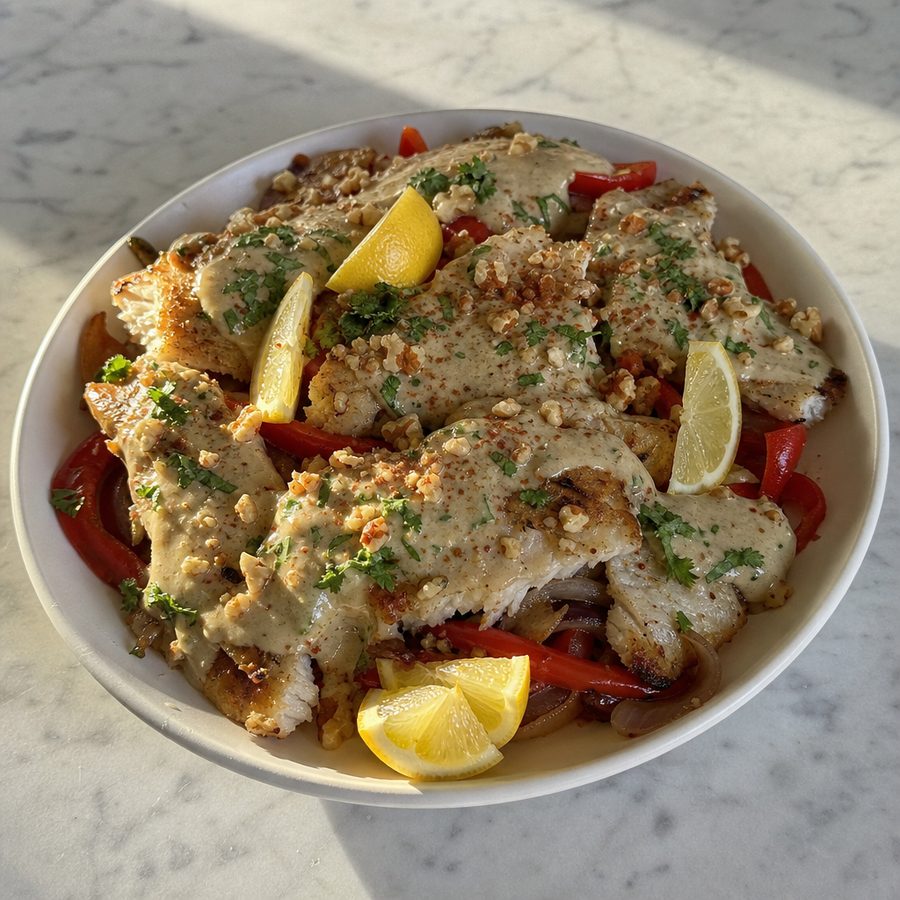
Seared tilapia finished in the Tripoli sauce of tahini, lemon, garlic, and chopped walnuts, with sweet peppers and onions under it and brown rice alongside.
Why You'll Love This Recipe
Samke harra means hot fish, and it belongs to Tripoli on the north coast of Lebanon, where it is usually a whole fish under a blanket of tahini sauce for a table full of people. This is the weeknight shape of it: fillets, one skillet, and a sauce you stir together in a bowl while the pan heats. I make it when I want fish that does not taste like every other piece of fish I cooked that month, and the answer is always the sauce, which is sour, garlicky, nutty, and hot all at once. Everything in it keeps, so once there is a jar of tahini and a bag of walnuts in the house this becomes a dinner you can decide on at six o'clock.
The sauce is worth understanding before you make it. Tahini and lemon juice seize when they meet, going stiff and pasty, and this alarms people the first time. That is exactly what should happen. You then add cold water a spoonful at a time and whisk, and it turns pale, glossy, and pourable, thicker than cream and lighter than the paste you started with. Garlic, cumin, coriander, cayenne, chopped walnuts, and a great deal of cilantro go in at the end, and it should taste too sharp on the spoon, because the fish and the rice will pull it back.
It is a plate with real balance to it. Tilapia is mild and cooks in five minutes, the peppers and onions go sweet and soft underneath, the rice catches the sauce that runs, and the walnuts give you something to chew in a dish that is otherwise all softness. I serve it in the skillet with lemon wedges and let people spoon the extra sauce over their rice, which is the part everyone goes back for. Make more sauce than you think you need, because it disappears, and what is left over will not last two days in the refrigerator with other people in the house.
Ingredients
- 4 tilapia fillets (about 1 1/3 lb total), patted dry
- 1/4 cup well-stirred tahini
- Juice of 2 lemons, about 1/4 cup, plus wedges to serve
- 1/2 cup walnut halves, coarsely chopped
- 1 1/2 cups chopped cilantro, leaves and thin stems, divided
- 5 garlic cloves, 3 grated and 2 thinly sliced
- 1 1/2 red bell peppers, sliced into thin strips
- 1 medium yellow onion, halved and sliced thin
- 3 cups cooked brown rice, warm
- 3 tbsp olive oil, divided
- 1/3 to 1/2 tsp cayenne, depending on how hot you want it
- 1 tsp ground coriander
- 1 tsp ground cumin
- 1/2 tsp freshly ground black pepper
- Scant 1/2 tsp fine sea salt, divided
Instructions
- Make the tahini sauce: Whisk the tahini and lemon juice together in a bowl. It will seize into a stiff paste almost immediately, which is correct. Add cold water a tablespoon at a time, whisking after each, until it flows off the whisk in a smooth ribbon, about 5 to 6 tbsp in all. Stir in the grated garlic, the cumin, the coriander, the cayenne, and half the salt.
- Soften the peppers and onion: Warm 1 1/2 tbsp of the olive oil in a large skillet over medium-high heat. Add the onion and peppers and cook for 6 to 7 minutes, stirring occasionally, until they slump, sweeten, and pick up brown edges. Add the sliced garlic for the last 30 seconds, since it would be bitter long before the peppers had softened if it went in at the start, then scrape everything onto a plate.
- Toast the walnuts: Drop the walnuts into the empty pan over medium heat and toast for 2 minutes, shaking the pan, until they smell warm and nutty and darken a shade, because a raw walnut in this sauce tastes of very little and slightly of tannin. Tip them into the tahini sauce along with 1 cup of the chopped cilantro and stir. Taste it now: it should be sharp, hot, and thick enough to coat a spoon.
- Sear the fish: Season the tilapia with the rest of the salt and the black pepper. Add the remaining 1 1/2 tbsp oil to the pan over medium-high and lay the fillets in, presentation side down. Cook 3 minutes without moving them, until the edges turn opaque and the underside is golden, since tilapia is thin and delicate and leaves half of itself in the pan if it is turned early, then turn once and give them 2 minutes more, until the fish flakes at the thickest part.
- Bring it together: Turn the heat to low, return the peppers and onions around the fish, and spoon the sauce over everything. Warm it for 1 to 2 minutes, just until the sauce thickens slightly and steams, and take the pan off before it bubbles, because tahini splits into oil and grit the moment it boils. Scatter the rest of the cilantro over the top and serve straight from the skillet with the rice and lemon wedges.
Variations
- Pine nuts on top: Fry a handful of pine nuts in olive oil until golden and scatter them over the finished skillet, which is how it is often sent out in Tripoli.
- Baked whole: Roast a whole fish, lay it on a platter, and pour the sauce over it at the table for the version made for company.
- Shrimp: Use shrimp in place of the fillets, cooking them 2 minutes a side, and fold them into the sauce off the heat.
- Roasted cauliflower: Leave the fish out and pour the sauce over a tray of hard-roasted cauliflower for a plate built the same way.
- Green chile heat: Blend a fresh green chile into the sauce with the cilantro for a brighter, greener heat than the cayenne gives.
Storage & Leftovers
Leftovers keep two days in the refrigerator, and the sauce goes on tasting good long after the fish has stopped being at its best. Store the fish with the sauce over it, since the tahini keeps the fillets from drying out, and keep the rice in its own container so it stays loose.
Reheat it covered in a low oven, around 300°F for 8 minutes, or in a skillet over low heat with a splash of water stirred into the sauce first. The tahini tightens as it cools and will look thick and claggy straight from the refrigerator, which a spoonful of water and gentle heat fixes completely.
The sauce on its own keeps five days and freezes for two months, so it is worth doubling. Thaw it in the refrigerator and whisk hard with a little water to bring it back together, since it separates as it thaws. It is excellent over roasted cauliflower or spooned onto a bowl of chickpeas when there is no fish in the house.
Notes & Tips
- Stir the tahini jar first: The oil separates and sits on top, and a scoop from the top or the bottom will give you two completely different sauces. Stir it well before you measure.
- Water, not more lemon: When the sauce seizes, the fix is cold water added slowly. More lemon juice will thin it eventually but leaves you with something too sour to eat.
- Use the cilantro stems: The thin stems carry more flavor than the leaves and chop up fine. Save the thick lower stalks for stock and use everything above them.
- Dry the fillets: Tilapia holds a lot of surface water and wet fish steams rather than sears. Paper towel and thirty seconds is the whole job.
- Keep the pan under a simmer: Once the sauce goes in, low heat and two minutes. A bubbling tahini sauce breaks and there is no undoing it in front of guests.
- Taste the sauce cold: It should be a little too sharp and a little too salty on its own. Spread across the fish and the rice it lands exactly right.
Nutrition & Mindful Eating
- Tilapia, tahini, walnuts, and rice make this a full plate. The fish carries the protein, the sesame and walnuts bring the fat that makes the sauce rich, the peppers and onions add sweetness and bulk, and the rice underneath catches everything.
- Tilapia is a mild, fine-textured fish that cooks through in five minutes and carries a lot of protein for something so light, which is why a sauce this assertive works over it rather than burying it.
- Tahini is nothing but ground sesame, and it brings calcium in a form that is unusual for a seed, along with the fat that lets it turn into a creamy sauce with only lemon juice and water added.
- Walnuts toasted in a dry pan for two minutes give the dish its crunch, and they are the nut with the most alpha-linolenic acid, the plant form of omega-3, which is a good reason to be generous with them.
- Cilantro goes in twice, a cup stirred into the sauce and the rest thrown over at the end, so you get both the deep herbal flavor cooked in and the fresh green lift on top.
- As you eat, notice how the sauce keeps changing depending on whether you catch a piece of walnut, a strip of sweet pepper, or a spoonful of rice, and give the plate the attention that keeps finding.
Frequently Asked Questions
What other fish can I use?
Any mild white fish takes to this sauce: cod, haddock, hake, sea bass, or snapper. Thicker fillets need a minute or two longer per side. The traditional version uses a whole fish roasted and then covered in the sauce, so if you want to do it that way, roast a 2 lb whole fish at 400°F for about 25 minutes and pour the sauce over at the table.
My sauce went grainy and split. What happened?
Heat, almost always. Tahini sauce breaks if you let it boil, so the pan has to be on low when it goes in and off the heat within two minutes. If it splits, take it off, add a tablespoon of cold water, and whisk hard, which brings most sauces back. Different brands of tahini also vary, and a very thick, oily one needs more water than you expect.
Can I make it ahead?
The sauce, yes, and it is better for a few hours in the refrigerator since the garlic and cumin settle into it. Make it up to two days ahead, hold back the cilantro and walnuts until you are ready to cook, and whisk in a little water to loosen it. The fish should be cooked at the last minute, since five minutes is all it needs.
Is there a way to make it less hot?
Cut the cayenne to a pinch and add a little sweet paprika in its place, which keeps the color and the warmth without the heat. The dish is named for its chile, so it will taste different, but the tahini, lemon, garlic, and cilantro are carrying most of the flavor and they hold up fine on their own.