
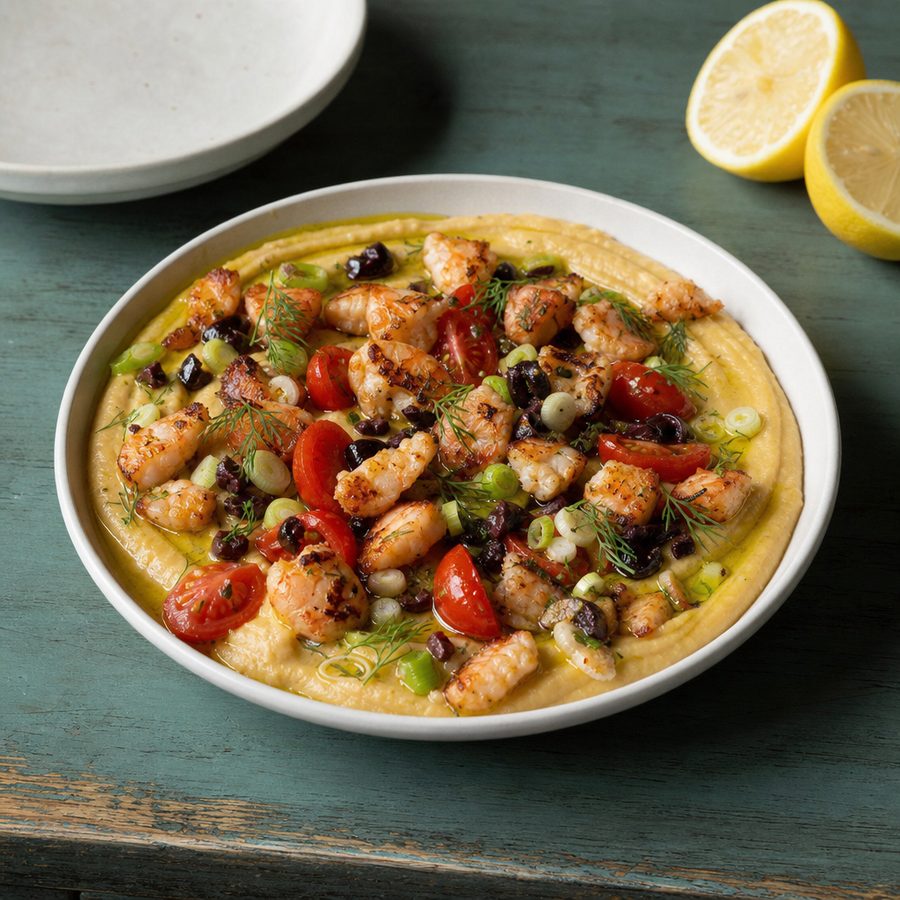
Santorini-Style Split Pea Puree with Seared Shrimp and Scallion
Yellow split peas simmered soft and beaten smooth with olive oil and lemon, spread under seared shrimp and a cold topping of scallion, tomato, olive, and dill.
Why You'll Love This Recipe
On Santorini this puree is served in every taverna with a pool of olive oil in the middle and sliced onion piled on top, and it is one of the small perfect things to eat anywhere in the Aegean. The peas want nothing except water, an onion, a bay leaf, and about forty minutes of quiet simmering, and then they collapse on their own. What turns them into the dish is what happens after the pot comes off the heat, when you beat in olive oil and lemon while the peas are still hot enough to take them in.
I add shrimp because a bowl of puree is a starter and I wanted dinner. They go into a dry, properly hot pan for barely ninety seconds a side, which is all a shrimp ever needs, and they are seasoned with nothing but pepper and oregano so they taste of the sea rather than of a marinade. The contrast is the whole pleasure of the plate: something hot and firm sitting on something warm and soft, with a cold, sharp scatter of scallion and tomato over the lot.
Texture is what people notice first and lemon is what they notice second. Beaten hard while hot, the peas go glossy and almost whipped, closer to a thick hummus than a soup, and they set firmer as they cool, so a leftover bowl eats like a spread. Season it more aggressively with acid than feels right in the pot, because split peas are sweet and earthy and they swallow lemon whole. I make this in late summer when tomatoes are worth quartering and I want dinner that feels like a holiday.
Ingredients
- 1 3/4 cups cooked yellow split peas (from about 3/4 cup dry, simmered in unsalted water)
- 1 lb large shrimp, peeled and deveined, patted very dry
- 3 1/2 tbsp extra-virgin olive oil, divided, plus a little to finish
- 1 small red onion, half chopped for the pot and half sliced paper thin for the top
- 3 garlic cloves, peeled and left whole
- 1 bay leaf
- 3 1/2 tbsp lemon juice, from 2 lemons, plus wedges for the table
- 5 scallions, sliced thin on an angle
- 1 cup cherry tomatoes, quartered
- 10 kalamata olives, pitted and roughly chopped
- 1/3 cup chopped dill, fronds and thin stems
- 2 handfuls arugula (about 2 oz)
- 3/4 tsp dried Greek oregano, crumbled between your palms
- 3/4 tsp coarsely ground black pepper
- 1/2 tsp fine sea salt
Instructions
- Simmer the split peas: Rinse 3/4 cup dried yellow split peas and put them in a saucepan with the chopped half of the onion, the whole garlic cloves, the bay leaf, and 3 cups of water. Bring to a boil, skim off the gray foam that rises in the first few minutes, then lower to a bare simmer and cook, partly covered, for thirty five to forty five minutes. They are ready when a pea crushes to nothing between your fingers and the mixture looks like loose porridge.
- Beat in the oil and lemon: Fish out the bay leaf. Off the heat, add 2 1/2 tbsp of the olive oil, 2 1/2 tbsp of the lemon juice, the salt, and half the black pepper, and beat hard with a wooden spoon for a minute, or blend it in the pot with a stick blender for a smoother finish. It should go glossy and pale gold and fall from the spoon in a thick ribbon. Loosen it with a splash of hot water if it stiffens.
- Make the cold topping: Toss the sliced scallions, the paper-thin onion, the quartered tomatoes, the chopped olives, and two thirds of the dill with the remaining lemon juice and the crumbled oregano. Leave it to sit for ten minutes so the onion softens in the acid and the tomatoes let go of a little juice, which becomes part of the dressing.
- Sear the shrimp: Pat the shrimp completely dry and season them with the rest of the black pepper. Warm the last 1 tbsp of oil in a heavy skillet over high heat until it is just about to smoke. Add the shrimp in one layer, without crowding, and cook ninety seconds on the first side, until the undersides are opaque and lightly browned, then turn and give them forty five seconds more. They should be curled into loose Cs and no further.
- Warm the puree through: Set the pan of puree back over low heat for a minute, stirring, so it is warm rather than hot when it goes into the bowls. It thickens as it stands, so beat in another spoonful of hot water if it has gone stiff. Taste it now and add more lemon and pepper, since this is the last chance to season the base.
- Build the bowls: Spread the warm puree across the base of four shallow bowls and press the back of a spoon into the middle of each to make a well. Scatter the arugula around the edge, arrange the shrimp over the puree, and spoon the cold topping and its juices over everything. Pour a little more olive oil into each well, finish with the last of the dill, and serve with lemon wedges.
Variations
- Caramelized onion top: Cook a sliced onion slowly in olive oil until dark and sweet and pile it on instead of the fresh topping, which is the winter version.
- Caper and parsley: Trade the olives for a tablespoon of rinsed capers and use chopped parsley in place of the dill for a sharper, saltier finish.
- Grilled shrimp: Thread the shrimp on skewers and grill them over hot coals for a minute a side, which adds a smokiness the puree takes well.
- Warm spiced oil: Warm the finishing oil with a pinch of oregano and a little cracked pepper before pouring it into the well.
- Thicker for spreading: Use a half cup less water when you simmer the peas and you get a stiff, spreadable version to serve as a starter with vegetables.
Storage & Leftovers
The puree keeps five days in a sealed container in the refrigerator and sets to a firm, sliceable paste as it chills. That is not a fault, it is how the leftovers are eaten across the islands, spread thick on something with more lemon over it. To bring it back to a puree, warm it gently with hot water beaten in a spoonful at a time.
Keep the shrimp separate and eat them within two days. They are better cold, straight from the container, than reheated, because a second trip through a hot pan turns them rubbery and squeaky in about forty seconds. If you do want them warm, thirty seconds in a covered pan with a splash of water is the limit.
The puree freezes for up to three months in flat, sealed portions and thaws well, which makes it worth cooking a double batch of peas. Thaw overnight in the refrigerator, then reheat slowly with water and beat in fresh olive oil and lemon at the end, since both fade in the freezer. The cold topping should always be made the day you eat it.
Notes & Tips
- Skim the foam early: Split peas throw off a gray foam in the first five minutes, and it tastes muddy. Lift it off with a spoon and the finished puree is cleaner and brighter in color.
- Beat while it is hot: Oil and lemon go into hot peas and disappear into them. Stirred in cold, they sit on the surface and the texture never turns glossy.
- Salt only at the end: Salt added at the start of the simmer keeps the skins firm and adds twenty minutes to the pot for no reason at all.
- Dry the shrimp until they squeak: Wet shrimp steam and go pale. Blotted properly and dropped into a hot pan, they brown in ninety seconds and stay tender inside.
- Let the topping sit ten minutes: The onion needs that long in the lemon to lose its bite, and the tomatoes give up juice that turns the whole scatter into a dressing.
- Keep hot water beside you: This puree thickens the moment you turn your back on it. A spoonful of hot water beaten in brings it straight back.
Nutrition & Mindful Eating
- The split peas, the shrimp, and the cold topping are three separate things that need each other. The peas give the bowl its body and most of its fiber, the shrimp sit on top as firm, sweet protein, and the scallion, tomato, and lemon cut through a base that would otherwise be very rich and very soft.
- Yellow split peas break down completely with no soaking and turn into a puree on their own, which is unusual among legumes. That collapse is the soluble fiber doing its work, and it is the same fiber that makes a modest bowl of this hold you the way it does.
- Shrimp cook in under two minutes and bring a serious amount of protein for the time they ask. They also carry selenium and iodine, and the trick with them is entirely about restraint, since the difference between tender and rubbery is about forty five seconds.
- Olive oil beaten into the hot peas is doing more than adding richness. It is what gives the puree its gloss and its silky mouthfeel, and its monounsaturated fat is what carries the flavor of the oregano and the lemon through the whole bowl.
- Dill, scallion, and quartered tomatoes go on cold and stay cold, and that contrast against the warm puree is the point of the plate. The dill in particular is grassy and slightly anise-like, and it keeps a bowl this soft from tasting like one note all the way down.
- As you eat, drag each shrimp through the puree and into the pool of olive oil in the middle, notice how the cold tomato and onion reset your mouth between bites, and let the bowl take as long as it wants to take.
Frequently Asked Questions
Are these the same as fava beans?
No, and the name causes real confusion. In Greece this dish is called fava, but it is made with small yellow split peas rather than the broad green beans that share the name in English. Buy yellow split peas, and note that Santorini grows a local variety that is worth seeking out if you ever see it.
My peas will not soften. What happened?
Usually one of two things. Old split peas that have sat in the cupboard for a couple of years never fully break down, so buy them somewhere with turnover. The other culprit is salt or acid added early, both of which keep the skins firm, which is why the salt and lemon go in only once the peas have collapsed.
Can I make it ahead for guests?
It is ideal for that. Cook the peas up to three days early and keep them in the refrigerator, then reheat with water and beat in the oil and lemon just before serving. The shrimp take two minutes and should be done at the last moment, and the topping can be tossed an hour ahead and left on the counter.
What else can go on top?
Grilled octopus is the classic in the Cyclades, and seared scallops work beautifully. For a plate with no seafood, roasted cherry tomatoes or a heap of braised greens over the puree is completely satisfying. Whatever goes on top, keep the sliced onion and the lemon, since they are what make the dish taste like itself.