
Sardine BuÄŸulama with Potatoes, Tomatoes, and Dill
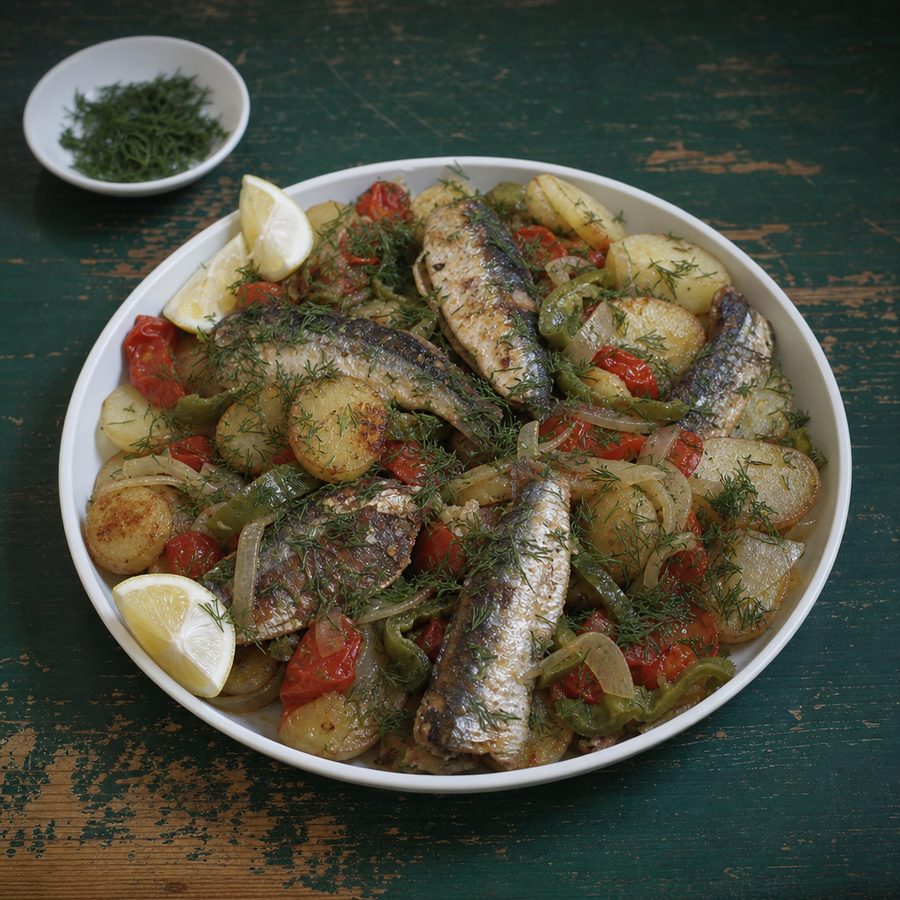
A Black Sea style covered braise of sliced potatoes, sweet onion, green peppers, and tomatoes, with sardines laid over the top to steam through and a great deal of dill and lemon at the end.
Why You'll Love This Recipe
BuÄŸulama is the Black Sea way with small oily fish, and the word means steamed. Everything goes into one wide pan, the lid goes on, and the vegetables cook in their own juice with a splash of broth until the potatoes give way. Where the coast uses fresh anchovies straight off the boat, I build the braise first and lay tinned sardines over it at the very end, just long enough to heat through. It gives you the same dish on a Tuesday in a landlocked town, and the fish arrives whole and glossy rather than stirred to pieces. Nothing about it is difficult and almost none of it needs watching.
What I love here is how gentle the whole thing is. Nothing browns, nothing sizzles hard, and the flavors stay clear and separate: sweet onion, green pepper, the slight sharpness of tomato, potatoes that taste of the pan liquid they cooked in. Then dill goes over the top in an amount that looks like too much and is not, and the lemon lands last. Sardines are strong fish, and dill and lemon are exactly what stands up to them without any fight. A pinch of pepper flakes keeps the whole pan from going soft-spoken. Everything tastes like itself, which is rarer in a one-pan dinner than it sounds.
This is a thirty-five minute dinner that costs very little and tastes like the sea. I make it on nights when the refrigerator is thin and the pantry is doing the work, and I make it in summer when the tomatoes are worth eating. It wants bread on the table for the juices at the bottom of the pan, and it is good warm rather than piping hot, which means it can sit while somebody finishes what they were doing. Leftovers eat well cold, straight from the container, with more lemon. I have made it with January supermarket tomatoes and it was still worth cooking, though July is when it sings.
Ingredients
- Four 3.75 oz tins sardines packed in olive oil, drained, soft bones left in
- 1 lb Yukon Gold potatoes, scrubbed and sliced into 1/4-inch rounds
- 2 cups cherry tomatoes, halved
- 2 mild green peppers such as poblano or Anaheim, seeded and cut into thin strips
- 1 large yellow onion, halved and sliced thin
- 4 garlic cloves, sliced
- 2 1/4 tbsp extra virgin olive oil
- 3/4 cup vegetable broth or water
- 2 tbsp fresh lemon juice, plus wedges for the table
- 1/2 cup chopped fresh dill, fronds and tender stems
- 1/3 cup chopped fresh flat-leaf parsley
- 2 dried bay leaves
- 1 tsp coarsely ground black pepper
- 1/4 tsp Aleppo style pepper flakes or a pinch of cayenne
- scant 1/4 tsp fine sea salt
Instructions
- Slice everything before you start: This cooks in one uninterrupted stretch, so have the potatoes in 1/4-inch rounds, the onion sliced thin, the peppers in strips, and the garlic sliced before the pan goes on. Thin potatoes matter more than they sound: at a quarter inch they cook through in the time the pan takes, and any thicker and they stay chalky in the middle.
- Soften the onion and peppers: Warm the olive oil in a wide lidded pan over medium heat. Add the onion, the peppers, and a pinch of the salt and cook for six to seven minutes, stirring now and then, until the onion is translucent and slumped and the peppers have lost their squeak. Keep the heat gentle, since color is not what you are after.
- Layer the potatoes and tomatoes: Stir in the garlic and cook it for thirty seconds, until it smells sweet. Lay the potato rounds over the vegetables in overlapping layers, tuck in the bay leaves, and scatter the halved tomatoes and the black pepper on top. Pour in the broth, bring it to a simmer, then cover and cook over low heat for fifteen minutes.
- Check the potatoes: Lift the lid and slide a knife into a potato round. It should go in with almost no resistance, and the tomatoes should have collapsed into the liquid and turned it pink. If the pan looks dry, add a few tablespoons of water, since the fish still needs steam to warm in.
- Steam the sardines through: Lay the drained sardines over the vegetables in a single layer, sprinkle on the pepper flakes, cover, and cook for four to five minutes over low heat, until the fish is hot all the way through and glossy. Do not stir after this point, or the fillets will break up into the potatoes.
- Finish with dill and lemon: Take the pan off the heat, pour the lemon juice over everything, and scatter on the dill and parsley in a thick layer. Put the lid back on for two minutes so the herbs steam and go fragrant, then bring the whole pan to the table with lemon wedges and let people serve themselves down through the layers.
Variations
- With white beans: Stir a cup of drained cannellini beans in with the tomatoes, which turns the pan into something closer to a stew and stretches it to five.
- Greens underneath: Wilt a few handfuls of chopped collard greens or chard into the onion before the potatoes go on, so the braise has something dark green running through it.
- Tomato paste base: Cook a tablespoon of tomato paste with the garlic for a minute before layering. It deepens the color and gives the pan liquid more body.
- Fennel and orange: Swap half the onion for thinly sliced fennel and finish with orange juice in place of half the lemon, which sends the whole pan sweeter and more aromatic.
Storage & Leftovers
It keeps three days in a sealed container in the refrigerator. The potatoes go on absorbing the tomato and lemon liquid overnight, so the second day tastes more seasoned than the first, and the fish holds together better once it is cold and set.
Reheat it covered in a low oven or in a pan over low heat with a spoonful of water, five to six minutes, until the steam comes back. High heat pushes the sardines apart and dries the potatoes, so keep it slow. Fresh dill and a squeeze of lemon at the end wake it up again.
I would not freeze this one. Potatoes cooked in liquid turn grainy after a freeze and the sardines fall apart entirely on thawing. It is quick enough to make fresh, and it is a dish that rewards good tomatoes rather than long storage.
Notes & Tips
- Use a wide pan, not a deep one: Everything here cooks in a single shallow layer under a lid. A tall pot steams unevenly and the potatoes at the bottom turn to mash before the top ones are done.
- Slice the potatoes thin and even: A quarter inch is the number. Uneven rounds mean some are falling apart while others are still hard in the middle, and there is no way to fix that once the lid is on.
- Add the fish last and stop stirring: Sardines are already cooked in the tin. They need heat and steam, not time, and a spoon dragged through the pan turns them into shreds.
- Be generous with the dill: Half a cup looks like a lot on the board and disappears into the pan. Dill is what makes this taste Turkish rather than generic, so measure it with a loose hand.
- Let it sit before serving: Five minutes off the heat lets the liquid settle back into the potatoes. Served straight off the burner it tastes thinner than it should.
Nutrition & Mindful Eating
- Sardines, potatoes, and the pan of vegetables under them are the whole plate. The fish carries the protein, the potatoes soak up the tomato liquid and give the dish its body, and the peppers, onion, and tomatoes are what keep something this rich tasting bright.
- Sardines are small oily fish meant to be eaten whole with their soft bones, and those bones are where the calcium sits. They bring omega-3 fats and vitamin D along with them, which is a lot to get from a tin that costs what it does.
- Potatoes cooked in their skins hold on to their potassium, and gold potatoes have a waxy, close flesh that keeps its shape through a covered braise rather than dissolving into the liquid.
- Dill goes on by the handful at the end rather than during the cooking, so its oils stay green and grassy. Fresh herbs used at that volume stop being a garnish and start being a vegetable, and dill carries a surprising amount of calcium of its own.
- Lemon juice poured over the pan off the heat does two things at once. It cuts the oiliness of the fish, and the vitamin C in it helps your body take up more of the iron that the sardines bring.
- As you eat, notice how the potatoes taste of the tomato and lemon they cooked in, and take the pan slowly enough that you find the sweet collapsed pieces of pepper at the bottom.
Frequently Asked Questions
Can I use fresh fish?
Yes, and on the coast that is the point of the dish. Use small whole fish such as fresh sardines or smelt, cleaned, or thin fillets of a firm white fish. Lay them on the vegetables in the same way and steam for six to eight minutes, until the flesh turns opaque and pulls easily from the bone.
Do I really eat the little bones?
You do, and they are so soft after canning that most people never notice them. They are also what makes canned sardines worth reaching for in the first place, since the calcium lives in the bones. If the texture bothers you, run a fork down the center of each fillet and lift out the spine before serving.
My potatoes were still hard when the fish was ready.
The slices were probably too thick, or the heat too low to hold a steady simmer under the lid. Cook the potatoes until a knife slides in easily before the fish goes anywhere near the pan. That stage is the one worth being patient about, and the sardines only need five minutes at the end.
Which sardines should I buy?
Ones packed in olive oil with the bones in. They are firmer and taste rounder than the water-packed kind, and you can use a little of the oil from the tin in place of some of the olive oil if you want the flavor to run deeper into the vegetables.