
Sardine and Radicchio Breakfast Plate with Fennel
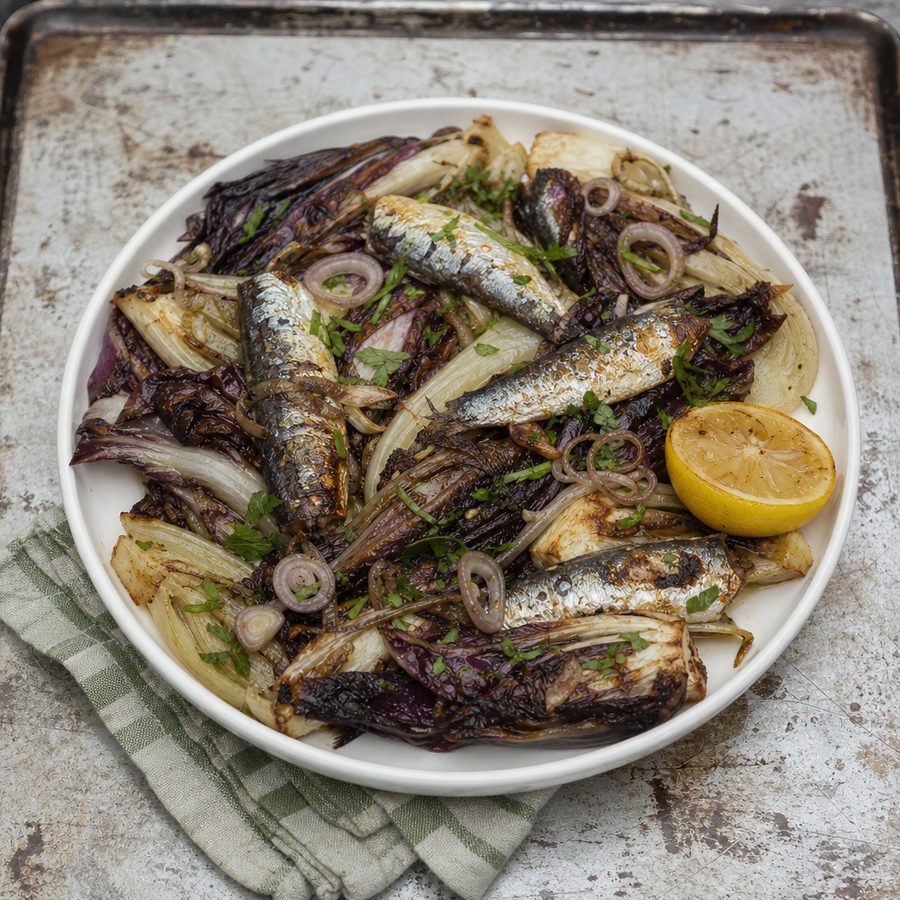
Charred fennel and radicchio wedges under whole sardines, dressed with lemon, sliced shallot, and parsley for a bitter, savory start to the day.
Why You'll Love This Recipe
This is a plate for someone who has decided that breakfast does not have to be sweet, and it is ready in about twenty minutes with almost no washing up. Tinned sardines are the most useful thing in my cupboard during an elimination phase, because they need no cooking, they keep for years, and one tin is a serious amount of protein for the price of a coffee. I make this on mornings when the fridge is nearly empty, since a bulb of fennel and a head of radicchio last well over a week and both of them turn into something else entirely under high heat.
Charring is the whole technique, and it is worth being braver with the heat than feels comfortable. Fennel goes in first, cut side down in a dry hot skillet, and stays there without being moved until the faces are properly blackened in patches, which takes the raw anise bite away and leaves it sweet and soft. Radicchio needs only a minute or two on each cut side, just long enough to collapse slightly and pick up some smoke, because bitterness mellows fast with heat but the leaves turn to slime if you leave them. The shallots go on raw and thin, and the lemon goes over everything while the vegetables are still hot enough to drink it in.
Sardines have a strong flavor and this plate is built to meet it rather than hide it. Bitter radicchio, sweet charred fennel, sharp lemon, and raw shallot all stand up to the fish, and the olive oil pulls them together. It eats like something you would be served at a table in Sicily at an odd hour. Two small fish and a plate of vegetables sounds like very little until you have eaten it, at which point you will notice you are not thinking about food again until well after midday.
Ingredients
- 4 tins whole sardines (about 3 3/4 oz each), drained
- 1 large fennel bulb, cut into 1/2-inch wedges through the root, fronds reserved
- 1 small head radicchio (about 7 oz), cut into 6 wedges through the core
- 1 large shallot, sliced paper thin
- 2 1/2 tbsp olive oil, divided
- Juice of 1 lemon (about 2 tbsp), plus wedges to serve
- 1/4 cup chopped flat-leaf parsley
- 1/2 tsp fine sea salt
Instructions
- Prep the vegetables: Trim the fennel, reserving the feathery fronds, and cut the bulb through the root into half-inch wedges so each one holds together. Cut the radicchio through the core into six wedges. Slice the shallot as thinly as you can manage and set it aside in the lemon juice.
- Char the fennel: Heat a dry cast iron skillet over medium-high for two minutes, then add one tablespoon of the olive oil. Lay the fennel wedges down on one cut side and leave them completely alone for four to five minutes, until the faces are blackened in patches. Turn onto the second cut side and give them another three minutes, until a knife slides into the thickest part.
- Char the radicchio: Move the fennel to a plate. Add another half tablespoon of oil to the pan and lay the radicchio wedges cut side down. Cook for one to two minutes a side, until the edges blacken and the leaves just begin to collapse. Pull it while the center is still firm, since radicchio goes limp very quickly.
- Dress the vegetables: Arrange the fennel and radicchio across four plates while they are still hot. Spoon the shallots and their lemon juice over the top, add the salt, and let everything sit for two minutes so the warm cut faces absorb the dressing.
- Add the sardines and finish: Drain the sardines and lay them whole over the vegetables, or split them along the backbone if you prefer them opened out. Drizzle with the remaining olive oil, scatter the parsley and the chopped fennel fronds, and serve with lemon wedges.
Variations
- Orange and olive: Swap the lemon for orange juice and add a handful of chopped kalamata olives, which turns the plate sweeter and saltier at the same time.
- Milder leaves: Use halved heads of endive rather than radicchio for a gentler, crunchier plate that chars just as well in half the time.
- With avocado: Add half a sliced avocado per plate for a richer, softer breakfast that eats more slowly and carries a hungrier morning.
- Herb-forward: Trade the parsley for torn mint and dill together, which lightens the whole plate and plays against the smoke from the pan.
- Grilled outdoors: Char the fennel and radicchio on a hot grill rather than in a skillet, four minutes a side over direct heat, for a smokier plate in summer.
Storage & Leftovers
The charred vegetables keep in a sealed container in the fridge for up to three days and are genuinely good cold, so I often char a double batch and build the plate from the fridge on the next two mornings. Dress them fresh each time rather than storing them already dressed.
Add the sardines only when you are ready to eat. Once a tin is open, transfer whatever is left into a small glass container with a lid, cover with a little olive oil, and use it within two days. Sardines left in an open tin in the fridge pick up a metallic edge.
Nothing here freezes. Fennel and radicchio both collapse into water on thawing, and the sardines come out of the freezer mushy and strong-smelling. The good news is that the whole plate is a twenty minute job from scratch, so there is little reason to try.
Notes & Tips
- Cut through the root: Both the fennel and the radicchio need the core left intact, or the wedges fall into loose leaves and burn. Cut through the base every time.
- Get the pan properly hot: A timid pan steams the vegetables gray. Two minutes of preheating and then no fiddling is what gives you the black patches this plate is built on.
- Do not move the fennel: Every turn costs you color. Set the wedges down, walk away for four minutes, and only then look underneath.
- Pull the radicchio early: It goes from charred to slimy in about a minute. The centers should still be firm and pink when it leaves the pan.
- Dress the vegetables hot: Warm cut faces drink up lemon and oil in a way cold ones never will. Two minutes of sitting is enough.
- Read the tin: Sardines vary a lot. The ones packed in plain olive oil with nothing else taste cleaner here, and they leave you a spoonful of good oil to add back to the plate.
Nutrition & Mindful Eating
- Small oily fish against bitter leaves and sweet charred fennel is an old combination and a very sound one. The sardines carry the protein and the fat, the vegetables carry the fiber and the bite, and the lemon holds the two halves together.
- Sardines are meant to be eaten whole, soft bones included, which is where their calcium comes from. They are also one of the few foods that carry meaningful vitamin D, and their omega-3 fats have been studied for years in connection with heart and brain health.
- Radicchio belongs to the chicory family, and the compounds behind that bitterness are the same ones traditionally credited with waking up the appetite before a meal. It also carries inulin, a fiber your gut bacteria feed on.
- Fennel tastes of anise raw and turns sweet and mellow once the cut faces blacken, and the anethole responsible for that aroma is the same compound in the seeds people chew after dinner to settle the stomach.
- Raw shallot and lemon go over everything at the end, cold and sharp against the smoke. That contrast is what makes a plate of strong fish and bitter leaves taste bright rather than heavy at breakfast time.
- As you eat, notice the way the bitterness of the radicchio fades once the lemon and the oily fish arrive, and give yourself the whole plate before deciding whether you want more.
Frequently Asked Questions
Do I have to eat the bones?
You do not, but I would. The backbone in a tinned sardine is so soft you will not notice it, and it is the reason these little fish carry the calcium they do. If it bothers you, run a thumbnail down the belly and lift the spine out in one piece before the fish goes on the plate.
Radicchio is too bitter for me. What can I do?
Soak the cut wedges in cold water for ten minutes and pat them dry before they hit the pan, which pulls out a good deal of the bitterness. Charring them harder helps too, and so does being generous with the lemon and the olive oil. Endive or radicchio's milder cousin treviso are gentler options.
Can I use a different tinned fish?
Yes. Tinned mackerel is the closest in character and goes in at the same weight. Tuna works and is much milder, though you lose the soft bones. Smoked trout or smoked salmon, flaked over the warm vegetables, turn this into a softer, less assertive plate.
Does this fit an AIP elimination phase?
It does, with one thing to check. Fish, fennel, radicchio, shallot, lemon, parsley, and olive oil are all fine, but read the tin: many tins carry chili, black pepper, mustard seed, or soybean oil. Look for fish packed in olive oil, water, or nothing else.