
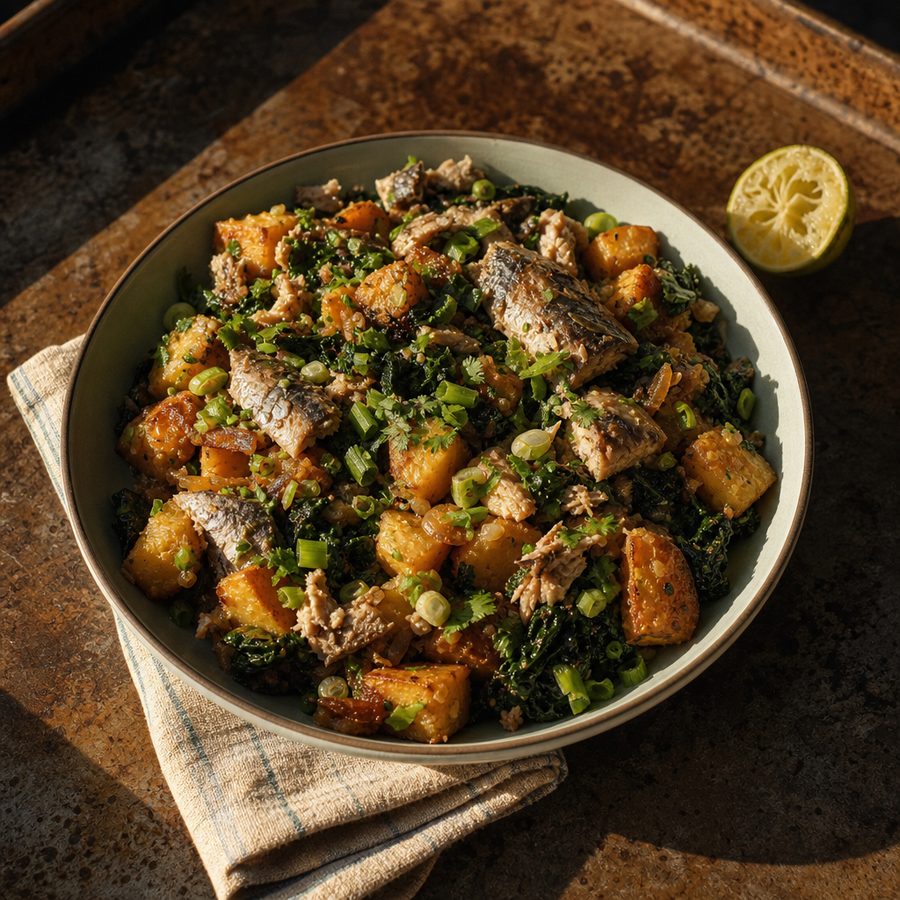
Sardine and Yam Hash with Lime and Cilantro
Cubed yam browned until the corners crisp, cooked down with onion, garlic, and dandelion greens, then folded off the heat with sardines, lime, and a lot of cilantro.
Why You'll Love This Recipe
Sardines are the least expensive good protein in the store, and most people own three tins they have never opened. This is the dish that gets them opened. It is a hash, so it is hot and browned and eaten from a bowl with a fork, and it comes together in about forty five minutes with a yam and an onion. I make it on the days when the refrigerator is empty, because a yam keeps for weeks in a cupboard and the fish keeps indefinitely beside it. If tinned sardines have only ever meant a cold plate to you, browning a starchy root first is what turns them into a proper hot lunch.
True yam is not the orange thing sold under that name in most American stores. It is a large, rough-skinned tuber with dry white flesh, and it browns harder and crisps better than almost any root I cook, though it needs a little help getting tender in the middle. So the cubes go into hot oil and sit undisturbed for five minutes to build color, then a splash of water goes into the pan with the lid on to steam them through, then the lid comes off so the outsides crisp back up. The onion goes in after, because onion releases water and pale, steamed yam is what you get if they share the pan too early.
The sardines go in off the heat, and that is not a small detail. They are already cooked, so all they need is to warm through, and stirring them into a pan still on the burner turns them to paste in about thirty seconds. Lay them over the top, break them into large pieces with the side of a spoon, and fold the pan over once. Lime juice and a half cup of cilantro go on last, which is what keeps an oily fish from sitting heavy. Sardines are strong, so if you think you dislike them, try them here first, against sweet yam and bitter greens, where the fish is one voice rather than the whole choir.
Ingredients
- 3 cans (4.4 oz each) sardines in olive oil, drained
- 1 1/4 lb yam, peeled and cut into 1/2-inch cubes
- 6 cups chopped dandelion greens (about 5 oz), thick stems removed
- 1 large yellow onion, diced (about 1 cup)
- 4 cloves garlic, minced
- 3 tbsp avocado oil, divided
- 1 tsp dried oregano
- 3 tbsp fresh lime juice (about 2 limes)
- 1/2 cup chopped fresh cilantro
- 3 scallions, thinly sliced
- 3/4 tsp fine sea salt, divided
Instructions
- Peel and cut the yam: Cut the yam into thick rounds first, stand each round on its flat side, and cut the rough skin away with a knife rather than a peeler. Cut the flesh into half-inch cubes and keep them in a bowl of cold water if you are not cooking straight away, since the cut faces discolor quickly.
- Brown the yam: Pat the cubes dry and heat 2 tablespoons of the avocado oil in a large cast iron skillet over medium-high until it shimmers. Add the yam in a single layer with a quarter teaspoon of the salt and leave it undisturbed for 5 minutes, until the undersides are deep gold. Toss once and cook 3 minutes more.
- Steam it tender, then crisp it again: Add 3 tablespoons of water to the hot pan and clamp the lid on for 5 to 6 minutes, until a cube gives easily to a knife. Take the lid off, raise the heat, and cook 2 minutes more until the water has gone and the edges have crisped back up. Move the yam to a plate.
- Cook the onion: Add the remaining tablespoon of oil to the same skillet and lower the heat to medium. Cook the onion with another quarter teaspoon of salt for 6 to 7 minutes, scraping up the browned bits the yam left behind, until it is soft and gold at the edges.
- Add the garlic, oregano, and greens: Stir in the garlic and oregano and cook for 45 seconds, until the garlic smells sweet rather than raw. Add the dandelion greens in two handfuls with the remaining salt, turning them until each batch collapses, about 3 minutes in all. They will still taste bitter, which is exactly what you want against the yam. Fold the yam back in and take the pan off the burner.
- Finish with the sardines and lime: Lay the drained sardines over the top and break them into large pieces with the side of a spoon. Fold the pan over once or twice, no more. Add the lime juice, the cilantro, and the scallions, taste for salt, and serve straight from the skillet while the yam still has its crisp corners.
Variations
- Smoked mackerel: Swap the sardines for flaked smoked mackerel at the same weight for a smokier, oilier pan.
- Gentler greens: Use collard greens or spinach in place of the dandelion when you want the bitterness dialed down.
- Ginger and lime: Grate a tablespoon of fresh ginger in with the garlic for a sharper, warmer version of the same skillet.
- Root swap: Use cassava or taro cut the same size when yam is hard to find, keeping the same steam-then-crisp method.
- Fruit at the end: Scatter diced mango or pineapple over the finished pan for a sweet, sharp note against the fish.
Storage & Leftovers
It keeps in a sealed container in the refrigerator for up to 3 days and travels well in a lunch bag, warm or cold. The yam softens overnight and loses its crisp corners, but the flavor deepens as the lime and oregano work through it. Cool it uncovered for 15 minutes before the lid goes on.
Reheat it in a dry skillet over medium heat for 3 to 4 minutes, spread out and left alone at first so the yam picks a few of its edges back up. A microwave will get it hot in 90 seconds, though everything comes out uniformly soft and the fish goes a little stronger in smell.
Freezing is not worth it. Cooked yam turns grainy and weeps water on thawing, and the sardines break down to nothing. What does work ahead is browning the yam and cooking the greens a day early, then reheating that base and adding the fish, lime, and cilantro fresh.
Notes & Tips
- Peel yam with a knife: The skin is rough and bark-like and a vegetable peeler slides straight off it. Cut the tuber into rounds first so you have a flat base to work against.
- Dry the cubes before they hit the oil: Yam holds surface water, and wet cubes steam rather than brown. A minute with a towel is the difference between gold corners and gray ones.
- Brown first, steam second: Color will not develop once water is in the pan. Build it in the first 5 minutes, then let the lid do the work of cooking the middles.
- Take the pan off the heat before the fish: Sardines are already cooked and they are fragile. Off the burner they warm through and stay in pieces, and on it they turn to paste.
- Save a spoonful of the tin oil: If your sardines are packed in olive oil, that oil is full of flavor. A tablespoon of it into the onion is free seasoning.
- Lime at the very end: Acid added to a hot pan goes flat and slightly bitter. Off the heat it stays sharp, and it is what balances the oil in the fish.
Nutrition & Mindful Eating
- Sardines, yam, and bitter greens make a complete plate between them. The fish brings the protein and the fat, the yam brings the starch and the sweetness, and the dandelion greens keep the whole skillet from tipping into richness.
- Sardines are small fish eaten whole, soft bones and all, which is where the calcium comes from, and they carry vitamin D and long-chain omega-3 fats as well. Very few foods bring all three at once, and a few of them anchor a pan this size.
- Yam has dry, faintly sweet white flesh and holds its shape better than most roots in a hot skillet. It brings potassium and vitamin C along with the kind of carbohydrate that arrives wrapped in fiber, which is what makes this eat like a hot meal rather than a snack.
- Dandelion greens are properly bitter, and that bitterness is doing real work against the oil in the fish. They carry vitamin K and vitamin A, and their bitter compounds have long been associated with supporting digestion.
- Lime juice and a half cup of cilantro go in off the heat, where both stay sharp and green. That hit of acid at the end is what makes an oily fish taste bright, and it is why you reach for the salt shaker less than you might expect.
- As you eat, notice the crisp browned corners of the yam landing against the salt of the fish, and let the lime and cilantro register on the back of your palate before you go in for the next forkful.
Frequently Asked Questions
Is this the same as a sweet potato?
No. True yam has rough bark-like skin and dry white flesh, and it is sold in Caribbean, African, and Latin markets, often in cut pieces. The orange sweet potato labeled yam in most supermarkets is a different plant, and it will work here but goes softer and much sweeter.
Does it matter whether the sardines are packed in oil or water?
Not much. Sardines in olive oil are richer and hold together better, and you can spoon a tablespoon of that oil into the pan with the onion. Sardines in water are milder and want an extra squeeze of lime. Check the label either way for soy oil or added spices.
Can I make this for the week?
Yes, and it is one of the better lunches to pack. Make the whole thing, portion it into four containers, and eat it cold or reheated. If you want the yam at its best on Thursday, cook the base ahead and add the fish and herbs the morning you eat it.
Does this fit an AIP elimination phase?
It does. There are no grains, legumes, dairy, eggs, nuts, seeds, or nightshades here, and the seasoning is onion, garlic, oregano, lime, and cilantro. Read the sardine tin, since some carry chili, mustard seed, or smoke flavoring that would not belong in an elimination phase.