
Sardines and White Beans over Lemony Dandelion Greens
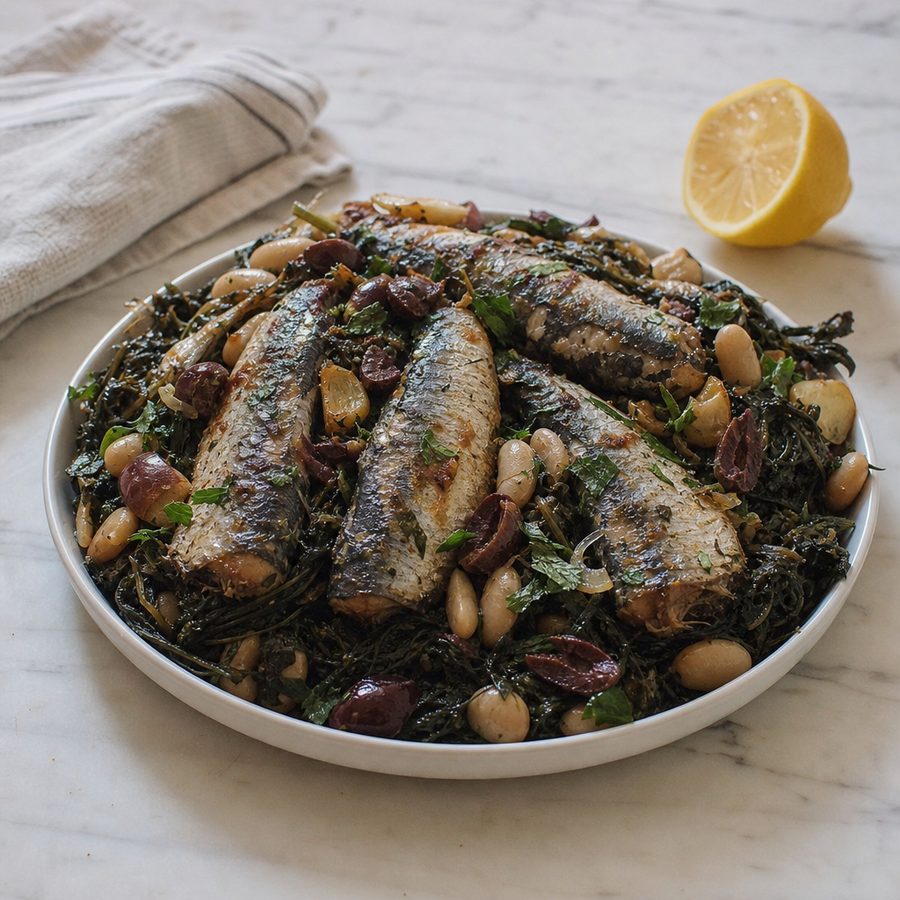
Canned sardines laid over a skillet of dandelion greens and cannellini beans wilted in garlic and olive oil, finished with kalamata olives, oregano, parsley, and lemon.
Why You'll Love This Recipe
Lunch has to happen in about half an hour and still be worth sitting down for. Everything comes out of the cupboard except the greens, so it is what I fall back on at the end of a week when the refrigerator has gone quiet. Dandelion greens are the one thing worth a trip for, and any Greek or Italian grocer stacks them in bunches with the roots still on. If there are none to be found, escarole or mature curly kale gets you most of the way there. I eat it warm standing at the counter, or cold out of a container the next day, and I could not tell you which I like better.
The bitterness in dandelion greens is the entire point, and heat, fat, and acid are how you make friends with it. Sliced garlic goes into the oil first and turns pale gold, the greens go in still wet from washing and collapse within a couple of minutes, and the beans warm in the same pan until a few of them split and thicken what liquid is left. The lemon goes in with the burner off so it stays sharp rather than cooking flat. The sardines never touch the heat directly. Laid over the hot greens they warm through in a minute, which is what keeps them whole rather than turning to paste.
There is more to this plate than the look of it suggests. Sardines are strong and oily and a little goes a long way, the beans give the pan its weight, and the greens keep every forkful from turning rich on you. Olives and crumbled oregano push the whole thing firmly toward the Greek end of the map, which is where I want it. I like it best with the pan juices spooned back over everything and a second squeeze of lemon at the table. The next day I mash the leftovers onto toast with more pepper, and that turns into a different lunch altogether, which is half the reason I make the full pan.
Ingredients
- 3 (4.4-oz) tins sardines packed in olive oil, drained (about 10 oz drained)
- 1 (15-oz) can cannellini beans, drained and rinsed
- 2 large bunches dandelion greens (about 14 oz), thick stems trimmed
- 3 tbsp extra-virgin olive oil
- 1/2 small red onion, sliced paper thin
- 4 garlic cloves, thinly sliced
- 8 kalamata olives, pitted and torn in half
- 2 tbsp fresh lemon juice, from about 1 lemon, plus wedges to serve
- 1/4 cup chopped flat-leaf parsley
- 1 tsp dried oregano, crumbled between your fingers
- 1/2 tsp coarsely ground black pepper
Instructions
- Wash and trim the greens: Cut the tough bottom two inches off each bunch of dandelion greens and pull off any stems thicker than a pencil. Wash the leaves in a sink of cold water, lifting them out so the grit stays behind, and give them one more rinse if the water was cloudy. Leave them dripping wet in the colander. That clinging water is what steams them tender in the pan.
- Soften the onion and garlic: Warm the olive oil in a 12-inch skillet over medium heat until it loosens and runs thin. Add the red onion and cook for two minutes until it goes limp and translucent, then add the sliced garlic and cook for one to two minutes more, stirring, until the slices are pale gold at the edges. Pull the pan off the heat for a moment if the garlic colors faster than that, since burnt garlic turns the whole dish acrid.
- Wilt the greens: Add the wet greens by the handful, turning each addition with tongs until it collapses enough to make room for the next. Cover the pan and cook for three to four minutes, then uncover and cook two minutes more, until the stems bend easily and the leaves are dark and glossy. There should be a shallow pool of green, garlicky liquid in the bottom of the pan.
- Warm the beans through: Scatter in the cannellini beans, the oregano, and the black pepper, and fold everything together gently. Cook for three minutes, pressing a few beans against the side of the pan with the back of your spoon so their starch thickens the liquid into something that clings to the greens. Taste a bean and a leaf together before you go any further.
- Lay the sardines over the top: Take the pan off the burner. Lay the drained sardines over the greens in a single layer, spacing them so each plate gets three, and put the lid back on for one minute. The residual heat is enough to warm them through, and it is gentle enough that they hold their shape when you lift them with a spatula.
- Finish and serve: Spoon the lemon juice over the whole pan, then scatter the torn olives and the parsley across the top. Bring the skillet to the table and serve straight from it, spooning the pan juices over each plate and passing extra lemon wedges. It is best eaten within a few minutes, while the greens are hot and the parsley is still bright.
Variations
- Chickpeas in place of white beans: Swap in a can of chickpeas for a firmer, nuttier bite that holds its shape completely through the warming.
- With a soft-cooked egg: Set a halved soft-cooked egg on each plate and let the yolk run into the pan juices.
- Sicilian sweet and sour: Add a tablespoon of currants and a teaspoon of red wine vinegar with the beans for a sharper, sweeter pan.
- Toasted sesame finish: Scatter a tablespoon of toasted sesame seeds over the top with the parsley for a nutty crunch against the soft greens.
- Smoked trout: Use flaked smoked trout in place of the sardines for something smokier and milder, added the same way off the heat.
Storage & Leftovers
Leftovers keep three days in a sealed container in the refrigerator, though the sardines will break up as you spoon them out. That is fine. By the second day the fish has flavored the beans and the greens all the way through, and the whole thing eats more like one dish than three.
I do not reheat this in a pan, because a second cooking turns the greens dull and the sardines to paste. Let a portion sit on the counter for twenty minutes and eat it at room temperature, or warm it gently in the microwave at half power for a minute. A fresh squeeze of lemon wakes it back up either way.
It does not freeze well. The beans go grainy and the greens turn watery on thawing, and sardines lose the firm texture that makes them worth eating whole. If you want to work ahead, wash and trim the greens up to two days early and keep them rolled in a damp towel in the crisper drawer.
Notes & Tips
- Leave the greens wet: The water clinging to the washed leaves is what steams them tender under the lid. Spun-dry greens fry rather than wilt and stay tough in the stems.
- Slice the garlic, do not mince it: Slices go gold and sweet in the oil and stay findable in the finished pan. Minced garlic scorches in the same time and turns bitter against greens that are already bitter.
- Drain the sardines properly: Tip the tin against the lid and let it sit for a minute. Excess packing oil pools in the bottom of the skillet and makes the greens greasy rather than glossy.
- Crush the oregano as it goes in: Rubbing the dried leaves between your palms over the pan breaks them open and releases the smell straightaway. Dropped in whole they stay woody and quiet.
- Press a few beans: Mashing five or six against the pan wall gives you a loose sauce that coats the greens. Every bean left whole is a bean that rolls off the fork.
- Add the lemon off the heat: Lemon juice cooked in a hot pan goes flat and slightly bitter. Poured over with the burner off, it keeps the sharpness that cuts the oil and the fish.
Nutrition & Mindful Eating
- Sardines, white beans, and dandelion greens are three foods that need each other. The fish brings the salt and the richness, the beans bring softness and body, and the greens cut through both with a bitterness that keeps the plate from feeling heavy.
- Sardines are small enough to be eaten whole, soft bones and all, and those bones are where their calcium sits. They carry the omega-3 fats as well, which is what gives them their round, oily flavor and why three of them are enough on a plate.
- Dandelion greens are the bitter chicory-family green Greek cooks call horta, and cooking them down in oil turns that bitterness sweet and mineral. They bring calcium of their own along with iron, and the lemon squeezed over at the end helps your body take that iron up.
- Cannellini beans give the pan its weight. Their soft fiber is the kind that dissolves into the liquid when you press a few against the side of the skillet, which is where the loose, clinging sauce on this dish comes from.
- Olive oil, crumbled oregano, torn kalamata olives, and lemon are doing the seasoning here, and between them they cover salt, herb, fruit, and acid. That combination is why a pan with so few components tastes finished.
- As you eat, notice how the bitterness of the greens keeps changing as the lemon and the oil work through them, and let yourself finish the plate slowly enough to feel when you have had enough.
Frequently Asked Questions
What can I use if there are no dandelion greens?
Escarole is the closest match and needs the same treatment, about four minutes in the covered pan. Mature curly kale works too, though it wants an extra three or four minutes and a splash of water. Both are milder, so add a little extra lemon at the end to make up the difference.
Should I buy sardines in oil or in water?
Oil-packed ones are what I use here. They stay softer and taste rounder, and the small amount of oil clinging to them after draining is part of the dish. Water-packed sardines are firmer and a little plainer, which is not a problem, but give the finished pan an extra teaspoon of olive oil if you go that way.
The greens still tasted harsh. What went wrong?
Usually the lemon. Two tablespoons is the floor, and older, thicker-stemmed bunches want closer to three. The other fix is time. Give the greens the full covered wilt rather than pulling them at the point they look done, because the last two minutes are where the sharp edge softens.
Can I make this ahead for lunches?
Yes, and it is one of the better make-ahead lunches I know. Build the whole pan through the beans, cool it, and portion it into containers, then lay the sardines on top of each cold portion and add the lemon, olives, and parsley the morning you eat it. Assembled that way it tastes made rather than saved.