
Sardinian Fregola with Shrimp, Fennel, and Mint
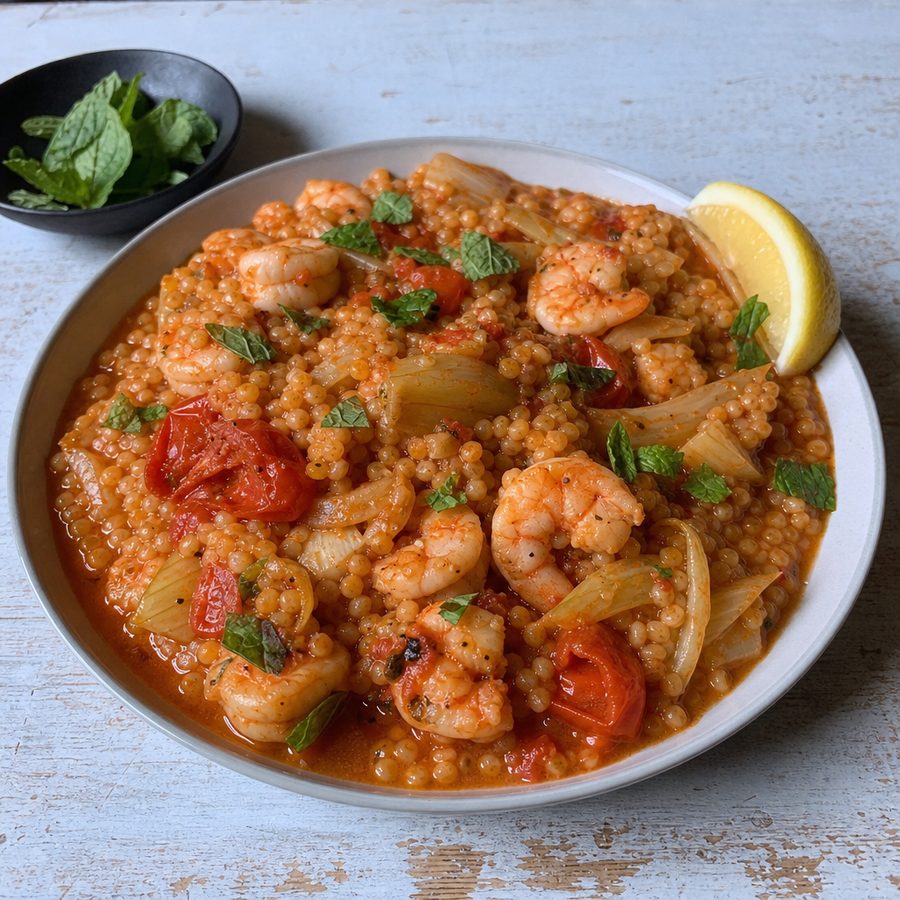
Toasted fregola simmered like risotto in a tomato and fennel broth until the little pearls are chewy at the center, with shrimp folded in at the end and torn mint and lemon over the top.
Why You'll Love This Recipe
Fregola is Sardinian semolina rolled into rough little balls and toasted in a wood oven, which is where its amber color and its faintly nutty smell come from. It behaves nothing like couscous. You cook it the way you cook risotto, in a shallow pan with liquid added a bit at a time, and it comes out chewy at the center with a thick starchy broth around it. The traditional version pairs it with tiny clams, and shrimp does the same job with a lot less sand and a lot less fuss.
Fennel is the other Sardinian fingerprint here. Wild fennel grows all over the island and turns up in almost everything, and a sliced bulb cooked slowly at the start loses its licorice sharpness and goes sweet and almost silky. Cherry tomatoes go in whole and burst against the pan, so you get pockets of concentrated tomato rather than a uniform sauce. The mint at the end is not a garnish. It cuts the sweetness of the fennel and the tomato in a way that parsley on its own cannot, and it is worth buying a bunch for.
The one thing to get right is the shrimp, which need about three minutes and go rubbery at four. I add them off to the side of the pan, cover it, and let the residual heat finish them while the fregola settles. This is a fifty-minute dinner that tastes like it took longer, and it is what I cook when I want something coastal in the middle of a landlocked week. Leftovers thicken overnight into something closer to a pilaf, which is no bad thing.
Ingredients
- 3 tbsp extra-virgin olive oil, divided
- 1 small yellow onion, diced small
- 1 large fennel bulb (about 9 oz), halved, cored, and sliced thin, fronds saved
- 5 garlic cloves, thinly sliced
- 1/2 tsp crushed red chile flakes
- 1 generous pint cherry tomatoes (about 12 oz), halved
- 6 oz fregola sarda, the toasted kind if your store has it, or pearl couscous
- 1 1/4 cups vegetable broth, plus more if the pan runs dry
- 1 lb large shrimp, peeled and deveined, patted dry
- 1 tsp coarsely ground black pepper, divided
- 1/4 tsp fine sea salt, divided
- 2 tbsp lemon juice, from 1 lemon, plus wedges for the table
- 1/2 cup chopped flat-leaf parsley
- 1/3 cup mint leaves, torn at the last minute
Instructions
- Soften the fennel: Warm 2 tbsp of the olive oil in a wide, deep skillet over medium heat. Add the onion and the sliced fennel with half the pepper and cook for eight to ten minutes, stirring now and then, until both are soft, translucent, and just starting to take on color at the edges. This is the longest step and rushing it leaves the fennel sharp.
- Add garlic and burst the tomatoes: Stir in the sliced garlic and the chile flakes and cook one minute, until the garlic smells sweet. Add the halved cherry tomatoes and the salt and cook five minutes more, pressing on them with the back of a spoon until most have collapsed and the pan is a loose red mess.
- Toast the fregola: Add the fregola and stir it through the tomato for a minute so every pearl is coated in oil. You will smell it toasting. This step is what keeps the pearls separate and chewy rather than gluey, so do not skip it even though the fregola came toasted.
- Simmer it like risotto: Pour in the broth and 1 cup of water, bring to a simmer, and cook uncovered for twelve to fourteen minutes, stirring every couple of minutes and adding a splash more water whenever the pan goes dry. It is ready when the pearls are tender outside with a distinct chew at the center and the liquid around them has gone thick and glossy.
- Cook the shrimp in: Season the shrimp with the rest of the pepper and nestle them into the surface of the fregola in a single layer. Cover the pan, turn the heat to low, and cook for three minutes, then turn them once and cover for one minute more. They are done the moment they turn opaque and curl into a loose C. A tight O means they went a minute too far.
- Finish off the heat: Take the pan off the burner and add the lemon juice, the last tablespoon of olive oil, the parsley, and most of the mint, folding gently so the shrimp stay whole. Let it sit two minutes to settle, then serve in wide shallow bowls with the rest of the mint, the reserved fennel fronds, and a lemon wedge on each.
Variations
- Saffron: Crumble a good pinch of saffron into the broth before it goes in, which turns the whole pan gold and is thoroughly Sardinian.
- Bottarga finish: Grate a little cured mullet roe over each bowl at the table for the salty, resinous edge Sardinians add to almost any pasta.
- Artichokes: Add a cup of quartered artichoke hearts with the tomatoes for a spring version with more bite.
- Meatier: Use cubes of firm white fish in place of the shrimp, added at the same point and cooked the same three minutes.
- Green at the end: Fold two handfuls of arugula in off the heat so it half wilts against the hot fregola.
Storage & Leftovers
This keeps three days in a sealed container in the refrigerator. The fregola goes on drinking the broth as it sits, so what was loose and saucy on the first night becomes something closer to a pilaf by the second, which many people in my house prefer. The shrimp stay tender as long as they were pulled at the right moment.
Reheat it in a covered pan over low heat with a few tablespoons of water or broth, stirring until it loosens and steams, about five minutes. Hard, fast reheating is what turns cooked shrimp to rubber, so keep the heat low and stop as soon as it is warm. A fresh squeeze of lemon and torn mint wake it back up.
I do not freeze this one. Fregola comes back from the freezer soft and the shrimp go stringy, and the whole point of the dish is the chew of one against the snap of the other. If you want to get ahead, make the tomato and fennel base up to two days early and finish the fregola and shrimp fresh.
Notes & Tips
- Give the fennel its full ten minutes: Fennel that has only been warmed through stays sharp and stringy and tastes like licorice. Cooked properly soft it goes sweet and nearly disappears into the broth.
- Toast the fregola in the oil: One minute of stirring the dry pearls through hot oil and tomato is what keeps them separate. Fregola tipped straight into liquid clumps.
- Use a wide pan: A deep narrow pot steams the fregola rather than simmering it, and the broth never reduces to that glossy stage. A twelve-inch skillet is right.
- Keep water at the elbow: This absorbs more liquid than you expect, and how much depends on your pan and your heat. Add splashes as you go rather than drowning it at the start.
- Pull the shrimp early: They carry on cooking in the hot fregola after the burner is off. Loose C, not tight O, and take the pan off the heat while you are still slightly nervous.
- Tear the mint at the last second: Cut mint darkens and loses most of its smell within a few minutes. Torn leaves added off the heat hold their color and their oil.
Nutrition & Mindful Eating
- The shrimp, the fregola, and the vegetables cooked down underneath them are what make this a full plate. The shrimp carry the protein, the fregola gives the bowl its chew and its staying power, and the fennel and tomatoes provide most of the volume and all of the sweetness.
- Shrimp cook in three minutes and come out sweet and firm, which is the whole argument for them on a weeknight. They bring a lot of protein for their size along with selenium and a useful amount of calcium, and they take on the flavor of whatever broth they finish in.
- Fennel loses its sharpness entirely when it is cooked slowly, and what is left is sweetness and a soft, silky texture. It brings fiber, potassium, and vitamin C, and the fronds saved for the top are the most fragrant part of the whole bulb.
- Cherry tomatoes burst against the pan and concentrate as their water cooks off, which is where the lycopene and the depth of the broth both come from. Cooking them in olive oil makes that lycopene easier for the body to take up.
- Mint and lemon go in with the burner off, and they change the dish more than their quantity suggests. Acid and fresh herbs at the end lift the sweetness of the fennel and the tomato so the last spoonful tastes as bright as the first.
- As you eat, pay attention to the chew of the fregola against the softness of everything around it, and let the mint and lemon on the last few bites tell you when you have had enough.
Frequently Asked Questions
Where do I find fregola, and what if I cannot?
Italian groceries and most well-stocked supermarkets carry it near the pasta, often labeled fregula. Pearl couscous is the closest substitute and cooks in about the same time, though it is softer and paler. Small pasta shapes like ditalini also work, cooked a minute short of the box time.
Can I use frozen shrimp?
Yes, and I usually do. Thaw them overnight in the refrigerator or under cold running water, then pat them thoroughly dry. Wet shrimp dropped into the pan cool it down and steam rather than cook, and they release water that thins the broth you just spent fifteen minutes building.
How do I know when the fregola is done?
Bite one. It should be tender at the outside with a firm, distinct core, the same way you judge pasta. Fregola cooked until it is soft all the way through loses the texture that makes it worth seeking out, and it will keep softening in the bowl.
Can I make it with clams or mussels instead?
That is the original, and it is wonderful. Steam a pound of scrubbed clams or mussels in a covered pan with a splash of water, pull the meat from most of them, and add them at the end along with their strained cooking liquid in place of some of the broth.