
Sardinian Sardines with Fava Beans, Tomato, and Mint
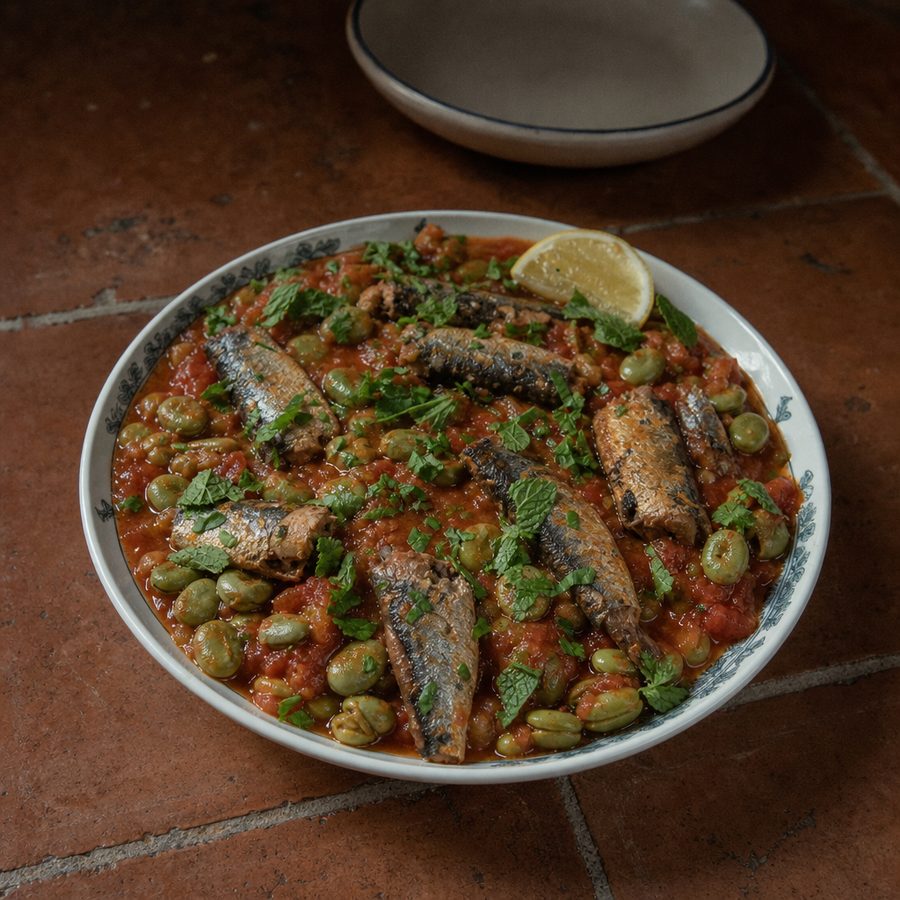
A short tomato braise of fava beans with garlic and chile, sardines laid in at the end to warm through, finished with torn mint, parsley, and lemon.
Why You'll Love This Recipe
Beans and small fish is the oldest kind of cooking there is, and on Sardinia it shows up over and over in different clothes. This is my weeknight version of it. Fava beans are the ones I want here because they cook down floury and slightly sweet and they stand up to tomato rather than dissolving into it. The braise takes ten minutes, the fish takes two, and the herbs go on with the burner off. I have made it with the last of a bag of dried favas and I have made it with two cans on a night I could not face cooking, and it is good either way.
The pleasure of it is the contrast between the soft, savory bean base and the sharp green top. Everything under the surface is round and warm: tomato cooked down until it loses its tinny edge, garlic gone sweet, chile sitting in the oil. Then mint and parsley and lemon land cold on top and cut a line through it. Mint with fish surprises people the first time, but it is common all over the islands, and against oily sardines it does something that parsley alone cannot.
This is the pan I make when I want dinner to feel like a proper sit-down meal without a shopping trip attached. It serves four out of one skillet, it needs a spoon rather than a knife, and it holds its heat long enough that nobody has to eat standing up. In summer I let it cool to room temperature and eat it on the porch, which is honestly when it tastes best, and in winter I serve it hot from the pan with more chile than I have written here.
Ingredients
- 2 tbsp extra-virgin olive oil
- 1 small red onion, finely diced
- 4 garlic cloves, smashed flat and roughly chopped
- 1/2 tsp crushed red chile flakes
- 1 cup crushed tomatoes
- 3 cups cooked fava beans (two 15-oz cans, drained and rinsed)
- 4 cans (about 3.75 oz each) sardines, drained, soft bones left in
- 2 tbsp lemon juice, plus a few strips of zest
- 1/4 cup mint leaves, torn at the last moment
- 1/3 cup chopped flat-leaf parsley
- 1/2 tsp coarsely ground black pepper
- a scant 1/8 tsp fine sea salt
Instructions
- Soften the onion: Warm the olive oil in a 12-inch skillet or shallow braiser over medium heat. Add the diced onion with the salt and cook for five minutes, stirring occasionally, until it turns translucent and smells sweet. You want it soft rather than colored, so drop the heat if the edges start to brown.
- Garlic and chile in the oil: Add the chopped garlic and the chile flakes and stir them through the hot oil for about forty five seconds, until the garlic is fragrant and just barely gold. This is the step that flavors everything else in the pan, so stay with it and pull the heat back the moment it starts to color.
- Cook the tomato down: Pour in the crushed tomatoes and the black pepper, raise the heat to medium-high, and let it bubble hard for three to four minutes, stirring once or twice. It is ready when the sauce has darkened from bright red to brick and a spoon dragged through the middle leaves a track that holds for a second before filling in.
- Braise the fava beans: Stir in the drained fava beans and lower the heat to a steady simmer. Cook for five minutes, mashing about a quarter of the beans against the side of the pan with the back of a wooden spoon. Those crushed beans thicken the sauce and hold everything together. Loosen it with a few tablespoons of water if it tightens too far.
- Settle the sardines in and finish: Lay the drained sardines over the beans in a single layer, spoon a little sauce over each fillet, cover, and let them warm through for two minutes. They are ready when the skins have gone glossy and loose. Off the heat, add the lemon juice and zest, then tear the mint and scatter it with the parsley across the top.
Variations
- Saffron and orange: Add a pinch of saffron to the tomato and finish with orange zest along with the lemon for a rounder, more perfumed pan.
- With greens: Fold two handfuls of chopped collard greens into the sauce with the beans and give them five minutes under a lid before the fish goes in.
- Tuna: Canned tuna broken into large flakes and stirred through at the very end works when sardines are more than you want.
- Extra heat: Double the chile and add a little of the oil the sardines came packed in, which carries the heat further through the beans.
Storage & Leftovers
Sealed and refrigerated, this keeps three days, and the tomato and chile work their way further into the beans overnight. Add the mint fresh when you reheat, since the leaves that have been sitting in the sauce go dark and lose the thing that made them worth putting there.
Reheat it covered over medium-low with a splash of water for five minutes, stirring once gently around the fish rather than through it. A microwave works if you go in short bursts at half power, though the fillets tend to break up. Room temperature is a legitimate way to eat this, and the version I like most.
The bean base freezes well on its own for up to three months, before the fish goes in. Freeze it flat in a sealed bag, thaw overnight in the refrigerator, then bring it back in a pan and add sardines, lemon, and herbs when you reheat. Fish that has been frozen in the sauce comes back mushy.
Notes & Tips
- Mash a quarter of the beans: It is the difference between beans sitting in sauce and beans that are part of the sauce. Thirty seconds with a wooden spoon does it.
- Let the tomato darken: Bright red tomato straight from the can tastes tinny. Three minutes at a hard bubble drives that off and turns the color brick.
- Lay the fish, do not stir it: Sardines put in and stirred around end up as paste. Set them on the surface and let the steam do the work under a lid.
- Tear the mint, never chop it: A knife bruises the leaves and turns the edges black. Tearing keeps them green and releases the scent right as it hits the pan.
- Rinse canned beans well: Twenty seconds under cold running water takes the canning liquid off, which otherwise leaves a dull, slightly metallic note in the sauce.
- Season at the end, not the start: The fish carries plenty of salt of its own into the pan, so taste after the sardines have warmed through and adjust then.
Nutrition & Mindful Eating
- Fava beans, tomato, and sardines make this a full plate on their own. The beans give the body and the fiber, the tomato gives the acid that keeps a rich pan from going heavy, and the fish sits on top carrying most of the protein.
- Sardines are eaten whole, soft bones and all, which is exactly where their calcium is stored, and the same oily flesh carries omega-3 fats and vitamin D that few other quick dinners bring.
- Fava beans cook floury and faintly sweet, and mashing some of them into the sauce is what thickens it. They bring iron and a real quantity of fiber to the bowl along with that texture.
- Tomato cooked down hard for a few minutes loses its tinny edge and turns brick colored and savory, concentrating the lycopene and the vitamin C that came in the can.
- Torn mint, parsley, and lemon all land after the burner is off, so they stay sharp and green. That cold, bright top is what makes a soft, warm pan of beans taste finished.
- As you eat, notice the mint arriving after the warm tomato and the salt of the fish, and let the bowl take longer than it needs to, so you can tell when you have had enough.
Frequently Asked Questions
Can I use a different bean?
Yes. Cannellini or chickpeas both work and both are easier to find, though each changes the character a little: cannellini go creamier and chickpeas stay firm and nutty. Keep the quantity the same and mash a quarter of them against the pan the same way.
Do the sardine bones need to come out?
No, and taking them out costs you the best part of the tin. Canning softens the spine until it collapses under a fork, and that is where most of the calcium in the fish is held. Once the fillets are warm in the sauce you will not find them at all.
Fresh favas from the market, can I use those?
You can, and in spring it is lovely. Shell them, boil two minutes, then slip off the pale jackets, which is fussy but fast once you get going. They will need an extra three or four minutes in the sauce, so add them with the tomato rather than after it.
What do I serve with it?
It stands on its own as a bowl with a spoon. If you want something green alongside, a plate of bitter leaves dressed with lemon is the right direction, since the pan is already rich and does not need anything starchy competing with the beans.