
Sayadieh-Style Halibut with Jammy Onions, Cumin, and Toasted Almonds
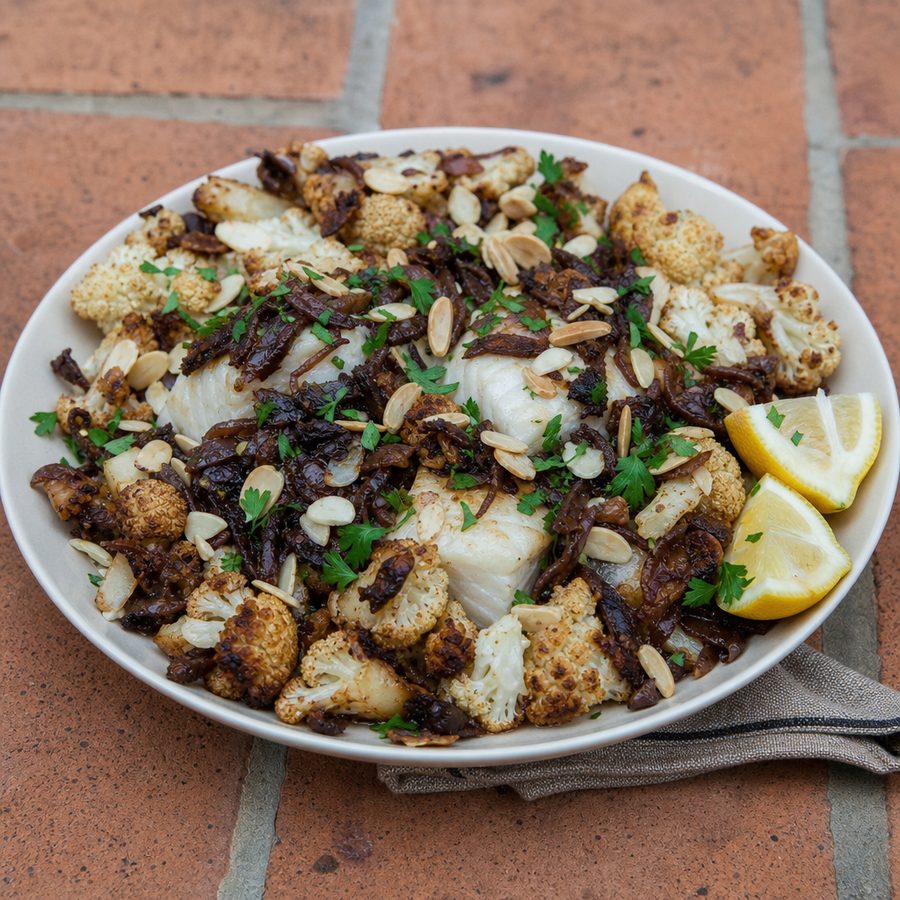
Halibut roasted over cauliflower and buried under onions cooked down to a dark jam with cumin, coriander, and a little cinnamon, finished with toasted almonds, lemon, and parsley.
Why You'll Love This Recipe
Sayadieh means the fisherman's dish, and versions of it turn up all along the Levantine coast from Tripoli down to Gaza. The constant everywhere is onions cooked far past what most cooks think is enough, until they are mahogany and jammy and taste more like something dried than something fresh. That takes half an hour of low, patient heat and it cannot be rushed. Everything else in the recipe is quick. I cook mine over cauliflower on a sheet pan rather than the usual rice, which lets the fish and the vegetable take on the same spiced onion juices.
The eating is a study in soft and sharp. The halibut comes out in wide white flakes, the cauliflower has gone brown at its cut faces and tender through, and the onions on top are sweet and dark. Then the almonds, which are toasted separately and scattered on at the end so they stay hard, and the lemon, which goes over everything just before it reaches the table. Cinnamon is the note that makes people stop and ask, and there is only half a teaspoon of it, sitting behind the cumin and the coriander rather than in front of them.
I make this when I want a dinner that tastes like it took real work, on an evening when I have an hour but not much attention. The onions look after themselves for most of their thirty minutes and the oven does the rest. It is also a good dish for feeding people who say they do not like fish, since almost nothing about it reads as fishy. Put the lemon wedges out and let everyone bury their own fillet under the onions.
Ingredients
- 1 1/3 lb skinless halibut fillet, cut into 4 even pieces
- 3 large yellow onions (about 14 oz), halved and sliced thin
- 1 small head cauliflower (about 1 lb), broken into small florets
- 1/2 cup slivered almonds
- 3 tbsp olive oil
- 2 tsp ground cumin
- 1 1/2 tsp ground coriander
- 1/2 tsp ground cinnamon
- 3/4 cup vegetable broth or water
- 3 tbsp fresh lemon juice, plus wedges for the table
- 1/2 cup chopped flat-leaf parsley
- 1/3 tsp fine sea salt
- 1/2 tsp freshly ground black pepper
Instructions
- Start the onions: Warm 1 1/2 tbsp of the olive oil in a large skillet over medium-low heat and add the sliced onions with a pinch of the salt. Cook for 28 to 35 minutes, stirring every few minutes and scraping the bottom, until the whole panful has reduced to about a cup of soft, dark, mahogany strands. If they start catching, add a splash of the broth and keep going. This step is the dish, because everything that follows is quick and there is nothing else in the pan deep enough to carry it.
- Roast the cauliflower: While the onions cook, heat the oven to 425°F. Toss the cauliflower florets with 1 tbsp of the olive oil, the rest of the salt, and the black pepper, spread them on a sheet pan in one layer, since crowded florets steam in their own water and stay pale, and roast for 18 to 20 minutes, until the cut faces are well browned and a knife goes into a stem easily.
- Toast the almonds: Put the almonds in a dry skillet over medium heat and toast for 3 to 4 minutes, shaking the pan constantly, until they smell nutty and are golden in patches. Tip them onto a plate immediately. Left in a hot pan they go from golden to burnt in under a minute, and they keep cooking off the heat.
- Season the onions: When the onions are dark, stir in the cumin, coriander, and cinnamon and cook 45 seconds until they smell toasted. Add the remaining broth and the lemon juice, scrape the bottom of the pan clean, and simmer 2 minutes, since the onions have to sit on the fish in a blanket and a loose sauce would run straight off into the pan.
- Roast the fish and finish: Push the cauliflower to the edges of the sheet pan and set the halibut in the middle, because the edges of a tray run hotter than the center and cauliflower can take that heat where halibut cannot, rub it with the last 1/2 tbsp of oil, and spoon the onions over each fillet in a thick blanket. Roast 10 to 12 minutes, until a paring knife slides into the thickest part with no resistance and the flesh has turned from glassy to opaque. Scatter the almonds and parsley over the top and serve with lemon wedges.
Variations
- With pine nuts: Swap the almonds for toasted pine nuts, which is what most cooks in Lebanon would reach for, and toast them a shade less since they burn faster.
- Sheet-pan eggplant: Use thick rounds of eggplant in place of the cauliflower, brushed with oil and roasted until collapsed, for a softer and richer plate.
- Chicken sayadieh: Use boneless chicken thighs, browned first and roasted under the onions for about 25 minutes to 175°F.
- More heat: Add a chopped green chile or a teaspoon of Aleppo pepper to the onions with the spices for a warmer, sharper finish.
Storage & Leftovers
Leftovers keep three days in a sealed container in the refrigerator. Keep the almonds separate in a small jar if you can, since they soften overnight once they are sitting against wet onions, and half their appeal is the crunch.
Reheat covered in a 325°F oven for 10 to 12 minutes, which is gentle enough to keep the halibut in flakes. A microwave will heat it through in ninety seconds and will tighten the fish noticeably. Squeeze fresh lemon over whatever you reheat, since the acid fades faster than anything else here.
The spiced onion base freezes beautifully on its own for up to three months and is worth making a double batch of for that reason. Thaw it overnight, warm it in a skillet with a splash of water until it is spoonable again, and it will carry a fresh piece of fish through a twelve-minute roast on a night when you have nothing planned.
Notes & Tips
- Slice the onions with the grain: Cut from root to tip rather than across, and the strands hold their shape through a long cook instead of falling into mush.
- Keep the heat low and the pan wide: Onions on high heat scorch at the edges before the middle has softened. A wide pan on medium-low gives you even color and the sugar has time to develop.
- Toast the spices in the pan, not the oven: Forty-five seconds in the hot onions wakes up the cumin and coriander in a way that stirring them into a cold mixture never will.
- Almonds go on last: Scatter them after the pan comes out of the oven. Roasted alongside the fish they soften, and the point of them is the crack.
Nutrition & Mindful Eating
- The halibut, the cauliflower, and the almonds carry three different parts of this plate. The fish gives it the protein, the cauliflower gives it bulk and fiber, and the almonds bring fat and crunch that keep a dish this soft from being one texture all the way through.
- Halibut is a firm white fish that comes apart in wide sheets rather than shredding, and a fillet this size delivers a great deal of protein along with selenium and the mineral magnesium.
- Onions cooked down for half an hour concentrate into something sweet and dark, and along with that sweetness come the prebiotic fibers that feed the bacteria in your gut, gentled by the long cook.
- Almonds toasted in a dry pan stay hard against all that softness, and they carry vitamin E and the kind of fat that makes a plate of fish and vegetables actually satisfying.
- Cumin, coriander, and a half teaspoon of cinnamon are what make this taste of the coast it comes from, and the lemon squeezed over at the very end is what keeps the sweetness of the onions in check.
- As you eat, look for the cinnamon sitting behind the cumin and notice how the almonds interrupt everything else, and let the plate hold your attention rather than eating it in front of a screen.
Frequently Asked Questions
Can I use a cheaper fish?
Yes. This dish was built on whatever came off the boat, so cod, haddock, hake, and pollock are all right at home and cook in about the same time. Thinner fillets like tilapia want 8 minutes rather than 12. Halibut is the most luxurious of them and the firmest, which is why I use it when I can.
How dark should the onions get?
Darker than feels comfortable. You are looking for a deep reddish brown, close to the color of strong tea, and a texture that holds together when you push it with a spoon. Pale gold onions will taste sweet but will not give the dish its color or its depth.
What can I use instead of cauliflower?
Thickly sliced eggplant roasts in about the same time and is very much in keeping with the region. Wedges of cabbage work well too, and if you want the traditional version, serve the fish and onions over rice with the almonds on top.
Is the cinnamon going to make it taste sweet?
No, and half a teaspoon across four servings is deliberately restrained. In this part of the world cinnamon is a savory spice and it sits underneath the cumin, doing the same job a bay leaf does in a stew. Leave it out and people will notice that something is missing without being able to name it.