
Seared Bison with Charred Radicchio and Balsamic
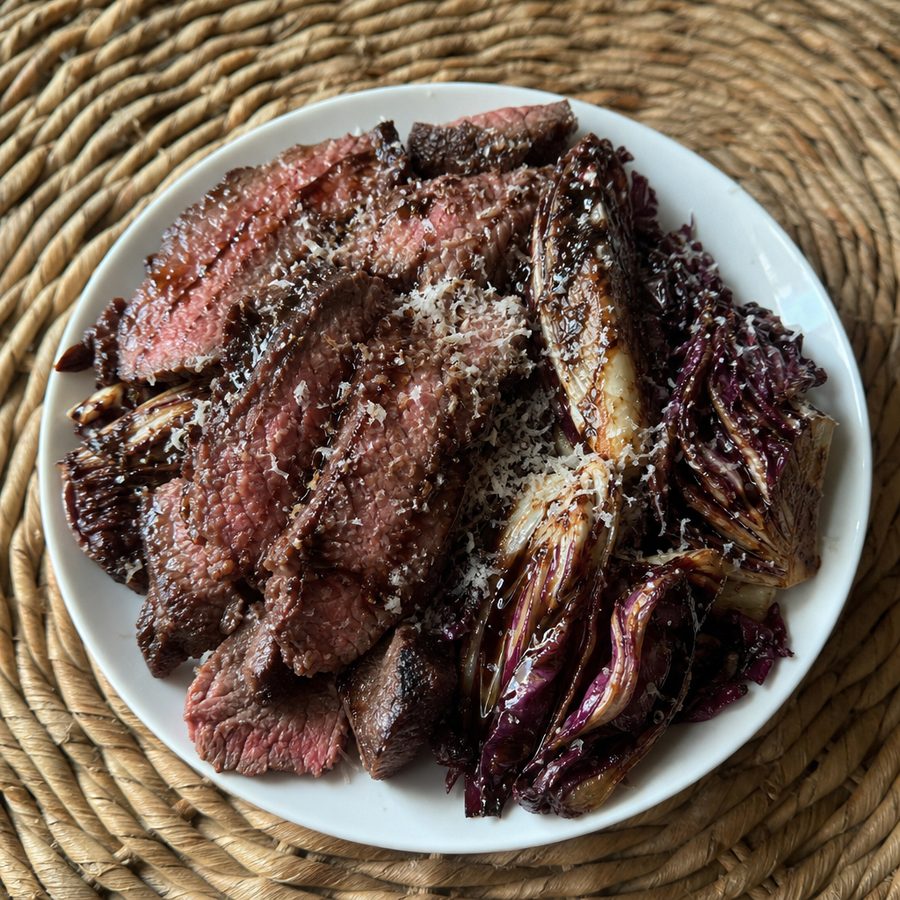
Bison steaks seared hard and rested while radicchio wedges char in the same pan, glazed with balsamic and rosemary butter and finished with grated parmesan.
Why You'll Love This Recipe
A bison steak in the freezer and about twenty minutes before the next thing starts is all this needs. Bison is close-grained and cooks faster than beef, so the meat is done and resting before the vegetables have even begun, and the radicchio goes into the same pan while the steak sits. That resting time is not a courtesy here, it is the window in which the rest of lunch cooks, and it is how a two-part plate stays a one-pan job. If bison is hard to find where you shop, a sirloin steak of the same thickness behaves almost identically and every time below still holds.
Radicchio is the part worth paying attention to. Raw, it is aggressively bitter, and most people who say they dislike it have only ever met it that way. Cut into wedges and left face down in a hot pan, the cut sides brown, the leaves slump, and that bitterness turns into something much closer to sweetness. Keep each wedge attached at the root so it holds together while it chars. The balsamic goes in near the end and cooks for well under a minute, because vinegar in a hot skillet turns syrupy fast and then turns bitter and scorched just as fast, and there is no coming back from that.
Bison is a fine-grained meat with little fat running through it, so the one thing that will spoil this is taking it past medium rare. I pull the steaks at 130°F (54°C) and they rest to about 135°F (57°C), which is where they stay tender and juicy. What lands on the table tastes of browned meat, sweet-bitter leaves, and the salty crackle of parmesan grated over everything while it is still hot enough to soften. Any meat left over is very good cold the next day, sliced thin over greens with the last of the pan juices spooned across the top and another grating of cheese.
Ingredients
- 1 1/2 lb bison sirloin steaks, about 1 inch thick
- 2 small heads radicchio (about 14 oz), each cut into 6 wedges through the root
- 3 tbsp balsamic vinegar
- 2 tbsp olive oil, divided
- 2 tbsp butter
- 1/3 cup finely grated parmesan (about 1 oz)
- 1 tbsp chopped fresh rosemary
- 3/4 tsp fine sea salt, divided
- 1 tsp coarsely ground black pepper
Instructions
- Season the meat and cut the radicchio: Pat the bison steaks dry, season both sides with 1/2 teaspoon of the salt and the black pepper, and leave them on the counter while the pan heats. Cut each head of radicchio through the root into 6 wedges so the leaves stay attached. Grate the parmesan and chop the rosemary.
- Sear the steaks: Heat 1 tablespoon of the olive oil in a heavy skillet over high heat until it shimmers and moves like water. Add the steaks and leave them undisturbed for 3 to 4 minutes, until a dark crust forms. Turn once and cook 3 minutes more, to 130°F (54°C) at the center for medium rare.
- Rest the meat: Move the steaks to a cutting board and tent them loosely with foil. They need at least 8 minutes, which is exactly how long the radicchio takes, so the pan keeps working while the juices settle back through the meat.
- Char the radicchio: Lower the heat to medium-high and add the remaining tablespoon of oil to the same pan. Lay the wedges cut side down with the remaining 1/4 teaspoon salt and cook 3 minutes, until the faces are browned and blistered. Turn onto the second cut side and cook 2 to 3 minutes more.
- Glaze the pan: Pour in the balsamic and scatter over the rosemary. Let it bubble for 30 to 45 seconds, until it thickens enough to coat a spoon, then swirl in the butter until the glaze turns glossy. Spoon it over the wedges and take the pan off the heat.
- Slice and serve: Slice the bison against the grain into thin pieces and return them to the pan with any juices from the board. Grate the parmesan over the top while everything is still hot and serve straight from the skillet.
Variations
- Endive in place of radicchio: Halved endive chars the same way in the same time and gives you a gentler, sweeter bitterness.
- Toasted walnuts: Toast a handful of chopped walnuts in the dry pan before you sear and scatter them over at the end for crunch against the soft leaves.
- Mustard glaze: Whisk a teaspoon of dijon into the balsamic before it goes into the pan for a sharper, thicker glaze.
- Green on the plate: Toss a few handfuls of arugula through the hot radicchio off the heat so it wilts only halfway.
- Herb change: Fresh thyme in place of the rosemary makes the pan taste greener and less resinous.
Storage & Leftovers
Leftovers keep in a sealed container in the refrigerator for up to 3 days. Store the sliced bison and the radicchio in separate containers if you can, because the charred leaves keep releasing liquid as they sit and that liquid washes the crust off the meat overnight.
I would not reheat the bison. A fine-grained meat cooked to medium rare goes gray and firm the second time around, and it is genuinely good cold. Warm the radicchio on its own in a dry pan for 2 minutes and lay the cold sliced meat over it with a little more parmesan.
Freezing cooked bison is a waste of a good steak, since it thaws watery and loses the texture you paid for. Freeze the raw steaks instead, thaw them overnight in the refrigerator, and pat them very dry before searing so the crust still forms properly.
Notes & Tips
- Buy the steak thick: A 1-inch steak gives you time to build a crust before the middle overcooks. Thin steaks are gray through by the time they brown.
- Dry meat browns, wet meat steams: Pat the surface with a paper towel right before it goes in. Any moisture has to boil off before a crust can start forming.
- Cut the radicchio through the root: The root is what holds each wedge together. Cut it out and you have a pan of loose leaves that burn in seconds.
- Watch the balsamic like a hawk: It goes from syrup to burnt sugar in about fifteen seconds over high heat. Lower the heat before it goes in.
- Rest the meat properly: Eight minutes lets the juices redistribute. Slice it early and they run onto the board, taking the best part of the steak with them.
- Grate the parmesan fine: Fine gratings melt into threads against the hot leaves. Thick shavings sit on top and stay separate.
Nutrition & Mindful Eating
- The bison, the radicchio, and the parmesan work as a set on this plate. The meat gives it substance, the charred leaves give it sweetness and a bitter edge, and the cheese and balsamic put the salt and the acid exactly where they are needed.
- Bison is fine-grained and deep red with a clean, faintly sweet flavor that comes through even under a hard sear, and it carries iron in the form the body takes up most easily along with the B12 that comes with red meat.
- Radicchio is a chicory, which is where that bracing bitterness comes from, and the deep magenta leaves carry fiber and the same red pigments that give the head its color.
- Balsamic reduced with rosemary and finished with butter turns into a glaze rather than a dressing, and that thin coat of sweet-sour syrup is what makes the bitter leaves taste finished.
- Parmesan aged for years turns dry, crystalline, and intensely savory, and a small amount of it brings calcium and protein along with enough salt to season the whole pan.
- As you eat, notice how the radicchio turned sweet exactly where it touched the pan, and let the first few bites be slow enough to catch the balsamic and the salt of the cheese against the meat.
Frequently Asked Questions
What can I use in place of bison?
Beef sirloin, venison, and elk all sear the same way at the same thickness. Beef carries more fat, so give it an extra minute per side. Venison and elk are as fine-grained as bison and want the same careful hand at 130°F (54°C).
My radicchio went limp and gray rather than charred. Why?
The pan cooled down. Radicchio holds a lot of water, and a crowded or lukewarm skillet steams it. Cook the wedges in two batches if they do not sit flat with space around them, and leave them alone for the full 3 minutes before checking.
Is there a way to make this less bitter?
Char the wedges harder and let the balsamic reduce a few seconds longer, since both browning and the sweetness in the vinegar sit directly against the bitterness. Endive is milder if radicchio is still too much for you, and it cooks in the same time.
Does this work as a low-FODMAP lunch?
It does. There is no onion or garlic in the pan, and the flavor is built from a hard sear, charred leaves, balsamic, rosemary, and aged cheese. Parmesan aged this long is easy on most people, and a tablespoon of balsamic per serving is a comfortable amount.