
Seared Bison with Warm Shaved Brussels Sprouts
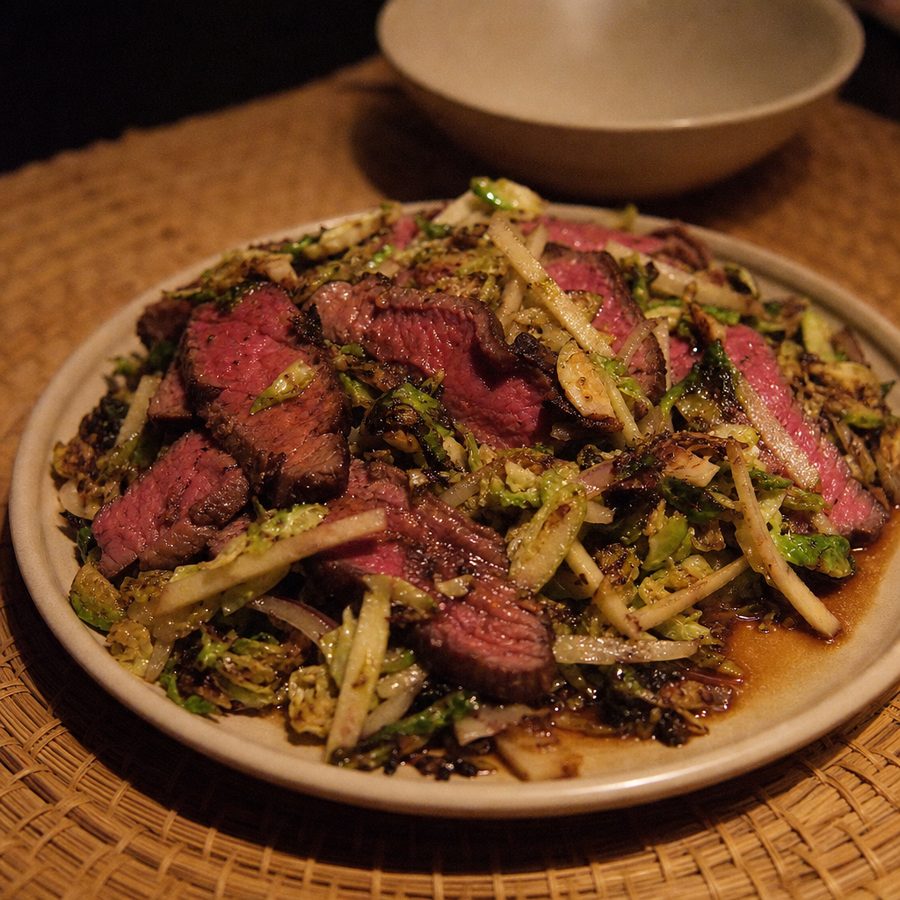
Bison steak seared and rested, then shaved brussels sprouts and apple tossed in the hot pan with shallot, rosemary, and cider vinegar so the juices become the dressing.
Why You'll Love This Recipe
Twenty minutes, something hot at lunch, and no interest in washing three pans. One skillet cooks the steak, and then everything else goes into the fat and the browned bits it leaves behind. Bison is worth buying if you have not tried it, close-grained and a little sweeter than beef, and it is far easier to find now than it used to be. If your store does not carry it, a sirloin steak works exactly the same way. This is a warm salad in the sense that matters, which is that the dressing is the hot pan and the resting juices rather than anything you shook up in a jar.
Two things go wrong here and both are easy to avoid. The first is cooking the bison past medium-rare. There is less fat running through it than through a marbled beef steak, so it goes from juicy to dry in about ninety seconds, and I pull it at 130°F (54°C) every time. The second is the sprouts. Shave them thin on a mandoline or with a sharp knife, get the pan properly hot, and then leave them alone for three full minutes so the cut faces brown before you toss them. Stirred constantly they steam, go army green, and taste like boiled cabbage, which is what put most people off brussels sprouts in the first place.
The apple is not a garnish. Cut into matchsticks and tossed in off the heat, it stays crisp and cool against the hot sprouts, and its sweetness is what the cider vinegar and the rosemary need to push against. Everything lands in the bowl together with the resting juices from the board poured over the top, and that is the part I would not skip, since those juices are the most concentrated beef flavor in the whole dish. It eats like a proper plate of food, hot and green and a little sharp, and there is enough protein in the steak to carry you well past the point where a lunch salad usually gives out.
Ingredients
- 1 1/4 lb bison top sirloin steak, about 1 inch thick
- 1 lb brussels sprouts, trimmed and shaved thin
- 1 small crisp apple, cored and cut into matchsticks
- 2 shallots, thinly sliced
- 2 cloves garlic, thinly sliced
- 2 tsp chopped fresh rosemary
- 2 tbsp apple cider vinegar
- 1/4 cup beef broth
- 2 tbsp olive oil
- 1 tbsp avocado oil
- 3 tbsp chopped fresh parsley
- 1 tsp fine sea salt, divided
Instructions
- Prep everything first: This cooks fast, so have it all ready. Trim the brussels sprouts and shave them about an eighth of an inch thick, slice the shallots and garlic, and cut the apple into matchsticks last so it stays pale. Pat the bison dry and season it on both sides with 1/2 teaspoon of the salt.
- Sear the bison: Heat the avocado oil in a large heavy skillet over medium-high until it just begins to smoke. Lay in the steak and cook 3 to 4 minutes per side without moving it, until a dark crust forms and the center reads 130°F (54°C) for medium-rare. Move it to a cutting board and let it rest for 10 minutes.
- Soften the aromatics: Lower the heat to medium and add the olive oil to the same pan. Add the shallots and cook for 2 minutes until they go limp and translucent, then add the garlic and rosemary and cook 45 seconds more, until the rosemary smells like a hot pine branch.
- Brown the sprouts: Raise the heat back to medium-high, add the shaved sprouts and the remaining 1/2 teaspoon of salt, and press them into a fairly even layer. Leave them undisturbed for 3 minutes so the cut faces catch and turn brown at the edges, then toss and cook 2 minutes more. They should be wilted but still bright green in the middle.
- Deglaze into a dressing: Pour in the broth and the cider vinegar and scrape the bottom of the pan with a wooden spoon. Let it bubble for about 45 seconds, until the liquid has reduced to a few glossy spoonfuls that cling to the sprouts, then take the pan off the heat.
- Slice, toss, and serve: Slice the rested bison thin against the grain. Tip the sprouts into a wide bowl, toss the apple matchsticks and the parsley through them while they are still hot, then lay the sliced steak on top and pour any juices from the cutting board over everything.
Variations
- Pear and sage: Swap the apple for a firm pear and the rosemary for chopped sage when you want the pan softer and more autumnal.
- Bacon in the pan: Render two slices of chopped bacon before the steak goes in and cook the sprouts in that fat for a smokier plate.
- Red cabbage: Use half shaved sprouts and half shredded red cabbage for more color and a slightly sweeter crunch.
- Balsamic finish: Trade the cider vinegar for balsamic and let it reduce a little further for a darker, sweeter glaze on the sprouts.
- Bigger plate: Add roasted delicata squash or sliced avocado alongside when you want the lunch to carry you further.
Storage & Leftovers
Leftovers keep for up to 3 days in the refrigerator. Store the sliced bison on top of the sprouts rather than mixed into them, since the meat picks up moisture and turns gray when it sits in the pan juices overnight. Cool the pan down for 15 minutes before the lid goes on.
This is one of the few warm salads I am happy to eat cold. Straight from the container the sprouts stay crisp and the vinegar has worked through them, so it makes a good desk lunch. If you would rather have it hot, warm only the sprouts in a dry skillet and lay the cold sliced meat over them at the end.
Do not freeze it. Shaved sprouts collapse into wet threads on thawing and a medium-rare steak comes out of the freezer with the texture of a dish towel. If you want a head start, shave the sprouts and slice the shallots up to 2 days ahead and keep them in a bag in the refrigerator.
Notes & Tips
- Shave the sprouts thin: An eighth of an inch browns in 3 minutes and stays green. Thick shreds need so long in the pan that they are dull by the time they are tender.
- Get the pan hot before the steak: The oil should be shimmering and just starting to smoke. A moderate pan gives you gray bison with no crust and no fond for the sprouts.
- Use a thermometer: Bison has little fat to protect it, and the window between juicy and dry is small. Pull the steak at 130°F (54°C) and let carryover heat do the rest.
- Rest the meat, then slice across the grain: Ten minutes lets the juices settle so they end up on the plate. Cutting across the grain shortens the fibers and is what makes each slice tender.
- Cut the apple last: Apple matchsticks brown within minutes of being cut. Do them while the steak rests and toss them in off the heat so they stay crisp.
- Scrape the pan properly: The brown film left by the steak is the best flavor in the dish. The broth and vinegar are there to dissolve it, so work the spoon over the whole base.
Nutrition & Mindful Eating
- Bison, brussels sprouts, and apple make a full plate between them. The steak brings the substance, the sprouts bring fiber and a green edge, and the apple brings enough sweetness and acid that a rich piece of meat never sits heavy.
- Bison is close-grained and finely textured, and it tastes faintly sweet even cooked plain. It carries iron in the form the body takes up most readily, along with zinc and B12, and protein this dense is why a plate of it holds you for a long stretch.
- Brussels sprouts shaved thin and browned in a hot pan turn nutty and sweet at the cut edges. They are one of the better sources of vitamin C and vitamin K, and cooking them fast and hot rather than boiling them is part of why so much of that vitamin C survives to the plate.
- Apple tossed in raw at the last second stays crisp and cool against the hot sprouts, and the pectin fiber in it sits mostly in the skin, so leaving the apple unpeeled is worth doing. Its sweetness is what the vinegar plays against.
- Rosemary, shallot, garlic, and cider vinegar are the whole seasoning, and the acid reduced into the pan juices is what makes the beef flavor read clearly rather than flat. Herbs this strong mean the plate tastes finished with very little salt on it.
- As you eat, notice the difference between the browned edges of the sprouts and the crisp raw apple through them, and give yourself long enough at the table to feel the meal land rather than eating it over the sink.
Frequently Asked Questions
I cannot find bison. What else works?
Beef sirloin or a flat iron steak both sear the same way at the same weight and thickness, and elk or venison steaks are even closer in character to the bison. Whichever you choose, buy it about an inch thick so the crust has time to form before the middle overcooks.
My sprouts came out soggy and dull. Why?
Too much in the pan at once, or too much stirring. Shaved sprouts release a lot of water, and if they cannot spread out, that water steams them. Use the widest skillet you own, keep the heat at medium-high, and leave them still for the first 3 minutes so the moisture cooks off as it comes out.
Can I cook the steak ahead?
You can, though it is best within the hour. Sear it, rest it, and refrigerate it whole rather than sliced, since a whole piece dries out far more slowly. Slice it cold the next day and lay it over freshly cooked sprouts, and the pan heat will take the chill off it.
Does this fit an AIP elimination phase?
It does. There are no grains, legumes, dairy, eggs, nuts, seeds, or nightshades in it, and the seasoning is rosemary, garlic, shallot, cider vinegar, and salt. Check your broth for pepper, and use avocado oil for the sear since it takes the high heat better than olive oil does.