
Seared Cod with Charred Bok Choy, Snap Peas, and Ginger-Scallion Oil
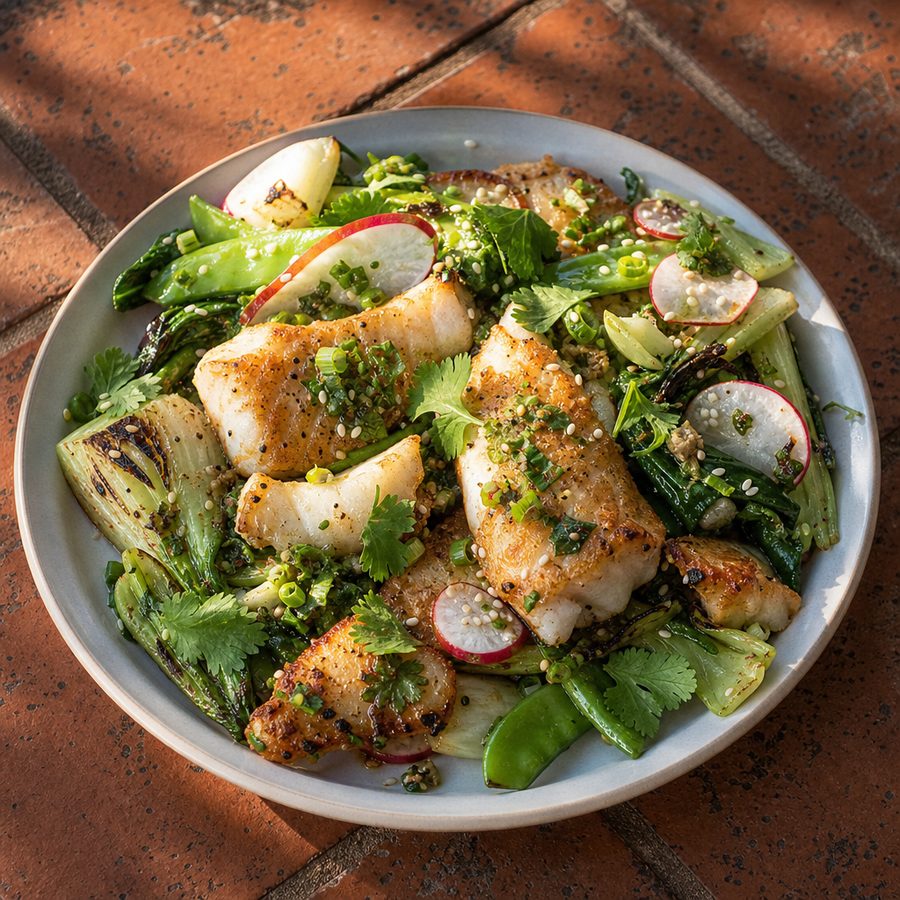
Golden seared cod over charred baby bok choy and snap peas, finished with a sizzling Cantonese ginger-scallion oil, a splash of tamari, and cold sliced radish.
Why You'll Love This Recipe
Ginger-scallion oil is one of the great sauces of the Cantonese kitchen, the thing that shows up beside poached chicken and steamed fish in every good restaurant in Chinatown, and it takes about ninety seconds to make. You pile minced ginger and thinly sliced scallion in a heatproof bowl, pour smoking oil over the top, and listen to it hiss. The heat cooks the raw edge off both of them without dulling them, so what you get is green, sharp, and almost sweet. I keep a jar of it in my refrigerator most weeks, and this is the lunch I make when I want it on something.
Cod is the right fish for it because cod is mild and soft and lets the sauce be the loud thing on the plate. The method is all about patience in the pan. You dry the fillets well, lay them in hot oil, and then you leave them alone for four minutes while a golden crust forms underneath. Move them early and they tear and stick. Leave them and they release on their own, turn cleanly, and finish in a couple more minutes, still moist enough that a fork splits them into big glossy flakes.
The vegetables are what make it a real lunch rather than a piece of fish. Baby bok choy goes into the same skillet cut side down and chars until the edges are dark and sweet while the thick white stems stay juicy. Snap peas go in after for just two minutes so they keep their pop. Then raw radish goes on cold at the end, peppery and crisp against everything warm. It is a plate full of contrast, soft against snappy, savory against fresh, and it is on the table in under half an hour.
Ingredients
- 1 1/2 lb skinless cod fillets, cut into 4 pieces and patted very dry
- 1 lb baby bok choy (about 4 heads), halved lengthwise, rinsed and shaken dry
- 8 oz snap peas, strings pulled off
- 8 scallions, trimmed and sliced as thin as you can manage
- A 2-inch piece of fresh ginger, peeled and finely minced (about 3 tbsp)
- 2 garlic cloves, finely minced
- 1/4 cup avocado oil, divided
- 1 tsp toasted sesame oil
- 2 tbsp certified gluten-free tamari
- 1 tbsp fresh lime juice, from half a lime
- 6 radishes, trimmed and sliced into thin coins
- 1/2 cup cilantro leaves and tender stems
- 1 tbsp sesame seeds, toasted in a dry pan until golden
- 1/2 tsp salt, divided
- 1/4 tsp white or black pepper
Instructions
- Make the ginger-scallion oil first: Put the minced ginger, garlic, three quarters of the sliced scallions, and 1/4 tsp of the salt in a small heatproof bowl. Heat 3 tablespoons of the avocado oil in a small saucepan over medium-high until it shimmers and a scallion slice dropped in sizzles hard, about two minutes. Pour the hot oil straight over the bowl. It should hiss loudly and bubble up; that sizzle is what blooms the ginger and softens the scallion without cooking away its color. Stir in the sesame oil and set it aside to settle while you cook.
- Char the bok choy: Heat a large nonstick or well-seasoned skillet over medium-high and add 1 teaspoon of the remaining avocado oil. Lay the bok choy halves cut side down in a single layer and leave them for three minutes, until the cut faces have real dark patches and the leaves are starting to wilt at the tips. Turn them once and give them one more minute. Charring rather than steaming is what makes the leaves taste sweet and nutty.
- Add the snap peas and the tamari: Toss the snap peas into the pan with the bok choy and cook for two minutes, stirring once, just until they turn a brighter green. Splash in 1 tablespoon of the tamari and the lime juice, let it bubble for a few seconds so it coats everything, then move the vegetables to four plates. Stop while the peas still squeak against your tongs; another minute and they lose their snap.
- Sear the cod without moving it: Wipe the skillet out, return it to medium-high, and add the last 2 teaspoons of avocado oil. Season the dry cod with the remaining salt and the pepper and lay the pieces in the pan, best side down. Leave them completely alone for three to four minutes, until the bottom edge has gone opaque about halfway up the side and the fillet lets go of the pan when you nudge it. If it sticks, give it another thirty seconds; it will release once the crust has formed.
- Finish the fish gently: Turn each piece with a thin spatula, lower the heat to medium, and cook two to three minutes more, until the center turns from glassy to bright white and a fork pressed into the thickest part opens it into flakes. An instant-read thermometer should show 145°F. Pull it now; cod goes from moist to dry in about a minute.
- Spoon the sauce and dress the plate: Stir the remaining tablespoon of tamari into the ginger-scallion oil. Set a piece of cod on each plate of vegetables and spoon the oil generously over the fish so it runs down into the greens. Scatter the radish coins, the rest of the sliced scallions, the cilantro, and the toasted sesame seeds over the top and eat right away, while the cod is hot and the radishes are still cold.
Variations
- Shrimp: Swap the cod for peeled raw shrimp, seared two minutes per side until pink and curled, then tossed in the ginger-scallion oil.
- Chicken breast: Sear thinly pounded chicken breast five to six minutes per side until it reaches 165°F, and slice it before spooning the oil over.
- Extra heat: Stir a thinly sliced jalapeño into the bowl of ginger and scallion before you pour the hot oil, so it blooms along with them.
- Napa cabbage: Use thick ribbons of napa cabbage in place of bok choy, charred in the skillet until the edges brown and the ribs turn tender.
- Cucumber crunch: Add thin cucumber slices with the radishes for a cooler, more refreshing plate on a hot day.
Storage & Leftovers
The ginger-scallion oil is the part worth making ahead. It keeps a full week in a sealed jar in the refrigerator, and the ginger mellows a little each day. The oil firms up when cold, so let the jar sit on the counter for ten minutes before you spoon it, or set it in a bowl of warm water.
Cooked cod and the charred vegetables keep two days in the refrigerator, stored together with the oil in a separate container. The fish is gentle to reheat: cover it and warm it in a 300°F oven for eight to ten minutes, or eat it cold, flaked over the greens with the oil spooned on, which is honestly how I prefer the leftovers.
Do not freeze this plate. Cooked cod comes back from the freezer watery and stringy, the bok choy collapses into a limp tangle, and the snap peas lose every bit of their crunch. Slice the radishes fresh each time too; cut radishes turn soft and bitter after a day.
Notes & Tips
- Mince the ginger very fine: Big pieces of ginger stay fibrous and hot. Mince it until it almost looks like a paste so it softens fully when the oil hits.
- Heat the oil until it shimmers: Oil that is merely warm leaves the scallions raw and the sauce flat. You want a loud sizzle the instant it lands.
- Dry the fish like you mean it: Water on the surface steams the cod and keeps a crust from forming. Press the fillets between paper towels and let them sit a minute.
- Cut side down, then leave it: The bok choy only chars when the flat side is pressed against hot metal and left there. Resist stirring for the full three minutes.
- Pull the cod a touch early: Fish keeps cooking from its own heat for a minute on the plate. Take it off the moment the center turns white.
- Toast the sesame seeds yourself: Untoasted seeds taste of almost nothing. A minute in a dry pan until they turn golden and smell nutty makes a real difference.
Nutrition & Mindful Eating
- The cod, the charred greens, and the ginger-scallion oil each bring something different to the plate. The fish gives it substance, the bok choy and snap peas give it volume and crunch, and the oil is what makes a simple piece of seared fish taste like something from a good restaurant.
- Cod is mild, tender, and flakes into big clean pieces, which is why it carries a bold sauce so well. It brings plenty of protein for a lunch that holds you through the afternoon, along with selenium and iodine, two minerals the ocean hands out generously.
- Baby bok choy turns sweet and nutty when the cut sides char, while the thick white stems stay juicy. Those charred halves carry vitamin C, vitamin K, and calcium, and they give the plate a heft that makes it feel generous.
- Ginger and scallion are the whole personality of this dish. The hot oil blooms them into something fragrant and sharp, and ginger is a root that has been studied for its effects on digestion and inflammation, which is a nice thing to know while you are enjoying its warmth.
- Snap peas and raw radish keep the plate lively, one sweet and juicy, the other cold and peppery. Their crunch and fiber slow you down between bites of soft fish, and together they make a plate that eats like a full, satisfying meal.
- As you eat, let each flake of cod pick up a little of the ginger oil, notice the snap of the peas against the soft fish, and pause halfway through to check in with how full you are.
Frequently Asked Questions
Can I use a different fish?
Halibut, haddock, or snapper all work with the same timing, and halibut holds together a little better if you are nervous about turning the fillets. Salmon is good with this sauce as well, though it is richer and takes a minute longer per side. Keep the pieces about an inch thick so they cook evenly.
My cod fell apart in the pan. What happened?
Usually it was turned too early or the fish was wet. Pat the fillets dry with paper towels until they feel tacky, get the pan properly hot before the fish goes in, and do not touch it until it releases on its own. A thin, flexible fish spatula slid all the way under helps a great deal.
Can I pack this for a work lunch?
Yes, with a little planning. Pack the vegetables and cod in one container and the ginger-scallion oil in a small jar, then add the radish and cilantro just before eating. It is good at room temperature or cold, so a microwave is optional; if you do warm it, go gently so the fish does not dry out.
Does this fit a weight-loss or anti-inflammatory way of eating?
It does. It is built around fish and vegetables with olive-family oils and fresh ginger, with no grains, starches, or processed meat, and the tamari is a certified gluten-free kind. Pair it with whatever the rest of your day looks like and it slots in comfortably.