
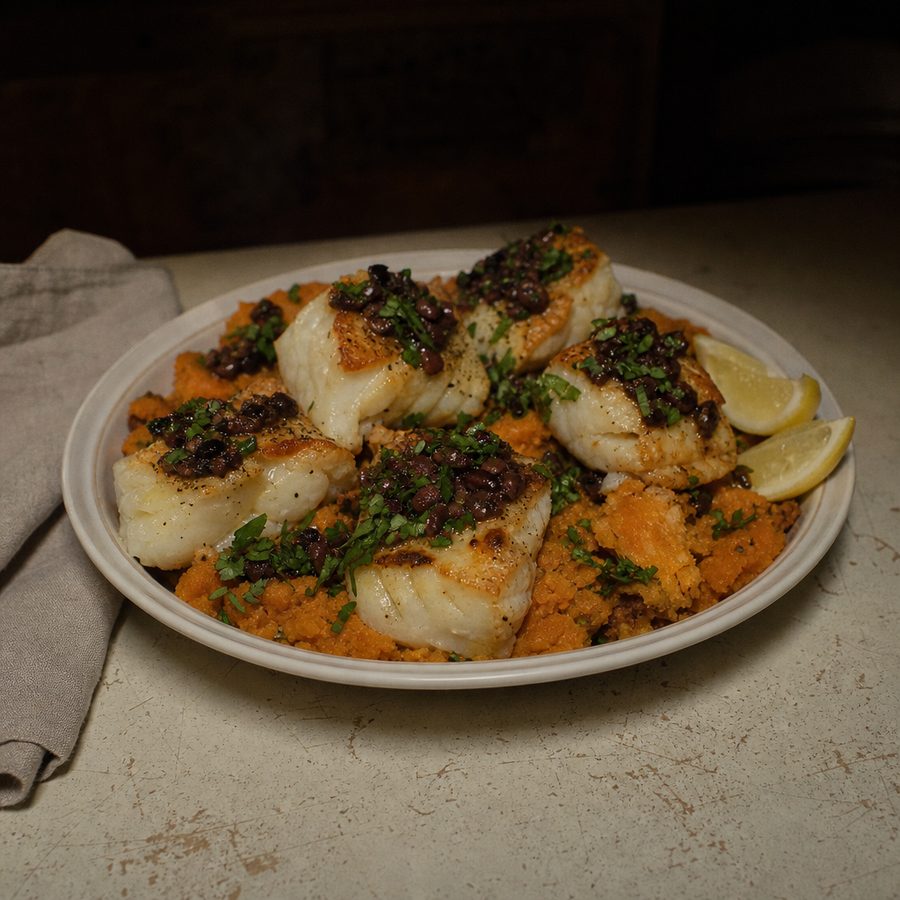
Seared Cod over Crushed Sweet Potato with Olive and Parsley Relish
Cod fillets seared hard in olive oil over sweet potato crushed with garlic, finished with a cold relish of chopped kalamata olives, parsley, shallot, and lemon.
Why You'll Love This Recipe
Dinner that tastes like it took planning, on a night when I have half an hour. Everything happens in two vessels, a saucepan and a skillet, and they run at the same time. The sweet potato boils while the cod comes to room temperature on a plate, and the relish gets chopped in the four minutes the fish sits in the pan without being touched. What arrives at the table is a soft orange bed, a fillet with a real crust on it, and something sharp and briny over the top. Three textures, one pan of dishes, and no part of it needs watching closely.
The eating is a study in soft against sharp. Cod is a large-flaked, close-grained fish that goes translucent and slippery when it is right, and the crushed sweet potato under it is deliberately coarse so you get lumps as well as puree. Against all that gentleness the relish does the work: olives bring salt and a little bitterness, shallot brings bite, lemon cuts a clean line through the olive oil, and parsley keeps the whole spoonful tasting green. Every forkful should have some of each. If you take a bite that is only fish and potato, you have not put enough relish on.
This belongs on a weeknight in the shoulder seasons, when sweet potatoes are good and you still want something that tastes of the coast. It is also the dinner I make when somebody is coming over and I have not shopped properly, because the relish can be built from a jar of olives, a lemon, and whatever soft herb is in the drawer. I would put it at the front of the week rather than the back, since cod is best the day you buy it and this is a recipe that rewards a fillet that has not been sitting.
Ingredients
- 4 skinless cod fillets (about 6 oz each), patted very dry
- 2 lb sweet potatoes, peeled and cut into 1/2-inch dice
- 3 tbsp extra virgin olive oil, divided
- 1/3 cup pitted kalamata olives, coarsely chopped
- 1/2 cup chopped flat-leaf parsley
- 1 small shallot, minced
- 4 cloves garlic, 3 sliced and 1 grated
- 2 tbsp lemon juice, plus wedges for the table
- 1/2 tsp fine sea salt, divided
Instructions
- Boil the sweet potato: Put the diced sweet potato in a saucepan, cover it with cold water by an inch, add a good pinch of the salt, and bring it to a boil. Cook for ten to twelve minutes, until a piece gives way completely when you press it against the side of the pan. Drain it and leave it in the hot pan off the heat so the steam escapes.
- Chop the relish: While the potato cooks, chop the olives coarsely and mince the shallot, then stir both together with the parsley, the grated garlic clove, the lemon juice, and one tablespoon of the olive oil. Leave it on the counter until the fish is done, since the shallot needs those twenty minutes in the acid to lose its raw bite.
- Sear the cod: Pat the fillets dry a second time and salt them on both sides. Heat one tablespoon of olive oil in a large skillet over medium-high until it shimmers and slides fast, then lay the fillets in the pan with the flattest side down. Leave them completely alone for four minutes, until the edges have turned opaque halfway up and the underside has gone golden, because cod releases from the pan by itself once a crust has formed and falls apart if you move it early. Turn once and cook two to three minutes more, until the center flakes when you press it.
- Crush the sweet potato: Add the sliced garlic and the last tablespoon of olive oil to the drained sweet potato and crush it with a fork or the back of a spoon, leaving it lumpy rather than smooth. Taste and add the rest of the salt if it needs it. It should hold a spoon shape and still show pieces of potato.
- Build the plate: Spoon the crushed sweet potato onto four warm plates and set a fillet on each. Spoon the relish over the fish when the plates are ready, so that some of it runs down the sides, and pour any oil left in the bowl over as well, since that oil has been taking on the olives and the lemon the whole time the fish was cooking. Serve right away with lemon wedges.
Variations
- Orange and mint: Swap the lemon juice in the relish for orange juice and half the parsley for torn mint, which pushes the plate sweeter and softer.
- Winter squash: Use diced butternut squash in place of the sweet potato. It boils in about the same time and crushes looser, so hold back a little of the olive oil.
- Roasted rather than seared: Set the fillets on an oiled tray and roast at 425°F for ten to twelve minutes, which gives you a softer fish and frees the skillet.
- Green underneath: Wilt a few handfuls of spinach or torn swiss chard in the skillet after the fish comes out and lay it between the potato and the cod.
- More garlic: Slowly frizzle four extra sliced cloves in the olive oil before you sear, lift them out golden, and scatter them over the finished plates.
Storage & Leftovers
Leftovers keep three days in the refrigerator, and I store the three parts separately when I can. The relish holds up best of all and actually improves overnight as the shallot mellows. The crushed sweet potato firms in the cold and loosens again with a spoonful of water and a minute of heat.
Reheat the fish gently or not at all. A covered skillet over low heat with a teaspoon of water for three or four minutes keeps the flakes intact, while a hot pan or a long spell in the microwave tightens cod and squeezes the moisture out of it. Cold cod flaked over the reheated sweet potato with fresh relish is a genuinely good lunch.
The crushed sweet potato freezes for three months in a sealed container and comes back well with a little more olive oil beaten into it. I do not freeze cooked cod, because the texture turns cottony on thawing and there is no way to get it back.
Notes & Tips
- Dry the fish twice: Once when it comes out of the package and once right before it hits the pan. Cod holds a surprising amount of surface water and that water is the whole difference between a crust and a gray fillet.
- Let the pan tell you it is ready: The oil should move like water and send up the faintest haze. Fish laid into a merely warm pan bonds to the metal and never releases cleanly.
- Do not move the fillets: Four minutes without touching them is the instruction and it is the hardest one to follow. Every nudge breaks the crust that is forming underneath.
- Crush, do not mash: A fork and a light hand leave you lumps and pockets of olive oil. A food processor turns sweet potato into glue within about ten seconds.
- Salt the relish last: Olives carry a lot of salt out of the brine, so taste the finished relish before you add any more and let the fish carry the seasoning.
- Warm the plates: Cod loses heat fast once it is off the pan. Two minutes in a low oven, or a rinse under hot water and a wipe, keeps the first bites properly hot.
Nutrition & Mindful Eating
- Cod, sweet potato, and the olive relish each pull the plate in a different direction. The fish carries the protein and the mild savory center, the sweet potato brings the color and the soft body underneath it, and the olives, lemon, and parsley sharpen everything so a gentle dinner still tastes lively.
- Cod is a large-flaked white fish that eats clean and mild, and it is one of the better sources of iodine, along with selenium and B12, which is a lot of substance in a fillet that cooks in six minutes.
- Sweet potato boiled and crushed keeps its deep orange color, and that color is the beta-carotene your body converts to vitamin A. The soft fiber in it is what gives the crush its body without any thickener.
- Olives and olive oil are doing the seasoning here. The oil is mostly monounsaturated fat and carries vitamin E, and the brine on the olives is what makes a spoonful of relish taste like far more than its size on the plate.
- Parsley chopped at the last minute and lemon squeezed over the top are the two brightest things in the dish. The parsley brings vitamin C and a green, peppery smell, and the acid keeps the olive oil from ever feeling heavy on the tongue.
- As you eat, notice how the sharp relish changes the fish and the sweet potato from one bite to the next, and let the plate slow you down long enough to taste all three parts together.
Frequently Asked Questions
My cod stuck to the pan and tore. What went wrong?
Two likely causes, and they compound. A wet fillet steams before it browns, so it never releases, which is why the fish gets patted dry twice. The other is impatience. Fish lets go of the metal on its own once a crust has formed, so if it resists at four minutes, give it another thirty seconds and try again.
Can I use a different white fish?
Yes. Halibut and haddock both take a hard sear and hold together, and halibut in particular wants an extra minute per side because the fillets run thicker. Tilapia works if you have it, though the fillets are thin enough that they cook through in about two minutes a side and want watching.
Which olives should I buy?
Kalamata packed in brine, and it is worth reading the jar. Many olive mixes are packed with peppers, chile flakes, or paprika, and a plain brine of salt, water, vinegar, and oil is what you want here. Pit them yourself by pressing each one with the flat of a knife if you can only find them whole.
Do I have to peel the sweet potatoes?
You do for this one. The skins stay chewy in a crush and break it into strings rather than lumps, which is the opposite of the texture you are after. A vegetable peeler takes two pounds down in about three minutes.