
Seared Elk Steaks with Blistered Green Beans and Lemon
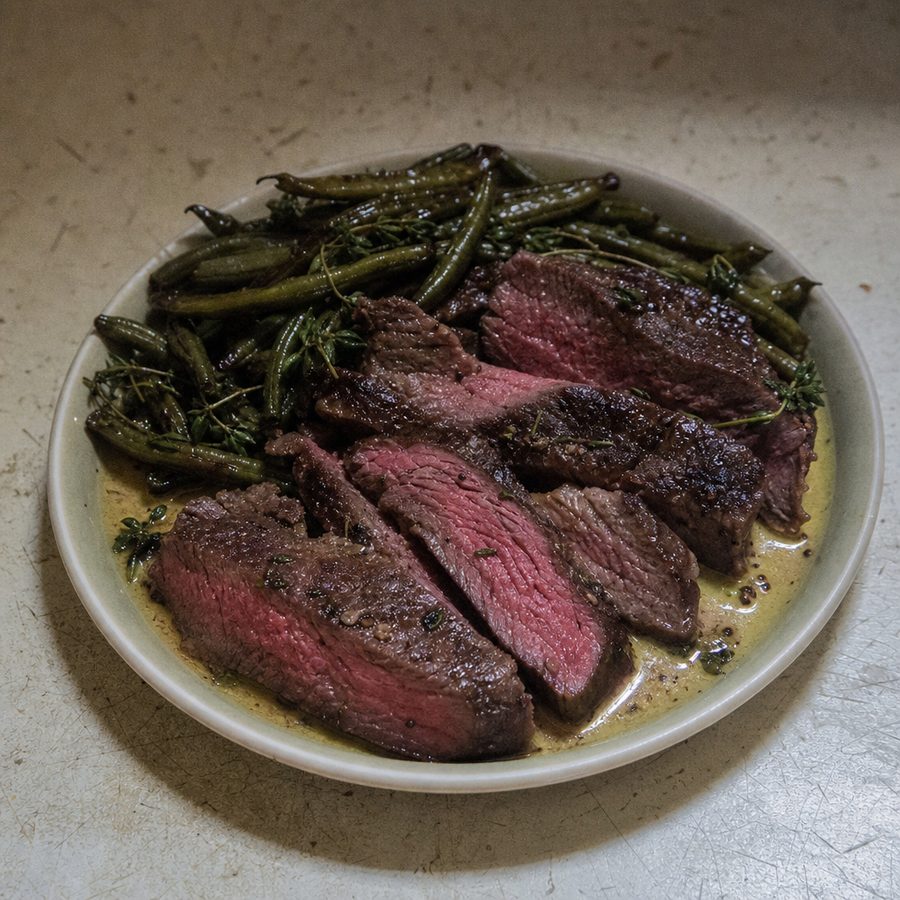
Elk steaks seared hard in a smoking pan and rested while green beans blister in the same skillet, finished with thyme butter and a squeeze of lemon.
Why You'll Love This Recipe
Something substantial, and out the door twenty minutes later, is not much to ask of a morning. Two steaks, a pound of green beans, and one skillet is the entire production. Elk is worth knowing if you have never cooked it: the grain is fine and close, the flavor is a little sweeter and cleaner than beef, and it is one of the fastest things you can put in a hot pan. If elk is hard to find where you shop, venison behaves almost identically and so does a thin sirloin, and none of the timing below changes much.
The one thing to understand is that elk carries very little fat through the muscle, which means it has nothing to protect it from a long stay in the pan. It goes from rose to gray in under a minute, and once it does, no amount of butter brings it back. So the pan gets properly hot first, the steaks go in dry and well seasoned, and they come out at 130 to 135°F (57°C) for medium-rare, which reads a good deal redder in elk than the same temperature does in beef. Then they rest, loosely covered, for a full five minutes while the beans cook. An instant-read thermometer costs very little and takes all the guesswork out of a meat that gives you almost no visual warning.
Green beans in that same pan are the whole side dish and they cost you nothing extra. They hit the seasoned fat the steaks left behind, sit undisturbed for two minutes so the skins blister and brown in patches, then finish with butter, thyme, and a squeeze of lemon that lifts off the pan in a cloud of steam. Everything stuck to the bottom comes up with that lemon and ends up on the plate rather than in the sink. Slice the rested meat against the grain, spoon the juices over both the beans and the steak, and you have a plate that eats like something you would order out, made in the time it takes most people to find their keys.
Ingredients
- 1 1/2 lb elk steaks, about 1 inch thick
- 1 lb green beans, trimmed
- 2 tbsp garlic-infused olive oil, divided
- 2 tbsp butter
- 2 tsp fresh thyme leaves
- 2 tbsp fresh lemon juice
- 1 1/4 tsp fine sea salt, divided
- 1 tsp freshly ground black pepper
Instructions
- Season and heat the pan: Pat the elk steaks completely dry and season both sides with 3/4 teaspoon of the salt and all the black pepper. Set a heavy skillet over medium-high heat with 1 tablespoon of the garlic-infused olive oil and wait until the oil shimmers and the first wisp of smoke rises.
- Sear hard, then check early: Lay the steaks in and leave them undisturbed for 3 minutes, until a dark crust forms and the meat releases from the pan on its own. Turn once and cook 2 to 3 minutes more, until an instant-read thermometer in the thickest part reads 130 to 135°F (57°C) for medium-rare.
- Rest the meat properly: Move the steaks to a warm plate, spoon any pan juices over them, and cover loosely with foil. Leave them alone for 5 minutes while the beans cook. Cutting early empties the juices onto the board and leaves the meat dry no matter how carefully you cooked it.
- Blister the green beans: Add the remaining oil to the same pan, still over medium-high, then the green beans and the remaining salt. Leave them undisturbed for 2 minutes so they blister and brown in patches, then toss and cook 2 to 3 minutes more, until they are bright green and still snap.
- Finish with thyme butter and lemon: Drop in the butter and the thyme, swirl the pan until the butter foams and coats the beans, then pull it off the heat and add the lemon juice, which will steam and hiss. Slice the rested steaks against the grain and serve with the beans and everything left in the pan.
Variations
- Mustard finish: Whisk a teaspoon of dijon mustard into the pan juices with the lemon for a sharper sauce.
- Different green: Swap the green beans for broccoli florets or halved zucchini, both cooked the same way in the same pan.
- Herb change: Use rosemary in place of the thyme, added a minute earlier so its oils have time to soften.
- With potatoes: Add a cup of cooked diced potatoes to the pan with the beans for a heartier plate.
- Sliced cold: Cook the steaks the night before, chill them whole, and serve sliced cold over arugula with the same lemon dressing.
Storage & Leftovers
Cooked elk keeps in a sealed container in the refrigerator for 3 days and is at its best sliced cold rather than reheated, since a second round of heat pushes it past where you want it. Store it whole rather than sliced if you can, because a whole piece dries out far more slowly.
If you do want it hot again, warm slices in a pan for no more than 45 seconds with a spoonful of butter, or lay them over something hot and let that do the work. The green beans reheat happily in a skillet for 2 minutes and come back almost as crisp as they started.
Cooked elk freezes for 2 months, though the texture tightens, so I keep frozen portions for slicing into soups and skillets rather than eating as steak. Raw steaks freeze well for 6 months and thaw overnight in the refrigerator, which is worth knowing since elk is often sold frozen.
Notes & Tips
- Dry meat, hot pan: Moisture on the surface steams and stops a crust from forming. Pat the steaks dry, salt them, and wait for the oil to shimmer before anything goes in.
- Why garlic-infused olive oil works: Garlic flavor is fat-soluble and the part that upsets a sensitive gut is not, so an infused oil carries the taste into the crust on the steak and into the beans afterward, and leaves the trouble behind in the bottle.
- Use a thermometer: Elk cooks faster than beef and gives you almost no visual warning. Thirty seconds is the difference between rose and gray, and 130 to 135°F (57°C) is where you want to pull it.
- Rest it for five minutes: The juices need time to settle back through the muscle. Slicing straight off the heat puts them on the board, and no amount of butter afterward brings them back.
- Let the beans sit still: Two undisturbed minutes in a hot pan is what blisters the skins and browns them in patches. Stirred constantly they steam and stay uniformly pale.
- Lemon off the heat: Added while the pan is on the burner, the juice boils away and turns bitter. Off the heat it hisses, lifts everything stuck to the bottom, and stays bright.
Nutrition & Mindful Eating
- Elk, green beans, and the butter and lemon at the end are all this plate is, and they cover a lot of ground between them. The meat brings the substance, the beans bring the snap and the color, and the lemon keeps a rich pan from ever tasting heavy.
- Elk is close-grained, fine-textured game meat with a flavor a little sweeter than beef, and it is one of the better sources of iron in the form the body absorbs most readily. It carries B12 and zinc along with it, which is a strong start to a day.
- Green beans blistered in a hot pan keep their snap while the skins brown and sweeten. They bring fiber, vitamin K, and vitamin C into a plate built mostly on meat, and the browning is what turns them from a plain vegetable into the part people finish first.
- Butter melted into the pan at the end carries the thyme through the beans and gives the juices their gloss. A small amount of fat added off the heat like this coats everything evenly and makes the whole plate taste finished.
- Protein this dense holds you well past the middle of the morning, which is the point of a breakfast built on a seared steak. The thyme, the black pepper, and the lemon squeezed into the hot pan are what keep it from eating like dinner arrived early.
- As you eat, notice how much softer the meat is for those five minutes it spent resting and how the lemon cuts across the butter, and give this plate the few quiet minutes it deserves before the day begins.
Frequently Asked Questions
I cannot find elk. What else works?
Venison is the closest match and needs the same short cooking and the same careful eye on temperature. A thin sirloin or a bison steak also works, though both carry more fat and can take an extra minute. Keep the target at 130 to 135°F (57°C) whichever you choose.
My elk came out tough and gray. What happened?
It was cooked too long, which is the one real risk with this meat. There is very little fat running through elk, so the window between rose and gray is narrow. Use a thermometer rather than the clock, pull it at 130 to 135°F (57°C), and give it the full five minute rest.
Can I make this ahead for a weekday?
You can trim the beans and season the steaks the night before, which leaves you ten minutes of actual cooking. I would not cook the meat ahead, since reheated elk stiffens quickly. If you want a cook-ahead version, cook it fully, chill it, and eat it sliced cold over greens.
Does this fit a low-FODMAP breakfast?
It does. Elk, butter, and green beans are all comfortable, and a serving of beans this size sits in the range most people handle well. The seasoning is thyme, black pepper, lemon, and garlic-infused olive oil rather than garlic or onion, so the flavor reaches you exactly as written.