
Seared Halibut with Tahini-Lemon Sauce over Mustard Greens
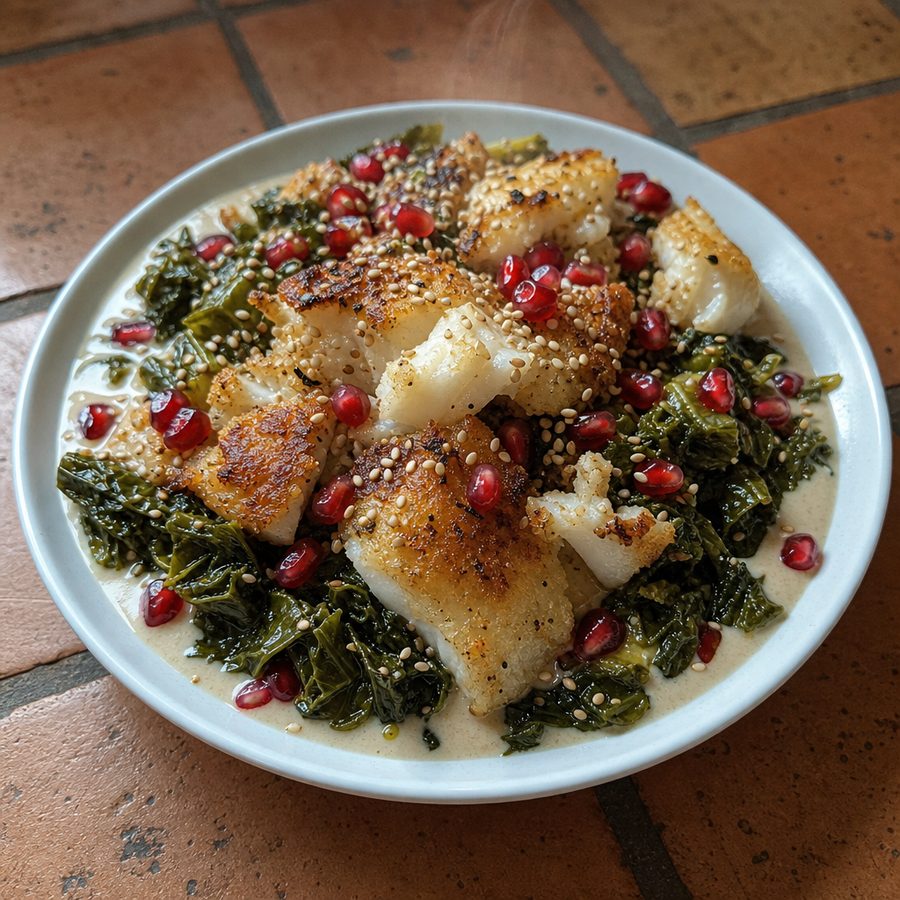
Thick halibut fillets seared to a golden crust, set over wilted mustard greens and a loose lemony tahini sauce, scattered with toasted sesame and pomegranate.
Why You'll Love This Recipe
Halibut is expensive and it is worth cooking properly, which mostly means cooking it less than you think. This is the plate I build when I have brought home four good fillets and want them to be the point of dinner rather than a component in something. It comes together in about forty minutes with no oven involved, and the sauce and the greens can both be done while the fish sits out losing its refrigerator chill. Twenty minutes of that is prep, and the actual cooking is nine or ten.
The sauce is the part people ask about. Tahini seizes and goes pasty the second lemon juice hits it, which alarms everybody the first time, and then it loosens back into something pale and pourable when you add cold water a spoonful at a time. Yogurt goes in after that for tang and body. Grated raw garlic stays raw, so it keeps its bite against the richness of the sesame. The greens are cooked separately in a splash of oil with the sliced garlic and the cumin, and they want only three or four minutes.
It is a plate of contrasts, which is why it works. The fish is sweet, firm, and mild. The mustard greens are peppery and a little bitter even after wilting. The tahini is rich and nutty, the lemon cuts through all of it, and the pomegranate seeds pop cold and sharp between bites of hot fish. I serve this when somebody is coming over, because it looks like it took a great deal more effort than it did, and because a whole halibut fillet on a plate is a generous thing to put in front of a person.
Ingredients
- 4 halibut fillets (about 5 oz each), 1 to 1 1/4 inches thick, patted very dry
- 1 large bunch mustard greens (about 12 oz), stems removed and leaves torn
- 5 tbsp well-stirred tahini
- 2/3 cup plain Greek yogurt
- 3 tbsp fresh lemon juice, plus wedges for the table
- 4 garlic cloves, 2 grated and 2 thinly sliced
- 5 tsp extra-virgin olive oil, divided
- 2 tbsp sesame seeds
- 1 tsp ground cumin
- 1/3 cup pomegranate seeds
- 1/3 cup flat-leaf parsley leaves, roughly chopped
- 1/2 tsp coarsely ground black pepper
- 1/3 tsp fine sea salt
Instructions
- Make the tahini sauce: Whisk the tahini with the grated garlic and the lemon juice in a small bowl. It will seize into a thick paste almost immediately, which is normal. Add cold water one tablespoon at a time, whisking hard after each, until it loosens into a smooth sauce about the thickness of heavy cream, usually three to four tablespoons. Whisk in the yogurt and a pinch of the salt, then set it aside.
- Ready the fish: Take the halibut out of the refrigerator twenty minutes before you cook it and pat every surface dry with paper towel, then pat it dry again just before it goes in the pan. Season both sides with most of the remaining salt and the black pepper. Dry fish is the entire difference between a crust and a gray fillet.
- Wilt the greens: Warm two teaspoons of the olive oil in a large skillet over medium heat. Add the sliced garlic and the cumin and stir for forty seconds, until it smells toasted. Add the mustard greens in handfuls with the last of the salt and cook three to four minutes, tossing, until they have collapsed and turned dark but still have some structure. Scrape them onto a plate and wipe the pan.
- Sear the halibut: Set the same skillet over medium-high until a drop of water skitters across it. Add the remaining three teaspoons of oil, swirl once, and lay the fillets in presentation side down. Do not move them for four minutes. The edges will turn opaque and creep up the sides, and the crust will release on its own when it is ready.
- Turn once and finish: Flip the fillets and cook three to four minutes more, depending on thickness. Pull them when the center is just barely translucent and an instant-read thermometer in the thickest part reads 130°F (54°C), which is medium-rare rather than the FDA figure of 145°F (63°C) for seafood. Halibut carries on cooking off the heat, and taking it to fully opaque in the pan is what makes people think they dislike it.
- Build the plates: Spoon a wide pool of tahini sauce onto each plate and spread it with the back of the spoon. Pile the mustard greens over the sauce, set a halibut fillet on top, and scatter the pomegranate seeds, the sesame seeds, and the parsley across everything. Serve with lemon wedges.
Variations
- Green tahini: Blend a large handful of parsley and cilantro into the sauce for a bright green version with a herbal edge.
- Warm spice: Add a half teaspoon each of coriander and cinnamon to the greens with the cumin for a rounder, warmer plate.
- Charred lemon: Halve two lemons and sear them cut side down alongside the fish, then squeeze the caramelized juice over everything.
- Chile heat: Stir a quarter teaspoon of cayenne into the oil before the greens go in for a slow heat under all that richness.
- Sardine version: Skip the searing and lay tinned sardines over the greens instead for a pantry night that takes fifteen minutes.
Storage & Leftovers
The sauce keeps five days in a sealed jar in the refrigerator and thickens considerably as it sits. Loosen it with cold water and a fresh squeeze of lemon before you use it again. It is worth making a double batch while you have the tahini open, since it is good on almost any roasted vegetable.
Cooked halibut keeps two days and is best eaten cold rather than reheated, flaked over the leftover greens with a spoonful of the sauce. If you do want it hot, warm it covered in a low oven at 275°F for eight minutes, which is gentle enough not to dry it out. A microwave will make it chalky.
I would not freeze the cooked fish or the sauce. Tahini emulsions split on thawing and halibut loses its texture. Raw halibut freezes well if it was fresh when you bought it, so buy an extra fillet and freeze that instead, wrapped tightly, for up to three months.
Notes & Tips
- Stir the tahini jar to the bottom: Sesame paste separates hard in storage. If you spoon from the top you get oil, and if you spoon from the bottom you get cement. Stir the whole jar with a butter knife before you measure.
- Use cold water in the sauce: Cold water emulsifies tahini into something pale and glossy. Warm water gives you a duller, thinner sauce that separates on the plate.
- Grate the garlic for the sauce: A microplane turns the clove into a paste that dissolves. Chopped garlic sits in the sauce in sharp little pieces and you will taste every one of them.
- Get the pan properly hot first: A medium-hot pan steams the surface of the fish while the inside overcooks. Wait for the water-drop test, then add the oil, then add the fish immediately.
- Pull the halibut at 130°F: It climbs another five degrees while you plate. Halibut is close-grained and unforgiving, and two extra minutes is the difference between silky and dry.
- Wipe the pan between the greens and the fish: The cumin left behind will scorch at searing heat and turn bitter. Ten seconds with a paper towel is enough.
Nutrition & Mindful Eating
- Halibut, tahini, yogurt, and mustard greens are doing four separate jobs on this plate. The fish carries the protein, the sesame and yogurt make the sauce rich and tangy, and the greens bring the bitterness and bulk that keep something this creamy from sitting heavy.
- Halibut is a close-grained white fish with a sweet, mild flavor and a real amount of protein behind a single fillet. It also carries selenium, magnesium, and vitamin B12, which is a good deal for a fish that cooks in eight minutes.
- Tahini is ground sesame and nothing else, which is why it tastes so much of the seed. Sesame is one of the better plant sources of calcium, and the fat in it is what gives the sauce its body and its long, nutty finish.
- Mustard greens keep some of their peppery bite even after they collapse in the pan, and they bring calcium, folate, and vitamins A and K along with it. Cooking them briefly in garlicky oil is what softens that sharpness into something you want more of.
- Yogurt whisked into the sauce adds tang and its own calcium and protein, and it makes the tahini pourable enough to spread across a plate. Cold sauce under hot fish is the contrast this dish is built on.
- As you eat, drag each bite of fish through the sauce and the greens together, and notice how the pomegranate resets your mouth between mouthfuls, which is a good moment to check in on how hungry you still are.
Frequently Asked Questions
My tahini sauce went stiff and grainy. Did I ruin it?
Not at all, and it happens every single time. Tahini tightens when acid hits it and then relaxes again once you add water. Keep whisking and keep adding cold water a tablespoon at a time. It goes from paste to pourable quite suddenly, so add slowly toward the end.
Can I use a cheaper fish?
Cod, haddock, and thick tilapia fillets all take well to this treatment and cost a fraction of halibut. They are more delicate, so use a wider spatula and expect to lose a corner or two. Reduce the cooking time by about a minute on each side.
What can I use instead of mustard greens?
Collard greens want five or six minutes rather than three, and kale wants about four. Both work. If you want something gentler than mustard greens, spinach wilts in ninety seconds, though it gives up a lot of water so drain it before it goes on the plate.
How do I stop the fish sticking to the pan?
Dry fillets, a properly hot pan, and patience. A fillet laid into hot oil bonds to the metal at first and then releases itself once the crust forms, usually around the three and a half minute mark. If it fights you when you try to lift it, it is not ready.