
Seared Lamb with Crushed Rutabaga and Mint
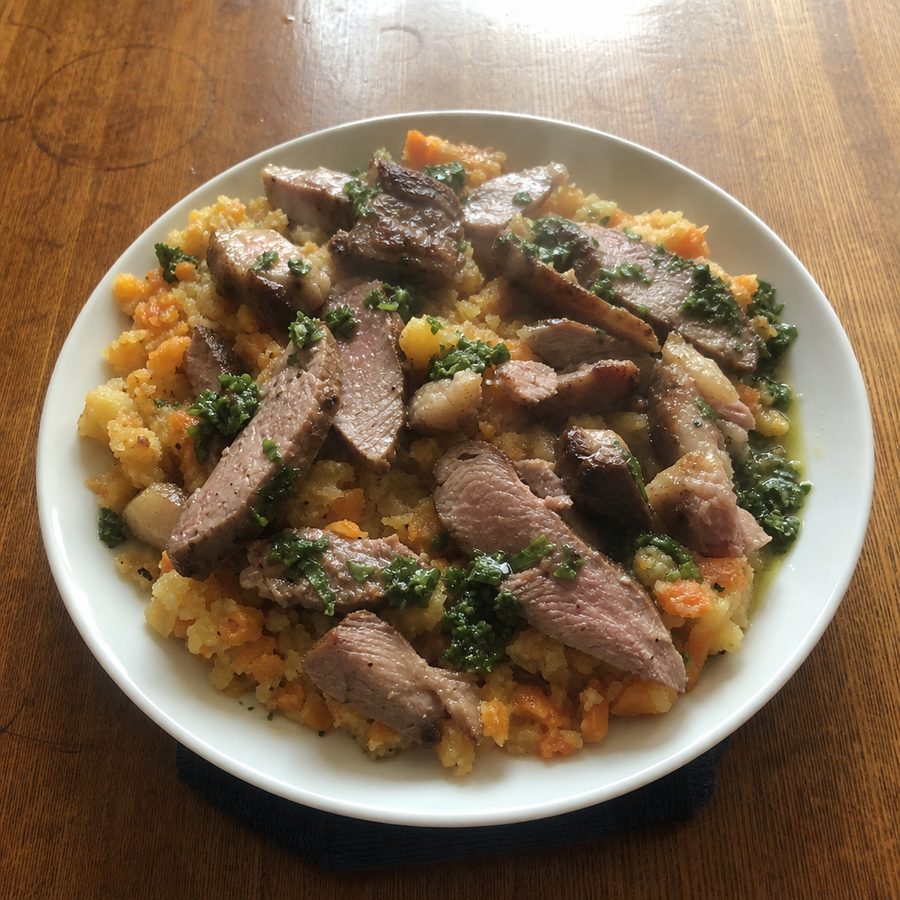
Lamb leg steaks seared to pink and sliced over a coarse crush of rutabaga and carrot, with chopped mint stirred into cider vinegar and spooned over the top.
Why You'll Love This Recipe
Lamb and mint is an old pairing and it survives because it works, though the sweet jarred sauce has done the combination no favors. What I want is the sharp version: chopped mint, a shallot, and cider vinegar sitting together for ten minutes while the rest of dinner cooks, so the acid pulls the color and the flavor straight out of the leaves. Spoon that over hot lamb and it does what a squeeze of lemon does for fish. Leg steaks are the cut I buy for this, because they cook in eight minutes flat and cost a good deal less than chops.
The crush underneath is rutabaga and carrot boiled together and broken up with a fork, and I leave it deliberately rough. A smooth puree turns the plate into baby food, while a coarse crush keeps little sweet pieces of carrot and faintly bitter edges of rutabaga separate enough that you taste both. Rutabaga takes longer than most roots to go tender, which is why it goes into the water first and gets cut small. A spoonful of the lamb fat stirred in at the end, along with the rosemary, gives it a savory depth that oil alone does not reach.
This eats the way a roast dinner eats, sweet root vegetable against savory meat with something sharp to keep it moving, and it is on the table inside half an hour. There is a real amount of lamb per person, sliced thin so it goes further, and the crush is filling in a soft, comforting way that suits a dark evening. I make it most often in late fall, when rutabaga is cheap and heavy and good, and when I want dinner to taste like it took longer than it did.
Ingredients
- 1 1/4 lbs boneless lamb leg steaks, about 3/4 inch thick, patted dry
- 1 1/2 lbs rutabaga, peeled and cut into 1/2-inch dice
- 3 medium carrots (about 8 oz), cut into 1/2-inch coins
- 1/4 cup fresh mint leaves, finely chopped
- 1 shallot, minced
- 2 cloves garlic, crushed
- 2 tbsp apple cider vinegar
- 2 tbsp olive oil, divided
- 1 tsp fresh rosemary, finely chopped
- 1/2 tsp fine sea salt, plus more to taste
Instructions
- Boil the roots: Put the rutabaga in a saucepan, cover with water by an inch, add a pinch of the salt, and bring to a boil. After 5 minutes add the carrot coins. Simmer 12 to 14 minutes more, until a knife goes into a piece of rutabaga with no resistance. Rutabaga is dense, so test the biggest piece.
- Make the mint vinegar: While the roots cook, stir the chopped mint, the minced shallot, the cider vinegar, and a pinch of salt together in a small bowl. Leave it to sit. In ten minutes the vinegar turns green and the shallot loses its bite.
- Sear the lamb: Season the steaks all over with half the salt. Heat 1 tablespoon of the olive oil in a heavy skillet over medium-high until it shimmers. Lay the lamb in with the crushed garlic and rosemary and cook 4 minutes without moving it, until the underside is deeply browned, then turn and cook 3 to 4 minutes more to 135°F for medium-rare. Move the steaks to a board and rest them 8 minutes.
- Crush the roots: Drain the rutabaga and carrot well and return them to the dry pan over low heat for 30 seconds to steam off. Add the remaining olive oil and a spoonful of the fat from the lamb pan, then break everything up with a fork or a masher until it is coarse and lumpy rather than smooth. Season to taste.
- Slice and serve: Cut the rested lamb thinly against the grain. Spoon the crush onto four warm plates, lay the lamb over it, pour on any juices from the board, and finish each plate with a spoonful of the mint vinegar and a little more of it on the table.
Variations
- Parsnip in the crush: Swap half the rutabaga for parsnip for something sweeter and softer under the meat.
- Thyme and garlic lamb: Use thyme in place of the rosemary and add two more smashed cloves to the pan for the last minute of searing.
- Ground lamb version: Brown a pound of ground lamb with the rosemary and pile it over the crush, finishing with the same mint vinegar.
- Add greens: Wilt a few handfuls of shredded kale in the lamb pan while the meat rests and serve it alongside.
- Sweeter finish: Stir a teaspoon of honey into the mint vinegar for a rounder sauce that sits closer to the traditional one.
Storage & Leftovers
The crush and the lamb keep 3 days in the refrigerator in separate sealed containers. Slice only what you plan to eat and keep the rest of the lamb whole, since a whole steak holds its pink middle through reheating far better than thin slices do.
Warm the crush in a saucepan over low heat with a splash of water, mashing again as it loosens. The lamb is best brought back to room temperature and eaten as it is, or given 30 seconds a side in a hot dry pan. Anything longer and medium-rare becomes well done.
The mint vinegar is at its best on the day it is made and stays good for 2 days, though the leaves darken. It does not freeze. The crush does, for up to 3 months, and it comes back well with vigorous mashing and a little extra olive oil.
Notes & Tips
- Cut the rutabaga small: Half-inch dice is the difference between 14 minutes and half an hour. A whole rutabaga looks intimidating, so halve it, sit it flat, and work down from there.
- Salt the mint early: The pinch of salt in the vinegar draws juice out of the leaves and the shallot, which is what makes the sauce taste of mint rather than of vinegar with mint in it.
- Let the pan get properly hot: Lamb needs a hard sear to develop the brown crust that carries the flavor. Wait for the oil to shimmer and move in ripples before the meat goes in.
- Spoon in the lamb fat: That spoonful from the skillet is the best thing that happens to the crush. It carries the rosemary and the browned bits into the root vegetables.
- Rest, then slice: Eight minutes on the board lets the juices settle back through the meat. Cut it straight off the heat and most of that ends up on your cutting board.
- Keep the crush rough: Stop mashing while there are still recognizable pieces of carrot in it. Texture is what makes this taste like a plate of vegetables rather than a puree.
Nutrition & Mindful Eating
- Lamb, rutabaga, and carrot balance each other here. The meat brings the savory richness and most of the protein, the rutabaga gives the plate its soft bulk, and the carrot sweetens the crush enough that it needs nothing sweet added to it.
- Lamb leg is a firm cut with a deep flavor that stands up to strong herbs, and red meat like this carries iron in the form the body absorbs most readily, along with zinc and B12.
- Rutabaga is a member of the cabbage family, which is where its faint bitterness underneath the sweetness comes from, and it brings fiber and vitamin C in a root that eats like comfort food.
- Carrots hold their sweetness through boiling and give the crush its color, and that deep orange is beta-carotene, which your body converts to vitamin A.
- Mint, shallot, and cider vinegar are the sharp edge of this plate. The acid softens the shallot, pulls the oils out of the mint leaves, and lands against the richness of the lamb so each forkful starts over.
- As you eat, let the sharpness of the mint arrive after the lamb rather than with it, and notice how a plate this rich asks you to slow down all by itself.
Frequently Asked Questions
Can I use lamb chops rather than leg steaks?
Yes. Loin or shoulder chops sear on roughly the same timing, and rib chops want about a minute less a side because they are thinner. Cook to 135°F either way and rest them the full 8 minutes before slicing.
The rutabaga was still hard when the carrots were done. What happened?
The dice was too big, or the two went in together. Rutabaga is much denser than carrot, so cut it to a true half inch and give it a 5 minute head start in the water. A larger cut can take twice as long to soften.
Can I make the mint vinegar ahead?
Make it up to a day ahead and keep it covered in the refrigerator. The color dulls a little, so chop and stir in a few extra leaves just before serving if you want it bright green on the plate.
Is this suitable during an AIP elimination phase?
It is as written. Lamb, rutabaga, carrot, mint, shallot, garlic, rosemary, cider vinegar, and olive oil are all compliant, and the only seasoning is sea salt. Buy plain lamb steaks and check that nothing has been seasoned at the counter.