
Seared Ostrich with Roasted Delicata Squash and Sage
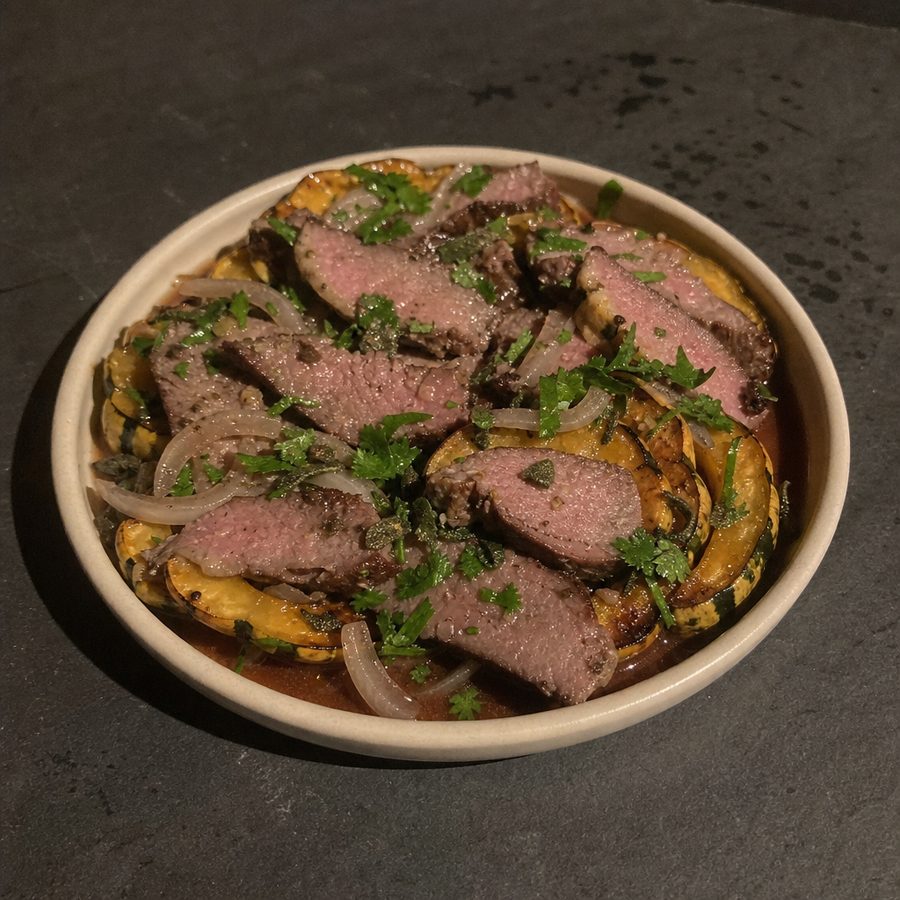
Ostrich steaks seared rosy and sliced over roasted delicata squash, then spooned with a warm shallot, sage, and balsamic dressing that soaks in while everything is hot.
Why You'll Love This Recipe
Ostrich is the meat I bring up with people who are tired of chicken and cannot face another piece of fish. It is a bird, but it eats like beef, deep red and close-grained, and a steak is done in about six minutes in a hot skillet. I make this on an afternoon in October when the squash is piling up on the counter, and then I eat it out of a container on Monday and Tuesday, because it is one of the few meat plates that is as good cold as it was hot. If your butcher does not carry ostrich, the same plate works with a beef tenderloin steak or a venison loin.
Two things make it work. The squash goes into a hot oven in a single layer so the flat faces caramelize while the half moons hold their shape, and the skin stays on, because delicata skin turns tender in the oven and saves you fifteen minutes of peeling. The ostrich then wants a very hot pan and very little time. There is almost no fat running through the muscle, so the window between rosy and dry is narrow, and I pull the steaks at 130°F (54°C) and rest them while the shallots, sage, and balsamic warm through in the same skillet. That dressing goes on while the squash is still hot, which is when it soaks in rather than sliding off.
What lands on the plate is sweet, savory, and a little sharp all at once, the squash going soft and honeyed under the vinegar while the meat stays firm and rosy against it. There is a serious amount of protein in a steak this size, and the squash underneath brings fiber and slow starch, which is the combination that carries an afternoon rather than fading at three. Slice the ostrich against the grain and lay it over the squash so the resting juices run down into it. If you are packing this for work, leave the steaks whole overnight and slice them in the morning, then let the container sit out for ten minutes before you eat.
Ingredients
- 4 ostrich steaks (1 1/2 lb total), about 1 inch thick
- 2 medium delicata squash (about 1 3/4 lb), halved, seeded, and cut into 1/2-inch half moons
- 2 medium shallots, thinly sliced
- 3 cloves garlic, thinly sliced
- 3 tbsp olive oil, divided
- 2 tbsp balsamic vinegar
- 2 tbsp chopped fresh sage (about 12 leaves)
- 1 tsp honey
- 3 tbsp chopped fresh parsley
- 1 tsp fine sea salt, divided
Instructions
- Heat the oven and cut the squash: Heat the oven to 425°F (220°C). Halve the delicata squash lengthwise, scoop out the seeds and strings with a spoon, and cut each half crosswise into half-inch half moons. Leave the skin on, since it turns tender as it roasts. Toss the squash on a sheet pan with 1 1/2 tablespoons of the olive oil and a quarter teaspoon of the salt.
- Roast the squash: Spread the half moons in a single layer with space between them and roast for 22 to 25 minutes, turning them once at the 15 minute mark. They are ready when the cut faces are deep gold and a knife slides through the thickest part with no resistance. Leave them on the pan while you cook the meat.
- Sear the ostrich: Pat the steaks very dry and season them with a half teaspoon of the salt. Heat 1 tablespoon of the oil in a cast iron skillet over medium-high until it shimmers and just begins to smoke. Lay the steaks in and leave them undisturbed for 3 minutes, then turn and cook 2 to 3 minutes more, until the center reads 130°F (54°C). Move them to a board to rest for 8 minutes.
- Build the warm dressing: Lower the heat to medium and add the last half tablespoon of oil and the shallots to the same skillet. Cook for 2 minutes until they soften and turn translucent, then add the garlic and sage and cook 45 seconds, until the garlic smells sweet. Pour in the balsamic vinegar and honey, scrape the browned bits off the bottom, and simmer for 1 minute until it turns glossy and slightly syrupy.
- Slice and dress: Slice the ostrich against the grain about a quarter inch thick. Lay the slices over the roasted squash, pour any juices from the board into the skillet dressing, and spoon the whole thing over the meat and squash while both are still warm.
- Finish: Scatter the parsley over the top and add the remaining quarter teaspoon of salt, tasting a piece of squash first, since the balsamic does some of the work salt usually does. Serve warm or at room temperature.
Variations
- Beef or venison: Swap in beef tenderloin or venison loin at the same weight and cook to the same 130°F (54°C) if ostrich is hard to source.
- Acorn or butternut: Use acorn squash wedges or peeled butternut half moons when delicata is out of season, adding 5 minutes in the oven.
- Rosemary and orange: Swap the sage for chopped rosemary and add a squeeze of orange to the pan dressing for a sweeter, more resinous plate.
- Greens underneath: Lay a handful of watercress or arugula on the plate first and set the hot squash on top so the leaves wilt just enough.
- Make it a bigger lunch: Add sliced avocado or a spoonful of sauerkraut alongside when you want the container to carry you further into the afternoon.
Storage & Leftovers
This keeps in a sealed container in the refrigerator for up to 3 days and is one of the few seared meats worth eating cold on purpose. Store the sliced ostrich on top of the squash rather than mixed through, and pour any dressing left in the skillet over the whole container before the lid goes on.
To eat it warm again, spread the squash in a dry skillet over medium heat for 3 to 4 minutes so the edges firm up, and add the meat for the last 30 seconds only. Ostrich has very little fat in it, so a second real cooking takes it straight past rosy and into dry and gray.
Freezing is not worth doing here. The squash collapses into threads on thawing and the sliced meat weeps and turns chalky. If you want a head start, roast the squash and make the dressing up to 2 days ahead, keep them separately, and sear the steaks the morning you plan to eat.
Notes & Tips
- Buy the steaks thick: A 1-inch steak gives you a browned crust and a rosy middle. Thin ostrich cuts are cooked through before the outside has colored at all.
- Dry the surface first: Wet meat steams instead of searing. Blot the steaks with paper towel and salt them right before they go in the pan.
- Give the squash room: Half moons stacked on a crowded sheet pan steam and stay pale. Use two pans if you have to, and the caramelized edges will be there.
- Use a thermometer: The window on this meat is about 90 seconds wide. At 130°F (54°C) it is juicy and rosy, and by 150°F (65°C) it is firm and dry with no way back.
- Dress it hot: The squash drinks up the balsamic while it is still warm from the oven. Dress a cold pan of squash and the same dressing just sits on the surface.
- Save the resting juices: Whatever pools on the cutting board goes back into the skillet. It carries more flavor than anything else you will add at the end.
Nutrition & Mindful Eating
- Ostrich, delicata squash, and a warm balsamic dressing make a full plate between them. The meat brings the substance, the squash brings sweetness and body, and the sharp dressing over both is what keeps a rich plate tasting bright rather than heavy.
- Ostrich is a red meat despite coming from a bird, close-grained and mild with a clear mineral note, and it carries iron in the form the body takes up most readily along with the B12 that red meat is known for.
- Delicata squash is sweet enough to caramelize at the cut faces, and its orange flesh carries beta-carotene, which the body converts to vitamin A. The skin is thin enough to eat, and that is where a good part of the fiber sits.
- Shallots and garlic softened in the pan turn sweet rather than sharp, and they feed the bacteria in your gut. Cooking them this gently is also what makes them sit easily on people who find raw onion difficult.
- Sage, balsamic, and a teaspoon of honey are the whole seasoning, and the vinegar is what makes the meat taste clearly of itself. A plate built on this much protein and this much fiber holds you through a long afternoon rather than asking for something else at three.
- As you eat, notice how differently the two halves of the plate behave, the squash giving way at once and the meat asking for a moment of chewing, and let that difference slow you down enough to catch the point where you have had enough.
Frequently Asked Questions
Where do I buy ostrich, and what if I cannot find it?
Ostrich fan fillet is sold frozen by game and specialty butchers and by several online meat suppliers. If none of that is near you, beef tenderloin, venison loin, or a thick sirloin steak all sear the same way at the same weight. Keep the internal temperature target at 130°F (54°C) for any of them.
My ostrich came out gray and dry. What happened?
It cooked a couple of minutes too long, which is the usual story with this meat. There is almost no marbling to protect it, so it goes from rosy to dry faster than beef does. Sear it hard and briefly, take it off the heat at 130°F (54°C), and let the resting time finish the job.
Do I have to peel the delicata squash?
No, and that is the reason to buy delicata rather than a thicker-skinned winter squash. The skin is thin enough that it goes tender in the oven and disappears into each bite. Scrub the outside well, since it goes onto the plate.
Does this fit an AIP elimination phase?
It does. There are no grains, legumes, dairy, eggs, nuts, seeds, or nightshades in it, and the seasoning is sage, garlic, shallot, balsamic, and salt. Check that your balsamic vinegar lists nothing beyond grapes, since a few bottles carry added sulfites or caramel color.