
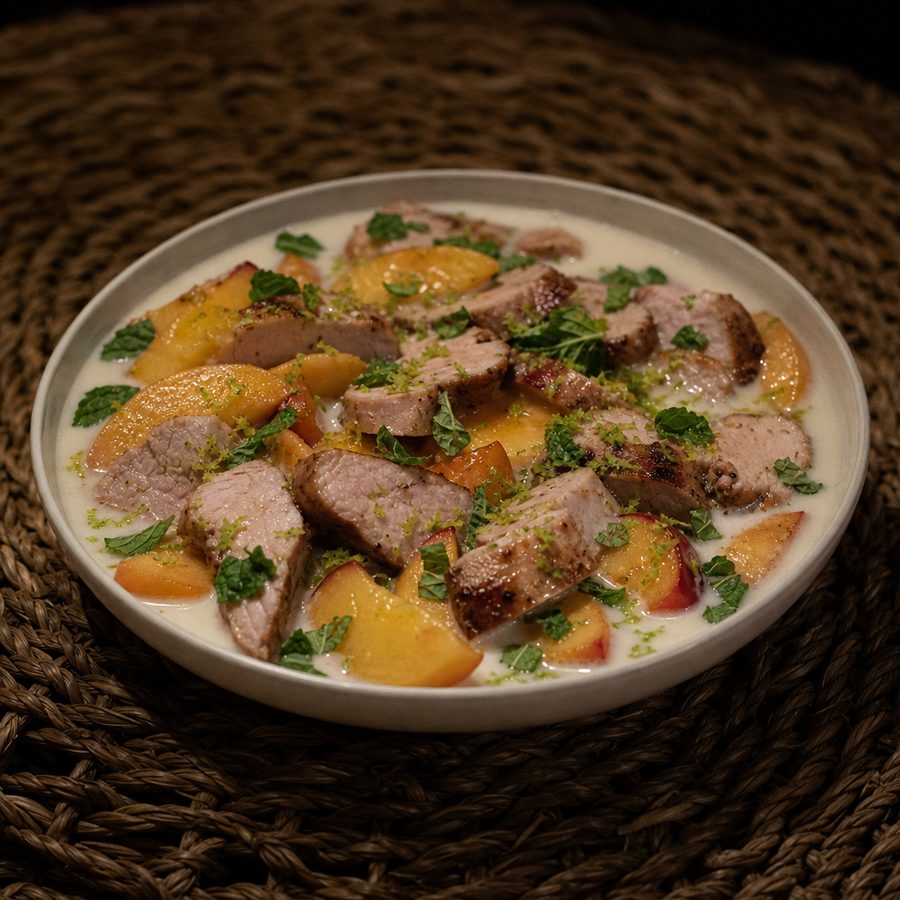
Seared Pork and Peach Breakfast Bowl with Coconut and Mint
Sliced seared pork tenderloin over warm peaches in a ginger coconut sauce, finished with lime and torn mint for a sweet and savory breakfast bowl.
Why You'll Love This Recipe
This started life as a peach and coconut bowl, which tasted lovely and left me hungry by half past nine, so the pork moved in and the bowl became a meal. Fruit on its own is a hard way to start a morning, especially in an elimination phase where the usual protein at breakfast is off the table. Tenderloin cooks in about 20 minutes, most of it in the oven while you slice peaches, and it slices into rounds that sit on top of the fruit rather than disappearing into it. I make this at the end of the summer when peaches are cheap and good, and I make it for people who say they do not like savory breakfasts.
The trick with fruit in a savory dish is heat and salt. Peach wedges go into the same pan the pork was seared in, where the browned bits and the fat are still sitting, and they cook for 3 or 4 minutes until the edges give and the fruit smells like a pie without ever collapsing. Ginger goes in with them, coconut milk goes in after, and the whole thing simmers down for a few minutes into a loose pale sauce. Lime juice and torn mint come at the very end, off the heat, so the sharpness stays sharp and the mint keeps its color instead of going black.
Pork tenderloin is the piece of the pig that behaves like chicken breast, close-grained and mild, which is why it takes to the sweetness of the peaches rather than fighting it. Cooked to 145°F (63°C) and rested, it stays juicy and slightly pink in the middle, which is both safe and far better eating than the gray version most of us grew up with. A bowl of this eats sweet and light and then holds you like a real breakfast, because there is a full serving of meat under all that fruit.
Ingredients
- 1 1/2 lb pork tenderloin, trimmed of silverskin
- 4 ripe peaches (about 1 lb), pitted and cut into thick wedges
- 2/3 cup canned full-fat coconut milk
- 1 tbsp coconut oil
- 1 tbsp finely grated fresh ginger
- 2 tbsp fresh lime juice, plus zest of 1 lime
- 1/4 cup fresh mint leaves, torn
- 3/4 tsp fine sea salt, divided
Instructions
- Heat the oven and season the pork: Heat the oven to 400°F (200°C). Pat the tenderloin dry and pull off the silvery membrane along one side with a thin knife, since it shrinks and toughens in the heat. Season all over with half a teaspoon of the salt.
- Sear the tenderloin: Heat the coconut oil in an ovenproof skillet over medium-high until it shimmers. Add the tenderloin and sear for 6 to 8 minutes total, turning every 2 minutes, until all sides are deep brown.
- Roast and rest: Move the skillet to the oven and roast for 10 to 14 minutes, until the thickest part reads 145°F (63°C). Take the pork out of the pan, set it on a board, and let it rest for 8 minutes. It will be faintly pink in the center, which is where it should be.
- Cook the peaches: Return the skillet to medium heat, keeping the browned bits in it. Add the peach wedges and the ginger with the remaining salt and cook for 3 to 4 minutes, turning them once, until the edges soften and the pan smells sweet.
- Make the sauce: Pour in the coconut milk, scrape the bottom of the pan, and simmer for 3 minutes until it thickens slightly and coats the fruit. Take the pan off the heat and stir in the lime juice and zest.
- Slice and serve: Cut the tenderloin across the grain into half-inch rounds and add any juices from the board to the sauce. Divide the peaches and sauce among four bowls, lay the pork over the top, and scatter the torn mint across everything.
Variations
- Nectarine or plum: Use nectarines for something almost identical, or plums for a tarter, darker sauce that suits a cooler morning.
- Warm spice: Add a quarter teaspoon of cinnamon with the ginger for a rounder, more autumnal bowl.
- Mango and lime: Swap the peaches for mango and double the lime for a tropical bowl that leans sharper.
- Herb switch: Use torn Thai basil or cilantro in place of the mint for a more savory finish.
- Greens underneath: Wilt a few handfuls of spinach into the sauce before the pork goes on when you want something green in the bowl.
Storage & Leftovers
Keep the pork and the peaches in separate sealed containers in the refrigerator for up to 3 days. Stored apart, the meat stays firm and the fruit stays in wedges rather than turning to sauce, and you can reheat one without overcooking the other.
Warm the peaches and coconut sauce in a small pan over low heat for 3 minutes, then add the sliced pork for the last 30 seconds only. Tenderloin is close-grained and dries out fast, so it wants to be warmed through rather than cooked a second time.
The coconut and peach sauce freezes for up to 3 months and is worth making a double batch of when peaches are in season. Cooked tenderloin freezes for a month but comes back drier, so I would rather cook it fresh and freeze only the fruit.
Notes & Tips
- Remove the silverskin: That thin silvery membrane does not break down and will curl the tenderloin as it cooks. Slide a thin knife under one end and pull it off in strips.
- Use a thermometer: Tenderloin is narrow and goes from juicy to dry in about 3 minutes. Pull it at 145°F (63°C) and let carryover heat do the rest during the rest.
- Pick peaches that give slightly: A rock-hard peach will not soften in 4 minutes in a pan and tastes sour. One that yields to gentle pressure at the shoulder is ready today.
- Do not stir the peaches much: Turn them once. Any more and the wedges break down into the sauce and you lose the shape that makes this a bowl rather than a compote.
- Rest the pork on a board, not in the pan: Left in the hot skillet it keeps cooking. Eight minutes on a board lets the juices settle, and those juices go back into the sauce.
- Tear the mint, do not chop it: A knife bruises mint and turns the edges black within minutes. Torn leaves stay green and smell far stronger.
Nutrition & Mindful Eating
- Pork, peaches, and coconut milk each pull the bowl in a different direction, and together they land somewhere balanced. The meat gives it substance, the fruit gives it sweetness and fiber, and the fat in the coconut milk is what makes the whole thing sit steadily.
- Pork tenderloin is close-grained and mild and slices into neat rounds, and it carries thiamine, selenium, and B6 along with a lot of protein for a cut that eats this gently.
- Peaches cooked briefly in a hot pan turn softer and sweeter than they are raw, and they keep the vitamin C and the fiber that come with the skin. Leaving the skin on is worth it for both the color and the texture.
- Coconut milk gives the sauce its body without anything thickening it, and the fat in it is what carries the ginger and lime flavors across the whole bowl. It is also why a fruit-heavy breakfast holds you rather than fading.
- Ginger, lime, and torn mint are the finish, and they are the reason this reads as a meal rather than a dessert. Mint added off the heat keeps its cooling edge, which is what cuts through the richness of the coconut.
- As you eat, taste how much deeper a warmed peach is than a cold one, and let the mint and the lime slow you down enough that you finish the bowl knowing exactly what you ate.
Frequently Asked Questions
Can I use frozen or canned peaches?
Frozen peach slices work well. Add them straight from frozen and give the pan an extra 2 minutes to cook off the water. Canned peaches in juice work in a pinch, drained thoroughly, though they are much softer and will break down into the sauce.
What else can I use instead of pork?
Chicken thighs or breast, seared and roasted the same way, are the closest swap. Duck breast is excellent with peaches if you have it. Shrimp works too and needs only 3 minutes in the pan, added after the sauce comes together.
Is pink pork safe?
Yes. Whole cuts of pork are safe at 145°F (63°C) followed by a 3 minute rest, which is the current USDA guidance, and at that temperature the center stays faintly rosy and juicy. Ground pork is different and needs 160°F (71°C).
Does this fit an AIP elimination phase?
It does. There are no grains, legumes, dairy, eggs, nuts, seeds, or nightshades in it, and ginger, lime, mint, and salt do all the seasoning. Check that your canned coconut milk is coconut and water, since some brands carry gums or additives.