
Seared Salmon over Crushed Minted Peas
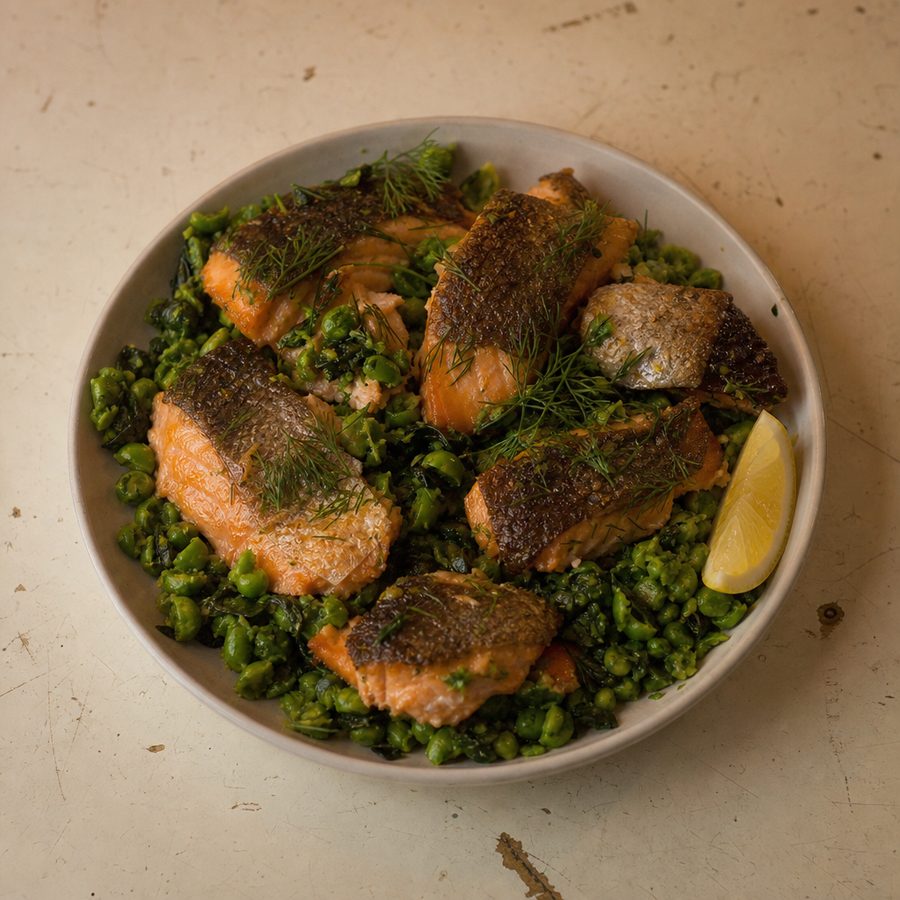
Salmon fillets seared skin side down until the skin shatters, laid over green peas crushed rough with shallot, wilted spinach, mint, dill, and a hard squeeze of lemon.
Why You'll Love This Recipe
Fish and mushy peas is an old pairing and I have never understood why it stayed inside the chip shop. Crushed peas with mint are sweet, soft, and green enough to hold their own against a fatty fish, and they take about six minutes to make. I crush them with a fork rather than a blender on purpose, because I want some of them still whole and popping between the teeth. A smooth puree turns into baby food and loses everything that makes peas worth eating.
Salmon on top of that is a study in contrasts. The skin, if you dry it properly and give it a hot pan and time, goes thin and brittle and crackles when you cut it. The flesh under it stays coral and just barely set at the center, which is where salmon tastes best. It sits into the peas and the fat runs down into them, and then the lemon comes over and cuts straight through the middle of all that richness. Dill and mint together are what keep it tasting light rather than heavy.
A proper dinner on a Tuesday, with no interest in a long cook, is the brief here. Frozen peas are entirely fine here, better than most fresh peas from a supermarket, and they mean this is a dish you can make from the freezer and a lemon. It plates beautifully with no effort, so it is also what I cook when someone is coming over and I have not planned anything.
Ingredients
- 4 salmon fillets (about 1 1/4 lb total), skin on and patted very dry
- 3 1/2 cups green peas, fresh or frozen
- 5 packed cups baby spinach
- 2 shallots, minced
- 4 cloves garlic, minced
- 1/2 cup fresh mint leaves, chopped
- 3 tbsp fresh dill, chopped, plus fronds to finish
- 2 1/2 tbsp olive oil, divided
- 5 tsp lemon juice, plus wedges to serve
- 1 tsp coarsely ground black pepper
- 1/2 tsp fine sea salt, divided
Instructions
- Cook the peas: Bring an inch of water to a boil in a wide saucepan. Add the peas and cook three to four minutes, until they are tender and bright green rather than olive. Drain them, keeping a few tablespoons of the cooking water, since it is sweet and green and it is what you will use to loosen the crush rather than plain water from the tap.
- Soften the shallots and wilt the spinach: Wipe the pan dry, add one tablespoon of the olive oil, and cook the shallots over medium for three minutes until translucent and just starting to color at the edges. Add the garlic for thirty seconds, then the spinach in handfuls, stirring until each one collapses before adding the next, because a whole bag at once cools the pan and sits there steaming. It should take about ninety seconds in total.
- Crush them together: Return the peas to the pan off the heat and crush them roughly with a fork or a potato masher, adding a splash of the reserved water if it looks tight. Stop while at least a third of the peas are still whole. Stir in the mint, dill, black pepper, a quarter teaspoon of the salt, and three teaspoons of the lemon juice off the heat, since both herbs go dull the moment they meet a live burner, then cover to keep warm.
- Sear the salmon: Heat a heavy skillet over medium-high with the remaining oil until it shimmers. Season the salmon skin with the rest of the salt and lay the fillets in skin side down, pressing each one flat for ten seconds, because salmon skin curls away from the pan as it heats and it only crisps where it stays in contact. Cook five to six minutes without moving them, until the skin is deep gold and you can see the flesh has turned pale two thirds of the way up the side.
- Turn briefly and serve: Flip the fillets and give them sixty to ninety seconds on the flesh side, which leaves the center rosy. Spoon the crushed peas onto warm plates, set the salmon on top skin side up, and finish with the last of the lemon juice and a few dill fronds.
Variations
- Watercress and lemon zest: Fold two handfuls of watercress in with the spinach and add a strip of lemon zest to the peas for something peppery and sharper.
- Cod or halibut: Use a white fish and sear it the same way. The peas keep their sweetness and the plate turns lighter and cleaner tasting.
- Pea and tahini: Stir a tablespoon of tahini into the crushed peas for a rounder, nuttier base that suits a colder night.
- Charred scallion: Blacken whole scallions in the dry skillet before the salmon and lay them across the plate for a smoky edge against the mint.
Storage & Leftovers
The crushed peas keep four days in a sealed container and reheat well in a saucepan over low heat with a splash of water, stirred until they loosen. They dull slightly in color after a day, so a little fresh mint stirred through on reheating brings them back to tasting green.
Cooked salmon keeps three days and is at its best eaten cold rather than reheated. Flake it over the peas straight from the refrigerator with lemon and pepper and it makes a very good lunch. If you must reheat it, do it covered at low heat for a few minutes, and accept that the skin will have gone soft.
The peas freeze for three months and thaw well, which makes them worth making in a double batch. Freeze them flat in a sealed bag, thaw overnight in the refrigerator, and warm them gently with a spoonful of water. I do not freeze cooked salmon, since the texture turns dry and stringy.
Notes & Tips
- Dry the skin, really dry: Blot the salmon skin with paper towel until it feels tacky rather than wet. Any surface moisture turns to steam in the pan and steam is what keeps skin from crisping.
- Press the fillets down for ten seconds: Skin contracts as it hits the heat and lifts the middle of the fillet away from the metal. A spatula held on top for a few seconds keeps the whole surface flat against the pan.
- Stop crushing early: The peas keep softening from their own heat after you stop. Leaving a third of them whole gives you a base with texture rather than a smooth spread.
- Mint goes in off the heat: Cooked mint turns gray and tastes faintly medicinal. Stirred into warm peas with the burner off it stays sweet and green.
Nutrition & Mindful Eating
- The salmon and the peas balance each other on the plate. The fish brings the protein and nearly all the fat, the peas bring fiber and their own quiet protein, and the spinach folded through adds bulk and color for very little weight.
- Salmon is an oily fish, which is where its softness and its deep color come from, and it carries the long-chain omega-3 fats along with vitamin D and B12. The fat sits mostly under the skin, so a fillet cooked skin on keeps more of it on the plate.
- Green peas are a legume even though they eat like a vegetable, and that is why they bring both fiber and protein where most green things bring only the first. Their sweetness comes from sugars that start turning to starch within hours of picking.
- Spinach wilts down to almost nothing, which is what lets five cups of it disappear into a pan of peas. It carries folate, vitamin K, and a good deal of potassium, and a squeeze of lemon over it makes the iron in the leaves easier for you to take up.
- Mint, dill, and lemon are what stop a rich fish from tasting heavy. Acid and cool herbs reset your palate between bites, which is why the fourth mouthful of this tastes as good as the first.
- As you eat, notice how the sweetness of the peas rises after the lemon has faded and how the skin gives way under the fork, and let the plate take longer than the twenty five minutes it took to make.
Frequently Asked Questions
Frozen peas or fresh?
Frozen, nine times out of ten. Peas begin converting their sugar to starch the moment they are picked, and the frozen ones are blanched within hours of harvest. Fresh peas straight from the pod in early summer are wonderful, but supermarket ones in a bag are usually tired.
Can I make this without the skin?
You can, and skinless fillets cook a little faster, three to four minutes on the first side. You lose the crackle, which for me is half the dish, so if your fish comes skinless I would sear it hard on both sides and let the browning do that work instead.
How do I know when salmon is done?
Watch the side of the fillet rather than the top. The flesh turns from translucent to opaque from the bottom up, and when that line has climbed about two thirds of the way, it is time to turn it. A thermometer at the thickest point should read 120 to 125°F (49 to 52°C) for a rosy center, which is medium-rare. The FDA figure for seafood is 145°F (63°C) if you would rather have it opaque the whole way through.
Should I use a blender for the peas?
I would not. Blades make a smooth, sticky puree that loses all the texture. A fork or a masher gives you the rough, half-crushed consistency that holds up under a piece of fish.