
Seared Scallops with Wilted Mustard Greens and Taro
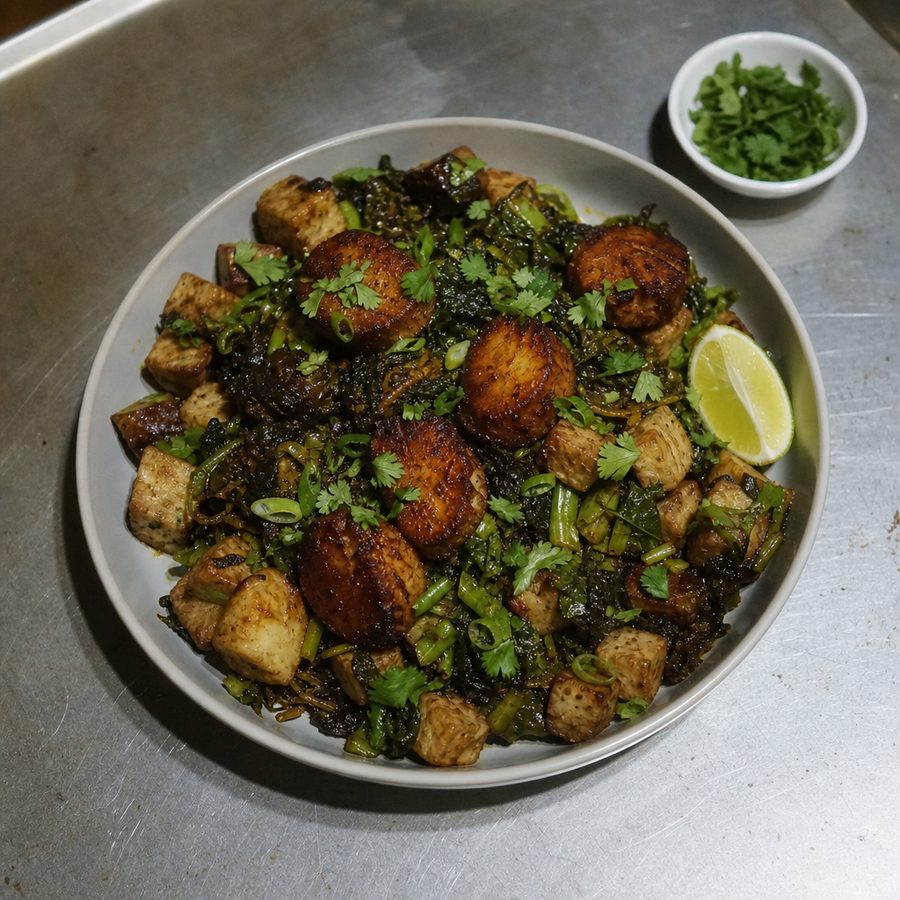
Hard-seared scallops over crisped taro and mustard greens wilted with ginger and garlic, finished with lime for a sharp, savory breakfast plate.
Why You'll Love This Recipe
Half an hour is enough to make a morning feel like an occasion. Scallops are usually thought of as a dinner food, which is mostly habit, because they cook faster than eggs and they are sweet enough to eat first thing. The taro gets boiled the night before if I am organized, and if I am not it takes 15 minutes while I wash the greens. On an elimination phase this is the plate that reminds you the food does not have to be plain, and it lands somewhere between a restaurant breakfast and a bowl of something warm and green.
Everything here depends on a dry surface and a hot pan. Scallops hold a lot of water, so they come out of the package onto a paper towel and stay there while you cook the rest, and then they go into a pan hot enough to sizzle the moment they land. Ninety seconds a side gives you a deep brown crust and a center that is still translucent and sweet, which is where a scallop is at its best. Taro takes the opposite approach, boiled until tender first so the starch sets, then crisped in coconut oil until the outsides go golden and the insides stay soft and faintly nutty.
Mustard greens are the sharp note that makes the plate work. They are properly peppery, more so than kale or chard, and they cook down in about 3 minutes with ginger and sliced garlic into something dark and savory that catches the lime at the end. Between the sweetness of the scallops, the starch of the taro, and the bite of the greens, every part of the plate is doing a different job. It eats light for the amount of protein in it, which is why it carries a morning without ever feeling like a heavy meal.
Ingredients
- 1 1/4 lb large sea scallops (about 20), side muscle removed
- 3/4 lb taro root, peeled and cut into 3/4-inch cubes
- 1 large bunch mustard greens (about 10 oz), stems removed and leaves torn
- 2 tbsp coconut oil, divided
- 1 tbsp finely grated fresh ginger
- 3 cloves garlic, thinly sliced
- 1 tbsp coconut aminos
- 1 1/2 tbsp fresh lime juice, plus wedges to serve
- 2 scallions, thinly sliced on the diagonal
- 2 tbsp chopped cilantro
Instructions
- Boil the taro: Peel the taro under running water or wearing gloves, since the raw skin can irritate bare hands, and cut it into three-quarter-inch cubes. Simmer the cubes in water for 12 to 15 minutes, until a knife slides in with no resistance, then drain them well and let them dry in the colander for 5 minutes, because a wet cube will steam in the skillet and never crisp.
- Crisp the taro: Heat 1 tablespoon of the coconut oil in a large skillet over medium-high. Add the drained taro in a single layer and cook for 4 minutes without moving it, since taro only browns where it stays in steady contact with hot metal, then turn and cook 3 to 4 minutes more until the cubes are golden and crisp at the corners. Lift them into a bowl.
- Wilt the greens: Lower the heat to medium. Add the ginger and garlic to the pan and cook for 30 seconds, until fragrant. Add the mustard greens in handfuls with the coconut aminos, turning them with tongs, and cook for 2 to 3 minutes until they are collapsed and glossy but still dark green. Move them to the bowl with the taro, since greens left in a warm pan keep going and lose the dark green you just worked for.
- Dry and sear the scallops: Pat the scallops completely dry on both flat sides and remove the small tough side muscle if it is still attached. Wipe the pan out, add the remaining tablespoon of coconut oil, and heat over high until it just begins to smoke.
- Sear and finish: Lay the scallops in the pan without letting them touch and leave them alone for 90 seconds, until a deep brown crust forms, because scallops crowded together release their water and poach in it instead of searing. Turn once and cook 60 to 90 seconds more, until the sides are opaque and the centers are barely translucent. Spoon the greens and taro onto plates, set the scallops on top, and finish with lime juice, scallion, and cilantro.
Variations
- Coconut milk finish: Pour a quarter cup of canned coconut milk into the pan with the greens for a richer, saucier base under the scallops.
- Shrimp version: Use cooked shrimp folded through the hot greens off the heat when you want this on the table in 20 minutes.
- Plantain instead of taro: Swap in green plantain cut into coins, boiled and crisped the same way, for a sweeter starch.
- Herb-forward: Trade the cilantro for Thai basil or mint, which changes the plate completely and suits the ginger.
- Extra green: Add a handful of snow peas to the pan with the greens for a sweeter crunch against the peppery leaves.
Storage & Leftovers
The taro and greens keep in a sealed container in the refrigerator for up to 3 days and reheat well in a skillet. Store them together, since the greens keep the taro from drying out, and add the lime fresh each time rather than storing it dressed.
Cooked scallops are best the day they are made. They keep for 2 days refrigerated, but reheating tightens them, so slice leftovers cold over the reheated greens rather than putting them back in a hot pan. They are good cold, which surprises people.
Boiled taro freezes well before it is crisped, so cook a double batch and freeze half in a flat bag for up to 3 months. Thaw it overnight, dry it thoroughly, and crisp it in coconut oil straight from the refrigerator. Do not freeze the scallops once cooked.
Notes & Tips
- Buy dry-packed scallops: Treated scallops are soaked in a solution that makes them heavier and wetter, and they will not brown no matter how hot the pan is. Ask at the counter.
- Wear gloves to peel taro: Raw taro carries compounds that make bare hands itch. Gloves, or peeling under running water, solves it, and cooking removes the issue entirely.
- Dry the taro before it hits the oil: Wet cubes spit and steam. Five minutes in the colander after draining is what gets you a crisp golden crust.
- Do not move the scallops: The crust forms in the first 90 seconds and only if the scallop stays still. Lift one edge to check at 80 seconds if you must, then leave it.
- Season lightly: Scallops come out of the sea already salty and the coconut aminos add more, so taste the plate before you add anything. Lime usually does the job you were about to give to salt.
- Pull them a shade early: A scallop keeps cooking on the plate. Take them off when the center is barely translucent and they will be perfect by the time you sit down.
Nutrition & Mindful Eating
- Scallops, taro, and mustard greens each do something different here. The scallops bring sweetness and substance, the taro gives the plate its weight and starch, and the greens cut through both with a peppery bite that keeps the whole thing from feeling rich.
- Scallops are dense in protein for their size and cook in about 3 minutes, and they carry B12 and selenium along with that. A few of them on a plate hold you longer than something that size suggests.
- Taro is a starchy root with a nutty flavor and a soft, slightly waxy texture, and it brings resistant starch and fiber that your gut bacteria feed on, especially when it has been cooked and then cooled before reheating.
- Mustard greens are properly sharp, and that mustard bite comes from the same family of compounds found in broccoli and cabbage. They also bring vitamin K and calcium in a leaf sturdy enough to stay dark green in a hot pan.
- Ginger, garlic, lime, and coconut aminos build the savory backbone in about a minute of cooking, and the acid going on at the very end is what makes a sweet, starchy plate taste sharp rather than heavy.
- As you eat, take one scallop at a time and let the browned crust give way to the soft sweet middle, using the sharpness of the greens to set a pace slow enough to taste the plate you just cooked.
Frequently Asked Questions
Where do I find taro, and what is it like?
Look in the produce section of Asian, Caribbean, or Latin markets, usually near the yuca. It is a starchy root with a nutty, faintly sweet flavor and a texture between potato and chestnut. Cassava, yam, or plantain all work here if taro is not available.
Why do my scallops steam instead of browning?
Almost always moisture or crowding. Dry both flat faces hard with paper towels, use a pan wide enough that the scallops are not touching, and let it get properly hot before they go in. Cook them in two batches rather than squeezing them all in at once.
Can I use frozen scallops?
Yes, and most scallops sold at a counter were frozen anyway. Thaw them overnight in the refrigerator, then dry them very well, since thawed scallops release more water than fresh. Look for dry-packed scallops, which brown far better than treated ones.
Can I swap the mustard greens?
Collard greens, kale, or Swiss chard all work, though each is milder, so add a little extra ginger and lime to make up the sharpness. Collards need about 2 minutes longer in the pan and chard needs a minute less.