
Seared Scallops over Shaved Fennel, Orange, and Mint
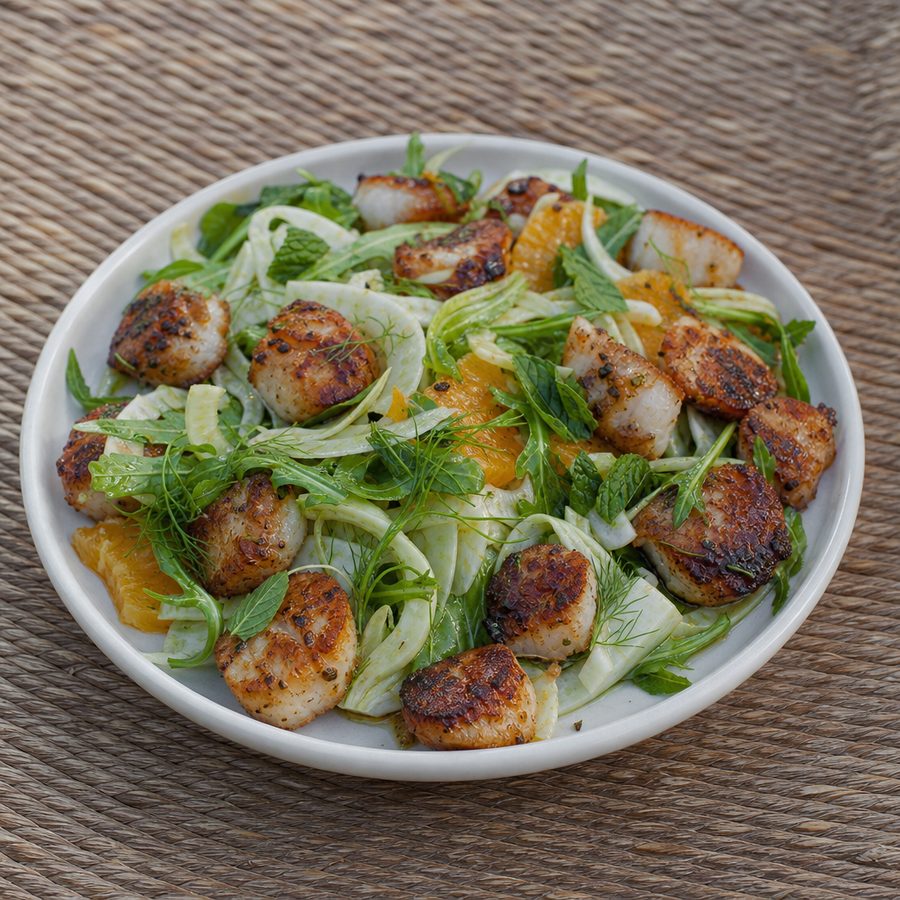
Sea scallops seared hard in olive oil and set over paper-thin fennel, orange rounds, arugula, and torn mint dressed with lemon and shallot.
Why You'll Love This Recipe
This is the fastest proper dinner in my repertoire and the one I make when the day has run long. The salad takes twelve minutes with a knife and about four with a mandoline, and the scallops need three minutes total in the pan. Nothing waits on anything else, which is the real luxury. I learned the fennel and orange combination from Sicilian cooking, where those two go together on a plate with almost nothing else, and adding something hot and browned on top turns a side dish into a meal without changing what makes it good.
The pleasure here is temperature and texture at the same time. A seared scallop is hot, sweet, and just short of set in the middle, and it lands on cold fennel that snaps, orange that gives, and arugula that goes limp only where the heat touches it. The juice from the oranges runs down and mixes with the olive oil and the lemon into something you will want to chase around the plate. Mint is not a garnish in this one. Tear it generously, because it is the flavor that makes the fennel taste sweet rather than medicinal.
I serve this in the spring and again in midwinter, which is when oranges are at their best and fennel is firm and heavy. It is a dinner for two people who want to eat well and talk, more than a dish for a crowd, though it scales fine if you sear the scallops in two batches. Buy dry-packed scallops if your fish counter has them, because they are the ones that will brown. Everything else on the plate can be assembled while the pan is heating.
Ingredients
- 1 1/4 lb large sea scallops (about 20), side muscle pulled off, patted very dry
- 2 medium fennel bulbs, halved, cored, and shaved paper thin, fronds saved
- 2 navel oranges, peel and white pith cut away, sliced into thin rounds
- 4 cups arugula, loosely packed
- 3 tbsp extra virgin olive oil, divided
- 1 small shallot, sliced into thin rings
- 4 tsp lemon juice
- 1/4 cup torn fresh mint leaves
- 1/4 tsp fine sea salt
Instructions
- Dress the shallot first and leave it: Put the shallot rings in a large bowl with the lemon juice and a pinch of the salt and leave them while you cut everything else. Ten minutes in acid takes the harsh edge off the onion flavor and turns the rings slightly translucent, which is why this is the first thing rather than the last.
- Shave the fennel paper thin: Shave the fennel as thin as you can manage, ideally on a mandoline, until the slices are nearly translucent, and add them to the bowl. Cut the peel and pith off the oranges with a knife, slice them into rounds, and add them along with any juice from the board, because that juice is part of the dressing. Add the arugula, the mint, and two tablespoons of the olive oil, toss lightly, and spread it over four plates, scattering a few chopped fronds over the top.
- Dry the scallops twice: Pat the scallops dry on both flat faces, then dry them again with a fresh piece of paper towel. Season them with the remaining salt when the pan is already hot and they are about to go in. Salt applied early pulls water to the surface, and surface water is the one thing that stops a scallop from browning.
- Sear them hard, 90 seconds a side: Heat the last tablespoon of olive oil in a large skillet over high heat until it is just short of smoking. Lay the scallops in with space between them, working in two batches if the pan is crowded, and leave them for ninety seconds. When the bottom edge shows a band of deep gold, turn them and give them sixty to ninety seconds more. They should feel like the pad of your thumb, springy rather than firm, since a scallop cooked past that goes rubbery and there is no recovering it.
- Serve at once, pan juices and all: Set the scallops over the salad browned side up as soon as they leave the pan and pour whatever oil and juices are in it over everything. Serve at once, while the scallops are still hot enough to wilt the arugula they are sitting on, because that half-wilting is the moment this dish is built around.
Variations
- Grapefruit and basil: Use pink grapefruit segments in place of the orange and torn basil in place of the mint for a sharper, more bitter plate.
- Olives in the salad: Scatter a handful of chopped kalamata olives through the fennel for a briny note that stands up to the sweetness of the scallops.
- Charred fennel: Sear half the fennel in wedges before you cook the scallops and fold the hot pieces through the shaved fennel for two textures at once.
- Warm citrus dressing: After the scallops come out, pour a splash of orange juice into the hot pan, swirl for twenty seconds, and pour it over the plates.
- Watercress: Trade the arugula for watercress, which brings a cleaner pepperiness and thicker stems that hold up under the hot scallops.
Storage & Leftovers
This is a dish to eat the hour you make it. Seared scallops go rubbery on a second heating and the salad softens as soon as the dressing has been on it for a while, so I plan the portions to be finished rather than saved.
If you do have leftovers, keep the scallops and the salad in separate covered containers in the refrigerator for one day. Slice the cold scallops thin and lay them back over the salad without reheating, which is a decent lunch and treats the texture more kindly than any pan would.
The fennel and orange salad on its own keeps overnight and is worth making deliberately as a side. Hold the arugula and the mint back until you serve it, since both wilt in the acid, and refresh it with a little more lemon and olive oil the next day.
Notes & Tips
- Buy dry-packed: It is the single decision that determines whether this dish works. Ask at the counter, and if the label says sodium tripolyphosphate, that is the wet-packed kind.
- Pull the side muscle: Each scallop has a small rectangular tab on its side that turns chewy when cooked. It peels off with your fingers in a second.
- Let the pan get properly hot: You want the oil shimmering and thin. Scallops are in the pan for such a short time that all the browning has to happen fast, and a moderate pan will not do it.
- Give them room: Crowded scallops steam each other. Two batches with space between them beat one batch shoulder to shoulder every time.
- Cut the oranges over the bowl: The juice that runs out while you slice is half the dressing. Do it on a board with a groove or straight over the salad.
- Tear the mint, do not chop it: A knife bruises the leaves and turns the edges dark. Torn leaves stay green and smell stronger on the plate.
Nutrition & Mindful Eating
- Scallops, fennel, and citrus divide this plate cleanly. The scallops carry the protein and the sweetness that browning brings out, the fennel gives the crunch and the body, and the oranges and lemon keep the whole thing tasting bright rather than rich.
- Sea scallops are a firm, sweet shellfish that cook through in about three minutes, and they carry a real amount of protein along with B12 and selenium in a portion that eats light on the plate.
- Fennel shaved thin tastes faintly of anise and eats like a crisp apple. It brings fiber and potassium, and the fronds you scatter on top are the most aromatic part of the bulb, so it is worth saving them.
- Oranges sliced into rounds rather than juiced give you the whole segment walls as well as the juice, which is where their fiber sits, and they bring the vitamin C that makes this plate taste like the middle of winter is nearly over.
- Mint, arugula, and olive oil are what tie the plate together. The arugula is peppery, the mint is cooling, and the oil pulls both flavors around the fennel so nothing tastes like it is sitting there on its own.
- As you eat, take a bite that has a piece of each thing on the fork, hot scallop against cold fennel and orange, and notice how much of the pleasure comes from that contrast rather than from the size of the plate.
Frequently Asked Questions
My scallops released water and never browned. Why?
Almost certainly wet-packed scallops, which are treated with a solution that makes them hold liquid. They look plump and slightly opaque white at the counter. Dry-packed scallops are ivory or faintly pink and sear properly. If wet-packed is what you have, sear them in two small batches so the pan stays hot enough to drive the water off.
How do I know when a scallop is done?
Touch rather than time. A finished scallop springs back gently and still has a line of translucence through the middle when you cut one open. Firm all the way through means it went a minute too far, and the difference between sweet and squeaky is about that long.
Can I use shrimp?
Yes, and it is a good swap. Large shrimp take about two minutes a side over the same heat and curl into a loose C when they are ready. A tight O means they have gone past it. Everything else about the plate stays as written.
What if I do not have a mandoline?
A sharp knife and patience. Halve the bulb, cut out the solid core at the base, lay the halves flat, and slice across as thinly as you can. Thicker slices are not a disaster, they simply crunch harder and want an extra few minutes sitting in the lemon before you serve.