
Seared Sirloin with Parsnip Mash and Wilted Cabbage
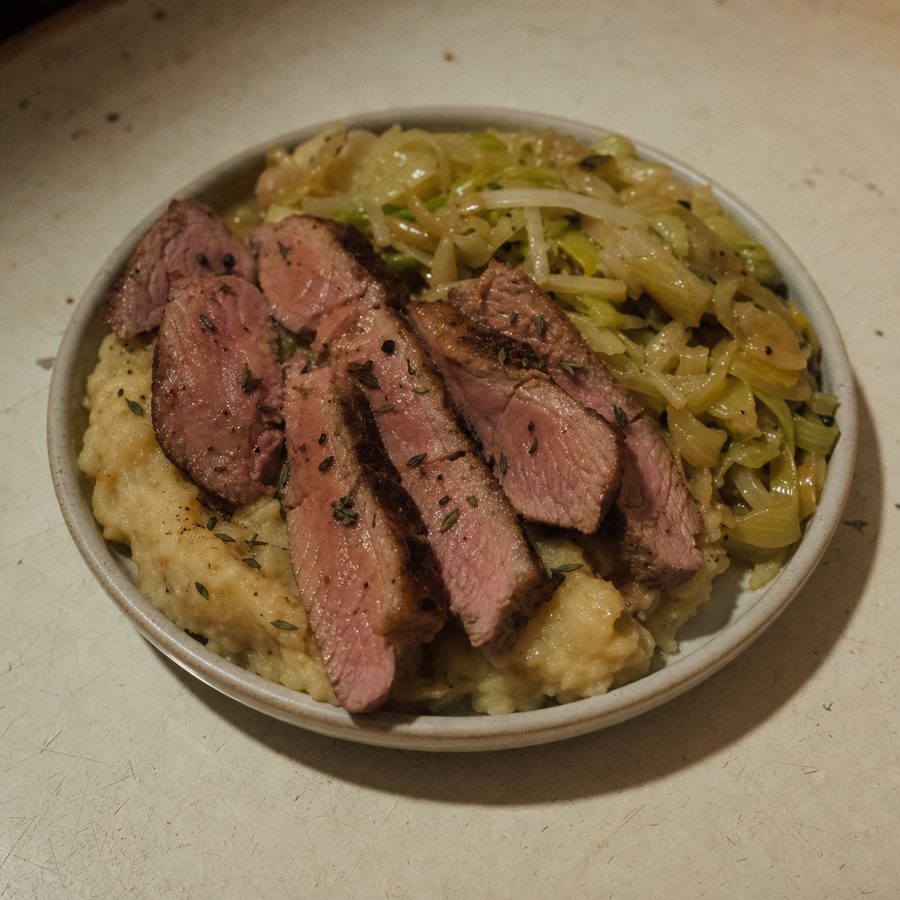
Sirloin seared hard and rested over a sweet parsnip mash, with shredded cabbage and leeks wilted in the steak pan and finished with cider vinegar.
Why You'll Love This Recipe
A proper plate of food, and about half an hour to produce it. Everything runs in parallel: the parsnips go into salted water first and look after themselves, the steak takes eight minutes in a hot skillet, and the cabbage cooks in the fat and browned bits the steak leaves behind while the meat rests. There is one pot and one pan at the end of it. It is the shape of a Sunday dinner delivered on a Tuesday, which is the only reason I ever manage to eat this way midweek.
Parsnips are the reason to build the plate this way. They go sweeter than a potato ever does and they mash into something silky and pale gold, especially once a little hot broth and olive oil are beaten in. That sweetness needs something to push against, which is what the cabbage and the cider vinegar are for. The cabbage catches color in the steak fat and turns nutty at the shredded edges, the leeks collapse into it, and the spoonful of vinegar off the heat lands somewhere between sharp and appley. Thyme ties the three parts together and smells like a roast without any of the waiting.
A seared steak rested properly and sliced against the grain eats tender and gives you real, chewy, savory mouthfuls, and there is enough beef here that nobody asks what else is coming. The mash is soft and sweet under it, the cabbage is still crunching a little, and the pink juices that run out of the sliced meat end up in the parsnips where they belong. I like this best in the cold months, when a root vegetable tastes like something rather than like a filler, and when a hot skillet is a good enough reason to stand at the stove.
Ingredients
- 1 1/4 lbs sirloin steak, about 1 inch thick, patted dry
- 1 1/4 lbs parsnips, peeled and cut into 1-inch chunks
- 1/2 small green cabbage (about 14 oz), cored and thinly shredded
- 1 large leek, white and pale green parts only, halved lengthwise and thinly sliced
- 3 cloves garlic, thinly sliced
- 3 tbsp olive oil, divided
- 1/2 cup beef bone broth
- 1 tbsp apple cider vinegar
- 1 tbsp fresh thyme leaves
- 1/2 tsp fine sea salt, plus more to taste
Instructions
- Get the parsnips going: Put the parsnip chunks in a saucepan, cover them with water by an inch, add a good pinch of the salt, and bring to a boil. Simmer for 14 to 16 minutes, until a knife slides into a piece with no resistance at all. Take them further than looks necessary, because a parsnip that still has any bite in it will not mash smooth and the texture never recovers.
- Sear the steak: While the parsnips cook, season the sirloin all over with half the salt. Heat 1 tablespoon of the olive oil in a heavy skillet over medium-high until it shimmers and the pan is just beginning to smoke. Lay the steak in and leave it alone for 4 minutes, until it releases easily and the underside is deep brown, since beef lets go of the metal by itself once a crust has formed and tears if you pull at it early, then turn it and cook 3 to 4 minutes more for medium-rare, 130°F on an instant-read thermometer.
- Rest the meat: Move the steak to a board, scatter half the thyme over it, and leave it for at least 8 minutes. Resting is not optional here. Cut into it early and the juices you want in the mash run out onto the board instead. Keep the skillet on the heat.
- Wilt the cabbage and leeks: Add the remaining olive oil to the hot skillet, then the leek and garlic, and stir for 1 minute until fragrant. Add the cabbage and the rest of the salt, press it flat, and leave it for 2 minutes so that the underside browns, which is where all of the sweetness in a pan of cabbage comes from. Toss and repeat for 5 to 6 minutes total, until the shreds are glossy and tender with dark edges but still have some snap. Take the pan off the heat and stir in the cider vinegar.
- Mash and plate: Drain the parsnips and return them to the dry pan for 30 seconds to steam off, since any water left clinging to them will thin the mash. Warm the broth, pour it in with the remaining thyme, and mash until smooth. Slice the steak thinly against the grain, spoon the mash onto four plates, and lay the beef over it with the cabbage alongside and any board juices poured over the top.
Variations
- Rosemary and garlic: Swap the thyme for a chopped teaspoon of rosemary and add two extra sliced cloves of garlic to the steak pan in the last minute of searing.
- Apple in the cabbage: Add a firm tart apple, cut into matchsticks, with the cabbage for a sweeter pan that leans toward the vinegar.
- Half parsnip, half celeriac: Use half celeriac in the mash for something earthier and a little less sweet under the beef.
- Lamb leg steaks: Cook lamb leg steaks the same way to 135°F and finish the cabbage with chopped mint as well as the thyme.
- Red cabbage: Use shredded red cabbage and give it 2 or 3 extra minutes in the pan, since it is firmer and wants a little longer to turn glossy.
Storage & Leftovers
Leftovers keep 3 days in the refrigerator, and I store the three components separately if I can. The mash tightens as it chills, the cabbage stays crisp, and the sliced beef holds its pink center much better when it is not sitting in the warm pan with everything else.
Reheat the mash in a saucepan over low heat with a splash of broth or water, stirring until it loosens. The cabbage wants 2 minutes in a hot dry skillet. Warm the sliced beef last and briefly, 30 seconds a side at most, or bring it back to room temperature and skip the heat entirely.
The parsnip mash freezes well for up to 3 months in flat sealed portions and comes back with a hard whisking over low heat. I would not freeze the steak or the cabbage. Both go soft, and both are quick enough to cook fresh that there is nothing to gain.
Notes & Tips
- Dry the steak, then salt it: Surface moisture is the enemy of a crust. Pat the sirloin with paper towel, then season, then get it straight into a pan that is properly hot.
- Listen to the pan: A steak that goes in silently is going into a pan that is not ready. You want an immediate loud sizzle that settles into a steady crackle.
- Do not move it: Four minutes untouched on the first side is what builds the brown. If the meat sticks when you try to lift it, it is not ready to turn.
- Steam the parsnips dry: Thirty seconds back in the empty hot pan drives off the surface water, and drier parsnips take up the broth and oil far better.
- Slice against the grain: Find the direction the muscle fibers run and cut across them. The same steak eats twice as tender sliced this way.
- Save the board juices: Everything that pools under the resting steak goes over the mash at the end. It is the most concentrated flavor on the plate.
Nutrition & Mindful Eating
- Sirloin, parsnips, and cabbage each do a different job on this plate. The beef gives it the savory weight, the mash gives it the sweetness and the soft texture underneath, and the cabbage keeps it crunching so nothing about the plate goes uniformly soft.
- Sirloin is a firm, close-grained cut that eats tender when it is rested and sliced across the grain, and red meat like this carries iron in the form your body takes up most easily along with zinc and B12.
- Parsnips turn sweeter as they cook, which is why the mash tastes almost of honey with nothing sweet added to it, and that pale flesh brings a soft fiber along with folate and potassium.
- Cabbage shredded thin and cooked fast keeps a bit of squeak in it, and the leaves hold vitamin C and vitamin K, both of which survive better in a quick hot pan than in a long simmer.
- Leeks, thyme, and the cider vinegar are what make the plate taste like more than beef and root vegetables. The leeks go sweet and silky, the thyme smells like a roast, and the vinegar goes in off the heat so it stays sharp against all that sweetness.
- As you eat, notice how the sweet mash and the sharp cabbage change each other bite to bite, and give the plate long enough that you feel the meal settle rather than finishing it standing over the stove.
Frequently Asked Questions
Can I use a different cut of beef?
Yes. Flat iron, flank, and strip steak all sear on the same timing, and a thicker ribeye needs an extra minute or two a side. Whatever you buy, take it off the heat 5°F below where you want it and let carryover finish the job while it rests.
My mash came out gluey. What went wrong?
Almost always overworking it, or wet parsnips. Drain them properly and let them steam dry in the hot pan for half a minute before anything else goes in, then mash by hand rather than in a food processor. A blade turns the starch slick in seconds.
Can I prep any of it ahead?
Peel and chop the parsnips and shred the cabbage a day ahead and keep them in sealed containers, the parsnips submerged in cold water so they do not darken. That leaves you about 20 minutes of actual cooking on the night, which is the whole point of this one.
Does this work for an AIP elimination phase?
It does as written. Parsnip, cabbage, leek, garlic, thyme, cider vinegar, olive oil, and beef are all compliant, and the seasoning is simply salt. The only thing to check is the bone broth, since many cartons carry pepper or tomato in the ingredient list.