
Seared Trout over Cider-Glazed Parsnips and Carrots
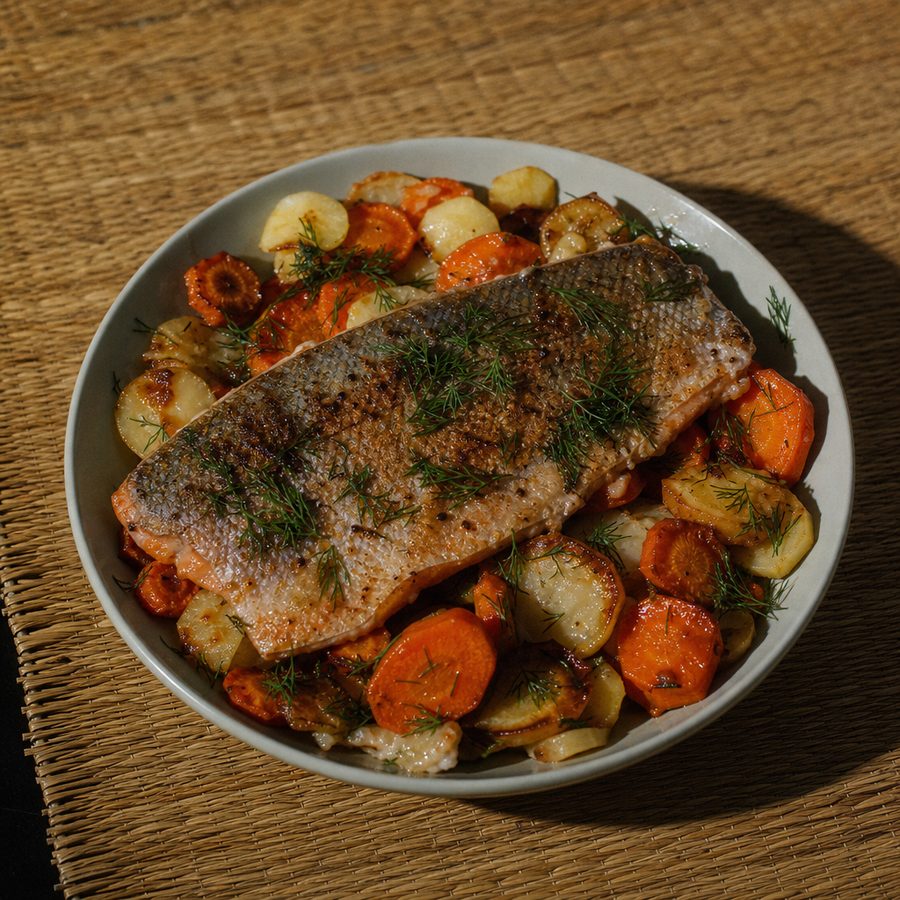
Trout fillets seared skin down until crisp, set over parsnip and carrot coins browned in a skillet and glazed with cider vinegar and a shower of dill.
Why You'll Love This Recipe
Parsnips are the reason to make this. Cut into quarter-inch coins they cook in about ten minutes rather than the forty a chunky roast takes, and the sugars in them caramelize hard against a hot skillet in a way carrots alone never quite manage. Slicing rather than dicing gives you the widest possible flat face for browning, which is the whole point. Halve the thick end of each parsnip lengthwise first so the coins from top and bottom come out roughly the same size and cook at the same rate.
Trout is the fish I buy when I want something with more character than cod but not the richness of salmon, and it is quick because the fillets are thin. The skin is worth taking seriously: dried well and pressed flat into a hot pan for three minutes, it crisps into a sheet you can hear. Press the fillet down with a spatula for the first ten seconds so it does not curl, then leave it alone. Turn it once, count to sixty, and it is done. Trout overcooks faster than almost any fish on the counter.
Cider vinegar is what keeps this from tipping into a sweet plate. Parsnip, carrot, and shallot are all sugary once they have browned, and a good splash of acid into the hot pan cuts a clean line through the middle of them and takes on a glaze in the process. Then the dill goes on raw and cold and does something else again. I make this in the fall and winter when parsnips are properly sweet, and it feels like a slower dinner than the clock says it was.
Ingredients
- 4 skin-on trout fillets (about 1 lb 5 oz total)
- 1 lb parsnips, peeled and sliced into 1/4-inch coins, thick ends halved first
- 4 medium carrots, sliced into 1/4-inch coins on a steep diagonal
- 2 shallots, sliced thin
- 1 3/4 tbsp apple cider vinegar
- 1 3/4 tbsp olive oil, divided
- 1/3 cup chopped fresh dill, fronds and thin stems
- 3/4 tsp coarsely ground black pepper
- 1/2 tsp fine sea salt
Instructions
- Cut the vegetables evenly: Peel the parsnips and halve the thick top end lengthwise before slicing, so every coin is a similar size. Cut both the parsnips and the carrots into quarter-inch coins, taking the carrots on a steep diagonal for a wider face. Even thickness matters more here than shape.
- Brown the roots: Heat 1 tbsp of the olive oil in a 12-inch skillet over medium-high until it shimmers. Add the parsnips and carrots with 1/4 tsp of the salt, spread them in one layer, and leave them undisturbed for four minutes until the undersides are caramel brown. Toss once and cook three minutes more.
- Soften them through: Add the shallots and 3 tbsp water, clamp on a lid, and cook three to four minutes over medium. The steam finishes the middles while the browned faces stay. Take the lid off, let any remaining water boil away, and check that a coin gives easily under a fork. Slide it all onto a platter and wipe the pan.
- Crisp the trout skin: Pat the fillets very dry, especially the skin, and season with the rest of the salt and the pepper. Heat the remaining oil over medium-high until it shimmers, lay the fillets in skin down, and press each one flat with a spatula for ten seconds so it does not curl. Cook three minutes without moving them.
- Turn once and finish the fish: When the flesh has turned opaque up the sides and the skin lifts cleanly from the pan, turn each fillet and cook sixty to ninety seconds more. The center should just flake when you press it. Move the fillets to the platter, skin side up so it stays crisp.
- Glaze and dress: Take the pan off the heat and pour in the cider vinegar, which will hiss and go syrupy against the hot metal. Scrape once and pour it over the vegetables, then scatter the dill across both the vegetables and the fish and bring the platter straight to the table.
Variations
- Apple and cider: Add a firm diced apple to the pan with the shallots so it softens into the roots and doubles down on the sweetness.
- Mustard glaze: Whisk a teaspoon of dijon mustard into the vinegar before it goes into the hot pan for a sharper, thicker glaze.
- Horseradish dill cream: Stir the dill into a few spoonfuls of cold plain Greek yogurt and serve it alongside rather than scattering it over.
- Turnips and rutabaga: Swap half the parsnips for diced turnip or rutabaga when you want the plate less sweet and more peppery.
- Toasted seeds: Scatter a handful of pumpkin seeds toasted in the dry pan over the top for crunch against the soft coins.
Storage & Leftovers
The vegetables keep four days sealed in the refrigerator and taste even sweeter cold, with the vinegar working further into the coins overnight. Bring them back with a fresh pinch of dill, since the herb in the original batch will have gone limp and dark by the second day.
Cooked trout holds two days but the skin will never be crisp again, so plan leftovers as flaked fish rather than a fillet. Flake it cold into the leftover vegetables with a little more vinegar and you have a very good lunch that needs no heating at all.
The root vegetables freeze for up to three months in a flat sealed bag, though they soften on thawing and lose most of their caramelized edge. Reheat them in a hot dry skillet rather than a microwave to bring back some browning. Trout does not freeze well once cooked.
Notes & Tips
- Slice everything a quarter inch thick: Thicker coins are still hard in the middle when the outside has gone too dark. This is the thickness that browns and cooks through together.
- Halve the fat end of the parsnip first: Otherwise the top coins are twice the diameter of the bottom ones and nothing finishes at the same time.
- Brown first, steam second: Water added at the start prevents any color at all. Get the caramel faces, then add the splash of water and the lid.
- Press the trout down for ten seconds: Skin contracts the moment it hits heat and lifts the fillet into a curve. Ten seconds of pressure keeps the whole surface flat against the pan.
- Turn the fish only once: Trout is thin and delicate. One confident flip with a wide spatula, sixty seconds, and it is finished.
- Add the vinegar off the heat: In a hot pan with the burner off it reduces to a glaze in seconds. Left over a flame it cooks away and takes its sharpness with it.
Nutrition & Mindful Eating
- Trout and the root vegetables balance each other here. The fish carries the protein and the soft fat, the parsnips and carrots bring the fiber and the sweetness that comes out of browning, and the vinegar and dill keep a plate this sweet from ever going flat.
- Trout is a moderately fatty freshwater fish, which is why the skin crisps so well and why the flesh stays moist over high heat. It is one of the better sources of the long-chain omega-3 fats, and it brings vitamin D and vitamin B12 alongside a lot of protein.
- Parsnips are sweeter than they look and get sweeter still under a hard sear, since the cold weather they grow through turns their starch to sugar. They carry more fiber than most root vegetables along with folate and potassium.
- Carrots browned in coins go jammy at the edges while the middle stays firm, and the beta-carotene that makes them orange is absorbed better when there is fat in the pan alongside. Cutting them on a steep diagonal is purely for more browned surface.
- Cider vinegar poured into the hot skillet and cold dill scattered over the top are the two things that finish this plate. The acid glazes the roots and cuts their sugar, and the dill stays grassy and raw because it never meets the heat.
- As you eat, listen for the crackle of the skin and notice how sweet the darkest parsnip coins are next to the sharp vinegar, and let the plate take longer than it took to cook.
Frequently Asked Questions
Can I use salmon or another fish?
Salmon works well and takes about a minute longer per side because the fillets are thicker. Arctic char behaves almost exactly like trout. Any skin-on fillet under an inch thick will follow this method, and skinless fillets are fine too, they simply give you nothing to crisp.
My parsnips were woody in the middle. What happened?
Large parsnips develop a fibrous core at the thick end. Halve that end lengthwise before slicing, and if the center looks pale and dense against the rest of the flesh, cut the woody strip out. Younger, thinner parsnips do not need this at all.
The trout skin stuck to the pan. How do I stop that?
Three things. Dry the skin hard with paper towel, get the oil properly shimmering before the fish goes in, and then do not touch it. Skin releases on its own once it has crisped, usually right around the three-minute mark, and pulling early is what tears it.
Can I get ahead on this?
Yes. Brown and steam the vegetables up to two days in advance and hold them in the refrigerator without the vinegar. Warm them in a skillet while the trout cooks, then glaze and add the dill at the end as written and dinner takes eight minutes.