
Seared Trout with Warm Chickpeas, Swiss Chard, and Lemon
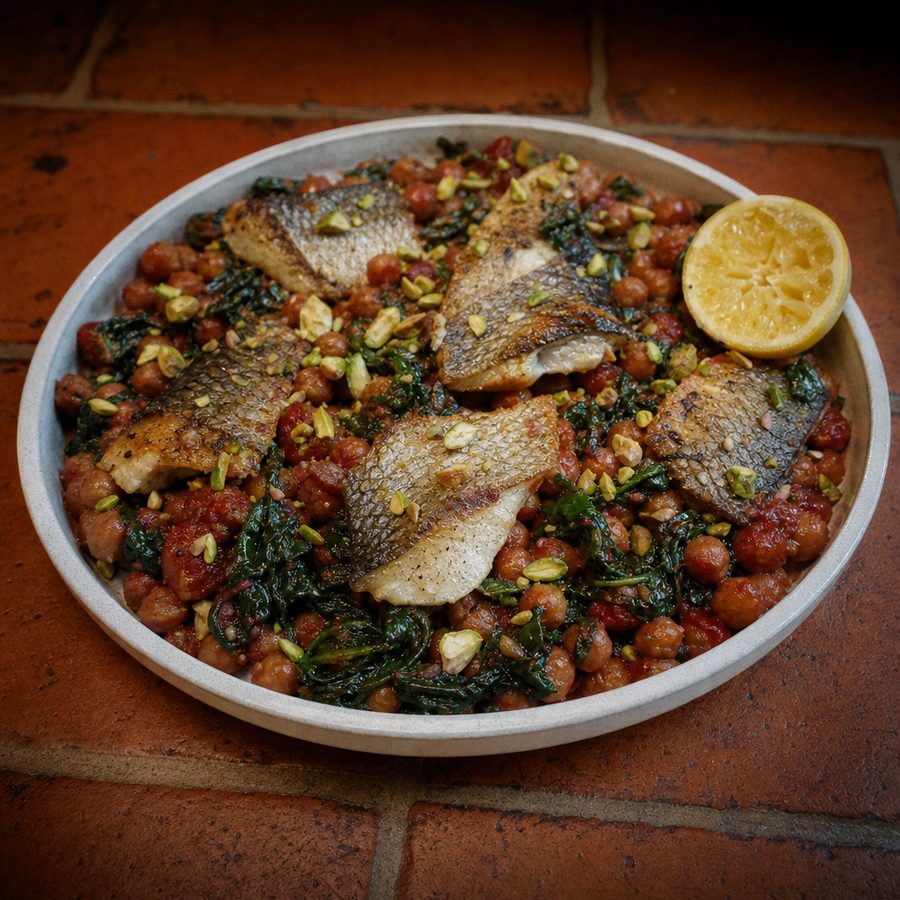
Trout fillets seared skin side down until the skin crackles, set over chickpeas crisped in smoked paprika oil with wilted chard, chopped pistachios, and lemon squeezed over the pan.
Why You'll Love This Recipe
Trout is the fish I buy when I want salmon's richness without waiting for a thick fillet to cook through. It is thin, it is quick, and its skin crisps more readily than almost any other fish skin, which is the entire reason this dish works. The technique is one thing repeated: dry the fillet, press it skin down into a hot pan with your fingers for the first ten seconds so it does not curl, and then leave it there for three minutes while the skin does its work. You turn it for barely a minute at the end, and it is done.
The chickpeas underneath are the part people ask about. Rinsed, dried properly, and thrown into hot oil, they split and blister and go crunchy on the outside while staying floury inside, and smoked paprika added at the end coats them in a deep brick color. That takes about five minutes and it is the difference between chickpeas as filler and chickpeas as something you would eat on their own. Chard goes in after, stems first because they take longer, leaves second because they need ninety seconds, and the whole pan turns dark and glossy. Lemon at the end cuts through the oil and the smoke.
This is a Sunday-night dinner in my house, the kind you make when the week is about to start and you want something that eats seriously without keeping you in the kitchen. It takes twenty five minutes and dirties one pan and a cutting board. Trout also happens to be one of the better-value fish at most counters, and a fillet freezes and thaws well, so I keep a few in the freezer for exactly this. Anything left over is excellent cold, flaked into the chickpeas with more lemon, which is the lunch I look forward to on a Monday. If you have never bought trout with the skin on, this is the recipe to start with.
Ingredients
- 1 1/3 lb trout fillets, skin on, cut into 4 pieces and patted very dry
- 1 1/2 cups chickpeas, drained, rinsed, and dried on a towel
- 1 large bunch swiss chard (about 10 oz), stems sliced thin and leaves cut into ribbons
- 1/3 cup shelled pistachios, roughly chopped
- 5 garlic cloves, sliced thin
- 2 tbsp olive oil, divided
- 2 1/2 tbsp lemon juice, plus wedges to serve
- 1/2 cup flat-leaf parsley, chopped
- 1 tsp smoked paprika
- 1/4 tsp fine sea salt
Instructions
- Dry everything: Rinse the chickpeas and spread them on a towel, rolling them gently until the skins look matte rather than wet. Pat the trout fillets dry on both sides and leave them skin side up on a plate while you slice the chard stems, leaves, and garlic. Water is what stops both the chickpeas and the skin from crisping.
- Crisp the chickpeas: Heat one tablespoon of the oil in a large skillet over medium-high. Add the chickpeas in a single layer and cook for five minutes, shaking the pan every minute or so, until many have split and browned and they rattle rather than slide. Stir in the garlic, chard stems, and smoked paprika and cook one minute more, until the paprika has coated everything and smells sweet.
- Wilt the chard: Add the chard leaves in handfuls with a splash of water, turning each batch through the chickpeas before adding the next. Cook for ninety seconds until the leaves have gone dark and glossy and reduced to a quarter of their volume. Season with half the salt, add a tablespoon of the lemon juice, and scrape everything into a serving dish.
- Sear the trout: Wipe the pan, add the remaining oil, and heat it over medium-high until it shimmers. Season the fillets with the remaining salt and lay them skin side down, pressing each one flat with a spatula or your fingertips for ten seconds so it does not buckle. Cook three minutes without moving them. The skin should release cleanly and be deep bronze underneath.
- Turn once and finish: Turn the fillets and cook for forty five to sixty seconds only, until the flesh has gone from translucent to just opaque at the thickest part. Set them skin side up on the chickpeas and chard, spoon the remaining lemon juice over, and scatter the pistachios and parsley across the top. Serve immediately with lemon wedges.
Variations
- Almond and dill: Use chopped almonds in place of the pistachios and dill instead of parsley, which moves the plate somewhere cooler and greener.
- Kale in winter: Swap the chard for lacinato kale, giving the leaves three minutes rather than ninety seconds so they soften properly.
- Cumin and coriander: Replace the smoked paprika with a teaspoon each of ground cumin and coriander for a warmer, earthier bed of chickpeas.
- Yogurt on the side: Spoon thick plain yogurt beside the fish and drag each bite through it, which softens the smoke and the lemon together.
Storage & Leftovers
The chickpeas and chard keep four days in the refrigerator and improve overnight as the paprika settles into them. They lose their crunch, which is the price of leftovers, but they make a very good base for an egg the next morning or a bowl of anything at lunch.
Cooked trout keeps two days and is best eaten cold rather than reheated, flaked over the chickpeas with a fresh squeeze of lemon. If you do want it hot, thirty seconds in a covered skillet over low heat is the most it should get, since a second cooking dries it out fast.
The chickpea and chard base freezes for up to two months in flat sealed portions and comes back well in a hot dry pan, where some of the crisp returns. I would not freeze the trout after cooking it, though raw fillets freeze very well and thaw overnight in the refrigerator.
Notes & Tips
- Press the fillet for ten seconds: Trout skin contracts faster than the flesh above it and lifts the middle of the fillet off the pan. Ten seconds of light pressure sets it flat and gives you an evenly crisp skin.
- Roll the chickpeas dry: A towel and ninety seconds is the whole trick. Chickpeas straight from the colander will never split, however long you leave them in the oil.
- Add paprika at the end: Smoked paprika burns and turns bitter within a minute at searing heat. It goes in after the chickpeas are already brown, off to one side of high heat.
- Separate chard stems from leaves: The stems need three or four times as long as the leaves. Sliced thin and started with the garlic, they end up tender at the same moment the leaves are still bright.
- Turn the fish only once: Every turn drops the pan temperature and tears the crust you have built. Three minutes down, one minute up, and onto the plate.
Nutrition & Mindful Eating
- Trout, chickpeas, and chard split the plate three ways. The fish carries the protein and the richness, the chickpeas bring the fiber and enough body to make this a full dinner, and the chard adds the bulk and the mineral edge that keeps it from tasting rich.
- Trout is one of the fattier freshwater fish and that fat is largely omega-3, the long-chain kind found in oily fish. It also carries vitamin D and vitamin B12, and the skin, when it is crisped properly, is where a good part of the flavor lives.
- Chickpeas hold both fiber and plant protein, and crisping them in a hot pan changes nothing about either while turning the texture completely. Their starch is the slow kind that takes a while to break down, which is part of why a plate with them on it eats so solidly.
- Swiss chard carries vitamin K, magnesium, and a distinct mineral flavor that comes from the same compounds. Cooking the stems separately from the leaves is what lets you use the whole bunch rather than half of it.
- Pistachios add a green, faintly sweet crunch and bring vitamin B6 and potassium with them, and scattering them raw at the end keeps that crunch against everything soft underneath.
- As you eat, break through the skin first and listen to it, then notice how the lemon changes a forkful of chickpeas, and let the meal be something you sit down for rather than something you finish standing up.
Frequently Asked Questions
How do I stop the trout skin from sticking?
Three things together. Dry skin, a pan that is properly hot before the fish goes in, and enough patience to leave it alone. Fish sticks while the skin is releasing its moisture and lets go on its own once the crust has formed, usually at around two and a half minutes. If it resists the spatula, give it another thirty seconds.
Can I use a different fish?
Salmon, arctic char, and branzino all behave the same way and take the same timing, allowing a minute more for anything thicker than three quarters of an inch. A skinless fillet works too, though you lose the crackle that is half the pleasure here.
Do the chickpeas really need drying?
Yes, and it is the step most worth doing. Wet chickpeas steam in the oil, stay pale, and never split. Ninety seconds of rolling them in a towel gives you the split, blistered ones you want, and it can be done while the pan heats.
Can I make it without a nonstick pan?
Cast iron and carbon steel are both better than nonstick for this, since they hold heat and give you a harder crust. Stainless steel works if the pan is hot and generously oiled. The rule is the same in any of them, which is that the fish releases when it is ready.