
Shaken Millet and Edamame Jars with Snap Peas and Lime
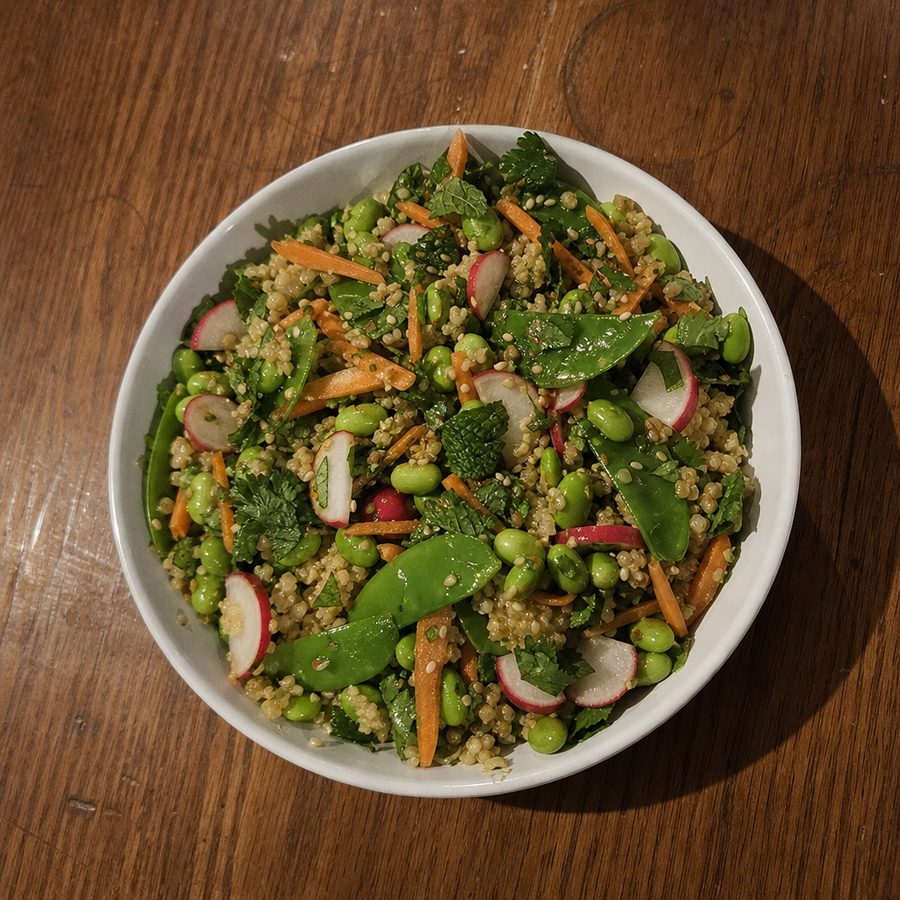
Cold millet layered in jars with edamame, snap peas, radish, and carrot, under a ginger-lime sesame dressing that goes everywhere the moment you shake it.
Why You'll Love This Recipe
I built this for the mornings when I am packing four lunches at once and have no appetite for assembly at midday. A jar solves the one problem a dressed salad always has, which is that the dressing sits on the bottom until you want it there. Everything sturdy goes in first, everything delicate rides on top, and a hard shake in the kitchen at noon does the mixing. Millet is my grain of choice here because the little round grains stay separate when cold and never clump into a block the way rice can after a night in the refrigerator.
The pleasure of this one is entirely about crunch, and there are four kinds of it. Snap peas cut on a sharp angle give you the loudest, radish coins are crisp and watery, carrot matchsticks are firm and sweet, and the toasted sesame seeds crackle against all of it. Edamame is the soft, squeaky exception that keeps the jar from tasting like a bowl of raw vegetables. The dressing is sharp with lime and grated ginger, warm from sesame oil, and just sweet enough from a spoonful of maple that the jalapeno reads as heat rather than sting.
This is a hot-weather lunch and a desk lunch, and it is the one I make when a week ahead looks long. Four jars in the refrigerator on Sunday night hold their texture through Wednesday, which is more than most salads manage. It also travels well to a picnic, since the jar is the bowl. If you want it to eat more like dinner, tip a jar into a wide bowl so you can see everything, and put the lime wedges out.
Ingredients
- 3 cups cooked millet, cooled (from about 1 cup dry)
- 1 1/2 cups shelled edamame, cooked and cooled
- 2 cups snap peas, strings pulled, cut on a sharp angle into thirds
- 8 radishes, sliced into thin coins
- 2 medium carrots, cut into matchsticks
- 4 scallions, sliced thin on the bias
- 5 tbsp sesame seeds, toasted
- 1/2 cup fresh mint leaves, torn
- 1/2 cup fresh cilantro leaves and tender stems, chopped
- 3 tbsp fresh lime juice, from about 2 limes
- 1 1/2 tbsp toasted sesame oil
- 1 tbsp finely grated fresh ginger
- 1 jalapeno, seeded and minced
- 2 tsp maple syrup
- 1/4 tsp fine sea salt
Instructions
- Cook and cool the millet: Rinse 1 cup dry millet, then toast it in a dry saucepan over medium heat for three minutes, shaking, until it smells nutty. Add 2 cups water, bring to a boil, cover, and simmer on the lowest heat for 15 minutes. Take it off, leave it covered 10 minutes, then fluff with a fork and spread it on a sheet pan to cool fast. Cooling it spread out is what keeps the grains separate.
- Blanch the edamame and snap peas: Drop the shelled edamame into boiling water for three minutes, adding the snap peas for the last 45 seconds, then drain everything into a colander and run cold water over it until both are cold to the touch. Spread them on a towel and pat dry. Wet vegetables water down the dressing and make the millet soggy by day two.
- Shake the dressing: In a small jar, combine the lime juice, sesame oil, grated ginger, minced jalapeno, maple syrup, and salt. Put the lid on and shake for 20 seconds. It should look cloudy and slightly thick rather than separated into two layers. Taste it on a piece of carrot, since dressing tasted off a spoon always reads sharper than it will in the jar.
- Layer the jars: Divide the dressing among four wide-mouth quart jars, then add the millet and press it down gently so it sits flat. Layer in the edamame, then the snap peas, then the radish and carrot, then the scallions. Keep the order, because the grain at the bottom is what protects everything above it from going limp in the dressing.
- Finish and seal: Top each jar with the toasted sesame seeds, then the mint and cilantro, and seal. To eat, shake hard for a count of ten with the lid held down, then either eat straight from the jar or tip it into a wide bowl. The herbs end up through the middle rather than sitting on top, which is the point of shaking rather than stirring.
Variations
- Cucumber and napa: Add a cup of quartered cucumber slices and a handful of shredded napa cabbage to the crunch layer for a lighter, wetter jar that suits the hottest week of summer.
- Tofu jars: Add half a block of firm tofu, pressed, cubed, and pan-seared until golden on two sides, laid over the edamame. It makes the jar eat more like a full plate.
- Mango and lime: Swap the carrot for a cup of diced firm mango and double the lime. Sweet and sharp against the sesame, and very good in July.
- Herb swap: Thai basil in place of the mint pushes it toward anise and licorice, which suits the ginger. Chives in place of the scallions make it milder and greener.
Storage & Leftovers
Sealed jars keep four days in the refrigerator, and they are genuinely as good on day four as on day one so long as you layered them in order and dried the vegetables properly. Do not shake a jar you are not about to eat. Once the dressing is distributed the snap peas begin to soften, and by the next day they have lost their crack.
If you want to build them further ahead, keep the herbs in a separate small container with a barely damp paper towel and add them the morning you plan to eat. Mint in particular darkens where it touches acid, and it will still taste fine but it stops looking like mint after about two days in the jar.
This does not freeze. Every vegetable in it is here for crunch and freezing takes exactly that away. The cooked millet, on the other hand, freezes well on its own in flat portions for up to three months, which makes building a batch of jars a fifteen-minute job on a weeknight.
Notes & Tips
- Toast the millet before you boil it: Three minutes in a dry pan is the difference between millet that tastes like nothing and millet that tastes nutty and faintly like popcorn. It also helps the grains stay separate.
- Spread the grain to cool: Millet left to cool in the pot steams itself and sticks together in one mass. On a sheet pan it cools in ten minutes and stays loose enough to layer.
- Dry everything: Water is what turns a good jar into a soggy one by Wednesday. Pat the blanched vegetables and the sliced radish on a towel before they go in.
- Cut the snap peas on a sharp angle: A long diagonal cut gives you more surface for the dressing to cling to and a better crunch than a straight chop. It also makes the jar look like something you want to eat.
- Dressing on the bottom, always: It is the rule the whole format rests on. Anything tender that touches dressing before you are ready to eat will be soft by the time you are.
Nutrition & Mindful Eating
- Millet, edamame, snap peas, and sesame seeds are doing four separate jobs in one jar. The grain gives it substance, the edamame carries most of the protein, the snap peas and radish bring water and crunch, and the sesame seeds add the fat that makes a cold lunch satisfying rather than sparse.
- Edamame is picked young and green, which is why it stays sweet and squeaky rather than turning starchy, and it is one of the few plant foods that brings all the essential amino acids in one place along with a good deal of fiber.
- Sesame seeds toasted until they hop are the richest thing in the jar, and they carry calcium in a quantity that few seeds match. Their oil is also what makes the dressing cling rather than run straight to the bottom.
- Snap peas eaten pod and all give you the sugar of a pea and the fiber of a green bean at once, and slicing them on the bias means every piece carries dressing on a wide cut face.
- Lime, ginger, jalapeno, and a spoonful of maple syrup are what keep a cold jar from tasting flat. Acid wakes up everything the refrigerator dulls, the ginger brings warmth from the back of the throat, and the sweetness is there to round the edges of the chile.
- As you eat, listen to how loud the first few bites are, and let the noise of the snap peas and the sesame slow you down enough to notice when the jar has actually filled you.
Frequently Asked Questions
What size jars do I need?
Wide-mouth quart jars, which hold a full portion with room at the top for the herbs and enough air to let things move when you shake. Pint jars force you to pack it tight, and packed layers do not redistribute no matter how hard you shake them. If you only have pints, use two per person and split the grain between them.
Can I use frozen edamame?
Yes, and I usually do. Shelled frozen edamame is picked and blanched young, and it needs only three minutes in boiling water from frozen. Drain it and cool it under running water the same way, then dry it well. Buy it shelled rather than in the pod so you are not doing that work at the counter.
Can I swap the millet for another grain?
Quinoa and bulgur both work and both stay loose when cold. Brown rice is the one I would think twice about, since it firms up and clumps after a night in the refrigerator and needs breaking apart with a fork before it will take dressing. Whatever you use, spread it to cool rather than letting it sit in the pot.
How spicy is it?
Mild as written, since a seeded jalapeno mostly brings green flavor. Leave a few seeds in for real heat, or leave the jalapeno out entirely and add a pinch of cayenne to the dressing, which spreads more evenly through the jar than fresh chile does.