
Shakshuka (Eggs Poached in Tomato)
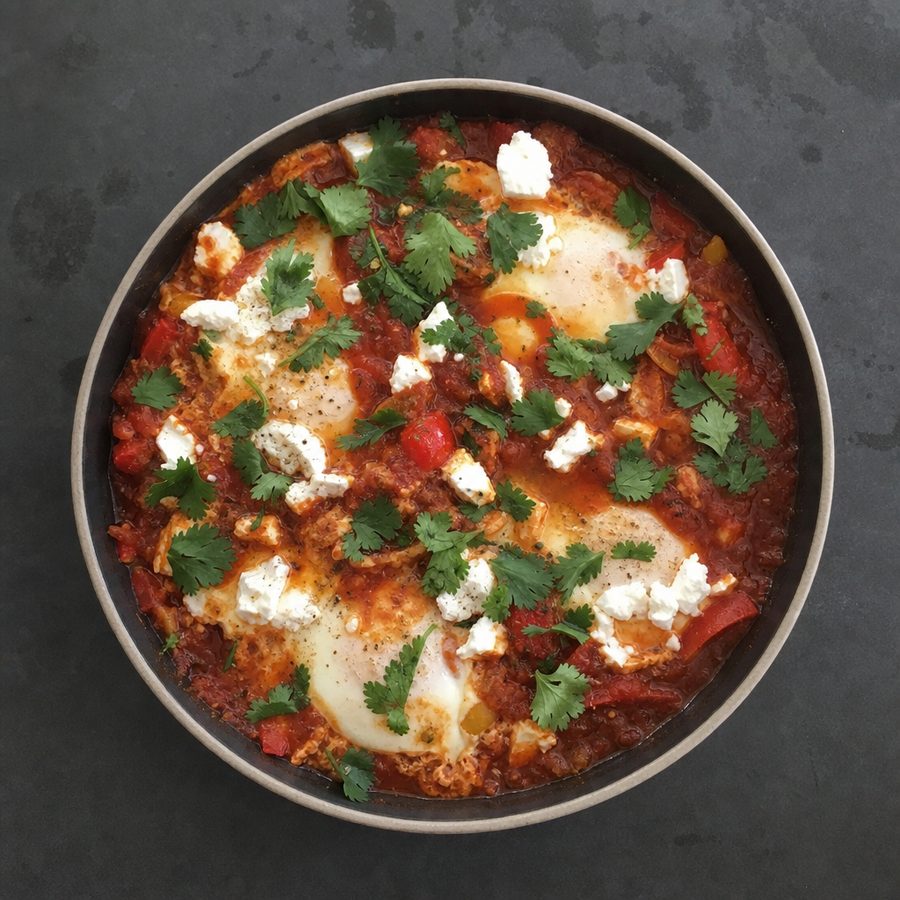
Eggs gently poached in a spiced tomato and pepper sauce, a high-protein, low-carb one-pan meal that works for breakfast or dinner.
Why You'll Love This Recipe
Eight eggs poached in a spiced tomato sauce in one skillet, which is breakfast for four or dinner for two depending on when you feel like eating it. Nothing about it is complicated: the whole dish is a sauce you reduce and then eggs you cook in it. What separates a good version from a mediocre one is patience at two points, letting the sauce thicken properly before the eggs go in and taking the pan off the heat while the yolks are still soft, and both of those are attention rather than skill.
Let the sauce reduce properly before the eggs go in. A thin sauce will not hold the wells you make for them, and the whites spread across the pan instead of setting where you put them. You are looking for a sauce that a spoon can drag a channel through and that closes back over slowly rather than at once. That usually takes a few minutes longer than it seems like it should, and it is the difference between eight distinct eggs and one large scramble.
Eggs and tomato make this filling with nothing starchy underneath it, though bread for mopping the pan has never hurt anyone and is arguably the point of the exercise. Two eggs a person plus a good amount of tomato and pepper is a real breakfast, and because it comes together in one skillet there is nothing to plate and one pan to wash. Our Asparagus and Egg Spring Skillet is another skillet of eggs and vegetables along the same lines.
Ingredients
- 8 large eggs
- 1 can (28 oz) crushed tomatoes
- 1 red bell pepper, diced
- 1 small onion, diced
- 3 cloves garlic, minced
- 2 tbsp olive oil
- 1/2 cup crumbled feta (optional)
- 1 tsp cumin
- 1 tsp paprika
- 1/2 tsp fine sea salt
- black pepper
- fresh cilantro or parsley
Instructions
- Soften the pepper and onion, then bloom the spices: Warm the olive oil in a large skillet over medium heat and cook the diced onion and bell pepper for six minutes, until both have softened and the onion has turned translucent. Add the garlic, cumin, and paprika and stir for thirty seconds, no longer, until the spices smell toasted rather than raw. Ground spices need hot fat to give up what they have, and that half minute does more for the finished dish than the entire simmer that follows it.
- Reduce the sauce until it will hold a well: Add the crushed tomatoes and the salt and simmer uncovered for eight to ten minutes, stirring now and then. What you want is a sauce thick enough that a spoon drawn through it leaves a channel that holds for a second or two before closing over. That is the test that matters, because a thin sauce cannot hold the wells and the whites spread across the whole pan instead of setting where you put them. Give it another two or three minutes if it is not there.
- Taste the sauce before the eggs go in: This is the last moment you can season anything properly. Once eight eggs are sitting in the pan, salt lands on the eggs rather than in the tomato. Taste it and adjust: salt if it is flat, a pinch of sugar if the tomatoes came out sharp, more paprika for warmth, a splash of water if it has reduced further than you meant. Aim for slightly bolder than you want the finished dish, because eight mild eggs are about to pull it back.
- Make the wells, crack low, and cover the pan: Press eight wells into the sauce with the back of a spoon, right down to the pan, spaced around the skillet. Crack each egg into a small bowl first and tip it into its well from just above the surface, since cracking straight into a hot pan from height is how yolks break. Cover the skillet and cook six to eight minutes over low heat. The whites should be opaque and just set, and the yolks should still wobble when you nudge the pan.
- Off the heat first, then feta and herbs: Take the pan off the burner the moment the whites are set, because a heavy skillet holds enough heat to keep cooking eggs for another couple of minutes after it leaves the stove. Scatter the feta and the cilantro or parsley over the top and bring the whole skillet to the table. If you are cooking for someone who is pregnant, for a young child, or for anyone with a weakened immune system, give the eggs another two or three minutes under the lid first so the yolks are firm.
Variations
- Dairy-free: the feta is already optional, so leave it out and finish with a swirl of tahini or a spoonful of unsweetened coconut yogurt for the same creamy contrast.
- Add more protein: crumble cooked merguez or ground lamb into the sauce before the eggs go in, or make another well and add another egg.
- Add more vegetables: wilt spinach or chard into the sauce before you make the wells for the eggs, or add sauteed eggplant for something heartier.
- Make it spicy: add harissa or a chopped chili with the garlic so the heat cooks into the sauce rather than sitting on top of the eggs.
- Make it green: swap the tomatoes for a base of tomatillos, poblanos and cilantro and poach the eggs in that instead, which is the same dish in a different key.
Storage & Leftovers
Shakshuka is a dish to eat when it is made, and leftovers are honestly a different meal rather than the same one held over. Refrigerate them in an airtight container for up to three days. The yolks firm up in the cold and will not come back soft, so what you have is spiced tomato sauce with cooked eggs through it, which is still very good spooned over toast.
Reheat it gently in a covered skillet over low heat, only until the sauce is hot, which takes three or four minutes. Anything beyond that cooks the eggs further and the whites go rubbery. A microwave is workable at half power in short bursts; at full power the yolks can burst, and eggs that have been reheated hard carry a sulfurous smell that no amount of cilantro on top will cover.
The sauce is the part worth making ahead, and it keeps far better on its own than the finished dish does. Make a double batch, refrigerate half for up to four days or freeze it for three months, and you are eight minutes away from shakshuka on a morning when eight minutes is all you have. Reheat the sauce, press the wells, crack in the eggs, and cover the pan.
Notes & Tips
- Do not overcook the eggs: pull the pan off the heat while the whites are just set. Carryover heat finishes them without turning the yolks solid.
- Crack into a cup first: crack each egg into a small cup before it goes in the pan. That way a broken yolk stays out of the sauce.
- Thicken the sauce before the eggs: a thin sauce will not hold the wells, and the eggs will slide together into one sheet instead of staying separate.
- Cover the pan: the lid is what cooks the tops of the whites, and without it the bottoms overcook long before the surface sets.
- Bloom the spices: that thirty seconds of cumin and paprika in the hot oil is what makes them taste like anything, so do not skip it.
- Make the sauce ahead: the tomato base keeps for several days and reheats well, so make it in advance and poach fresh eggs in it when you want to eat.
Nutrition & Mindful Eating
- The sauce and the eggs are made for each other. The tomato and pepper cook down into something sweet and deep, and the yolks break into all of it, turning the sauce richer with every bite you take.
- Eggs poached this way stay tender because the sauce cooks them slowly, and the yolks are where the choline, vitamin A and vitamin D sit, which is a good argument for keeping them whole until your spoon gets there.
- Crushed tomatoes simmered down lose their sharp edge and go jammy and sweet, and that same cooking is what makes their lycopene easier for your body to take up.
- Red bell pepper, onion and garlic soften in olive oil at the start, which is where the sweetness underneath the tomato comes from, and the pepper brings a good deal of vitamin C in with it.
- Crumbled feta over the top goes soft in the heat while holding its shape, and its salt and tang land against the sweet tomato so every bite has something sharp running through it.
- As you eat, watch the yolk run out into the red sauce and take the first bite while the pan is still steaming, then slow yourself down and let this be a meal you sit with.
Frequently Asked Questions
Is shakshuka healthy?
Yes, it's mostly eggs and tomatoes, so it's high in protein, rich in vegetables, and naturally low in carbohydrate.
Can I make it ahead?
Make the sauce ahead and refrigerate it; reheat and poach the eggs fresh when you're ready to eat.
Is it good for blood sugar?
Yes, high protein and low in carbohydrate, so it has a gentle effect on blood sugar.
How long does it keep?
Three days, although the yolks are firm by then and it eats as a different dish. Reheat it covered over low heat only until the sauce is hot. The better plan is to make extra sauce, keep that on its own in the refrigerator or freezer, and poach fresh eggs into it when you want them.