
Sheet-Pan Cauliflower and Red Peppers with Aji Verde
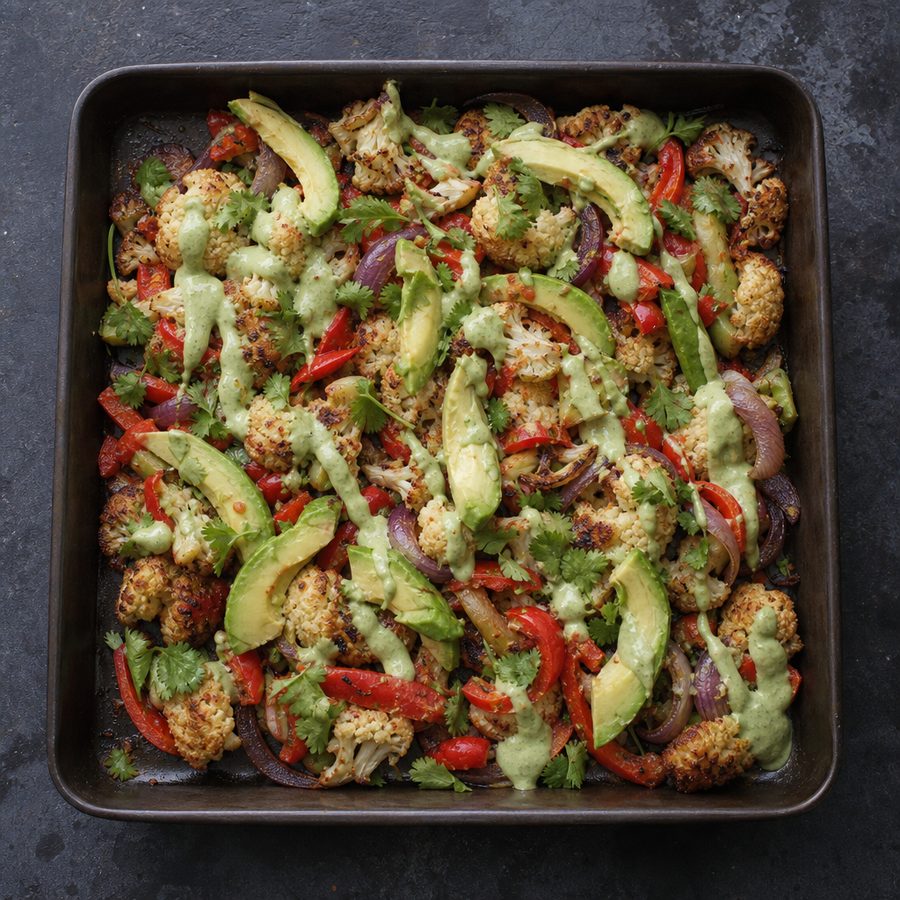
Cauliflower florets and thick strips of red pepper roasted hard on one sheet pan with cumin and red onion, served under a cool green sauce of cilantro, jalapeno, lime, and yogurt with sliced avocado over the top.
Why You'll Love This Recipe
Aji verde is the sauce that sits on every table in a Peruvian chicken shop, and once I started making a version of it at home I found it was the vegetables it did the most for. Cilantro, jalapeno, garlic, and lime go into a blender with yogurt and come out pale green, loose, and sharp enough to cut through anything roasted. This lunch is really just a hot sheet pan and a cold jar of that sauce, which is the sort of cooking I do most often on a weekday. Ten minutes of chopping, twenty minutes in a hot oven, and the blender does the rest.
Roasting is what makes cauliflower worth eating. Small florets on a preheated pan brown on the flat faces and go nutty and faintly sweet, and the thin slices of core turn almost caramelized. The peppers give up their water and slump into something soft and jammy, the onion wedges char at the tips and stay juicy in the middle, and everything comes out smelling of cumin. Then the sauce goes on while the pan is still hot, so it loosens and runs into the gaps, and the avocado stays cold against all of it. Hot, cold, sharp, and sweet in the same forkful.
I make this on days when I want lunch to feel like something rather than a container of leftovers, and it takes almost no attention. Everything on the pan holds well, so I roast a double tray on Sunday and keep the sauce in a jar, then build plates through the week in about four minutes. It is also the dish I put out when someone is coming over and I do not know what they eat, because it suits nearly everyone and the sauce is the thing people ask about.
Ingredients
- 1 large head cauliflower (about 1 3/4 lb), cut into small florets with the core sliced thin
- 2 red bell peppers, seeded and cut into wide strips
- 1 red onion, cut through the root into thick wedges
- 3 tbsp olive oil, divided
- 2 tsp ground cumin
- 1 1/4 cups plain Greek yogurt
- 2 packed cups cilantro leaves and tender stems
- 2 jalapenos, stemmed and seeded, or left seeded in for more heat
- 3 scallions, cut into 2-inch lengths
- 3 cloves garlic
- 2 tbsp lime juice
- 1 avocado, halved, pitted, and sliced
- 1/2 tsp fine sea salt
- 1/2 tsp coarsely ground black pepper
Instructions
- Heat the oven and the pan: Put a heavy rimmed sheet pan on the middle rack and heat the oven to 475°F. A pan that is already screaming when the vegetables land is the difference between roasted and steamed, and it saves you five minutes of cooking time as well.
- Cut the vegetables small: Break the cauliflower into florets no bigger than a walnut, halving any large ones so each has a flat side, and slice the core into thin planks rather than throwing it out. Cut the peppers into strips about an inch wide and the onion into thick wedges with the root left on. Toss everything in a bowl with 2 tbsp of the oil, the cumin, the salt, and the black pepper.
- Roast hard: Pull the hot pan out, tip the vegetables on, and spread them into one layer with room between the pieces. Listen for the sizzle as they land. Roast for twelve minutes without touching them, then turn everything with a spatula and give it another six to eight minutes, until the cauliflower is deep brown on the flat sides and the pepper edges have blackened in places.
- Blend the aji verde: While the pan is in the oven, put the cilantro, jalapenos, scallions, garlic, lime juice, yogurt, and the last tablespoon of oil into a blender and run it for a full minute, scraping down once, until it is smooth and evenly pale green with no flecks of garlic left. It should pour in a thick ribbon. Loosen it with a spoonful of water if it stands up in the jar.
- Build the plates: Slide the vegetables straight from the oven onto a platter or four plates and spoon the sauce over while everything is still hot, so it thins and runs down between the florets. Fan the avocado slices over the top and finish with any cilantro you have left. Put the rest of the sauce on the table, because people always want more of it.
Variations
- Add a starchy element: Toss in a couple of handfuls of halved baby potatoes with the cauliflower, giving them a five minute head start on the hot pan.
- Charred lime: Halve two limes and lay them cut side down on the pan for the last five minutes, then squeeze the hot juice over the vegetables before saucing.
- White beans: Scatter a cup of drained white beans over the pan for the final four minutes so they crisp slightly at the edges and soak up the cumin.
- Broccoli and cauliflower: Use half a head of each. Broccoli chars faster, so give it two or three minutes less than the cauliflower.
- Smokier: Add a teaspoon of smoked paprika along with the cumin for a deeper, redder pan that plays well against the cold green sauce.
Storage & Leftovers
The roasted vegetables keep for four days in a sealed container in the refrigerator and are good cold straight from the box. Keep the sauce in its own jar, where it holds for five days and thickens as it sits, and slice the avocado fresh each time rather than storing it, since it darkens within a few hours of being cut.
Reheat the vegetables on a sheet pan at 450°F for six or seven minutes rather than in the microwave. The dry heat brings the brown edges back and drives off the water they gave up in the cold. Sauce them after reheating, never before, or the yogurt splits and goes grainy in the oven.
Roasted cauliflower does not freeze into anything you would want to eat, but the aji verde freezes well in a small jar for two months. Thaw it in the refrigerator overnight and blend or whisk it hard to bring it back together, since it separates a little as it thaws.
Notes & Tips
- Preheat the sheet pan: Vegetables landing on cold metal sit in their own moisture for the first five minutes. A hot pan starts the browning on contact and is the single biggest thing you can do for a roasted vegetable.
- Keep the cauliflower core: Sliced thin, the core roasts sweeter than the florets and gives you a different texture on the plate. Throwing it away costs you a quarter of the head.
- Blend the sauce longer than feels necessary: A full minute is what turns it from speckled to properly pale green and smooth. Short blending leaves harsh little pieces of garlic you will find later.
- Sauce it hot: The heat of the vegetables thins the sauce and carries it into every gap. Sauce a cold plate and it sits on top like a dollop.
- Season the vegetables, not the sauce: The yogurt and lime already carry a lot of flavor, so put the salt on the pan where it draws moisture out of the cauliflower and helps it brown.
- Cut the avocado last: It browns within the hour once it meets air. Slice it while the pan is coming out of the oven and it goes straight onto the plate.
Nutrition & Mindful Eating
- Cauliflower, peppers, yogurt, and avocado are doing four separate jobs on this plate. The cauliflower gives it bulk and fiber, the peppers bring sweetness and color, the yogurt sauce carries protein and calcium, and the avocado supplies the soft fat that makes a tray of vegetables eat like a full lunch.
- Cauliflower belongs to the cabbage family, which is where its sulfur compounds and its faint bitterness come from, and roasting it hard turns that bitterness nutty and sweet. It also carries a good amount of vitamin C, more than most people expect from a vegetable this pale.
- Red peppers are one of the sweetest things you can put on a sheet pan, and the color is the clue to what is in them. They hold beta-carotene along with a striking amount of vitamin C, and the pieces that blister black at the edges taste the most concentrated.
- Greek yogurt is the body of the sauce. It gives it the thickness that lets it cling to a floret rather than run off, and it brings calcium and protein to a plate that is otherwise all vegetable.
- Cilantro, jalapeno, garlic, and lime blended together are the reason this tastes like a dish rather than a tray of roasted vegetables. The acid keeps everything bright, and the garlic blended in cold stays sharp in a way that roasted garlic never does.
- As you eat, notice the swing between the hot nutty cauliflower and the cool sauce running over it, and let that contrast keep you at the table long enough to feel the meal land.
Frequently Asked Questions
How hot is the sauce?
With the seeds and ribs taken out of both jalapenos it is mild and mostly herbal, which is how I make it for a table with children at it. Leaving one pepper seeded gives a real but comfortable heat. The yogurt tempers a great deal, so taste after blending rather than before.
My cauliflower browned unevenly. What should I change?
Give it more room. Vegetables crowded on a pan trap steam and go pale and soft, so use two pans if your one tray looks full, and always halve the big florets so there is a flat face touching hot metal. A preheated pan matters more here than the oven temperature does.
Can I use a different herb?
Cilantro is the backbone of this sauce and there is no exact swap, but a mix of parsley and mint blended the same way makes a good green sauce with a different accent. If cilantro tastes like soap to you, go the parsley and mint route and add an extra squeeze of lime.
What if I do not have a blender?
A food processor works, though you will need to scrape the sides several times. Failing that, chop the cilantro, jalapeno, scallion, and garlic as finely as you can, then stir them into the yogurt with the lime and oil. The texture is coarser and honestly rather good on the roasted vegetables.