
Sheet-Pan Maple-Mustard Tempeh with Delicata Squash and Kale
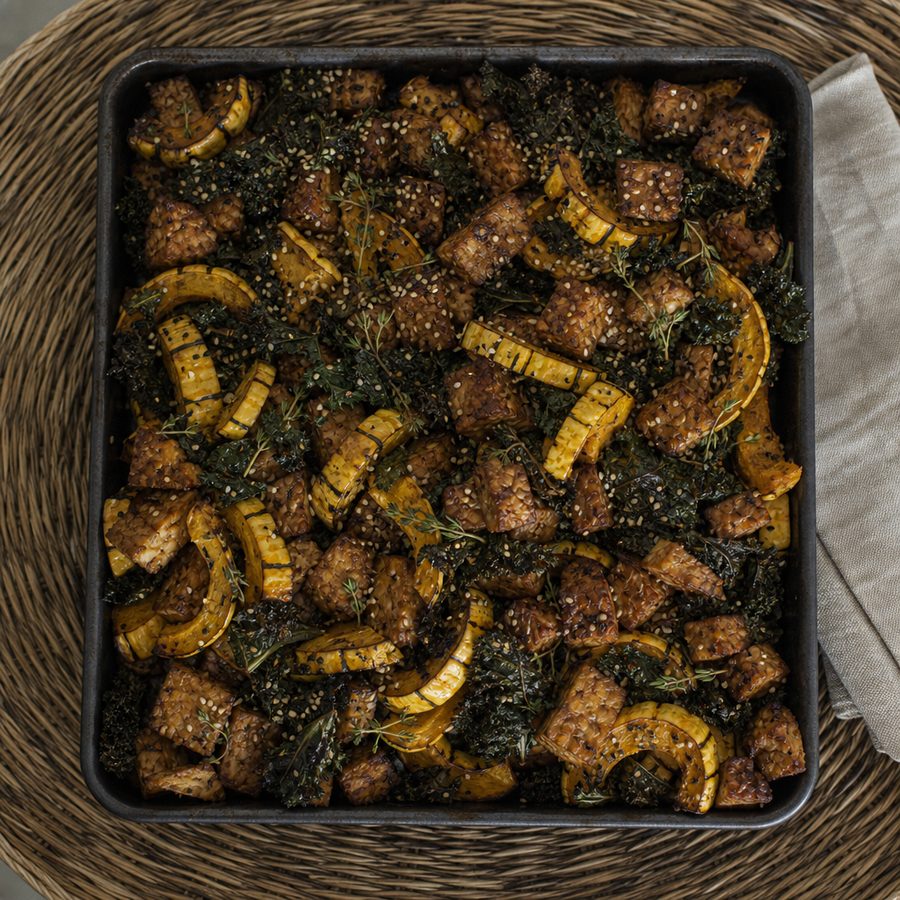
Cubed tempeh and half moons of delicata squash roasted hard on one tray, glazed with maple and dijon, finished with torn kale and toasted sesame.
Why You'll Love This Recipe
The oven does the cooking, and I am out of the kitchen while it happens. Everything goes on one tray, the squash needs no peeling because delicata skin is thin enough to eat, and the only real work is cutting. Tempeh is the ingredient people are shy about, and a hot sheet pan is the preparation that usually wins them over: it browns the way a firm cake of soybeans should, going nutty and dense rather than soft. Four people eat properly off one pan, which is most of why it stays in my rotation.
The glaze goes on late, and that timing is the whole trick. Maple and dijon whisked with lemon juice will burn if they sit at 425°F for half an hour, so the tempeh and squash roast plain until they have real color, and then the glaze goes on for the last stretch and turns sticky rather than black. Kale joins at the same moment, tossed in whatever oil is left on the pan, and comes out with the edges gone papery and toasted. Sliced garlic added at that point perfumes everything without turning bitter, and a scatter of thyme keeps the sweetness in check.
What lands on the plate is sweet, sharp, and smoky in the same bite, which is more range than a tray of roasted vegetables usually manages. The squash goes almost custardy, the tempeh stays firm and chewy against it, the kale crackles, and the sesame gives a last bit of grit and richness. It eats like a full dinner with nothing else alongside it, and I like it just as much at room temperature an hour later, when the glaze has set and the flavors have gone rounder. Leftovers get folded into a bowl for lunch without any complaint from me.
Ingredients
- Two 10-oz blocks tempeh, cut into 3/4-inch cubes
- 2 delicata squash (about 1 1/4 lb total), halved lengthwise, seeded, and cut into 1/2-inch half moons
- 1 large bunch lacinato kale (about 9 oz), stems stripped and leaves torn into big pieces
- 1 red onion, cut root to tip into 8 wedges
- 4 cloves garlic, thinly sliced
- 1 1/2 tbsp olive oil
- 1 tbsp dijon mustard
- 1 tbsp maple syrup
- 1 tbsp lemon juice
- 3 tbsp sesame seeds, toasted
- 1 tbsp fresh thyme leaves
- 1/4 tsp fine sea salt
Instructions
- Heat the oven and cut everything: Put a rack in the upper third of the oven and heat it to 425°F. Halve the delicata lengthwise, scoop the seeds out with a spoon, and cut each half into 1/2-inch half moons, skin left on. Cut the tempeh into 3/4-inch cubes, cut the onion into eight wedges through the root so they hold together, and strip the kale leaves off their stems.
- Roast the tempeh and squash: Toss the tempeh, squash, and onion wedges on a large rimmed sheet pan with the olive oil and salt, then spread them into a single layer with space between the pieces. Roast for 20 minutes, then pull the pan out and turn everything with a spatula. The squash should be tender at the thin edge and the tempeh should be tan and dry-looking on the underside.
- Make the glaze: While the pan is in the oven, whisk the dijon, maple syrup, and lemon juice together in a small bowl with a spoonful of water to loosen it. It should pour off the whisk in a thin ribbon. If it is thick enough to sit in a lump, add another teaspoon of water, since a stiff glaze will not coat evenly.
- Glaze and add the kale: Spoon the glaze over the tempeh and squash and turn everything so each piece is coated. Pile the torn kale and sliced garlic on top, toss briefly in the oil at the bottom of the pan, and spread it out again. Return to the oven for 8 to 10 minutes.
- Check the edges: It is ready when the kale is dark and crisp at the tips but still deep green in the middle of the leaves, the glaze has gone tacky and caught brown in places, and the tempeh corners are properly dark. If the kale is still floppy at ten minutes, give it three more and watch it closely, because it goes from crisp to burnt quickly.
- Finish and serve: Scatter the toasted sesame seeds and thyme leaves over the hot pan and give everything one gentle turn so the seeds stick to the glaze. Let it sit for three or four minutes before serving, which lets the squash firm up enough to lift cleanly. Serve straight off the tray.
Variations
- Miso and ginger: Swap the dijon for a spoonful of white miso and grate a thumb of fresh ginger into the glaze for a savorier, warmer tray.
- Chili and lime: Add a teaspoon of chipotle powder to the oil at the start and use lime juice in the glaze in place of lemon.
- Collards in place of kale: Torn collard greens hold up even better under the heat, though they want an extra three minutes to go tender at the edges.
- Almond crunch: Scatter a handful of chopped almonds over with the sesame seeds for a heavier, more toasted finish.
- Herb shift: Rosemary in place of thyme pushes the tray in a piney, wintry direction that suits the squash.
Storage & Leftovers
This keeps four days covered in the refrigerator. The kale softens overnight and the glaze soaks further into the tempeh, so day two tastes deeper even though it looks less dramatic. Store it in a shallow container rather than a deep one so the bottom layer does not steam itself.
Reheat it spread out on a sheet pan at 400°F for eight minutes rather than in the microwave. That brings back the crisp edges on the tempeh and re-dries the kale. A fresh squeeze of lemon over the hot pan wakes the whole thing up again.
It does not freeze well. Delicata turns watery after thawing and the kale collapses entirely. If you want to get ahead, cube the tempeh and cut the squash up to two days early and keep them in separate containers, then the tray goes together in five minutes.
Notes & Tips
- Give the pan room: Two pounds of food on a small tray steams rather than roasts. Use the largest rimmed sheet you own, or split it across two pans and rotate them halfway.
- Cut the tempeh generously: Cubes smaller than about three quarters of an inch dry out to something hard. Bigger pieces keep a soft center against the browned outside.
- Toast the sesame separately: Two minutes in a dry skillet over medium, shaking constantly, until they smell nutty and start to hop. Seeds toasted on the tray tend to scorch under the glaze.
- Slice the garlic, do not mince: Minced garlic burns in the time the kale needs. Thin slices go sweet and toasty instead.
- Loosen the glaze with water: Straight dijon and maple sit in blobs. A teaspoon of water is the difference between coated and spotted.
- Dry the kale thoroughly: Wet leaves steam and stay limp. Spin them or press them in a towel before they go anywhere near the pan.
Nutrition & Mindful Eating
- Tempeh, delicata, and kale are doing three separate jobs on one tray. The tempeh carries most of the protein and the calcium, the squash brings sweetness and soft whole-food carbohydrate, and the kale goes brittle at the edges so there is something crisp in every forkful.
- Tempeh is whole soybeans bound together by a culture, which is why it holds its shape in firm cubes and takes browning so well. That fermentation gives it a nutty, mushroomy depth, and the block carries a complete set of protein along with a real amount of calcium.
- Delicata squash has skin thin enough to roast and eat, and the flesh turns almost custardy in a hot oven. Its deep orange color is beta-carotene, which the body converts to vitamin A, and it brings the gentle sweetness the mustard is playing against.
- Kale goes in for the last ten minutes so the leaves keep their structure and only the tips go dark and papery. It carries vitamin K, vitamin C, and calcium of its own, and its faint bitterness is what keeps the maple from taking over.
- Sesame seeds toasted in a dry skillet go on at the very end, and those two minutes are worth taking. They land rich and nutty against the glaze, add more calcium to the plate, and give a tray of roasted vegetables the bit of grit it needs.
- As you eat, notice the sticky glazed corners of the tempeh against the soft sweetness of the squash, and give yourself long enough at the table to feel the meal settle rather than finishing it standing over the pan.
Frequently Asked Questions
Do I have to steam the tempeh first?
No. Steaming is often recommended to soften the bitterness, and it does help if your tempeh is very fresh and strong-tasting. Roasting at high heat with a glaze covers the same ground, and skipping the step keeps the cubes drier so they brown better. If you know you are sensitive to that flavor, steam the cubes for ten minutes and pat them dry first.
Can I use butternut or acorn squash?
Yes, with one adjustment. Both have skin you would rather not eat, so peel them and cut the flesh into 3/4-inch cubes. They also cook a little slower than delicata, so give them a five-minute head start on the tray before the tempeh goes on.
My glaze burned. What went wrong?
It went on too early. Maple syrup at 425°F will darken past the point you want in fifteen minutes, so the glaze belongs in the last eight to ten minutes only. If your oven runs hot, drop it to 400°F when the glaze goes on and add a couple of minutes.
Is there enough here to be dinner on its own?
There is. Each serving carries a serious amount of tempeh along with a whole tray of vegetables, so it eats as a complete plate. If you are feeding big appetites or want to stretch it further, a cup of cooked farro or brown rice underneath soaks up the glaze nicely.