
Shrimp and Artichoke Skillet with Fennel, Chile, and Lemon
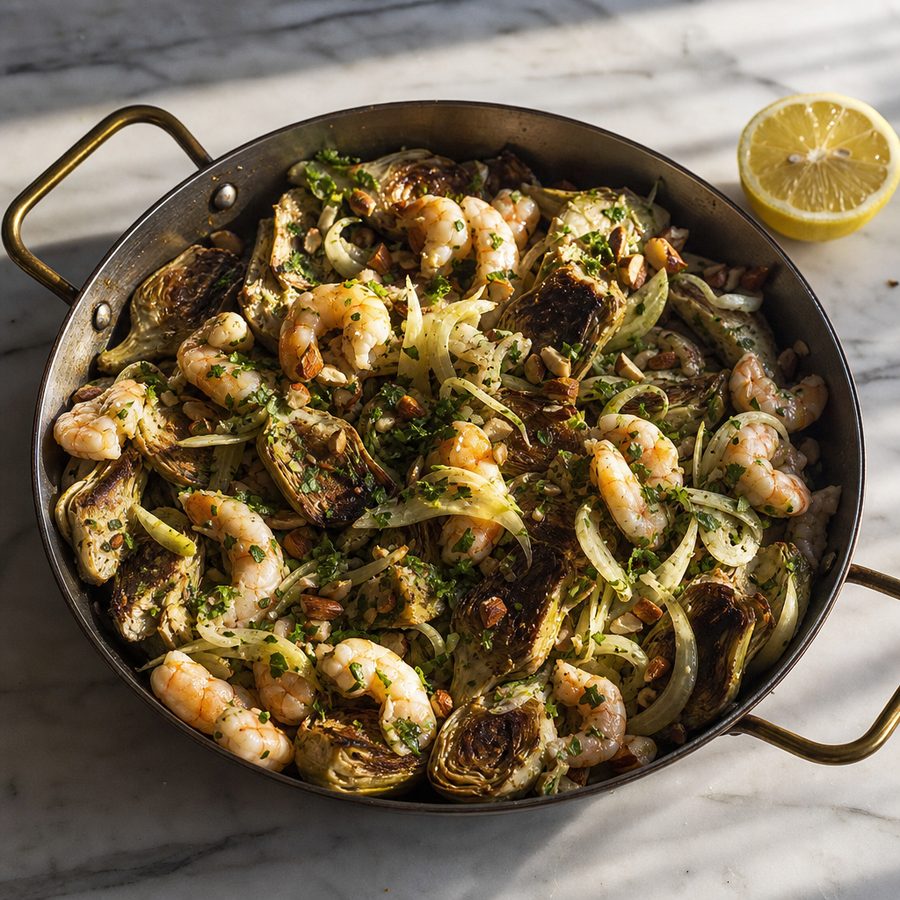
Artichoke hearts browned cut side down until their edges frizzle, tossed with thin-sliced fennel, chile, and garlic, with shrimp cooked through in the last two minutes and almonds and lemon over the top.
Why You'll Love This Recipe
Artichoke hearts are the ingredient I most often see used cold and never browned, which is a waste of what they can do. Drained well, dried, and pressed cut side down into a hot pan, they take on dark frizzled edges and a nutty sweetness while the middles stay soft and faintly creamy. It takes four minutes and it changes them completely. The rest of this skillet is built around giving them a good pan and then getting out of the way. There is no sauce, no thickening, and nothing that needs watching except the moment the shrimp turn.
Fennel and shrimp have always belonged together, and slicing the bulb thin means it softens in the same few minutes the artichokes need. Raw fennel is bracing and licorice-forward. Cooked quickly over decent heat it goes sweet and mild and holds a little bite, which is exactly what you want against something as soft as shrimp. The chile is there for warmth rather than fire, the garlic goes in late so it stays sweet rather than bitter, and the almonds are toasted in the pan at the start so they come back crisp at the end. Lemon off the heat is what makes the whole thing taste finished.
Nothing has been planned and dinner needs to be good anyway. Shrimp go from freezer to pan in ten minutes under cold running water, artichoke hearts live in the pantry, and a fennel bulb keeps in the crisper for a week and a half. Twenty five minutes start to finish, one pan, and it tastes like something you decided on rather than something you fell back on. I make it year round, though it is best in winter when fennel is sweet and the almonds have that season's crop behind them. It goes to the table in the skillet, which is how I think it should be eaten, with the lemon wedges beside it.
Ingredients
- 1 1/3 lb large shrimp, peeled and deveined, patted very dry
- 2 cups artichoke hearts (about 14 oz), drained well and halved
- 1 large fennel bulb, cored and sliced thin, fronds reserved
- 1/3 cup raw almonds, roughly chopped
- 5 garlic cloves, sliced thin
- 1 small jalapeno, seeded and sliced into thin rings
- 2 tbsp olive oil, divided
- 2 1/2 tbsp lemon juice, plus wedges to serve
- 1/3 cup flat-leaf parsley, chopped
Instructions
- Dry everything that will be browned: Drain the artichoke hearts and spread them on a towel, pressing gently to get the moisture out of the leaves and the center. Pat the shrimp dry as well and leave both on the counter while you slice the fennel, garlic, and chile. Wet artichokes steam instead of browning, and this is the step that decides whether the dish works.
- Toast the almonds: Put the chopped almonds in a large dry skillet over medium heat and toast for three minutes, shaking often, until they are pale gold and smell nutty. Tip them out onto a plate and set them aside, since a hot dry skillet goes on toasting them after the burner is off and almonds turn bitter quickly.
- Brown the artichokes: Add one tablespoon of the oil, raise the heat to medium-high, and lay the artichoke halves cut side down in a single layer. Leave them undisturbed for three to four minutes, until the cut faces are deep brown and the outer leaves have frizzled and gone crisp, because an artichoke that gets stirred gives up its moisture and stews in it. Move them to the almond plate.
- Soften the fennel: Add the remaining oil and the sliced fennel to the pan and cook for four minutes, stirring occasionally, until the ribbons are limp and taking color at the edges. Add the garlic and chile and cook for one minute more, until the garlic is fragrant and just starting to turn blond, since it would have been bitter long before the fennel softened if it had gone in at the start.
- Cook the shrimp and bring it together: Add the shrimp in a single layer and cook for ninety seconds without moving them, then turn and cook another sixty to ninety seconds, until they have gone from gray to pink and curled into a loose C rather than a tight O. Return the artichokes, add the lemon juice, and toss once off the heat, because lemon over a live burner goes flat and it is the only acid in the pan. Scatter the almonds, parsley, and reserved fennel fronds over the top and serve straight from the pan.
Variations
- Cherry tomatoes: Add a cup of halved cherry tomatoes with the garlic and let them burst into the fennel for a looser, saucier pan.
- Scallops: Use a pound of dry sea scallops in place of the shrimp, seared two minutes on one side and one on the other.
- Greens folded in: Wilt three big handfuls of arugula into the pan off the heat, so it collapses only where it touches something hot.
- Dill and lemon zest: Swap the parsley for dill and add the zest of the lemon with the juice, which sharpens the whole skillet.
Storage & Leftovers
This keeps two days in a sealed container in the refrigerator, and I like it cold as much as hot. Straight from the container with an extra squeeze of lemon it makes a very good lunch, and the artichokes and fennel taste even better once the flavors have settled.
If you are reheating it, use a skillet over medium-high for two minutes and no longer, tossing constantly, since the shrimp are already fully cooked and will tighten into rubber if you take them further. The microwave is a losing proposition with shrimp for exactly the same reason.
I would not freeze this one. Shrimp go grainy and artichoke hearts turn watery once frozen and thawed. What you can do ahead is slice the fennel, garlic, and chile and hold them covered in the refrigerator for a day, which takes the prep down to almost nothing.
Notes & Tips
- Press the artichokes dry: They hold water in the leaves and in the hollow center, and every drop of it works against the browning you are after. A towel and thirty seconds of gentle pressure is enough.
- Cut side down, then walk away: The crust forms in the first three minutes of contact. Stirring during them means you get warm artichokes rather than browned ones.
- Add garlic late: Sliced garlic burns in about ninety seconds at the heat this pan needs. Going in after the fennel has softened gives it just enough time to sweeten.
- Shrimp in one layer: Crowded shrimp release water and poach in it. If a pound and a third will not fit in a single layer, cook them in two quick batches.
- Lemon off the heat: Acid added to a hot pan cooks off and turns flat. Take the skillet to the counter first, then squeeze, and it stays bright.
Nutrition & Mindful Eating
- Shrimp, artichokes, and fennel each do one job here. The shrimp carry almost all of the protein, the artichoke hearts bring the fiber and the body, and the fennel gives the pan its sweetness and keeps it from feeling heavy.
- Artichoke hearts hold more fiber than nearly anything else you can brown in a skillet in four minutes, much of it inulin, which feeds the bacteria in the large intestine. They also carry folate and magnesium, and browning concentrates their flavor without touching any of that.
- Shrimp are dense in protein for their weight and very low in fat, which is why they cook in ninety seconds and why they tighten if you give them three minutes. They bring selenium and vitamin B12 along with iodine.
- Fennel sliced thin turns sweet in the pan as its anethole cooks off, and it brings potassium and vitamin C. The fronds saved for the end are worth using, since they carry the fresh anise note the bulb loses over the heat.
- Almonds toasted at the start of the pan and returned at the end give the skillet its crunch, and the vitamin E and magnesium they carry ride along with it.
- As you eat, find a frizzled artichoke edge and notice how differently it eats from the creamy middle of the same piece, and let the plate take as long as it takes rather than finishing it in five minutes.
Frequently Asked Questions
Jarred, canned, or frozen artichoke hearts?
Frozen brown the best and taste closest to fresh, so thaw them fully and dry them well. Canned in water are the next best and the easiest to find. Marinated hearts from a jar will work in a pinch, but drain them very thoroughly, since the oil they sit in prevents browning and the vinegar in the brine competes with the lemon.
How do I know when the shrimp are done?
Watch the shape. A raw shrimp is straight, a perfectly cooked one curls into a loose C, and an overcooked one closes into a tight O. Pull them at the C, and take the pan off the heat while you are still asking yourself whether they need another minute.
Can I use frozen shrimp?
Almost all shrimp were frozen at some point, so yes. Thaw them in a colander under cold running water for eight to ten minutes, then spread them on a towel and dry them properly. Skipping that last part is the most common reason shrimp steam rather than sear.
What if I do not like anise flavor?
Cooking already takes most of it out, since heat converts the anethole that gives raw fennel its punch. If you would rather avoid it altogether, use thinly sliced celery or shaved kohlrabi, both of which soften in the same four minutes and keep the pan crisp.