
Shrimp and Fava Bean Stew with Dill, Spinach, and Lemon
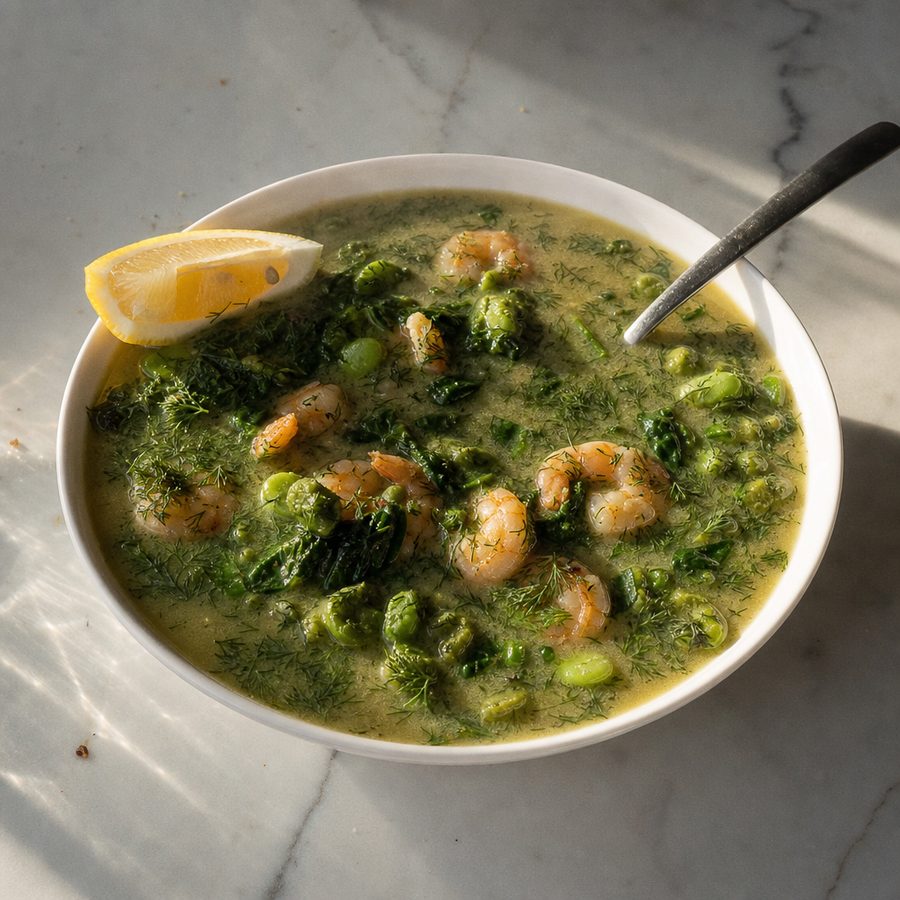
Fava beans simmered soft in a turmeric broth thick with dill and spinach, with shrimp poached in at the last minute and lemon stirred through off the heat.
Why You'll Love This Recipe
Early summer, when fava beans show up, calls for something brothy that is still a real dinner. It comes from the Persian habit of cooking beans and an almost unreasonable quantity of dill together until the herb stops being a garnish and becomes the body of the dish. Forty five minutes, most of it a gentle simmer, and the only fussy part is peeling the favas. Frozen shelled favas turn it from a weekend pot into a weeknight one, and I use them without apology most of the year. Make it on an evening when you want the kitchen to smell of herbs rather than of frying.
The method is built around the shrimp being last. Leek, celery, and garlic soften in olive oil first, the turmeric goes into that hot oil for thirty seconds so it loses its raw dustiness, and then the favas simmer in broth until they give under a spoon. Dill and spinach go in together and cook only until the spinach slumps, which keeps the pot green rather than olive. The shrimp go in off a hard boil and poach in the residual heat, and they are done the moment they turn coral and curve into a loose C. Taking the pot off the burner before they go in gives you a wide, forgiving window rather than a thirty-second one.
What you get is light on the spoon and heavy on flavor, sharp with lemon, thick with herbs, and sweet where the shrimp are. It is one of the few brothy dinners that genuinely fills people up, because the favas and the shrimp are both doing real work. I serve it in wide shallow bowls with more lemon on the side, and I like it just as much cold from the refrigerator the next day, eaten standing up. The favas hold their shape in the broth, the spinach almost disappears into it, and every spoonful carries a little of each. It tastes even more strongly of dill on the second day, which is the main reason I make the full pot.
Ingredients
- 1 1/4 lb large shrimp, peeled and deveined, tails off
- 1 1/2 cups shelled fava beans, fresh or frozen (about 2 lb in the pod)
- 10 oz mature spinach, thick stems removed, roughly chopped
- 2 1/2 cups vegetable broth
- 1/2 small leek, white and pale green only, halved and thinly sliced
- 2 stalks celery, finely diced
- 5 cloves garlic, finely chopped
- 1 packed cup chopped fresh dill, fronds and tender stems
- 1/3 cup chopped flat-leaf parsley
- 2 1/2 tbsp olive oil
- 2 1/2 tbsp lemon juice, plus wedges to serve
- 1 tsp ground turmeric
- 1/2 tsp freshly ground black pepper
- 1/2 tsp fine sea salt
Instructions
- Prepare the favas: If you are using fresh favas, shell them, drop them into boiling water for two minutes, then cool them under the tap and slip each bean out of its pale jacket. Frozen shelled favas need the same two-minute blanch and the same peeling, and the skins come away easily while they are warm. Skipping this step leaves a tough, slightly bitter skin in every spoonful.
- Soften the aromatics: Warm the olive oil in a wide pot over medium heat. Add the leek and celery with the salt and cook eight minutes, stirring now and then, until they are soft and translucent without taking on color. Add the garlic and cook one minute more, just until it smells sweet rather than sharp.
- Bloom the turmeric: Stir in the turmeric and the black pepper and let them cook in the oil for about thirty seconds. The oil will turn a deep gold and the smell will shift from dusty to warm and earthy. This is the step that decides whether the finished broth tastes of turmeric or merely looks like it.
- Simmer the beans: Pour in the broth, bring it to a simmer, add the peeled favas, and cook uncovered for ten to twelve minutes at a lazy bubble. The beans are ready when one crushes easily against the side of the pot but still holds its shape in the broth.
- Add the herbs and spinach: Stir in the dill, the parsley, and the spinach in handfuls, letting each one wilt before adding the next. Simmer two to three minutes only. The spinach should be collapsed and glossy and the broth should still be bright green under the gold, not drab.
- Poach the shrimp and finish: Take the pot off the heat, wait thirty seconds so it stops boiling, then stir in the shrimp. Cover and leave it for three to four minutes, until the shrimp are opaque coral and curled into a loose C rather than a tight O. Stir in the lemon juice and taste, then ladle into wide bowls with lemon wedges.
Variations
- Cod in place of shrimp: Lay two-inch chunks of cod on top of the simmering broth, cover, and steam for six minutes until they flake.
- Egg on top: Crack four eggs into wells in the finished stew and cover for five minutes until the whites set, which is how this is often eaten in northern Iran.
- Green garlic and mint: Swap half the dill for chopped fresh mint and use green garlic in place of the leek for a sharper, grassier spring version.
- Thicker pot: Crush a third of the favas against the side of the pot before the herbs go in, which turns the broth silky without any thickener.
- Fenugreek note: Add a teaspoon of dried fenugreek leaf with the dill for the slightly bitter, maple-scented edge that Persian herb stews are known for.
Storage & Leftovers
The stew keeps three days in the refrigerator in a sealed container. Shrimp toughen when they are cooked twice, so if you know you will have leftovers, poach only what you are serving and add the rest of the shrimp to the reheated broth on the second night.
Reheat gently over low heat until it steams, and stop there. A hard boil turns the shrimp rubbery and dulls the dill from green to gray. A splash of water loosens it if the beans have drunk up the broth overnight, and a fresh squeeze of lemon wakes the whole pot back up.
The bean and herb base freezes well for two months without the shrimp. Cool it, freeze it flat, thaw overnight in the refrigerator, then bring it back to a simmer and poach fresh shrimp into it. Frozen spinach loses a little texture but the broth does not mind.
Notes & Tips
- Buy shrimp with the shells on: They cost less, they taste better, and the shells can simmer in the broth for ten minutes and be strained out before the beans go in.
- Chop the dill stems too: The tender upper stems carry as much flavor as the fronds and they soften completely in the broth. Only the thick woody bases go in the bin.
- Blanch favas in well-salted water: Two minutes in salty boiling water sets their color and loosens the skins. Cold tap water straight after stops them going khaki.
- Take the pot off the heat before the shrimp: A rolling boil overcooks them in under a minute. Residual heat is all they need and it gives you a much wider window.
- Add lemon at the end: Acid added during the simmer dulls as it cooks and turns the herbs drab. Stirred in at the finish it stays sharp and lifts everything.
- Use a wide pot: A wide pot lets the spinach wilt in a single layer and keeps the broth from reducing too far while you work in the herbs.
Nutrition & Mindful Eating
- Shrimp, fava beans, and a great deal of dill are what hold this pot together. The shrimp bring the protein and the sweetness, the favas bring the fiber and the substance that makes it a dinner rather than a soup, and the herbs turn the broth into something with real flavor of its own.
- Shrimp cook in minutes and stay firm and sweet when you keep them out of a hard boil, and they carry selenium and vitamin B12 along with a lot of protein for their size.
- Fava beans are sweeter and grassier than most beans, and peeling them leaves a tender bright green interior that gives up starch into the broth. They bring folate and soluble fiber, which is the part that makes a brothy bowl actually hold you.
- Spinach wilts down to almost nothing and carries folate, magnesium, and vitamin K, and cooking it briefly in the broth means whatever it gives up stays in the pot rather than going down the sink.
- Dill in this quantity is a vegetable, not a garnish. It goes in by the packed cup, along with parsley, turmeric bloomed in the oil, and lemon stirred in off the heat, and those four are the reason a pot this simple tastes finished.
- As you eat, notice how the broth tastes different once the lemon goes in and how the dill lands at the back of your throat, and let the spoon rest between mouthfuls so you can tell when the bowl has been enough.
Frequently Asked Questions
I cannot find fava beans. What else works?
Frozen shelled edamame is the closest match in texture and needs no peeling, and butter beans or cannellini give you a softer, creamier pot. Use the same volume and add them at the same point, though canned beans only need five minutes rather than twelve since they are already tender.
Do I really have to peel the favas twice?
For fresh ones, yes. The outer pod comes off in the kitchen and the individual skin comes off after blanching, and that second skin is thick and faintly bitter. Very young, small favas can skip it, but anything bigger than a thumbnail is worth the ten minutes.
My shrimp came out rubbery.
They were in boiling liquid. Shrimp finish cooking at a temperature well below a simmer, which is why the pot comes off the heat before they go in. Three to four minutes covered in hot broth is plenty for large shrimp, and they will keep firming up in the bowl.
Can I use dried dill?
It will not carry this dish. Dried dill has a hay-like flavor and the whole point here is the volume of fresh herb going in, enough that it thickens the broth. If fresh dill is impossible, use a large bunch of fresh cilantro and a spoonful of dried mint instead, which is a different pot but a good one.