
Cold Shrimp and Jicama Napa Cabbage Rolls with Mint
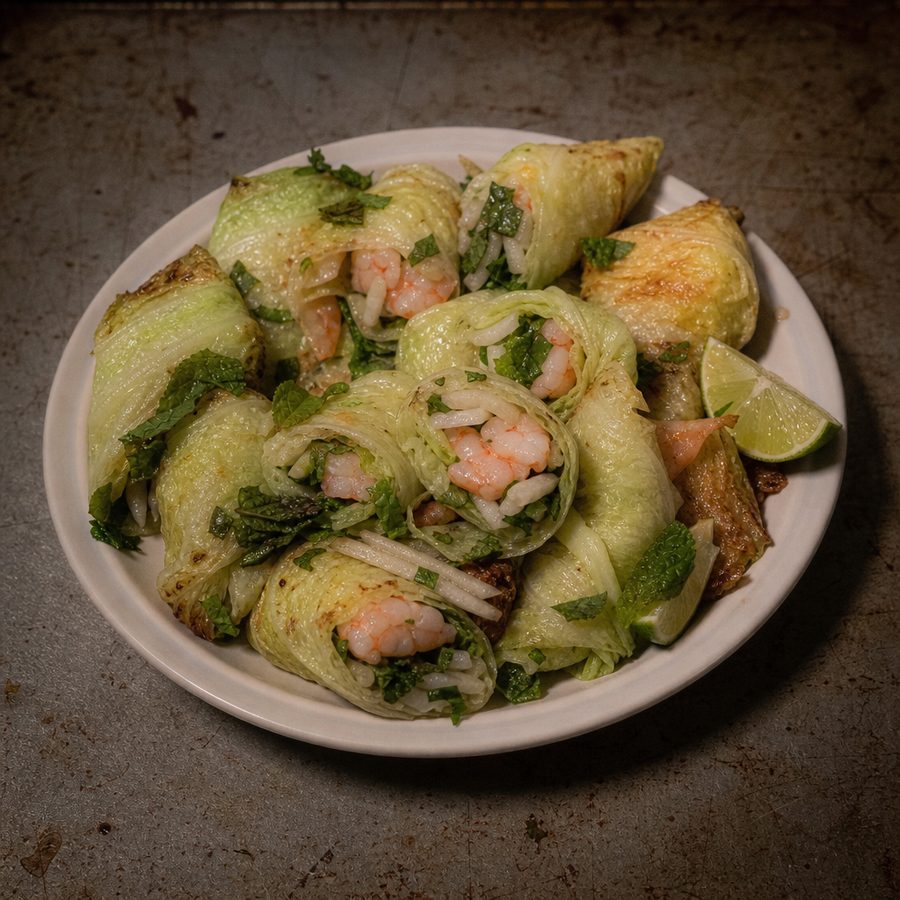
Blanched napa cabbage leaves rolled around cold shrimp, crisp jicama matchsticks, scallions, and mint, dressed with lime and ginger, then chilled overnight and eaten in one hand.
Why You'll Love This Recipe
These are for the mornings you are already late. I make eight of them on a Sunday evening while dinner is in the oven, wrap them in parchment, and stack them in the refrigerator, and for the next three days breakfast is something I pick up on the way to the car. There is no plate, no fork, and no reheating, which matters far more than it sounds like it should when the honest alternative is skipping breakfast altogether. They are also my answer to what to eat in August, when a hot skillet first thing in the morning is the last thing anybody in the house wants.
The leaf is the part people get wrong, and it is worth fifteen seconds of care. A raw napa cabbage leaf splits along its white rib the moment you try to fold it, so each one goes into boiling water for a slow count of fifteen and then straight into ice water, which turns the green part silky and the rib flexible without cooking either of them limp. Then you lay a paring knife almost flat and shave that thick white rib down level with the rest of the leaf, so it rolls tightly rather than fighting you at the spine. Pat both sides properly dry afterward, since a wet leaf makes a roll that slumps by morning.
What holds up overnight is the jicama. It is a root you eat raw, and it stays crunchy for days once it is cut, so a roll made on Sunday night still has snap on Wednesday in a way cucumber never manages. The shrimp is chopped rather than left whole so that every bite gets some, and the dressing of lime, olive oil, grated ginger, and salt goes over the filling in the bowl rather than onto the leaf, so nothing turns soggy. Mint goes in last and there should be more of it than feels reasonable. Two rolls hold you through a morning, and the protein in the shrimp is doing most of that work.
Ingredients
- 1 lb cooked peeled shrimp, tails removed and chopped into rough 1/2-inch pieces
- 8 large outer napa cabbage leaves, pulled off the head whole
- 1 small jicama (about 3/4 lb), peeled and cut into thin matchsticks
- 4 scallions, sliced thin on a long angle
- 1/2 cup fresh mint leaves, torn
- 3 tbsp fresh lime juice, from about 2 limes
- 3 tbsp olive oil
- 1 tbsp grated fresh ginger
- 1 clove garlic, grated
- 3/4 tsp fine sea salt
Instructions
- Blanch the cabbage leaves: Bring a wide pot of salted water to a boil and set a bowl of ice water beside it. Slide the napa leaves in two at a time for 15 seconds, until the green parts go silky and the white ribs bend without snapping, then move them straight into the ice water. Lay them flat on a towel and pat both sides dry.
- Flatten the ribs: Set each leaf rib side up on the board. Hold a paring knife almost flat against the leaf and shave the thick white rib down until it sits level with the rest of the leaf. Do not cut the rib out, since the leaf has to stay in one piece to roll.
- Cut the jicama: Peel the jicama with a knife rather than a peeler, since the skin is fibrous and thicker than it looks. Cut it into planks, then into matchsticks about the thickness of a wooden skewer. Slice the scallions thin on a long angle.
- Dress the filling: Put the chopped shrimp in a bowl with the jicama and scallions. Whisk the lime juice, olive oil, grated ginger, grated garlic, and salt together, pour it over, and toss until everything is coated. Tear the mint in by hand at the very last moment so it does not bruise and darken.
- Roll them: Lay a leaf with the stem end toward you and pile an eighth of the filling in a line across the lower third. Fold the bottom edge up over it, fold both sides in, and roll it away from you tightly, the way you would roll a burrito. Repeat with the other seven leaves.
- Wrap and chill: Roll each one snugly in a square of parchment and twist the ends, or set them seam side down in a container packed close enough that they cannot unwind. Refrigerate for at least 2 hours and ideally overnight, which is what sets the shape.
Variations
- Crab rolls: Swap the shrimp for cooked lump crab meat and fold it in gently so the pieces stay whole.
- Ginger and orange: Trade the lime for orange juice and zest and double the ginger for a sweeter, warmer filling.
- Chicken version: Use shredded poached chicken breast in place of the shrimp for a milder roll that holds a day longer.
- More crunch: Fold in a handful of thinly sliced radish or snow peas along with the jicama.
- Herb swap: Use fresh basil in place of the mint, torn in at the same point, for a rounder and less sharp finish.
Storage & Leftovers
Wrapped in parchment and kept in a sealed container, these hold in the refrigerator for 3 days. They are better on the second day than the first, since the leaf relaxes around the filling and the lime works its way through everything. Keep them seam side down so they do not unwind in the container.
These are not reheated, and that is the point of them. Cooked shrimp turns rubbery the second time it meets heat, and a warmed cabbage leaf goes slippery and gray. Eat them straight from the refrigerator, or set one on the counter for 10 minutes if you would rather it were not quite so cold.
Do not freeze them. Jicama collapses into something soft and watery once it has been frozen and thawed, and the cabbage leaf tears as soon as you handle it. For a head start instead, cut the jicama and blanch the leaves up to 2 days ahead, keep them in separate containers, and roll in about 10 minutes.
Notes & Tips
- How they keep: Three days in the refrigerator, wrapped in parchment and packed seam side down. The jicama is what buys you those three days, since it stays crisp long after most raw vegetables have gone limp.
- They are not reheated: Eat them cold, straight from the refrigerator. Heat turns cooked shrimp rubbery and a warm collard leaf goes slippery, so there is no version of this that improves in a microwave.
- Fifteen seconds, no longer: The leaves need just enough boiling water to go flexible at the rib. Half a minute makes them limp and gray, and a limp leaf tears when you try to roll it tightly.
- Shave the rib flat: The raised white rib is what makes a roll split down the side. Hold the knife almost parallel to the board and take the rib down level rather than cutting it out.
- Dry leaves roll tighter: Pat both sides with a towel before you fill them. Water trapped inside is the most common reason a roll slumps overnight.
- Dress the filling, not the leaf: The lime and salt go over the shrimp and jicama in the bowl. Poured onto the leaf, they draw water out of it and the roll goes soft by morning.
Nutrition & Mindful Eating
- Shrimp, jicama, and the cabbage leaf around them work together here. The shrimp brings the protein and the sweetness, the jicama brings the crunch and a kind of fiber your gut bacteria feed on, and the leaf turns a handful of vegetables into something you can hold in one hand.
- Shrimp eaten cold keeps a firm, snappy bite, and it is one of the more protein dense things you can hold in your hand at seven in the morning, along with the selenium and B12 that shellfish carry.
- Jicama is crisp and faintly sweet raw, somewhere between an apple and a water chestnut, and it holds the sort of soluble fiber that has been studied as food for the bacteria living in your gut.
- Napa cabbage leaves blanched for a count of fifteen stay pale green and keep the crunch in their ribs, and they carry vitamin C and folate along with the water that makes a cold roll refreshing at seven in the morning.
- Lime juice, grated ginger, and a generous handful of torn mint are what make a cold breakfast taste like it was made on purpose. The mint in particular reads as fresh in a way that has nothing to do with temperature.
- As you eat, pay attention to the snap of the jicama against the soft shrimp and the mint that arrives at the end of each bite, and let the cold sharpness of the lime be a reason to sit for the five minutes it takes.
Frequently Asked Questions
Can I start with raw shrimp?
Yes. Poach 1 pound of peeled raw shrimp in barely simmering salted water for 2 to 3 minutes, until they curl loosely and turn opaque, then chill them in ice water and drain them well. A shrimp curled into a tight ring is overcooked and will be tough once it is cold.
What can I use in place of napa cabbage?
Collard leaves are sturdier and hold a tighter roll, and they need 30 seconds in the boiling water rather than 15. Large chard leaves work too, though they tear more easily, so lay two down overlapping and roll them together as one wrapper.
My rolls fell apart in the bag.
Either the leaf was still wet or the filling was piled too high. Dry both sides of the leaf properly, keep the filling to a line across the lower third rather than a mound in the middle, and roll tightly enough to feel resistance. The parchment wrap holds the rest.
Is this really enough food for breakfast?
Two rolls is a real portion, and there is a full pound of shrimp spread across the eight of them. If you wake up genuinely hungry, eat three and make a half batch again midweek, or put half an avocado on the side.