
Shrimp, Okra, and Corn Skillet with Smoked Paprika and Lime
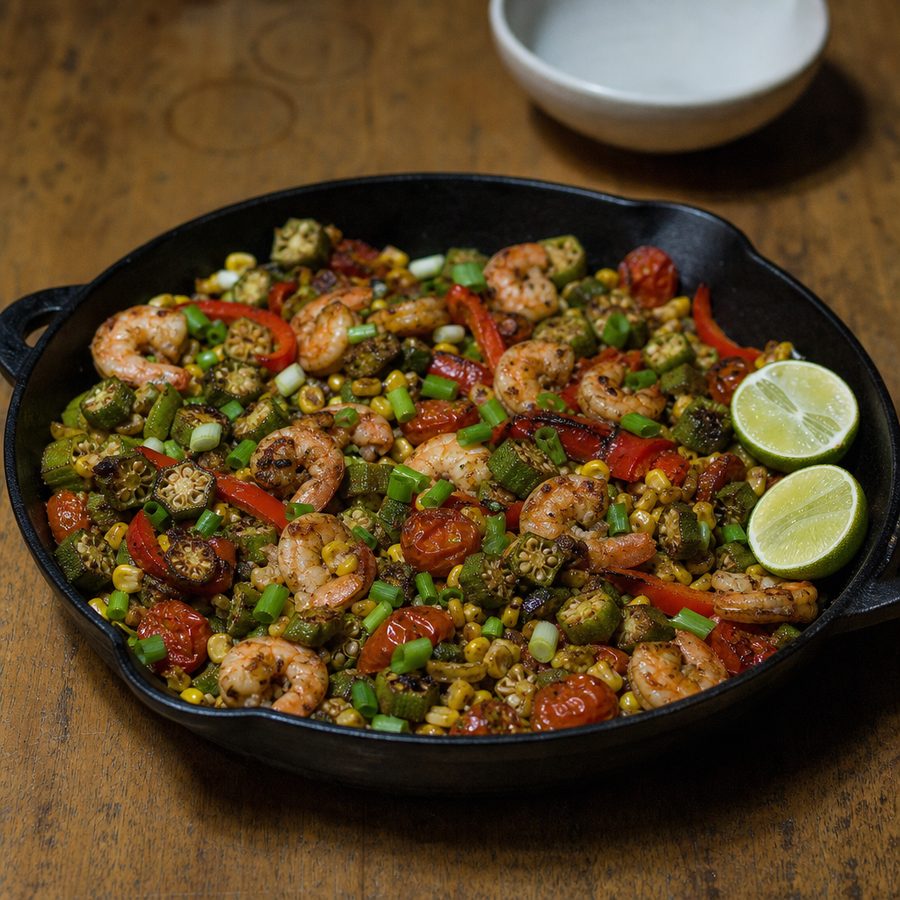
Okra blistered hard in a dry pan with corn, then built into a skillet of peppers, celery, and burst tomatoes with smoked paprika and thyme, with shrimp folded in for the last two minutes and lime squeezed over.
Why You'll Love This Recipe
Okra has a reputation problem and the fix is heat. Cut into rounds and put into a very hot, very dry pan, it chars on the flat faces before it has time to release the mucilage that puts people off, and what comes out is nutty, green, and faintly like a green bean. Long slow simmering does the opposite and is why so many people think they dislike it. I cook it this way every summer and serve it to people who tell me they hate okra, and they usually go back for more.
The rest of the pan is a fast take on the peppers, onion, and celery that start most Louisiana cooking, with smoked paprika standing in for a long-cooked roux. Cherry tomatoes burst under the spoon and make just enough sauce to coat everything without turning it into a stew. The shrimp go in at the very end and take about ninety seconds, so they stay plump and snappy. If you are still stirring shrimp at three minutes, they have gone.
This eats like a late summer supper and it is what I cook when the okra and the corn arrive at the market in the same week. Rice underneath is very good if you have some, and it takes twenty seven minutes in one skillet. It is also one of the cheaper dinners in my repertoire, and one of the few I like just as much at room temperature an hour later.
Ingredients
- 1 1/4 lb large shrimp, peeled and deveined, tails off
- 3 cups okra, trimmed and cut into 1/2-inch rounds
- 1 3/4 cups corn kernels, cut from 2 ears or thawed from frozen
- 2 cups cherry tomatoes, halved
- 1 red bell pepper, cut into short strips
- 1 small onion, diced
- 2 stalks celery, sliced thin
- 5 cloves garlic, minced
- 4 scallions, sliced thin
- 2 tsp smoked paprika
- 1/4 tsp cayenne, or more
- 2 tsp fresh thyme leaves
- 1 tsp coarsely ground black pepper
- 2 tbsp olive oil, divided
- 5 tsp lime juice, plus wedges to serve
- 3/8 tsp fine sea salt, divided
Instructions
- Blister the okra: Heat a large cast iron skillet over high until it is genuinely hot. Add the okra rounds dry, in one layer, and leave them for two to three minutes without touching them, since okra that is stirred releases the mucilage that puts people off and okra that sits still chars before it has the chance, until the down faces are charred black in places. Toss once, give them another minute, then tip them into a bowl.
- Toast the corn: Add the corn to the same dry pan and spread it flat. Leave it ninety seconds until it starts to pop and brown, toss once, then add it to the okra. Both of these steps want a bare pan, since oil lowers the surface temperature and you get steam rather than char.
- Build the base: Turn the heat to medium-high, add one tablespoon of the oil, and cook the onion, bell pepper, and celery with a quarter teaspoon of the salt for four minutes, until the onion is translucent and the pepper has softened. Add the garlic, smoked paprika, cayenne, thyme, and black pepper and stir for forty five seconds.
- Burst the tomatoes: Add the halved cherry tomatoes and press some of them against the pan with the back of the spoon, because their juice is the only liquid in this skillet and it is what lifts the browned bits off the metal. Cook two to three minutes until they slump and release enough juice to glaze the vegetables. Return the okra and corn and toss everything together.
- Add the shrimp last: Season the shrimp with the remaining salt, add them with the last tablespoon of oil, and cook ninety seconds to two minutes, turning once, until they have just curled and turned opaque through. Take the pan off the heat before the lime juice and scallions go in, since lime goes flat over a live burner and the scallions are meant to stay sharp. Serve with lime wedges.
Variations
- Andouille and shrimp: Brown a few ounces of sliced smoked sausage with the onion for a deeper, smokier pan closer to a traditional Louisiana skillet.
- Cod or catfish: Use chunks of firm white fish in place of the shrimp, added at the same point and left undisturbed so they do not break up.
- Green tomato and vinegar: Swap half the cherry tomatoes for diced green tomato and finish with cider vinegar for a sharper, more old-fashioned version.
- Extra heat: Add a sliced fresh chile with the garlic and double the cayenne for a pan that genuinely bites.
Storage & Leftovers
This keeps three days in a sealed container. The okra softens after the first day and loses some of its char, which is the price of leftovers here, but the flavor holds up well. The corn and tomatoes are, if anything, better on the second day once they have sat together.
Reheat it in a skillet over medium-high for two or three minutes only. Shrimp reheated for any longer go rubbery, and it is worth pulling the pan while it is still slightly under. A fresh squeeze of lime at the end brings the smoked paprika back to life.
I do not freeze this one. Okra turns soft and slippery on thawing, and shrimp that have been cooked and then frozen come back with a woolly texture. If you want to get ahead, make the vegetable base through the tomato step, refrigerate it for two days, and cook fresh shrimp into it.
Notes & Tips
- Get the pan properly hot first: Cast iron over high heat for three full minutes before the okra goes in. A pan that is merely warm will steam the vegetables and you will get exactly the texture you were trying to avoid.
- Cut the okra thick: Half inch rounds hold their shape and give you a charred face on each side. Thin slices cook through before they can brown and collapse into the sauce.
- Shrimp go in at the very end: They need less time than anything else in the pan. Adding them with the vegetables guarantees they will be tight and rubbery by the time the rest is ready.
- Lime with the burner off: Acid boiled in a hot pan flattens out. Off the heat it keeps its edge and it is what makes smoked paprika taste smoky rather than dusty.
Nutrition & Mindful Eating
- The shrimp, the okra, and the corn are doing three different jobs in one skillet. The shrimp bring the protein for very little fat, the okra and corn carry the fiber and the bulk, and the tomatoes and peppers make the sauce that holds it together.
- Shrimp cook faster than almost any other protein and stay sweet and snappy when they are pulled at the right moment. They carry protein along with selenium, iodine, and the astaxanthin that turns them pink in the pan.
- Okra charred at high heat goes nutty and green tasting, and it holds soluble fiber along with vitamin K and folate. That soluble fiber is the same thing responsible for its texture when it is cooked slowly, which is why the hot dry pan matters so much.
- Corn browned in a dry skillet tastes nutty because its own sugars caramelize on the kernel. The yellow color comes from lutein and zeaxanthin, carotenoids that stay in the kernels rather than dissolving into the pan.
- Smoked paprika, thyme, and lime are carrying the seasoning here, and they cover the ground that a long-cooked roux would in a traditional version. The smoke gives depth, the thyme gives the savory backbone, and the lime keeps a sweet pan of corn and tomato tasting sharp.
- As you eat, look for the okra rounds with the blackest faces and notice how the corn sweetness arrives after the smoke, and stay at the table long enough to notice when you have had enough.
Frequently Asked Questions
How do I keep okra from being slimy?
High heat, a dry pan, and no crowding. The mucilage that people object to is released by moisture and gentle cooking, so anything that steams the okra makes it worse. Charring the cut faces fast sets the outside before that can happen.
Can I use frozen okra?
Yes, but thaw it and blot it thoroughly first, and expect a little less char. Frozen okra comes out wetter than fresh, so give it an extra minute in the dry pan and do not stir it during that time.
How do I know when the shrimp are done?
They turn from gray and translucent to white and pink and curl into a loose C shape. A tight O means they have gone too far. Ninety seconds a side for large shrimp is usually right, and they carry on cooking in the hot pan after you take it off the heat.
What can I serve this over?
It stands on its own, and I usually eat it straight from the skillet. Rice, grits, or a piece of bread to push it around the plate all suit it if you want something underneath.