
Shrimp and Okra Soup with Garlic and Oregano
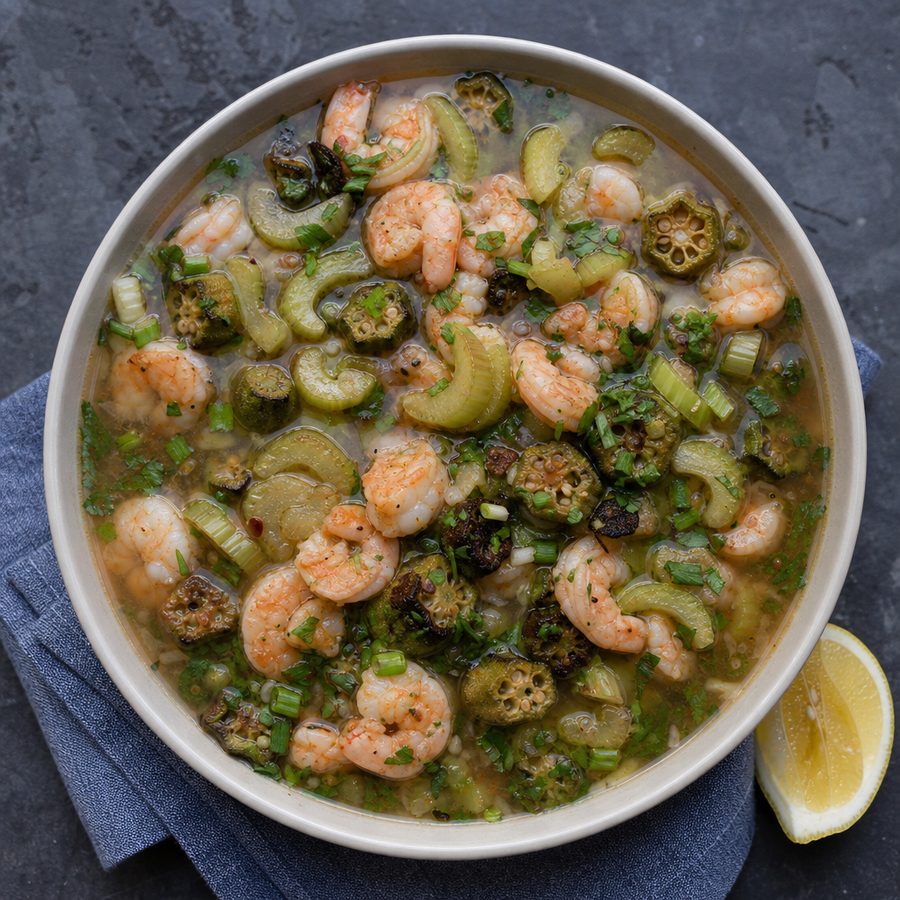
Okra browned hard before any liquid goes in, simmered into a garlicky broth with onion and celery, then finished with whole shrimp poached in the pot for three minutes.
Why You'll Love This Recipe
This is the soup I make on a weeknight when I want something in the refrigerator by Tuesday and I am not willing to spend an hour getting it there. It takes about thirty five minutes start to finish, and most of that is the broth quietly working while the shrimp sit in the refrigerator waiting for their three minutes. It is a bowl with real pieces in it, shrimp you can count and okra rounds and celery, which is a relief after a run of blended and shredded things. I make it in August when okra is everywhere and cheap, and again in January with frozen okra, and honestly the frozen version is nearly as good.
Okra is the reason people are nervous about a soup like this, and the fix is the first step rather than a trick at the end. Cut the rounds, get a dry pan properly hot, and let them sit in it until they blister and take on color, which drives off the moisture that makes okra slippery. After that they can simmer in broth for fifteen minutes and stay in distinct green rounds. The other thing that matters is the shrimp going in last, off the direct heat, curling from gray to pink in about three minutes. Boiled shrimp go tight and rubbery, and there is no fixing them once they have.
What makes the bowl taste like more than broth and shrimp is the garlic, and there are five cloves in it on purpose. They go in after the onion has softened and cook only until they smell sweet, then the broth lifts everything off the bottom of the pot. Dried oregano and two bay leaves do the background work while it simmers, and the lemon juice and zest go in off the heat where they stay bright. Parsley and scallion over the top, and it eats like a proper lunch rather than a starter, with a good amount of protein sitting in the middle of it.
Ingredients
- 1 1/2 lb large raw shrimp, peeled and deveined, tails off
- 12 oz okra (about 3 cups), stems trimmed and cut into 1/2-inch rounds
- 3 ribs celery, sliced 1/4 inch thick
- 1 large yellow onion, diced
- 5 cloves garlic, minced
- 5 cups chicken bone broth
- 2 tbsp olive oil, divided
- 2 tsp dried oregano
- 2 dried bay leaves
- 2 tbsp fresh lemon juice, plus the zest of 1 lemon
- 1/4 cup chopped fresh parsley
- 4 scallions, thinly sliced
- 1 tsp fine sea salt, divided
Instructions
- Brown the okra: Trim the stem ends off the okra and cut it into half-inch rounds. Heat a large dry pot over medium-high, add the okra with 1 tablespoon of the olive oil, spread it in as close to a single layer as you can, and leave it alone for 4 minutes. Toss and cook 3 to 4 minutes more, until the rounds are blistered and browned in places. Scrape them into a bowl.
- Soften the onion and celery: Add the remaining tablespoon of oil to the same pot over medium heat, then the onion, the celery, and a quarter teaspoon of the salt. Cook for 6 minutes, stirring and scraping the browned bits up off the bottom, until the onion is translucent and the celery has lost its raw edge.
- Garlic and oregano: Stir in the garlic and the dried oregano and cook for 1 minute, until the garlic smells sweet rather than sharp. Crumbling the oregano between your fingers as it goes in wakes up more of it than dropping it in whole.
- Simmer the broth: Pour in the bone broth, add the bay leaves and another quarter teaspoon of salt, and return the okra to the pot. Bring it to a simmer and cook uncovered for 15 minutes, until the okra is tender and the broth has thickened very slightly and tastes of the vegetables rather than of broth.
- Poach the shrimp: Pat the shrimp dry and season them with the remaining salt. Turn the heat down so the surface barely moves, add the shrimp, and cook for 3 minutes, stirring once. They are done the moment they have curled into loose C shapes and turned pink and opaque. Pull the pot off the heat right then.
- Finish: Take out the bay leaves. Stir in the lemon juice and zest, then the parsley and the scallions, and taste the broth for salt. Serve it right away while the shrimp are still tender, with plenty of broth in every bowl.
Variations
- Crab instead: Fold half a pound of lump crab meat in off the heat in place of the shrimp for a softer, sweeter bowl that needs no cooking.
- Greens in the pot: Wilt a few large handfuls of chopped collards or kale into the broth for the last 5 minutes so there is something dark green in every spoon.
- Bacon at the bottom: Render two chopped slices of bacon before the okra goes in and use that fat for the browning, which gives the whole pot a smoky base.
- More broth, more vegetables: Add a cup of broth and a diced zucchini with the okra when you want a lighter, brothier bowl that stretches to six servings.
- Warmer and rounder: Add a teaspoon of turmeric with the garlic for a golden broth with a little more earthiness behind the lemon.
Storage & Leftovers
The soup keeps in a sealed container in the refrigerator for 3 days. Cool it uncovered for about 20 minutes first so the shrimp are not sitting in hot liquid, since they keep cooking in a warm pot and that is what turns them tight by the next day.
Reheat it gently in a saucepan over medium-low for 5 to 6 minutes, stopping as soon as it steams. Do not let it boil, and skip the microwave if you can, since it heats the shrimp much faster than the broth and rubbery shrimp are the one thing that ruins this bowl. A fresh squeeze of lemon on reheating brings it back.
For batch cooking, the better move is to make the broth and okra through the simmering step and refrigerate that for 5 days or freeze it for 3 months. Bring a portion up to a bare simmer, drop in raw shrimp, and you have a fresh bowl in about four minutes with the shrimp perfect every time.
Notes & Tips
- Brown the okra first, always: Eight minutes in a hot pan before any liquid touches it is the whole difference between a clean broth and a ropey one.
- Cut the rounds big: Half an inch is the size to aim for. Thin slices expose more of the interior and release far more of what makes okra slippery.
- Three minutes on the shrimp: Off the boil, barely moving liquid, and pull the pot the second they curl. Shrimp go from tender to rubbery in about a minute.
- Crumble the dried oregano: Rubbing it between your palms as it hits the pot breaks the leaves and releases far more scent than adding it whole.
- Keep the pot uncovered: The broth needs to reduce a little to taste of anything. A lid traps the steam and you end up with a thin, watery pot.
- Lemon off the heat: Acid boiled into a broth goes dull. Added at the end it stays sharp, and it also helps keep the okra from turning ropey.
Nutrition & Mindful Eating
- Shrimp, okra, and a well made broth carry this bowl between them. The shrimp bring the protein, the okra and celery give it substance and something to chew, and the broth ties the two together so it eats like a meal rather than a first course.
- Shrimp are firm, sweet, and quick to cook, and they hold a lot of protein for how light they taste. They also carry selenium and iodine, two things not many foods bring in any quantity, which is part of why a bowl of these eats more substantially than it looks.
- Okra is full of soluble fiber, and that is the same fiber that gives the broth its soft body once the rounds have simmered. Browning them first drives off the moisture behind the slipperiness while leaving the fiber exactly where it is.
- Celery cooked in the base keeps a little bite and brings its own salty, green flavor, along with potassium and a good deal of water. It is the vegetable that keeps a garlicky broth tasting fresh rather than heavy.
- Five cloves of garlic, two bay leaves, and dried oregano do all of the seasoning, and lemon juice and zest go in at the very end where the oils in the zest stay bright. That late acid is what makes the shrimp taste sweeter.
- As you eat, notice how the broth has thickened just slightly around the okra, and let the shrimp be worth chewing slowly rather than something you spoon through on the way to the bottom of the bowl.
Frequently Asked Questions
Will the okra be slimy?
Not if you brown it first. The slip comes from moisture, so a hot dry pan and 8 minutes of browning before any liquid goes in takes care of it. Cutting the rounds no smaller than half an inch helps too, and so does the acid from the lemon at the end.
Can I use frozen okra?
Yes, and it is what I use most of the year. Do not thaw it. Put it straight into the hot pan with the oil, expect it to spit for the first minute, and give it a couple of extra minutes to brown since it releases more water than fresh.
What else can I use in place of shrimp?
Lump crab meat stirred in off the heat works beautifully and needs no cooking at all. Chunks of cod or halibut poach in the same three to four minutes. Shredded chicken thigh is the cheapest option and can go in with the broth to warm through.
Does this fit an AIP elimination phase?
It does. There are no grains, legumes, dairy, eggs, nuts, seeds, or nightshades in it, and the seasoning is garlic, onion, oregano, bay, lemon, and salt. Buy shrimp with no additives beyond salt, and read the bone broth label, since pepper turns up in most cartons.